

Solar fans earn their keep in places where cords feel awkward and airflow matters most, from tents and trailers to greenhouses, coops, sheds, and attic spaces. You’re usually balancing three things at once: how the fan mounts or moves, how it draws power, and how much maintenance it asks of you later. The right choice depends on whether you need a small personal unit, a fixed ventilation setup, or a hybrid fan that can still keep going after sunset.
That mix makes the category broader than it first looks. Some picks lean portable and handy for camping weekends, while others are built for steady airflow in a structure that needs help staying dry and breathable. A good shortlist keeps you from overbuying capacity you won’t use, or underbuying ventilation where it really counts.
Quick Look At Our Solar Fan Shortlist

Drchop Solar Powered Fan 8-inch with Led Lantern

Fanspex Solar 3 Fan Kit Waterproofed for Chicken Coop, Greenhouse & Shed

WESTTREE Solar Fan Battery Powered Rechargeable Camping Fan with Led Lantern

Remington Solar Builder Series 40 Watt Solar Attic Fan
ecoCalm Solar Fan 8-inch with Adjustable Thermostat and Battery

Gliztech Solar Ceiling Fan Light with 20000mAh Battery
Innopower Portable Fan with Solar Panel and Led Lantern

Innopower Portable Fan with Solar Panel and Led Lantern

Innopower Portable Fan with Solar Panel and Led Lantern
More Details On Our Top Picks
The Drchop unit fits the camping-and-backup lane neatly, especially for a tent, porch, or emergency kit. The 8-inch size keeps it portable, while the built-in lantern adds a second job so you’re carrying one less item. That kind of combo matters in a cramped setup where every inch of pack space feels earned.
The longer runtime claim is the big hook, though real-world usefulness still depends on how hard you run the fan and how you recharge it. Compared with the more fixed greenhouse picks later in this list, this one makes more sense for travel or short outages than for permanent ventilation. The honest read is that you’re paying for flexibility first.
Strong Points
- 8-inch format stays easy to move between a tent, table, and gear shelf.
- Lantern function reduces the need to pack a separate light source.
- Battery-powered design gives you a backup path beyond direct sunlight.
- Works well for campers who want one compact item to cover more than one job.
Worth Noting
- Portable fans like this usually trade raw airflow for convenience.
- The lantern adds usefulness, but it also means more settings to keep track of.
- For long-term greenhouse or shed ventilation, a mounted system is the better fit.
Feature Snapshot
Who It Suits Best
Campers, van travelers, and anyone who wants a compact cooling backup in a personal space will get the most from it.
Where A Sibling Pick Shines
Fanspex Solar 3 Fan Kit suits shed or coop owners better, because it’s built around fixed ventilation rather than portable comfort.
This Fanspex kit moves the conversation away from personal cooling and into real ventilation duty. Three fans in one package make it a strong fit for coops, sheds, and greenhouse walls where a single small fan would feel undersized. Waterproofing matters here because damp structures need equipment that’s built with moisture in mind, not just a patio breeze.
Compared with the Drchop portable fan, this is the more serious setup for air exchange, though it asks for installation instead of grab-and-go convenience. That trade-off is worth it for outbuildings that need steady intake or exhaust movement. You’re getting infrastructure, not a camp accessory.
What We Like
- Three-fan layout gives you broader airflow coverage than a single compact unit.
- Waterproofed construction suits humid, dusty, and semi-exposed spaces.
- Useful for intake or exhaust setups, which helps you match the fan to the building layout.
- Better suited to permanent ventilation than portable fan-and-lantern combos.
Points To Note
- Installation takes more planning than a plug-and-place personal fan.
- Cleaning and dust control matter in coops and sheds, so periodic upkeep is part of ownership.
- For travel or tabletop use, the size and purpose are too specialized.
Core Details
Best Suited To
Chicken coop owners, greenhouse gardeners, and shed users who want fixed ventilation will get the most from this kit.
Another Choice May Suit
Remington Solar Builder Series 40 Watt Solar Attic Fan fits attic projects better, because it’s built for roof-space ventilation rather than outbuilding walls.
WESTTREE leans into travel-friendly flexibility, and the foldable angle makes that easier to picture on a camp table or beside a sleeping area. The solar charging plus battery setup gives you more ways to keep it going, while the lantern and power-bank idea make it feel closer to a utility kit than a plain fan. That versatility helps when space is tight and backup power matters.
Compared with the Drchop pick, this one adds more utility layers, but the payoff depends on how much you value those extra functions over simplicity. For a car-camping setup or a travel bag, that balance can feel smart. In a minimalist kit, though, the extra features may be more than you need.
Highlights
- Foldable angle gives you more placement flexibility on uneven camp surfaces.
- Lantern function helps cover both airflow and visibility in one piece of gear.
- Battery and solar charging broaden the ways you can keep it ready.
- USB use adds practical value for travel kits that already rely on shared charging.
Small Caveats
- Extra functions can make the control layout feel busier than a plain fan.
- For permanent ventilation jobs, a fixed-mounted model makes more sense.
- Folded parts and moving joints usually need a little care in packing and storage.
Details At A Glance
Who Will Love This
Travel campers and weekend adventurers who want a compact, multi-use fan will appreciate this one most.
Look Elsewhere When
Innopower B0CYL8Z2CB suits a simpler desk-or-tent setup better, especially for anyone who wants a straightforward portable fan without extra layers.
This Remington Solar model is aimed squarely at attic ventilation, not camping comfort, and that focus is exactly why it stands out here. The 40-watt solar setup gives the fan a more serious job to do, while the included 110V adapter supports night operation without asking you to improvise. For attics that trap heat, that kind of hybrid setup is a practical step up.
Compared with the Fanspex kit, this pick is less about multi-fan coverage and more about roof-space airflow. You’ll like it most when you want a dedicated attic solution that can keep working after dark. Installation is the trade-off, though, so it suits a home project more than a casual weekend install.
Positives
- Built for attic spaces, where heat build-up can be stubborn.
- Solar plus adapter support gives you a useful backup path for night hours.
- 40-watt rating signals a more substantial ventilation setup than compact portable fans.
- Good fit for homeowners who want a dedicated roof-space solution.
Areas To Watch
- Attic installation is more involved than setting down a portable fan.
- The size and purpose are highly specialized, so it won’t suit general room cooling.
- Roof-space equipment usually benefits from careful placement and periodic checkups.
Technical Sheet
Made For
Homeowners planning attic ventilation or a roof-space upgrade will find the fit most useful here.
Skip It When
Fanspex Solar 3 Fan Kit is the better lane for coops, sheds, and greenhouse walls that need multiple smaller fans instead of attic hardware.
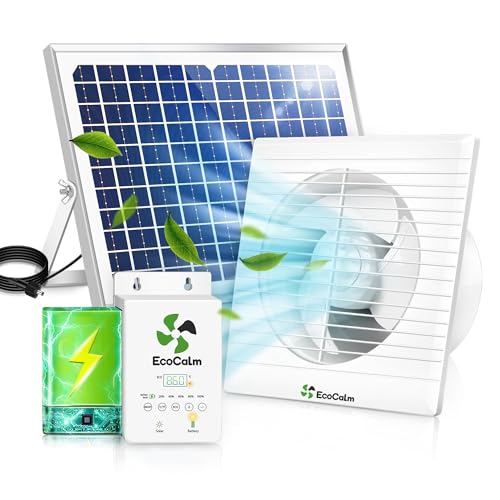
ecoCalm is the control-focused choice in this group, because the adjustable thermostat gives you a smarter way to manage airflow instead of running the fan constantly. The 8-inch size keeps the unit familiar enough for greenhouse or shed use, and the bifacial panel, which means it can gather light from both sides, is the detail that makes the solar side feel more purposeful. Anti-backflow support also matters in ventilation setups where you want air moving one direction, not drifting back the wrong way.
Compared with the Fanspex kit, this one feels more tuned to a single exhaust role than broad multi-fan coverage. That makes it a tidy fit for gardeners who want temperature-based operation without a lot of fuss. The trade-off is that control features add complexity, so a very simple setup may prefer a plainer fan.
Upsides
- Adjustable thermostat helps the fan respond to heat instead of running blindly.
- 8-inch size suits compact greenhouse and shed openings.
- Bifacial solar panel can make better use of available light.
- Anti-backflow design supports cleaner one-way airflow in ventilation layouts.
Softer Spots
- Thermostat-based control can feel more involved than a basic on-off fan.
- Like most ventilation gear, it benefits from dust and debris cleaning over time.
- It’s purpose-built, so it won’t replace a portable camping fan.
Core Details
The Right Fit
Greenhouse owners and shed ventilators who want temperature-responsive exhaust control will get the most from this pick.
Reach For A Different Pick When
WESTTREE B0D66VVTXY is a better match for travel use, because its lantern and foldable design suit portable setups more naturally.
Gliztech sits in a more furnished corner of the category, because it combines a ceiling-style fan, a light, a remote, and a large battery into one unit. That makes it appealing for patios, porches, RV spaces, and gazebos where you want cooling and lighting to feel integrated rather than separate. The 30W solar rating gives the package a more substantial backbone than the smaller portable picks.
Compared with the Remington attic unit, this one is about livable outdoor space rather than roof ventilation. The remote is a comfort feature you’ll notice right away in covered seating areas, though the install still asks for more commitment than a tabletop fan. In plain terms, it’s the most “room-like” option in the lineup.
Reasons To Buy
- Remote control adds convenience in covered outdoor seating areas.
- Fan plus light design reduces the need for separate fixtures.
- 20000mAh battery capacity gives the unit a strong backup story on paper.
- Useful for porches, canopies, and RV setups where overhead placement works well.
Worth Noting
- Ceiling-style mounting makes it less portable than the tent and table options.
- More functions usually mean more parts to keep clean and organized.
- It fits covered spaces better than fully exposed settings.
Feature Card
Whose Shelf It Belongs On
Owners of patios, porches, RVs, and covered outdoor rooms will get the most from this ceiling-style setup.
Swap It Out When
Drchop B0CSCN6NQ1 is the better move for travel kits, because it stays smaller and easier to carry.
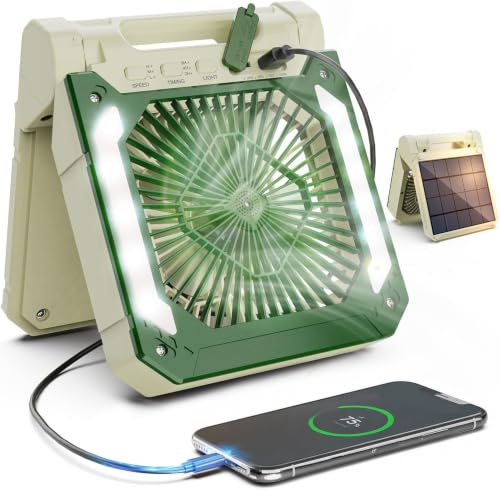
Innopower’s first listing in this roundup feels like the tidy, no-frills portable option. The three speeds, USB-C charging, timer, and LED lantern give you the basics in a package that sounds easy to live with on a tent table or a desk. For short trips, that simplicity can be a virtue rather than a compromise.
Compared with WESTTREE, this pick looks more straightforward and less layered, which suits you better when you want familiar controls and a smaller mental load. The downside is that very compact fans rarely feel as forceful as larger ventilation gear. Still, for solo camping or bedroom backup, the balance is sensible.
Bright Spots
- Three speed settings give you a little more control than a single-speed fan.
- USB-C charging is convenient for modern travel and gear kits.
- Timer function helps avoid leaving the fan running longer than needed.
- Lantern adds usefulness without making the unit feel oversized.
Minor Gripes
- Small portable fans are still limited by their compact footprint.
- Tabletop use is practical, but it won’t replace fixed ventilation in larger spaces.
- Extra electronics mean you’ll want to keep the unit dry and stored neatly between trips.
Feature Rundown
Built With In Mind
Campers, dorm users, and desk-side shoppers who want a small solar-assisted fan will appreciate this setup.
Another Choice May Suit
Gliztech B0DX759HP2 suits covered patio spaces better, because its ceiling-style design feels more at home overhead.
This second Innopower listing lands in the same compact family, but it reads as a straightforward backup fan rather than a feature-heavy travel tool. The three speeds and lantern still cover the basics, and the cordless battery-powered layout keeps it easy to move around a tent, office, or bedroom. That kind of simplicity helps when you want a small fan to stay out of the way.
Compared with the first Innopower entry, the positioning here feels more pared back, so it makes sense for someone who wants a useful portable fan without overthinking the setup. In a quiet room or an overnight kit, that can be enough. For heavier airflow needs, though, you’d move up to a larger pick.
What We Like
- Portable build makes it easy to shift between travel, office, and home use.
- Three speed levels keep the airflow from feeling overly rigid.
- Lantern function adds value without demanding much extra space.
Room For Improvement
- Basic portable fans are still a step behind larger units for airflow reach.
- Battery gear benefits from routine recharging and neat storage between outings.
At A Glance
Who Should Grab It
Anyone who wants a low-fuss portable fan for temporary cooling or light backup use will be comfortable here.
Where Another Pick Fits Better
ecoCalm B0CSN5L4PM is the stronger choice for greenhouse ventilation, since its thermostat and exhaust focus suit fixed spaces better.
This third Innopower entry keeps the formula familiar, which can be exactly what some setups need. You get a portable solar-assisted fan with three speeds and an LED lantern, so it covers short-term cooling without asking for a larger footprint. It’s the sort of piece that slips into a travel bin and stays there until needed.
Compared with the other two Innopower picks, it fills the same basic role, so your real decision comes down to which version’s listing details and package feel best in your hands. For casual use at camp or around the house, that consistency is useful. It won’t replace a purpose-built ventilation unit, but it doesn’t pretend to.
Standout Traits
- Compact portable layout suits quick packing and simple storage.
- Three speeds and lantern use cover the basics without clutter.
- Good backup option for occasional cooling around the house or campsite.
Honest Caveats
- It shares the same portable limitations as the other small Innopower picks.
- Fans in this class usually work best as personal cooling, not room cooling.
- Stored battery gear does best when you keep the charging routine regular.
Core Details
Perfect Match For
Casual campers and household users who want a simple portable solar fan will feel at home with this one.
Where A Sibling Pick Shines
Remington Solar Builder Series 40 Watt Solar Attic Fan is the better fit for fixed attic ventilation, because it serves a structural job instead of a personal one.
How To Choose The Right Solar Fans
Start With The Space You Need To Cool
Solar fans work very differently in a tent than they do in a greenhouse or attic. A portable 8-inch fan fits personal airflow and short trips, while fixed ventilation kits suit walls, roof spaces, and outbuildings that need steady movement. The right size keeps you from buying a fan that looks capable on paper but feels awkward in the actual space.
Mounting matters just as much as size. Ceiling-style and attic fans are built for structure-specific jobs, while table or foldable units are easier to move from one spot to another. That split is the first filter worth using.
Match Power Options To How You Use It
Solar input is only part of the story, because battery backup, USB charging, or an AC adapter changes how flexible the fan feels after sunset. A hybrid setup helps when you camp through the evening or need attic airflow at night. A simpler direct solar unit can still make sense, but it’s best for predictable daytime use.
The battery size or backup method affects practical ownership too. Larger reserves tend to suit longer off-grid stays, while smaller batteries keep the unit lighter and easier to carry. Pick the balance that fits your routine instead of chasing the most features.
Decide Whether Control Features Matter
Thermostats, timers, remotes, and multiple speed settings all add convenience, but they also add complexity. A greenhouse owner may value thermostat control because it keeps the fan tied to heat levels, while a camper may be happier with three speeds and a lantern. The trade-off is usually between hands-off operation and simpler day-to-day use.
Think about maintenance too. Fans placed in dusty coops or sheds need easier cleaning access, and portable fans need storage that protects moving parts and charging ports. The smartest pick is the one that matches both your airflow need and your willingness to keep it maintained.
A Quick Reality Check Before You Choose
Mistakes Worth Dodging
Shoppers often overfocus on the solar panel and forget the fan’s actual job. A compact travel fan and a coop exhaust kit solve different problems, even if both use solar power.
Another common miss is ignoring where the unit will live. Portable gear is easy to move, but fixed ventilation usually brings better results in a greenhouse, shed, or attic.
The Upgrade Payoff
Higher-tier solar fans usually cost more because they add larger batteries, stronger panels, remotes, thermostats, or specialized mounting hardware. Those parts matter most in places where airflow has to stay reliable after dark or across bigger spaces.
Spending more makes sense when you want a fan to handle a structure, not just a spot on a table. For light travel use, a simpler model often feels smarter and easier to live with.
Frequently Asked Questions
Can solar fans work without direct sunlight?
Many do, as long as they include a battery or another backup power path. Direct sunlight still helps charging, so a shaded setup usually needs more planning.
Are portable solar fans strong enough for a tent?
Yes, for personal cooling and air movement inside a small tent. They are not meant to cool a whole campsite the way larger ventilation gear handles a building.
What’s the difference between a camping fan and a ventilation fan?
Camping fans focus on portability, easy placement, and extra convenience features like lanterns or timers. Ventilation fans are built for fixed airflow in sheds, coops, attics, or greenhouses.
Do thermostats matter in greenhouse fans?
They do, because they help the fan respond to temperature instead of running on a fixed pattern. That makes them useful in spaces where heat changes through the day.
How much upkeep does a solar fan usually need?
Outdoor and dusty spaces need periodic cleaning, especially around vents, panels, and moving parts. Portable models also benefit from tidy storage and regular charging.
Closing Thoughts
The best solar fan for you depends on where it will live and how much control you want over airflow. Portable picks suit campsites, desks, and backup kits, while fixed models make more sense for greenhouses, coops, sheds, and attics. Once you match the fan to the space, the rest gets much easier. A good fit here feels practical from day one, not complicated.
