

Backpackers need power that earns its place in the pack. A good solar charger can keep a phone, headlamp, or power bank topped up on trail days, without turning your setup into dead weight.
This roundup focuses on compact panels and battery-bank hybrids that make sense for campsites, day hikes, and travel days between outlets. You’ll see where each pick fits, where it asks for a trade-off, and which style suits your route.
Quick Look At The Shortlist
BLAVOR 10W Portable Solar Charger

BLAVOR Solar Power Bank with Hand Crank and 4 Cables

BigBlue Ultra-Light Portable 25W Solar Panel Charger

SOLUPUP Solar Panels 30W Portable Foldable Solar Charger
FlexSolar 25W Portable Solar Panel Charger
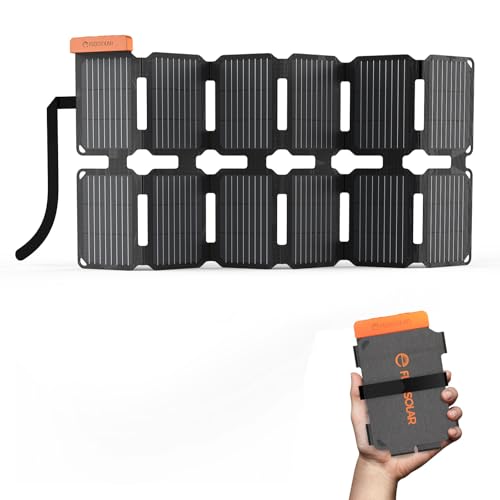
FlexSolar 36W Ultra-Portable & Lightweight Solar Panel Charger

GEYOTO 45W Portable Solar Panel Charger

BigBlue 28W High-Efficiency Solar Panel Charger

BLAVOR Solar Power Bank 10,000mAh
More Details On Our Top Picks
For short trips and lighter packs, this 10W foldable panel keeps the footprint small. The USB-C and USB-A outputs give you flexible cable matching, and the IPX4 water resistance adds some breathing room in damp trail weather.
The trade-off is simple: 10W suits modest charging needs more than full-device refreshes. You’ll get the most from it on sunny breaks, at camp, or paired with a power bank, and that makes it a sensible entry-level panel for hikers who want to keep things basic.
Strong Points
- Foldable design keeps packing simple.
- USB-C and USB-A ports cover common cables.
- IPX4 rating gives you some spill and splash tolerance.
- 10W output suits light trail top-ups.
Things To Consider
- Lower wattage means slower charging for larger batteries.
- Best results still depend on steady sun and good panel placement.
- Like most small panels, it makes more sense as a support tool than a solo power source.
Key Specs
Who It Suits Best
Backpackers who want a small, straightforward panel for light phone or accessory charging will get the most from it.
A Better Fit Elsewhere
BigBlue Ultra-Light Portable 25W Solar Panel Charger suits hikers who want a lighter carry with more charging headroom.
This pick leans toward self-contained backup power rather than pure solar panel simplicity. The 20,000mAh capacity, wireless charging, hand crank, four cables, and camping light make it easier to cover small electronics without packing extra accessories.
The catch is size and complexity, which matter on long climbs where every ounce gets noticed. For base camp use, car-camping sidetrips, or emergency kits, the mix of features makes sense, though a minimalist thru-hike setup may feel crowded by all those extras.
What We Like
- 20,000mAh capacity gives you more stored power for multiple top-ups.
- Built-in cables reduce cord clutter in your pack.
- Wireless charging adds convenience for compatible phones.
- Hand crank and camping light make it useful in backup-minded setups.
- Good for camps where you want one gadget to cover several jobs.
Small Caveats
- More functions usually mean more weight and a busier shape.
- Wireless charging can be less space-efficient than a wired connection.
- The hand crank feels like a backup feature, not a daily charging plan.
Feature Snapshot
Who Will Love This
Campers who want a backup-heavy power bank with built-in extras will get the most out of this layout.
Another Choice May Suit
BLAVOR 10,000mAh Solar Power Bank fits shorter trips and lighter kits where a smaller battery bank feels easier to carry.
Weight is the story here, and 0.84 pounds makes this panel easy to live with on a long route. The USB-A and USB-C ports help it slot into mixed-gear kits, while the IP68 rating points to strong dust and water protection for messy outdoor days.
Compared with BLAVOR’s smaller 10W panel, this one gives you more charging headroom without turning into a brick. Backpackers who count grams but still want a practical solar panel, especially for a power bank or phone at camp, will find the balance appealing.
Highlights
- 0.84-pound weight keeps it easy to pack.
- USB-A and USB-C outputs cover common devices.
- IP68 protection gives it a stronger weather and dust profile.
- 25W output suits more ambitious trail charging than tiny panels.
Areas To Watch
- Still depends on sunlight, so placement matters a lot.
- The lighter build can suit travel well, though rough handling still calls for care.
Technical Sheet
Right Fit For
Backpackers who want a lighter panel with real flexibility for everyday trail charging will appreciate this model.
Where A Sibling Pick Shines
FlexSolar 36W Ultra-Portable & Lightweight Solar Panel Charger suits you better when higher output matters more than trimming every ounce.
This 30W panel pushes harder than the smaller BLAVOR and BigBlue options, which matters on multi-day trips where phone, lamp, and power bank all want attention. The built-in smart chip helps identify attached devices and shapes charging to suit them, while the automatic reconnect feature brings the panel back online after shade clears.
That extra intelligence makes it a strong fit for camp setups that get intermittent sunlight from trees or shifting weather. The IPX5 water resistance is handy around damp ground and drizzle, though the foldable format still asks for a little care when packing.
Reasons To Buy
- 30W output gives you more headroom than the smaller panels here.
- USB-A and USB-C ports work well across mixed gear.
- Smart chip logic can help match output to the device.
- Automatic reconnection is useful when sunlight comes and goes.
- IPX5 rating adds confidence around splashes and damp camp spots.
Room For Improvement
- More output usually means a bit more panel to manage.
- Foldable seams and hinge points deserve normal packing care.
- Smart charging helps, though it still won’t change the limits of weak sun.
Quick Facts
Best Suited To
Backpackers who spend time in mixed light conditions and want a stronger solar panel will get the most out of this one.
Look Elsewhere When
BigBlue 28W High-Efficiency Solar Panel Charger fits better for hikers who want a simpler, steadier middle-ground panel.
This FlexSolar panel sits in a useful middle lane, with 25W output and built-in USB-A plus USB-C ports. For backpacking, that’s enough flexibility to keep a phone or power bank in rotation without pushing into the heavier, more complex territory of battery-bank hybrids.
It makes sense for hikers who want a straightforward panel for camp use and emergency top-ups. The very light build should be easier to carry than bulkier multi-output models, though the panel still depends on open sun and steady placement to earn its keep.
Positives
- 25W output gives you a practical step up from tiny panels.
- USB-A and USB-C ports keep device matching simple.
- Lightweight build suits trail packs with tight space limits.
- Works well as a support charger alongside a power bank.
Honest Caveats
- Open-sun performance still matters more than the spec sheet.
- Very light panels can need a careful setup to avoid shifting around camp.
Details At A Glance
The Right Fit
Backpackers who want a simple, light solar panel for phone and battery-bank top-offs will find this a sensible fit.
Swap It Out When
GEYOTO 45W Portable Solar Panel Charger is the better match for heavier power needs and more demanding gear lists.
This is the panel to look at once 25W starts feeling a little modest. The 36W output, USB-A, USB-C, and DC outputs give you more ways to connect gear, which helps on longer backpacking stretches or mixed camp setups where different devices share the same power source.
Compared with the 25W FlexSolar, this model is the more demanding option, but it pays back in usefulness when you carry more electronics. The trade-off is that a stronger panel usually asks for a bit more room and more attention to how you stage it in camp.
Upsides
- 36W output offers more charging room than midrange panels.
- USB-A, USB-C, and DC outputs widen compatibility.
- Good fit for multi-device camps or longer stretches away from outlets.
- Still stays in a portable shape for travel and hiking.
Points To Note
- More output can mean a bit more pack presence.
- DC gear adds usefulness, though it also adds another cable path to manage.
- Like any solar panel, placement and sun angle still matter a lot.
Core Details
Built With In Mind
Backpackers carrying more electronics or staying off-grid for longer stretches will appreciate the extra output here.
Another Choice May Suit
FlexSolar 25W Portable Solar Panel Charger fits lighter kits better, especially for hikers who want fewer cables and a simpler setup.
GEYOTO pushes into higher-output territory with 45W capacity, dual USB-C, USB-A, and a stated 25.4% efficiency figure. Efficiency, in plain terms, is how well a panel turns sunlight into usable power, so that number matters for trail days where every hour of sun counts.
The 1.7-pound foldable build is still portable, though it’s clearly less minimal than the smaller panels in this roundup. Backpackers carrying a larger phone setup, a power bank, or extra accessories will notice the benefit, while ultralight hikers may prefer a leaner panel like BigBlue’s 25W option.
Best Bits
- 45W output gives you the strongest charging ceiling in this group.
- Dual USB-C helps with modern cable setups.
- USB-A support keeps older gear in the mix.
- IP68 rating adds a strong outdoor protection profile.
- 25W PD support is helpful for compatible devices.
Minor Gripes
- Heavier than the lightest panels here.
- More output can be more than you need on very short trips.
- As with any foldable panel, storage and unfolding take a little routine care.
Feature Card
Whose Shelf It Belongs On
Backpackers who run power-hungry gear and care more about output than shaving every ounce will get the most from this panel.
Where Shoppers Go Wrong
FlexSolar 25W Portable Solar Panel Charger makes more sense for lighter carry goals, especially on shorter routes where simpler gear feels better.
BigBlue’s 28W panel sits right in the middle of the pack, and that middle position is useful. Dual USB-C and USB-A outputs make it easy to pair with newer phones, older accessories, or a power bank, which is exactly the kind of flexibility that helps on a mixed backpacking kit.
It doesn’t chase the highest wattage, and that restraint can be a good thing for hikers who want something dependable without overcomplicating the setup. Compared with the 45W GEYOTO, it asks less of your pack and your budget while still offering a sensible level of trail-friendly capability.
Best Bits
- 28W output lands in a practical middle zone.
- Dual USB-C and USB-A ports widen device support.
- Good balance for casual backpacking and camp charging.
- Less intimidating than larger, feature-heavy panels.
Areas To Watch
- Not the lightest or strongest option in the group.
- Performance still depends on real sun, not just the watt rating.
Quick Facts
Perfect Match For
Backpackers who want a sensible middle-ground solar panel with broad cable support will feel right at home here.
Skip It When
GEYOTO 45W Portable Solar Panel Charger makes more sense for larger power loads and more demanding off-grid plans.
This one feels like the grab-and-go option in the group. The 10,000mAh battery, wireless charging, USB-C port, dual flashlight, and 20W fast charging give you a compact tool for short trips, day hikes, or the kind of backpacking setup where one power bank covers the basics.
Compared with BLAVOR’s larger 20,000mAh bank, this version is easier to carry and simpler to live with. It won’t replace a larger solar panel for longer off-grid stretches, but it makes a clean sense for trips where backup power and a small footprint matter more than maximum capacity.
Highlights
- 10,000mAh capacity suits lighter power needs.
- Wireless charging adds easy daily convenience.
- USB-C and 20W fast charging make it more versatile.
- Dual flashlight design helps in camp or at night.
- Small size is easy to tuck into a pack pocket.
Worth Noting
- Battery banks still need recharging from a wall outlet or another source.
- Smaller capacity means fewer total device top-ups than the 20,000mAh BLAVOR model.
- Solar panel charging on a power bank is usually a support feature, not the fastest refill path.
Core Details
The Right Fit
Backpackers who want a compact power bank for short outings, emergency top-ups, or casual carry will appreciate this one.
Reach For A Different Pick When
BLAVOR Solar Power Bank with Hand Crank and 4 Cables suits longer base-camp stays or trips where you want more built-in backup tools.
How To Choose The Right Solar Chargers For Backpacking
Start With Your Real Power Load
The first question is simple: what do you actually need to charge on trail? A phone and headlamp can live with a small panel, while a phone, GPS, and power bank push you toward 25W or higher.
Capacity matters too, especially with power banks measured in mAh, which stands for milliamp-hours and tells you how much energy the battery stores. Bigger numbers help, but they also usually mean more weight, more space, and more time to refill.
Match Output To Your Route
Short weekend hikes reward compact gear, and a 10W to 28W panel can make sense there. Longer routes, cloudy shoulder seasons, and camp-heavy itineraries benefit from 30W to 45W panels because they offer more margin when sunlight is inconsistent.
Sun angle, shade, and panel placement matter just as much as wattage. A well-positioned 25W panel often behaves better than a stronger panel laid flat in bad light, so the route and campsite style should shape your pick.
Choose The Right Form Factor
Panels keep things lean, while power-bank hybrids give you stored energy plus solar backup. That trade-off matters on the trail, because direct solar charging is great in daylight, but a stored battery keeps your phone alive after sunset.
Foldable panels are easier to pack, yet they ask for a little setup each time you stop. Power banks are simpler to live with day to day, though they often recharge from solar more slowly and make less sense for long sunny breaks.
Don’t Overlook Durability And Ports
Look closely at port mix, water resistance, and weight. USB-C helps with modern phones and accessories, USB-A still covers plenty of gear, and ratings such as IPX4, IPX5, IP68, or IPX4 give you a clue about outdoor tolerance.
Materials and sealing affect how much care the gear needs in a pack. A lighter panel can be easier on your shoulders, but a more protective shell or higher resistance rating often adds a bit of bulk, so you’re always balancing comfort against toughness.
What To Weigh Before You Click Through
Mistakes Worth Dodging
A common slip is chasing wattage without thinking about the rest of the setup. A 45W panel helps more than a 10W panel, but only when you actually have the space, sun exposure, and charging cables to use it well.
Another easy miss is buying a bulky hybrid for a trip where a plain foldable panel would do. On short routes, extra features can feel like clutter instead of help.
The Upgrade Payoff
Higher-tier solar gear usually costs more because it brings stronger output, better sealing, more port options, or a smarter control chip. Those parts add convenience on longer trips, especially when you carry several devices or deal with shifting weather.
Spending up makes the most sense for multi-day backpacking, frequent off-grid travel, and camp setups that stay outdoors for hours at a time. For simple weekend use, a leaner panel often gives you a cleaner balance of size and function.
Frequently Asked Questions
Do Solar Chargers Work Well For Backpacking?
They work best as support gear, not magic power sources. Clear sun, sensible placement, and realistic expectations matter a lot.
How Much Wattage Makes Sense For Trail Use?
Light use often fits small panels around 10W to 25W. Heavier device loads usually benefit from 30W or more.
Is A Solar Panel Better Than A Solar Power Bank?
A panel makes more sense for charging in daylight, while a power bank stores energy for later. Many backpacking kits work best with both styles in different roles.
What Ports Matter Most On A Backpacking Charger?
USB-C is a strong starting point because many newer devices use it. USB-A still matters because plenty of accessories and older cables rely on it.
How Important Is Water Resistance?
It matters a lot on the trail, because weather and wet ground happen. Higher protection can make the gear easier to trust around camp.
Closing Thoughts
The right solar charger for backpacking depends on how much power you need, how much weight you want to carry, and how long you stay away from outlets. A compact 10W panel can be enough for short, careful trips, while 30W to 45W models suit longer routes and busier gear lists. Power banks add convenience, especially once daylight fades. Pick the shape that matches your trail rhythm, and the rest of the setup gets much easier.
