

Wall outlets used to be the most boring thing in a room, but I’ve watched them quietly become one of the most useful upgrades a home can get. After years of wrestling with lamp cords behind sofas and chargers hogging both receptacles, I started treating my wall outlets like the rest of my gear: something worth choosing carefully.
I’ve put together this roundup for anyone who wants to add real convenience to their home without rewiring the whole place. Whether you’re after a single remote-controlled switch or USB ports built right into the wall, these picks cover the spread I’d actually recommend to people with different needs and budgets.
A Fast Comparison Of The Options

LoraTap Mini Remote Control Outlet Plug Adapter (White)

Leviton Slim GFCI Outlet 15 Amp, 3-Pack (White)

Linkind Smart Light Stick Color and White Bulb, 850lm
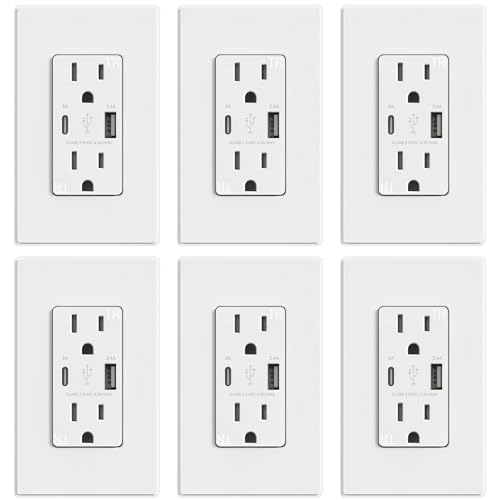
ELEGRP USB Outlets 15 Amp, Type A and Type C, 6-Pack

ELEGRP USB Wall Outlets 3-Port, Screwless Plate, 2-Pack

ELEGRP USB Outlets 20 Amp, Dual USB C, 2-Pack

DEWENWILS Remote Light Switch with Side Outlet, 15A

Linkind Matter Smart Plug for Apple Home and Alexa

Linkind Matter Smart Light Bulbs for Apple Home and Alexa

DEWENWILS Wireless Remote Control Outlet, Dual Sockets
More Details On Our Top Picks
If a lamp is wedged behind a heavy sofa and you keep unplugging it to reset something, a plug-in remote adapter is the kind of fix you forget you installed until you wonder how you lived without it. The LoraTap Mini slides into any grounded receptacle and pairs with a small handheld remote, so you can place the switch on a coffee table or mount it on a magnetic plate near the door. Rated at 1100W, it covers table lamps, fans, and most small appliances without strain.
Unlike the Leviton GFCI you’ll see later, this isn’t an in-wall install; it sits on top of whatever outlet you already have. That makes it a good match for renters or anyone who wants zero wiring. The remote runs on its own radio frequency, so there’s no app account, no hub, and no firmware updates to babysit.
Features That Help
- Long 656ft RF range reaches across most homes and even out to a detached garage, depending on walls and construction.
- Magnetic base on the remote lets you stick it to a fridge or any steel surface for one-touch access from the kitchen.
- No hub, no app, no account: pair it once and it works offline, which is friendly for anyone avoiding cloud-tied gear.
- Compact body keeps the second receptacle on a duplex outlet free, so you don’t sacrifice a plug to gain remote control.
Things To Consider
- Single channel: it controls one outlet at a time, so multi-lamp setups need a unit per fixture.
- RF remotes can occasionally respond to other nearby devices on similar frequencies in apartment buildings, a widely reported quirk worth knowing.
Who It Suits Best
Renters, dorm dwellers, and anyone who wants a single switched lamp without touching a wire.
Consider Something Else When
Holiday lights and string setups run better on the DEWENWILS dual-socket remote later in the roundup, since it handles two channels independently.
A GFCI outlet (Ground Fault Circuit Interrupter) is the kind of upgrade you notice most when you don’t have one. It shuts off power in milliseconds if it senses current going somewhere it shouldn’t, like through water or a person. That’s exactly why building codes require them in kitchens, bathrooms, laundry rooms, and outdoor receptacles, and why I’d prioritize them there over standard replacements.
Where the Leviton Slim stands apart from the LoraTap we just looked at is depth: it sits noticeably shallower in the box, which makes it easier to fit in tight or shallow boxes without forcing the wall plate to bow. This 3-pack covers a kitchen, a bathroom, and a laundry room at once, which is the trio most homes need.
Where It Helps
- Self-test feature runs an automatic internal check to confirm ground-fault response, so you don’t have to remember the monthly test-button ritual.
- Slim profile simplifies installation in shallow boxes where thicker GFCIs barely fit, a common headache in older homes.
- Tamper-resistant shutters block foreign objects, which matters in homes with curious kids.
- Three outlets in one pack means a single trip covers the high-moisture rooms most people overlook.
Honest Caveats
- No smart features: this is a safety receptacle, not a connected device, so it won’t pair with an app or voice assistant.
- Installation requires shutting off the breaker and working with line/load wiring, which is not a beginner swap in every home.
Made For
Anyone refreshing code-required wet-area outlets or replacing older GFCIs that no longer self-test properly.
Look Elsewhere When
Voice control and scheduling matter more to you than safety compliance, in which case the Linkind Matter Smart Plug is the smarter fit.
A bulb sounds like a strange pick in a wall-outlet roundup, but here’s the thing: a smart bulb only works when the outlet it’s plugged into (or wired into) stays on, so the lighting on your walls often decides whether your smart home actually feels smart. The Linkind Smart Light Stick runs at 850 lumens, which puts it in the same usable range as a 60W incandescent for reading lamps and bedroom fixtures.
Unlike the Leviton we just covered, this is a tunable bulb that shifts between full color and clean white. It fits a standard E26 socket (the everyday screw base found in most lamps and ceiling fixtures), and at roughly 57mm wide by 131mm tall, it slips into enclosed shades and stick-style fixtures where bulkier bulbs tend to stick out.
The Practical Payoff
- Tunable color and white covers everything from a warm bedside glow to a focused daylight reading scene.
- App and voice control let you adjust brightness from the couch or set a sunrise routine that fades up gently.
- 850-lumen output is enough for most table and desk lamps without feeling dim.
- Works with a standard on/off wall switch, so guests can still turn the light on without needing your phone.
Points To Note
- 2.4GHz Wi-Fi only, not 5GHz, so homes with a 5GHz-only mesh may need a guest network enabled.
- Not compatible with traditional dimmer switches, which can cause flickering or buzzing when paired with old wall hardware.
Best Suited To
Apartments and bedrooms where renters want app control without swapping the actual wall outlet.
Skip It When
You want the bulb and the wall control working together across ecosystems; the Linkind Matter Smart Bulb later in the list plays nicer with Apple Home, Alexa, and Google at once.
The honest reason I keep USB outlets in this roundup is simple: brick chargers eat up both receptacles, and the cleaner the nightstand or kitchen counter looks, the better the room works. The ELEGRP 15 Amp duplex gives you two standard plugs plus a Type A and a Type C USB port (the rectangular USB-C and the older flat USB-A) in a single gang, so a phone, a watch charger, and a lamp can share one outlet without a power strip.
Where this differs from the Leviton GFCI we looked at earlier is the focus: the ELEGRP is built for whole-home upgrades, not wet-area safety. The 6-pack format assumes you’re walking through the house replacing outlets one room at a time, which is how I usually tackle a project like this.
What Pays Off
- Total 21W USB output across both ports means two phones can fast-charge at the same time without slowing each other down.
- Type A and Type C ports future-proof the outlet, since most phones, earbuds, and tablets are moving to USB-C.
- Wall plate included removes the small annoyance of matching a separate trim plate after install.
- Tamper-resistant shutters block inserted objects, a quiet plus in any home with kids.
Practical Considerations
- 15 Amp rating is fine for lamps and small appliances, but kitchens with microwaves or kettles on the same circuit may need the 20 Amp ELEGRP variant instead.
- Six outlets means six boxes to open, which turns a weekend swap into a longer project without a voltage tester on hand.
Who Should Grab It
Homeowners replacing a batch of outlets during a remodel and anyone tired of hunting for a free brick charger.
Where Another Pick Suits Better
Higher-draw rooms like kitchens and garages are a better match for the ELEGRP 20 Amp dual USB-C version later in this list.
An outlet doesn’t have to shout to look good, and this matte-finish screwless design is the one I’d reach for when the outlet sits at eye level in a living room or entryway. The plate snaps on without visible screws, so the wall reads as one continuous surface instead of a grid of fasteners. That alone changes how a freshly painted wall photographs, in my experience.
Unlike the LoraTap we kicked off with, this one is hardwired and looks like a built-in part of the wall. It also steps up to 20 Amp, which gives it more headroom for higher-draw appliances like window air conditioners or workshop gear on a shared circuit.
A Few Strong Suits
- Three USB ports (two Type A, one Type C) handle a phone, a watch, and earbuds from one outlet without adapters.
- Screwless matte wall plate blends with most paint finishes and feels premium in person.
- 20 Amp rating supports heavier loads, useful in older kitchens where 15 Amp circuits tend to trip.
Trade-Offs
- No fast-charging protocols like Power Delivery (PD), which tops up modern laptops and tablets at full speed.
- Two-pack size suits a quick refresh, but a whole-home project would burn through multiple packs fast.
Perfect Match For
Design-minded homeowners upgrading visible outlets in living rooms, hallways, and home offices.
Not Your Match When
You want the cleanest screwless look but need only standard 15 Amp wiring; the ELEGRP 6-pack we just covered handles basic loads more economically.
For anyone whose house predates USB-C, this 20 Amp duplex with dual Type C ports is a useful jump forward. It carries two USB-C slots alongside one legacy Type A, which covers most modern phones, tablets, and earbuds without adapters. The 20 Amp spec also means it’s spec-matched for kitchens, garages, and other spots with heavier corded appliances.
Compared to the screwless ELEGRP we just looked at, this one ships with a traditional wall plate, which is easier to remove if you ever need to swap the outlet or repaint. It’s a small thing, but renters and serial remodelers tend to care about that detail.
Strong Points
- Dual USB-C ports at 5V/3A each handle two modern devices at full advertised speed at the same time.
- 20 Amp rating handles toasters, microwaves, and air compressors on shared circuits without nuisance tripping.
- Tamper-resistant shutters add child safety without slowing adult use.
- Standard screw-mounted plate is easier to remove for painting or future swaps.
Less Ideal Details
- No fast-charge protocols, so laptops needing 60W+ Power Delivery will still require their own brick.
- Only one legacy USB-A port, which feels tight in homes with older cables still in rotation.
The Right Fit
Garages, kitchens, and laundry rooms where you want USB-C ready and the appliance load is on the higher side.
Reach For A Different Pick When
You mostly charge low-draw devices and prefer a clean screwless finish; the ELEGRP 3-port screwless outlet covers that crowd well.
Anyone who’s shoved a sofa against the wall knows the misery of an unreachable lamp switch. The DEWENWILS Remote Light Switch is the kind of small tool that quietly solves that problem: plug the lamp into the side outlet, stick the wireless remote anywhere, and the lamp becomes switchable from across the room. The included mounting bracket lets it live on a wall like a normal switch.
Where this differs from the LoraTap we covered first is load capacity. Rated at 15A/1875W, the DEWENWILS handles bigger plug-in loads like floor heaters or window AC units, which a 10A remote adapter is not built for. ETL listing (a North American safety certification similar to UL) adds another layer of confidence for higher-wattage gear.
What Works In Its Favor
- Side-outlet design keeps the front socket free for everyday use.
- Up to 100ft RF range works through most interior walls, useful in ranch layouts or basements.
- Detachable remote doubles as a wall-mounted switch or handheld clicker, helpful for anyone with limited mobility.
Soft Spots
- Single-channel control: only one fixture toggles per remote, so multiple lamps need multiple units.
- Heavier remote body feels clunkier in a coat pocket than the slim LoraTap keychain-style remote.
Built With In Mind
Older homes, basement rec rooms, and anyone running a floor lamp behind a deep-cushioned sectional.
Swap It Out When
Holiday string lights or ceiling fan control is the goal; the DEWENWILS dual-socket outlet later in this list handles two channels independently.
If you’ve ever tapped an icon in one app and watched nothing happen in another, you already understand why Matter (a new smart-home standard that lets devices from different brands talk to each other natively) matters. The Linkind Matter Smart Plug uses that standard to bridge Apple Home, Alexa, Google Home, and SmartThings in one device. Plug it in, scan the QR code with your preferred app, and the outlet shows up everywhere your household actually lives.
Unlike the LoraTap and DEWENWILS remotes we looked at, which run on radio frequencies that need no internet, this is a Wi-Fi device that needs a Matter-certified hub (a small dedicated bridge such as a HomePod, Echo, or Nest that keeps the network talking smoothly). That’s the trade-off for app control: more features, more dependency on your network and hub.
Key Advantages
- Single setup works across Apple Home, Alexa, Google Home, and SmartThings, so one purchase covers multiple ecosystems.
- Schedule and timer routines run locally on supported Matter hubs, which keeps automations responsive even if the internet drops briefly.
- Compact body leaves the second outlet free on a standard duplex, unlike some smart plugs that block neighbors.
Worth Bearing In Mind
- A Matter hub is required for Apple Home users, which adds a small up-front cost if the home doesn’t already have one.
- Wi-Fi dependency means a router outage also takes the smart outlet offline, a common limitation to know about.
Who Will Love This
Mixed-ecosystem households where some rooms run Siri and others rely on Alexa or Google Assistant.
A Better Fit Elsewhere
If you want simple, app-free control for a single lamp with no hub setup, the LoraTap Mini remote adapter earlier in the roundup is the cleaner pick.
Like the Linkind Smart Light Stick we saw earlier, this is technically a bulb rather than an outlet, but it earns its place here because it runs on the Matter standard. That means a single bulb can show up in Apple Home, Alexa, Google Home, and SmartThings at the same time without needing a separate app per ecosystem. For renters or homeowners who change voice assistants every few years, that’s a useful form of insurance.
Where this differs from the plug-in Linkind smart plug above is the form factor: it lives in the socket instead of on the wall, so it’s a fit for ceiling fixtures and lamps where reaching the switch is awkward. Setup follows the same Matter QR code flow, and the bulb works with standard 120V household wiring found across North American homes.
Standout Benefits
- Matter certification means a single QR-code setup gets the bulb talking to every major smart-home platform at once.
- 120V compatibility covers standard North American fixtures without rewiring or adapter bases.
- Multi-platform control lets iPhone households and Android households share one bulb without jealousy.
Factors To Consider
- A Matter-certified hub is required for Apple Home users, so households without a HomePod or Apple TV will need to budget for one.
- Like the earlier Linkind bulb, it relies on 2.4GHz Wi-Fi, which may require enabling a guest network on 5GHz-only mesh systems.
Whose Shelf It Belongs On
Anyone starting (or expanding) a cross-platform smart home who wants future-proof bulbs that won’t trap them in one app.
Where A Sibling Pick Shines
For pure plug-in appliance control without the Matter hub dependency, the LoraTap Mini remote adapter we kicked off with is the simpler go-to.
Holiday lights are the perennial reason most people discover wireless outlets exist, and this dual-socket model is built for exactly that. Two outlets run independently from one remote, so the indoor tree and the outdoor wreath can each have their own on/off button without juggling two remotes on the kitchen counter. Variable learning codes (rolling signal codes that change with each pairing) keep multiple units in the same house from accidentally cross-firing.
Compared to the LoraTap single-channel remote we covered at the start, this doubles the channels without doubling the wall footprint. The keychain-style remote clips to a carabiner or a keyring, which keeps it from vanishing into the couch cushions like a flat handheld remote tends to.
Useful Touches
- Two independently controlled sockets let one remote handle two loads, useful for grouped lamps or front-and-back outdoor displays.
- Up to 100ft RF range works through walls and doors in most homes, in most suburban layouts.
- Keychain remote stays clipped to a bag or hook so it doesn’t disappear when you actually need it.
Points To Keep In Mind
- Plugs into the wall and occupies the full receptacle, so the second socket on the wall is sacrificed.
- No app, no scheduling, so anything beyond simple on/off needs another tool in the kit.
Right Fit For
Seasonal decorators and renters who want grouped remote control without touching the home wiring.
Another Choice May Suit
For everyday lamp control with a longer-lasting magnet-mounted remote that doesn’t tie up a keychain, the LoraTap Mini earlier in this list is a cleaner everyday pick.
What To Weigh Before Choosing Smart Wall Outlets
Match The Outlet To The Room’s Job
A living-room lamp needs different muscle than a kitchen counter. Before anything else, identify the load on each outlet: under 10A covers lamps, fans, and small electronics, while kitchen appliances and window AC units push toward 15A or 20A. Matching the rating to the room prevents nuisance breaker trips and gives USB ports room to deliver full speed. For wet areas like bathrooms and laundry rooms, a GFCI (Ground Fault Circuit Interrupter) is required by code; for everything else, regular or USB-equipped outlets work fine.
Decide Between Wired Replacements And Plug-In Adapters
Plug-in adapters like the LoraTap or DEWENWILS are the right tool when renting, when you can’t open the walls, or when you just want one or two fixtures under remote control. Hardwired replacements like the ELEGRP USB outlets look cleaner and add USB ports the wall never had, but they do require shutting off breakers and matching wire gauges. Picking the wrong style is the most common regret I see in retrofits.
Think About Smart-Home Ecosystem Compatibility
A smart plug that only works with one app quickly becomes annoying when a roommate prefers a different assistant. Matter-certified devices, like the Linkind plug and bulb covered here, sidestep that problem by working across Apple Home, Alexa, Google Home, and SmartThings with a single setup. The trade-off is hub dependency for some ecosystems; Wi-Fi-only remotes like the LoraTap avoid hubs entirely but offer no app control.
Plan For Future Charging Needs
USB-C is now the default on most new phones, tablets, and earbuds, so an outlet with at least one Type C port keeps the nightstand tidy for years. Look at the total wattage per port (5V/3A handles phones and tablets well), and decide whether fast-charge protocols like Power Delivery matter for your laptop or gaming handheld. If they do, plan to keep a brick charger handy; most built-in USB ports don’t negotiate the higher voltages laptops want.
Key Considerations Across These Picks
Mistakes Worth Dodging
The most common slip is choosing a 15 Amp outlet for a microwave or window AC circuit and wondering why the breaker trips under load. Another is buying a smart plug without checking the hub requirement: a Matter device needs a hub for Apple Home, but no hub for Alexa in many setups. Finally, don’t assume all USB ports are equal. A 1A legacy port will charge a phone slowly, while a 3A USB-C port handles tablets and modern phones at full speed. Match the spec to the device, not the other way around.
When Paying More Pays Off
Higher-tier picks in this category earn their cost in three ways: better safety certifications (GFCI self-testing or ETL listing), heavier amp ratings that future-proof for new appliances, and cross-platform smart-home support that keeps you out of app lock-in. For a single lamp, the extra spend is hard to justify; for a whole-home remodel or a household juggling multiple voice assistants, the upgrade pays for itself in fewer future swaps and cleaner installations.
Frequently Asked Questions
Do smart wall outlets work without internet?
Wi-Fi-based smart outlets need a router connection for remote access, though many still respond to local schedules if your hub keeps them on a local network. RF-based remotes like the LoraTap and DEWENWILS run entirely offline and need no internet at all.
What’s the difference between GFCI and regular outlets?
A GFCI outlet monitors the balance of current going in and out. If even a small amount leaks (through water or a person), it cuts power in milliseconds. Regular outlets do not, which is why codes require GFCI in bathrooms, kitchens, laundry, and outdoor areas.
Can I install a USB outlet myself?
Replacing a standard outlet with a USB-equipped one is doable for anyone familiar with shutting off breakers and matching line, load, and ground wires. Working with GFCIs adds line/load discipline that beginners sometimes mix up, so calling an electrician is reasonable for older homes with unfamiliar wiring.
What is Matter and why does it matter?
Matter is a smart-home standard that lets devices from different brands work together natively, so a single plug or bulb can appear in Apple Home, Alexa, Google Home, and SmartThings without separate apps. It reduces lock-in and simplifies multi-ecosystem households.
Will a 15 Amp outlet work for a kitchen?
For most small appliances and lamps, yes. Heavy loads like microwaves, toaster ovens, and window AC units often share 20 Amp circuits, so matching the outlet rating to the circuit keeps things from tripping under normal use.
Closing Thoughts
Smart wall outlets aren’t exciting in the way a new TV is, but they change how a room feels day to day, and that’s what makes them worth choosing carefully. Pick the style that fits your room and your comfort with wiring, then lean into one upgrade at a time. The best smart home is the one you actually use, not the one with the longest spec sheet.
