

Rigid solar panels suit you when you want a fixed array on a roof, shed, RV top, or cabin frame, not a fold-up kit that gets packed away after each use. The right panel choice depends on wattage, cell layout, shading behavior, and how much mounting room you actually have. Pick well, and your setup feels steadier, easier to plan, and less fussy over time.
Quick Shortlist For Rigid Solar Panels
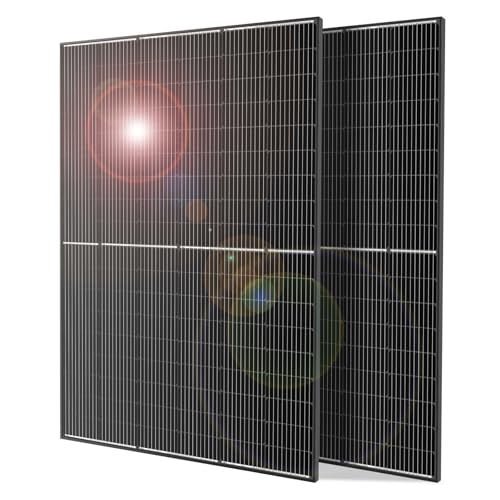
DOKIO 800W Solar Panel Set, Two 400W 31V Panels

JJN Bifacial 425 Watt Solar Panel, N-Type UL 61730 16BB

Renogy ShadowFlux Solar Panel 400 Watt, N-Type 25%

Renogy ShadowFlux Solar Panels, N-Type Anti-Shading Panels

N-Type 16BB 400W Bifacial Solar Panel, 2Pcs 200 Watt

Renogy Solar Panels 200 Watt N-Type, 200W Solar Panel

Renogy 100W Solar Panel N-Type, 12V 100 Watt Solar Panel

Renogy Solar Panels 2PCS 320 Watt Solar Panel 18BB N-Type

100W Solar Panel, 18BB N-Type 2Pcs 12V/24V 100 Watt Solar Panels
Two 400W panels make this DOKIO set feel built for a fixed 24V plan, not a tiny weekend add-on. The 9.84 ft cables help the layout breathe a little, which matters in sheds, yards, and other spaces where the controller or battery bank sits a bit away from the mounting point.
The aluminum frame points toward a sturdier install, and the pre-drilled holes should make roof or rack mounting less awkward. The trade-off is simple: this is a big, purpose-built set, so you want enough room and a matching system before you start planning around it.
Strong Points
- Two-panel 800W setup suits larger fixed installs.
- Long cable runs help with practical placement.
- Pre-drilled mounting points simplify the hardware side.
- Aluminum framing gives the set a sturdier feel for sheds or outbuildings.
- Well matched to 24V off-grid planning, which keeps system design straightforward.
Points To Note
- Space needs are higher than with the smaller 100W and 200W options in this list.
- The set makes more sense in a fixed build than in a portable setup.
- You’ll want to think through mounting height and cable routing before installation day.
Feature Snapshot
Who It Suits Best
You’ll get the most from this set in a fixed off-grid build that needs serious panel area and straightforward 24V planning.
A Better Fit Elsewhere
Renogy 100W Solar Panel N-Type, 12V 100 Watt Solar Panel suits smaller starter systems, especially when roof space and wiring complexity matter more than raw output.
The JJN panel leans into a more serious single-panel approach, with a 425W rating and a bifacial design, meaning it can collect light from both sides of the module. That matters on bright rooftops, reflective farm areas, or RV layouts where the back side can catch useful stray light.
Its N-type, 16BB cell layout gives you a modern build profile, and the listed fit for 12V, 24V, and 48V systems makes it easier to slot into different plans. The honest trade-off is that this kind of panel rewards a cleaner mounting environment, so cramped or heavily shaded spots won’t let it show its best side.
What We Like
- Bifacial construction offers more flexible light capture.
- 425W output suits larger power needs without stacking multiple small panels.
- Works across 12V, 24V, and 48V system planning.
- N-type cells and 16BB layout point to a more current panel design.
- Good match for rooftops, farms, and off-grid spaces with open exposure.
Small Caveats
- Bifacial performance depends heavily on where and how the panel is mounted.
- Shaded installs can blunt the value of the higher output rating.
- Best used where you can give the panel open, stable placement.
Core Details
Who Will Love This
You’ll appreciate this panel most in a roomy rooftop, farm, or off-grid setup where higher output and broader system compatibility matter.
Where A Sibling Pick Shines
Renogy ShadowFlux Solar Panels, N-Type Anti-Shading Panels make more sense for patchy light or tree cover, especially when your site gets uneven sun through the day.
This Renogy pair makes sense for places where shade is part of daily life, not a rare exception. Trees, roof edges, dormers, leaves, and even snow can break up incoming light, and the ShadowFlux design is built around handling that mess more calmly than a plain panel usually does.
Because the kit is split into two 200W panels, you get more placement flexibility on RV roofs and marine decks. That setup can feel like a better fit than the larger single-piece options in this roundup, although you still need enough clean mounting area to keep the array productive.
Highlights
- Shade-focused design helps in messy light conditions.
- Two 200W panels give you installation flexibility.
- Useful for RV, marine, rooftop, and home placements.
- N-type, 25% efficiency rating points to a modern high-output build.
Areas To Watch
- Very heavy shade still cuts into any solar panel’s output.
- Two-panel planning takes a little more routing thought than a single module.
- Open mounting space still matters for the cleanest results.
Details At A Glance
Best Suited To
You’ll get the most value from this pair in a setup that sees partial shade across the day and needs flexible placement.
A Better Fit Elsewhere
JJN Bifacial 425 Watt Solar Panel, N-Type UL 61730 16BB suits open, bright spaces better, especially for a larger roof or farm layout that wants higher single-panel output.
This ShadowFlux version keeps the anti-shading focus but packages it in a more compact 200W panel for 12V or 24V systems. That makes it useful for smaller builds where you care about usable output more than raw panel size, especially on trailers, compact RV roofs, or modest cabin arrays.
Compared with the 400W and 425W choices above, this one asks for less space and less commitment, which can be a relief on crowded mounting surfaces. The trade-off is obvious: you’re stepping down in total output, so it works best as part of a carefully planned system rather than a big stand-alone power source.
Upsides
- Anti-shading design helps in patchy light.
- 200W size fits tighter mounts more easily.
- Works in both 12V and 24V plans.
- Good match for compact roof space on RVs or small cabins.
Honest Caveats
- Lower total output means you may need more panels for a larger battery bank.
- Smaller size can mean more pieces to wire in a big system.
Quick Facts
Made For
You’ll like this panel most in a smaller off-grid build where roof space is limited and shade handling matters.
Swap It Out When
Renogy Solar Panels 2PCS 320 Watt Solar Panel 18BB N-Type fits larger power plans better, especially when your roof or rack has room for a bigger pair.
Callsun takes a modular route here, giving you two 200W bifacial panels rather than a single larger slab. That layout can be handy on RV vans, marine decks, or rooftop builds where you need to split coverage around vents, rails, or other hardware.
The bifacial idea is the same useful one seen in the JJN panel above, but this set leans harder into install flexibility. The catch is that more flexible layouts still demand careful mounting and wiring, so it suits hands-on setups better than casual plug-and-go use.
Reasons To Buy
- Bifacial format gives you more placement options.
- Two 200W modules are easier to split around roof obstacles.
- 12V and 24V compatibility broadens system fit.
- Dual-module layout works well in mixed-surface builds.
Minor Gripes
- More components can mean more planning during installation.
- Splitting the array only helps when your mounting area supports it.
- Best suited to a tidy, deliberate layout rather than a rushed install.
Technical Sheet
Whose Shelf It Belongs On
You’ll appreciate this set most in a custom RV, van, or rooftop layout that needs modular panel placement.
Look Elsewhere When
DOKIO 800W Solar Panel Set, Two 400W 31V Panels suits larger fixed systems better, especially when your priority is fewer panels and a stronger total output target.
This 200W Renogy panel sits in a useful middle zone, because it’s small enough to stay manageable but large enough to matter in a working system. That balance helps on van roofs, cabin roofs, and home backup layouts where you want a single panel that doesn’t feel undersized.
Compared with the anti-shading ShadowFlux options, this one looks more straightforward and less specialized. That simplicity can be a plus in clean, open installations, though it does mean you’re choosing general-purpose convenience over the more focused shade-handling angle.
Plus Points
- 200W format gives you a practical mid-size building block.
- Works with 12V and 24V systems.
- N-type, 16BB design points to a modern panel structure.
- Useful for vans, cabins, marine use, and home roofs.
Room For Improvement
- It does not bring the shade-specific focus of the ShadowFlux picks.
- One panel may not be enough for larger daily loads.
- Planning ahead for expansion still matters in real use.
Feature Rundown
The Right Fit
You’ll get the most value from this panel in a modest system that needs a practical mid-size unit without extra complexity.
Another Choice May Suit
Renogy Solar Panels 2PCS 320 Watt Solar Panel 18BB N-Type fits larger arrays more naturally, especially for home or RV owners who want more output from the start.
For a starter build or a small add-on, this 100W Renogy panel keeps things simple. It suits RV roofs, trailers, boats, and small farm or cabin layouts where you want a manageable panel that won’t swallow the available mounting space.
The 16BB N-type cell layout and the listed 25% efficiency figure tell you this is aimed at current-generation solar hardware, not an older bargain-bin design. The trade-off is plain enough, 100W is a modest step, so it works best for light loads, battery maintenance, or gradual system expansion.
Best Bits
- Small size makes planning and mounting easier.
- Good for RV, boat, trailer, and camper use.
- Works well as a first panel or a helper panel.
- N-type, 16BB construction suggests a modern cell layout.
Points To Note
- 100W is modest for larger daily energy needs.
- You may need multiple panels as your setup grows.
- Best viewed as an entry point rather than the whole system for heavy use.
Core Details
Built With In Mind
You’ll like this panel most as a first step into fixed solar or as a compact support panel on a small vehicle or roof.
Reach For A Different Pick When
Renogy Solar Panels 200 Watt N-Type, 200W Solar Panel is the better fit for a mid-size system that needs more output without jumping straight to the larger arrays.
This two-panel Renogy set is the heftier option in the lineup for people who want a stronger roof or ground array without jumping to a custom commercial-style build. Because each panel is rated at 320W, the pair gives you a sizable 640W total, which can make a meaningful difference in homes, boats, and larger RV systems.
The 18BB N-type design points to a denser cell layout, and the listing’s on-grid or off-grid flexibility gives you room to plan for different setups. The main trade-off is size and weight management, so you’ll want enough surface area and solid mounting hardware before you commit.
Bright Spots
- 640W combined output suits larger energy plans.
- Two 320W panels can cover more territory with fewer modules.
- Works for home, rooftop, RV, and boat setups.
- 18BB N-type construction points to a more advanced panel layout.
- Fits both on-grid and off-grid planning, which broadens your options.
Trade Offs
- Large paired panels need confident mounting space.
- More output also means more thought for wiring and placement.
- Better suited to serious installations than to a casual single-panel add-on.
Feature Card
Who Should Grab It
You’ll get the most from this pair in a larger setup where output matters more than keeping the panel count low.
Where Shoppers Go Wrong
Renogy 100W Solar Panel N-Type, 12V 100 Watt Solar Panel is the safer choice for tight spaces, because a full-size dual-320W pair can be more panel than a small roof can comfortably handle.
Rvpozwer keeps this set in the small-system lane, which is useful for anyone building around modest loads or adding solar in stages. Two 100W panels give you more placement flexibility than a single panel, and that can help on RV roofs, boats, trailers, or a small home setup.
The 18BB N-type layout and 25% efficiency claim place it in the same modern design conversation as the other N-type panels here. The trade-off is straightforward: you gain modularity, not huge output, so this is a better fit for gradual builds than for heavy daily demand.
Upsides
- Two-panel format helps with layout flexibility.
- Works for 12V and 24V systems.
- Useful for RV, boat, trailer, farm, and home projects.
- Good entry point for a compact off-grid setup.
Minor Gripes
- 100W panels are small for larger energy needs.
- Growing systems may need extra panels sooner than you expect.
- Best for light-duty or staged expansion plans.
Core Details
Built With In Mind
You’ll appreciate this pair most in a small solar project where you want flexibility more than raw panel size.
Where Another Pick Fits Better
JJN Bifacial 425 Watt Solar Panel, N-Type UL 61730 16BB is the stronger fit for larger open roofs or farm spaces that can make use of higher single-panel output.
How To Choose The Right Rigid Solar Panels
Match Output To Your Actual Load
Start with the gear you want to run, then work backward to panel size. A 100W panel suits light tasks and small add-ons, a 200W panel fits mid-size systems more comfortably, and 320W to 425W panels make sense for larger banks or faster charging goals.
That math matters more than marketing language. A panel that looks impressive on paper can still leave you short on useful power, while a smaller, well-matched panel often feels easier to live with day to day.
Think About Mounting Space And Layout
Rigid panels reward stable mounting, so roof shape, rack width, vent placement, and cable routing all matter. Two smaller panels can be easier to place around obstacles than one oversized module, especially on RVs, vans, and cabins with awkward roof hardware.
Maintenance stays simpler too when you can reach the glass and frame without drama. You still need room for cleaning and inspection, since dirt, pollen, and leaf buildup can steal usable light faster than people expect.
Choose The Cell Style For Your Light Conditions
N-type panels, 16BB and 18BB layouts, and bifacial designs all point toward different strengths. N-type cells are aimed at efficient conversion, while bifacial panels can make use of reflected light from the back side in the right setup.
For bright, open areas, a standard high-output panel can be enough. For shaded rooftops or sites with uneven exposure, the shade-focused models in this list earn their place because they handle messy light with less fuss.
Plan For System Growth
Starter systems often grow, so it helps to leave breathing room in your charge controller, wiring, and mounting plan. A compact 100W panel can be a smart first step, but a 400W or 425W choice may save you from rebuilding too soon.
The cleanest setup is the one that fits the next year of use, not just the first week. That’s where the larger Renogy and DOKIO options start to look sensible for long-haul setups, while the smaller panels stay attractive for compact builds.
Things Worth Knowing First
Mistakes Worth Dodging
Many people focus only on wattage and forget roof size, shade, and panel count. That leads to cramped installs, awkward wiring, or a system that never quite matches the space around it.
Another common slip-up is pairing a large panel with a small setup that cannot really use the output well. Match the panel to the battery bank and controller plan, not just the number printed on the listing.
When Paying More Pays Off
Higher-tier panels usually cost more because of newer cell designs, tighter efficiency claims, bifacial construction, or better shading behavior. Those details matter most on rooftops with limited space, on RVs where every inch counts, or in off-grid homes that need more power from fewer modules.
The upgrade makes sense when installation space is tight and output matters a lot. For a casual backup or a small starter build, a simpler 100W or 200W panel can be the calmer choice.
Frequently Asked Questions
What makes rigid solar panels different from portable panels?
Rigid panels are meant for fixed mounting on roofs, racks, sheds, or ground frames. Portable panels are better for short-term use or setups that get packed away often.
Which size works best for a small RV setup?
A 100W or 200W panel is often easier to place on an RV roof. Larger panels can work too, but they ask for more room and cleaner layout planning.
Do bifacial panels need special placement?
Bifacial panels perform best where the back side can catch reflected light. A bright, open mount gives them more room to justify the design.
Is shade always a problem?
Shade hurts output on any solar panel, but some designs handle uneven light better than others. Shadow-focused modules are the better fit for tree cover, roof edges, and mixed conditions.
How do you choose between 12V and 24V panels?
Match the panel to the system you already plan to run. 24V-friendly panels suit larger fixed builds, while 12V options often work well for smaller vehicles and simpler off-grid setups.
Closing Thoughts
Rigid solar panels work best when you choose for the space you have, the light you get, and the amount of power you truly need. The smaller Renogy options suit modest builds, the shade-aware ShadowFlux models help in tricky exposure, and the bigger DOKIO and JJN choices fit more serious fixed systems. The right pick should feel calm on the roof and practical in daily use, not oversized for the job. Take a hard look at your mounting area, then choose the panel that matches it cleanly.
