

I’ve watched a lot of families burn through piles of single-use AAs for TV remotes, game controllers, kids’ toys, and flashlights. A solid rechargeable setup quietly erases that waste, but the category has gotten confusing. Newer lithium cells keep a flat 1.5V, classic Ni-MH cells still dominate the budget conversation, and charging stations have evolved into something close to a countertop appliance.
This list pulls together the rechargeable batteries and chargers that genuinely make sense for a household in 2026. I’ve grouped the heavy-duty Eneloop Pros for power-hungry gear, the 1.5V lithium cells for high-drain devices, and a couple of Ostation charging docks that turn battery management into a one-touch task. Each pick leans toward a specific use case so you can match the cell chemistry and the charger to the way you actually live.
The Main Contenders

Eneloop Panasonic BK-3HCCA6BA pro AA High-Capacity Ni-MH Rechargeable Batteries (6-Pack)

Eneloop Panasonic BK-3MCCA16FA AA 2100 Cycle Ni-MH Rechargeable Batteries (16-Pack)

Eneloop Panasonic BK-3MCCA4BA AA 2100 Cycle Ni-MH Rechargeable Batteries, 4 Count (Pack of 2)
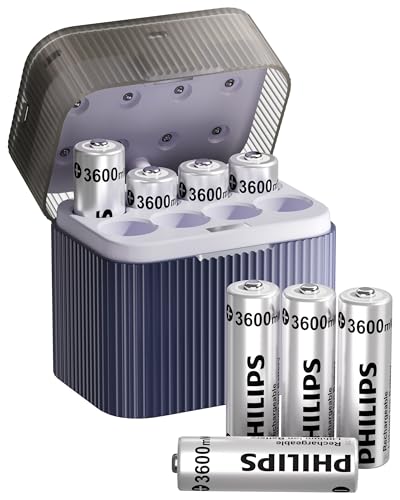
PHILIPS Rechargeable AA Lithium Batteries 8 Pack, 1.5V 3600mWh

Ostation 2 Pro AA AAA Rechargeable Battery Charging Station with 24 Batteries
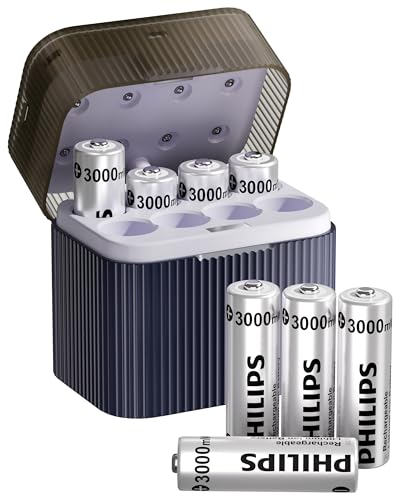
PHILIPS Rechargeable 3000mWh AA Lithium Batteries 8 Pack

Ostation 1.5V AA Rechargeable Lithium Batteries 2100mAh 8 Pack

PHILIPS Rechargeable AAA Lithium Battery 8 Pack, 1.5V 1300mWh

PHILIPS Rechargeable AA Lithium Battery 4 Pack, 1.5V 3600mWh

Ostation 2 AA AAA Rechargeable Battery Charging Station with 24 Batteries
Meet The Standout Selections
The Eneloop Pro line is what I reach for when a device chews through ordinary rechargeables. These AAs ship with a high-capacity Ni-MH chemistry that holds more energy per cell than the standard Eneloop 2100-cycle AA in my second pick, so they keep flashlights, camera flashes, and game controllers running noticeably longer between top-ups.
They arrive pre-charged, so you can drop them straight into a Wii remote the afternoon they land. The trade-off, which is worth flagging honestly, is that the higher energy density typically means a shorter overall cycle life compared to the regular Eneloop line, so I treat them as the “heavy lifting” cells and rotate lighter devices onto a longer-cycle pack.
Where It Helps
- Higher capacity than the standard 2100-cycle Eneloop, useful for camera flashes and high-drain gamepads.
- Pre-charged at the factory, so they slot into a remote the day you unbox them.
- Six-cell pack is a tidy size for stocking one or two demanding devices.
- Ni-MH chemistry plays nicely with most existing smart chargers already in the home.
Points To Keep In Mind
- Higher capacity chemistry tends to self-discharge faster than the standard Eneloop line in long storage.
- You’ll need a separate Ni-MH charger, since no charger ships in this pack.
Who Should Grab It
Photographers, gamers, and anyone whose flashlights and remotes get a daily workout will appreciate the extra capacity.
Skip It When
Casual remote-and-clock households will get more longevity per charge from the standard Eneloop 16-pack in the next slot.
This is the Eneloop pack I’d hand to a friend setting up a household from scratch. Sixteen pre-charged AAs give you spares for every remote, toy, and kitchen scale on day one, and the 2100-cycle rating means each cell can be topped up hundreds of times before it shows real wear.
Where the Pro 6-pack in my first pick leans toward high-drain work, this standard 16-pack is built for longevity. The chemistry is engineered to hold most of its charge through long stretches on a shelf, so a remote you barely touch can still work months later. If you want a single purchase that quietly replaces disposables across a whole house, this is a strong starting point.
The Good Stuff
- Sixteen cells cover most households’ full remote, clock, and toy inventory in one go.
- Long cycle rating means years of weekly top-ups before noticeable capacity loss.
- Pre-charged using solar power at the factory and ready out of the package.
- Low self-discharge keeps stored spares usable far longer than older Ni-MH cells.
Trade Offs
- Capacity per cell is lower than the Eneloop Pro AA, so heavy-drain devices need swapping more often.
- Batteries only: no charger in the box, so factor one in if you’re new to rechargeables.
Key Attributes
Built With In Mind
Families replacing disposable AAs across remotes, clocks, and toys will appreciate the single-purchase convenience.
A Better Fit Elsewhere
Gamers and photographers running power-hungry controllers should grab the Eneloop Pro 6-pack in my first slot instead.
Eight pre-charged AAs split across two four-packs is a smart entry into the Eneloop ecosystem without committing to the 16-cell haul in my second pick. The 2100-cycle Ni-MH chemistry mirrors the larger pack, so you get the same dependable long life, just in a more manageable starter quantity.
I think of this as a trial bundle: enough cells to refresh a TV remote, a wireless mouse, and a kitchen timer, with two extras on standby. Owners commonly report these ship from the factory ready to use, and the long cycle life means you’ll be recharging them for years before they need replacing.
Everyday Wins
- Eight pre-charged AAs split into two small packs make storage and labeling easier.
- Mirrors the 2100-cycle chemistry of the larger 16-pack, so longevity is the same.
- Lower up-front cost than the bulk pack, friendly to first-time rechargeable shoppers.
Some Limits To Know
- Fewer cells than the 16-pack, so larger households will run out of spares fast.
- No charger included, same as the other Eneloop AA options in this list.
Right Fit For
Anyone curious about rechargeables but unsure how many cells they need will find this a low-pressure starting point.
Reach For A Different Pick When
Anyone already running ten or more battery-drawers should step up to the Eneloop 16-pack in my second slot.
This is where the lithium rechargeable conversation gets interesting. Unlike the Ni-MH cells from Eneloop that gradually drop voltage as they drain, these PHILIPS AAs hold a steady 1.5V from full to nearly empty. That flat output is a real win for devices that misbehave when voltage sags, like Xbox controllers, camera flashes, and motorized toys.
At 3600mWh, the per-cell energy is generous, and the manufacturer frames the cycle life as long enough for years of regular use. The catch, and it’s worth being upfront about, is that lithium 1.5V cells like these need a lithium-aware charger. Your old Ni-MH charger won’t refill them safely.
Notable Upsides
- Stable 1.5V output keeps high-drain devices running at full strength until the cell is nearly depleted.
- Higher energy per cell than the standard Eneloop AA for longer sessions between swaps.
- Rechargeable lithium chemistry avoids the gradual voltage sag of Ni-MH cells.
Honest Caveats
- Requires a lithium-compatible charger, which is not always bundled with the cells.
- Higher per-cell cost than Ni-MH, so building a stockpile adds up fast.
Who It Suits Best
Gamers, photographers, and anyone running devices that falter when battery voltage dips will get the most out of the flat discharge curve.
Swap It Out When
Shoppers only powering low-drain remotes and clocks will save money with the Eneloop 16-pack in my second slot.
The Ostation 2 Pro is less of a charger and more of a small countertop appliance. It combines a charger, a battery tester, and an organizer for up to 24 cells, so the “drawer full of mixed batteries” problem quietly disappears. Drop a handful in, and the station figures out the rest.
Smart sorting means you can toss cells in any orientation and let the unit route them to charge or storage, while thermal-adaptive charging keeps heat in check during long top-up cycles. For households juggling both AA and AAA, plus a few 1.5V lithium cells, this one dock replaces a tangle of separate chargers.
A Strong Showing
- Three roles in one unit: charger, tester, and organizer for up to 24 cells.
- Handles both AA and AAA sizes, including compatible 1.5V lithium cells.
- Smart sorting and thermal-adaptive charging reduce babysitting during long top-ups.
Worth Noting
- Bulkier than a basic four-bay charger, so it needs a permanent spot on a counter or shelf.
- Premium feature set comes with a higher price than entry-level Ni-MH chargers.
Quick Facts
Made For
Busy households and small offices with mixed AA and AAA devices will appreciate the set-and-forget workflow.
Consider Something Else When
Anyone with just two or three battery-drawers will do fine with a basic four-bay charger and the Eneloop 8-pack.
Step down a notch from the higher-capacity PHILIPS AA in my fourth pick, and you land here: 3000mWh cells with the same flat 1.5V lithium profile. The drop in per-cell energy is modest, and for most remotes and mid-drain electronics, you won’t notice the difference in day-to-day use.
What changes is the charging story. This eight-pack leans on an integrated Type-C charging case, which doubles as a storage box, so you can top up cells from any USB-C cable without a bulky dock on the counter. The trade-off is reduced overall capacity per cell compared to the 3600mWh version above.
Everyday Perks
- 2-in-1 Type-C case simplifies storage and charging in one piece.
- Stable 1.5V lithium output keeps devices performing consistently.
- Lower per-pack cost than the 3600mWh PHILIPS AA option for casual high-drain use.
Practical Considerations
- Smaller per-cell capacity than the 3600mWh PHILIPS AA in heavy-use devices.
- Charging case ties the cells to a specific cradle rather than an open multi-chemistry dock.
Who Will Love This
Households wanting a tidy, USB-C-friendly lithium AA setup without buying a full charging station will find this comfortable.
Look Elsewhere When
Anyone who already has an Ostation-style multi-chemistry dock might prefer the Ostation 1.5V AA cells in my seventh slot for ecosystem compatibility.
These Ostation lithium AAs are designed to drop into the brand’s own chargers, with each cell carrying a small BMS, or battery management system, that monitors current and temperature during charging. That built-in smart chip is the real story: it dynamically adjusts the charge profile, which helps the cells last longer under regular top-up cycles.
Out of the Ostation 2-series dock, these AAs reportedly refill in a few hours, which is faster than most Ni-MH chemistries. They also work with other 1.5V Li-ion chargers, so you’re not locked into one brand, though you give up some of the safety and speed optimizations if you stray from the Ostation ecosystem.
The Value In It
- Built-in BMS per cell improves safety and balances charging across all eight cells.
- Fast refill times when paired with the Ostation 2-series dock.
- Flat 1.5V output suits high-drain remotes, controllers, and small electronics.
Possible Compromises
- Best experience requires an Ostation 2-series charger, sold separately from the cell pack.
- Per-cell capacity is lower than the 3600mWh PHILIPS AA, so runtime per charge is shorter in demanding gear.
Right Fit For
Anyone who already owns or plans to buy an Ostation charging dock will get the most from these cells’ smart-chip behavior.
Not Your Match When
Shoppers who want a simple, no-dock solution should consider the PHILIPS 3000mWh AA with Type-C case in my sixth slot.
AAA cells get less love than AAs, but they power a surprising number of remotes, small flashlights, and TV streaming sticks. This PHILIPS pack brings the same flat 1.5V lithium chemistry as the AA version in my fourth pick, just scaled down to the smaller AAA form factor.
The 1300mWh rating is solid for the size, and the manufacturer frames the cycle life as long enough to outlast several years of casual use. Owners commonly report that these small-format cells hold their voltage better than older Ni-MH rechargeables, so devices don’t dim as the battery drains.
What Earns Its Place
- Flat 1.5V output keeps small electronics from dimming or misbehaving late in a charge cycle.
- Eight cells cover a typical household’s AAA-drawer needs in one pack.
- Rechargeable lithium chemistry avoids the gradual self-discharge common to Ni-MH AAA cells.
Small Caveats
- Requires a lithium-compatible charger, which is sold separately.
- Higher upfront cost per cell than standard Ni-MH AAA rechargeables.
Who It Suits Best
Anyone running a stack of small remotes, mini-flashlights, or streaming-stick controllers will value the steady 1.5V output.
Where Another Pick Suits Better
Shoppers needing both AA and AAA support in one dock should look at the Ostation 2 Pro station in my fifth slot.
If the eight-pack PHILIPS AA in my fourth pick feels like overkill, this four-pack offers the same high-capacity 3600mWh lithium chemistry in a smaller bundle. The flat 1.5V discharge curve and long cycle life carry over, so a couple of game controllers or a wireless shutter remote can run for ages between top-ups.
I think of this as the “try-before-you-stockpile” option. Four cells is enough to gauge whether the lithium chemistry suits your gear, without committing to a full drawer of them. Just remember you’ll still need a compatible lithium charger to refill them.
Positive Takeaways
- Same high-capacity 3600mWh lithium cells as the larger PHILIPS 8-pack, just a smaller bundle.
- Steady 1.5V keeps controllers, flashes, and small electronics running at full strength.
- Lower upfront cost than the 8-pack for shoppers testing the lithium experience.
Where It May Fall Short
- Only four cells may leave households short on spares for multi-device days.
- Charger is sold separately, adding to total cost for first-time lithium adopters.
Key Product Details
Whose Shelf It Belongs On
Casual gamers and photographers who want a small lithium upgrade without overhauling their whole battery drawer.
Skip It When
Anyone stocking a multi-controller gaming setup will be happier with the PHILIPS 8-pack in my fourth slot.
The standard Ostation 2 trades a couple of the Pro’s premium touches for a friendlier price, while keeping the same 24-slot, set-and-forget design philosophy. It charges both AA and AAA Ni-MH cells, plus compatible 1.5V lithium rechargeables, which covers the formats most households actually rotate.
The real convenience, in my view, is the broad compatibility. Drop in cells from any Ni-MH brand, mix in some Ostation 1.5V lithium from my seventh pick, and the station quietly routes everything to the right charge mode. For a family juggling toys, remotes, and flashlights all at once, that flexibility is what makes the dock earn its keep.
Features That Help
- Broad compatibility with most Ni-MH AA/AAA cells plus Ostation 1.5V lithium cells.
- 24-slot capacity covers a typical family’s full inventory in one dock.
- Real-time monitoring and thermal-adaptive charging keep cells healthy during long top-ups.
Less-Strong Areas
- Doesn’t include every premium feature of the Ostation 2 Pro in my fifth slot, like the magnetic charging ports for flashlights.
- Bulkier than a basic four-bay charger and needs a permanent spot on a shelf or counter.
Feature Snapshot
Perfect Match For
Families and home offices juggling a mix of Ni-MH and lithium cells across many devices will value the set-and-forget design.
A Better Fit Elsewhere
Shoppers with Olight flashlights using magnetic charging should step up to the Ostation 2 Pro in my fifth slot instead.
What Matters Most Before Choosing Rechargeable Batteries And Chargers
Pick The Chemistry First, Then The Cell Count
The single biggest decision is Ni-MH versus 1.5V lithium. Ni-MH cells, like the Eneloop 2100-cycle AA in my second pick, are budget-friendly, work with most existing chargers, and last through hundreds of cycles. They lose voltage gradually as they drain, which is fine for remotes and clocks but noticeable in high-drain devices. Lithium 1.5V cells, like the PHILIPS 3600mWh AA in my fourth pick, hold a flat voltage and refill faster, but they need a compatible charger and cost more per cell.
Match Capacity And Size To Your Drawer
Cell capacity is measured in mAh (milliamp-hours) for Ni-MH, or mWh (milliwatt-hours) for lithium. Higher numbers mean longer runtime per charge, but the trade-off is often fewer recharge cycles. For a TV remote or wall clock, modest capacity is plenty. For a camera flash, motorized toy, or game controller, you’ll want the highest capacity your budget allows.
Decide How You’ll Charge
A basic four-bay Ni-MH charger works fine for casual users. A multi-chemistry station like the Ostation 2 Pro or Ostation 2 in my fifth and tenth slots makes more sense once you have ten or more cells rotating in and out. A Type-C case, like the one bundled with the PHILIPS 3000mWh AA in my sixth pick, is a tidy middle ground for travel or small apartments.
Key Considerations Across These Picks
Where Shoppers Go Wrong
The most common slip-up is mixing cell chemistries in a single charger. Ni-MH chargers aren’t designed for 1.5V lithium cells and vice versa, and forcing the wrong pairing can shorten cell life or, in worst cases, damage the charger. Another trap is buying cells without a charging plan in place, which leads to a half-charged drawer of mixed AAs that nobody wants to sort.
When Paying More Pays Off
Higher-tier options like the Ostation 2 Pro or the high-capacity PHILIPS lithium AAs cost more up front, but the upgrade usually pays off in three places: faster charging, broader compatibility, and longer overall cell life. For households with serious battery demand, a station that handles 24 cells at once removes daily friction. For everyone else, a smaller Type-C case and a few lithium AAAs covers most needs without the countertop commitment.
Frequently Asked Questions
How long do rechargeable AA batteries actually last?
Ni-MH cells like the Eneloop 2100-cycle line are typically rated for hundreds of full recharge cycles, often translating to several years of regular household use. Lithium 1.5V cells are usually rated for around 1200 cycles, which can also stretch across years depending on how often you top them up.
Do I need a special charger for lithium AA batteries?
Yes. 1.5V lithium cells use a different charging profile than Ni-MH, so an old Ni-MH-only charger won’t refill them safely. Look for chargers that explicitly list compatibility with 1.5V Li-ion cells, like the Ostation 2-series in my fifth and tenth picks.
Can I mix rechargeable and disposable batteries in the same device?
Avoid it. Mixing chemistries can cause the weaker cells to reverse-charge, which leads to leakage or damage. Stick to one chemistry per device, and replace all cells at the same time.
Are rechargeable batteries worth it for low-use remotes?
For a remote that’s used twice a week, the savings take longer to show up, but the convenience of always having working cells on hand is still real. Low self-discharge Ni-MH packs like the Eneloop 16-pack in my second pick hold most of their charge for years on a shelf.
What’s the difference between mAh and mWh?
mAh, or milliamp-hours, measures how much current a battery can deliver over time, while mWh, or milliwatt-hours, measures the total energy stored. For comparing cells of the same voltage, either works. Across chemistries, mWh is the more accurate apples-to-apples comparison.
The Takeaway
A solid rechargeable setup saves money and drawer space once it finds its rhythm. Casual households do well starting with the Eneloop 16-pack and a basic Ni-MH charger, while gamers and photographers benefit more from the flat voltage of 1.5V lithium cells like the PHILIPS 3600mWh AA. For anyone juggling a dozen or more devices, a multi-chemistry station like the Ostation 2 turns battery management into a one-touch task. Match the chemistry and the charger to the way you actually live, and the rest falls into place.
