

Tangled in a drawer full of dead AAs? Same here, more times than I’d like to admit. The right rechargeable Aaa batteries can quietly cut the cost of keeping remotes, controllers, and small gadgets alive, while also trimming the waste of single-use cells. I’ve put together a list that mixes dependable alkaline backups with modern NiMH and lithium rechargeables, so the right match shows up for every kind of household.
The Essentials At A Glance

Duracell x Messi Coppertop AAA Batteries, 28 Count

Energizer Alkaline Power AAA Batteries (32 Pack)
Duracell Coppertop AAA Batteries, 24 Count

HIVEVOLT Rechargeable AAA Batteries 1100mAh, 24 Count
PHILIPS Rechargeable AA Lithium Batteries 8 Pack, 1.5V 3600mWh

PHILIPS Rechargeable AAA Lithium Battery 8 Pack, 1.5V 1300mWh

PHILIPS Rechargeable AA Lithium Battery 4 Pack, 1.5V 3600mWh
The Picks, Examined More Closely
Duracell’s Coppertop line is the name most households already trust, and the 28-count bundle goes a step further with a limited-edition Messi-themed wrap. For anyone running remotes, thermometers, kids’ toys, and a string of small gadgets, this is the kind of no-fuss pack that quietly covers the year. Compared with the Energizer 32-pack below, the count is slightly lower, but each cell carries the familiar Coppertop chemistry that lives up to its long-storage reputation.
In a busy home, this pack earns its keep by being the one you reach for without thinking. The bulk size means you stop rationing batteries for the bathroom scale or the back of a drawer flashlight, which in my experience is where most “running out” moments actually happen.
Everyday Advantages
- Large 28-count bundle keeps spares on hand for remotes, scales, and small electronics
- Alkaline chemistry suited to low-drain household devices that see occasional use
- Familiar Coppertop construction from a brand most people already recognize
- Works across a wide range of AAA-compatible gear without special chargers
- Long storage life makes it practical to stock for emergencies
Things To Consider
- Single-use alkaline, so it isn’t the right answer for high-drain controllers used daily
- Heavier than NiMH cells in devices that get held a lot, like TV remotes
Feature Snapshot
Who It Suits Best
Families and casual households who want a single bulk pack of reliable disposables for low-drain remotes, clocks, and small electronics.
Consider Something Else When
Anyone running game controllers or VR gear every day will get more value from the HIVEVOLT 24-count rechargeable AAA pack, which cuts long-term cost for high-drain use.
The Energizer Alkaline Power 32-pack is built for the kind of shopper who would rather buy once and forget about it. Alkaline Power is positioned as Energizer’s long-lasting line, and at 32 cells you have flexibility to scatter them across a kitchen drawer, a bedside table, and a hall closet. It pairs naturally with the smaller Duracell 24-pack above, trading some brand novelty for a noticeably higher cell count at a similar category.
For households keeping flashlights, smart-home sensors, and wireless mice on rotation, this pack tends to be the one that quietly disappears into every room. The honest read is that it doesn’t try to be anything more than a dependable alkaline supply, and that focus is exactly why it stays useful.
Notable Upsides
- Generous 32-cell count, the largest single-use pack in this roundup
- Long-lasting alkaline formulation for everyday household electronics
- Long storage life in unopened packaging, helpful for emergency prep
- Drop-in compatibility with any standard AAA device
Worth Noting
- Single-use only, so high-drain devices chew through them quickly
- Bulkier packaging than smaller count options for tight storage spaces
Quick Facts
Made For
Stockpilers and prep-minded households who want one big alkaline pack that sits in a drawer and stays good for years until needed.
Look Elsewhere When
Anyone tired of throwing out depleted cells in game controllers should look at the PHILIPS 8-pack AAA lithium option, which delivers 1.5V constant output for frequent-use devices.
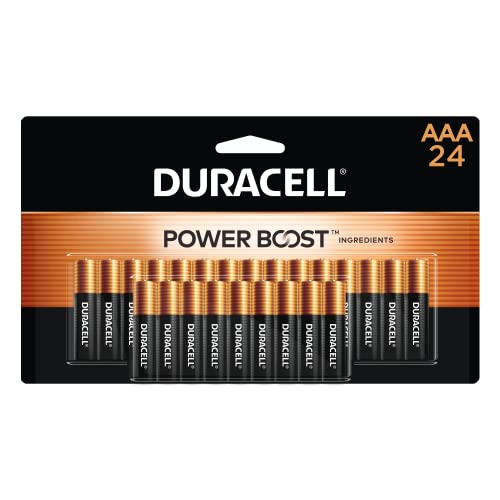
The classic 24-pack Coppertop is the size I keep coming back to for mixed-device homes. It is a comfortable middle ground between the 28-count Messi edition above and the smaller retail packs, and it slides easily into a kitchen drawer without looking like a stockpile. The Coppertop name carries a 12-year storage guarantee in unopened packaging, which makes it a sensible choice for people who like to buy ahead.
Where it earns a place is in the device mix most homes actually run: thermometers, remotes, scales, small toys, and the occasional gadget that only gets used a few times a year. The catch is that you will still be tossing depleted cells, so this is more of a dependable background pack than a long-term cost play.
Features That Help
- 12-year storage guarantee for a real long-term backup option
- 24-cell count balances size and shelf footprint for most homes
- Designed for everyday low-drain electronics like remotes and clocks
- Recognizable Coppertop branding helps avoid mix-ups at the back of a drawer
Trade Offs
- Single-use alkaline, not suited to high-drain daily devices
- Higher long-term cost than rechargeable options for heavy users
Feature Card
Best Suited To
Owners of mixed-device homes who want one familiar alkaline pack that covers remotes, thermometers, and small electronics without overbuying.
Reach For A Different Pick When
Frequent gamers or VR users will be better served by the PHILIPS Rechargeable AAA Lithium 8-pack, which keeps output steady during long sessions.
Here is the list’s first true rechargeable option, and it lands in a useful spot. The HIVEVOLT 24-pack uses NiMH chemistry, the most established rechargeable cell type for household AAA work, and rates each cell at 1100 mAh, which is a healthy mid-tier capacity. NiMH cells cost more up front than alkalines but pay you back over hundreds of cycles. Compared to the Duracell Coppertop above, the trade is a charging step for dramatically lower long-term cost.
This pack is the one I would point a parent toward if their kid’s toy drawer chews through batteries weekly. The low self-discharge rating means you can leave a charged cell in a drawer for a while and still find it ready, which is the kind of detail that makes rechargeables feel less fussy in real homes.
Where It Helps
- 1100 mAh capacity supports longer runtimes in game controllers and wireless devices
- Rechargeable up to many cycles, dropping per-use cost dramatically
- Low self-discharge design holds charge through long idle periods
- 24-cell count gives you a full rotation while some cells charge
Points To Note
- Requires a separate NiMH-compatible charger, which adds to the initial cost
- Voltage drops gradually as cells deplete, unlike the constant 1.5V lithium options below
- Higher self-discharge than lithium rechargeables if left in a hot closet for months
Right Fit For
Busy households running high-drain toys, game controllers, and wireless mice who want a refillable rotation and don’t mind owning a charger.
Swap It Out When
Owners who want the steadiest voltage for performance-sensitive gear should consider the PHILIPS Rechargeable AAA Lithium 8-pack, which holds 1.5V from full to empty.
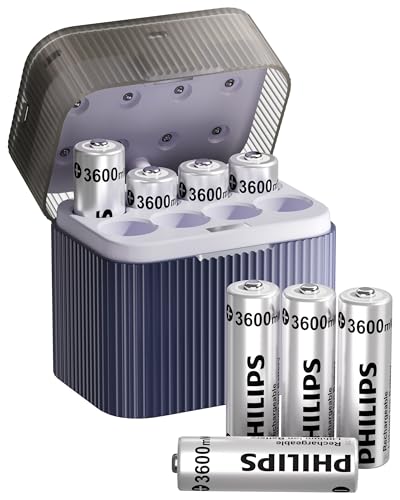
Note up front that this is an AA pack, not AAA, but it earns its spot because it shows the lithium chemistry story in a familiar form factor. The PHILIPS 8-pack uses Li-ion cells that hold a steady 1.5V from full to empty, with a stated 3600 mWh capacity, which is meaningfully higher than a standard NiMH AA. The result is the kind of steady power output that matters for high-drain devices like Xbox controllers, where voltage sag can shorten playtime mid-session.
The honest read is that this is overkill for a TV remote, and a clear upgrade for a gaming setup. If your home mixes AA-powered gear with the AAA items elsewhere on this list, this is the cell you hand to the gear that complains first.
What Works In Its Favor
- Constant 1.5V output from full to empty charge, avoiding the gradual sag NiMH cells show
- Stated 3600 mWh capacity suited to high-drain AA devices like game controllers
- Long cycle life aimed at frequent rechargers who don’t want to replace cells often
- Recharges via an included Type-C station for convenience
Honest Caveats
- AA size only, so it doesn’t substitute for the AAA cells on the rest of this list
- Higher upfront cost than NiMH or alkaline, though lower long-term cost for heavy users
- Requires the matching charger, which adds to the entry price
Key Specs
Whose Shelf It Belongs On
Gamers, photographers, and other heavy users of AA-powered gear who want steady 1.5V output without the mid-session power dip of standard NiMH cells.
Where Another Pick Suits Better
For strictly AAA devices like remotes and small electronics, the HIVEVOLT 24-pack NiMH option gives more cells per dollar in that exact size.
The PHILIPS AAA lithium 8-pack brings the same constant-voltage idea down to the smaller AAA size that most remotes, game controllers, and smart-home sensors use. Each cell holds a stated 1300 mWh and is built to keep output at 1.5V from full to empty, which is the real story here: a controller won’t feel sluggish halfway through a match the way it sometimes can with depleted NiMH cells.
For households that have already moved past the “buy a 24-pack of disposables every few months” cycle, this is the natural next step. You may find the up-front cost stings a little, but the cycle life claim and the included charging station smooth that out over time.
What Earns Its Place
- Lithium chemistry in AAA size, a less common combination for household users
- Constant 1.5V output keeps devices running at full strength to depletion
- Manufacturer-stated 1200 cycle lifespan for long-term rechargers
- Independent slot charging station included, no extra purchase required
Less Ideal Details
- Higher per-cell cost than the HIVEVOLT NiMH pack above
- Smaller pack count than the bulk alkaline options, so spares run out faster
- Less universal compatibility documentation than simple alkaline cells
Who Should Grab It
Controller-heavy gamers, smart-home owners with battery-powered sensors, and anyone who wants rechargeables that hold voltage like fresh alkalines.
A Better Fit Elsewhere
For one-time backup cells you want to leave in a flashlight for years, the Energizer Alkaline Power 32-pack is a more practical storage option.
Closing the list is the smaller sibling of the PHILIPS 8-pack above, a 4-cell AA lithium bundle aimed at the photographer or traveler who only needs a few cells at a time. Same 3600 mWh capacity, same constant 1.5V output, just a more compact count. Compared to its 8-pack relative, you give up spare coverage but save on cost and pack size, which is a fair swap for camera bags and weekend trips.
It is worth noting that this set is AA only, so it won’t cover the AAA devices scattered through the rest of the home. Where it lands well is in a small kit, a camera case, or a single gaming controller setup where the owner wants steady voltage without the expense of an 8-pack.
A Strong Showing
- 3600 mWh capacity in a smaller, more affordable 4-cell bundle
- Constant 1.5V output avoids mid-shoot power dips in cameras and flashes
- Long cycle life suited to regular travelers who recharge often
Worth Bearing In Mind
- Only 4 cells, so larger households will need to combine it with another pack
- AA size, not interchangeable with the AAA cells used by most remotes
Core Details
Perfect Match For
Photographers, flash users, and travelers who want a small lithium AA bundle for a single camera or a short trip.
Skip It When
For whole-house coverage across remotes and small electronics, the HIVEVOLT 24-pack NiMH option gives broader size support at a more accessible price point.
What To Weigh Before Picking Rechargeable Aaa Batteries
Match The Chemistry To The Device
Alkaline cells are still the right answer for low-drain items like remotes, clocks, and bathroom scales. NiMH rechargeables, where the active materials are nickel-metal hydride, work better for high-drain gear that chews through cells weekly. Lithium rechargeables, made with lithium-ion chemistry, hold a constant 1.5V output, which is a real edge for game controllers and photography gear where voltage sag can shorten runtime. Picking the wrong chemistry usually means more frequent swaps, not better performance.
Capacity And Voltage Are Different Stories
Milliamp-hour (mAh) ratings tell you how long a cell can deliver a given current, while watt-hour (mWh) ratings measure total stored energy, which is more accurate for lithium cells. A higher mAh on an NiMH cell helps, but a constant-voltage lithium cell can outlast a higher-capacity NiMH cell in a controller because it never drops below the device’s working threshold. For the most accurate comparison between chemistries, mWh is the more useful number.
Think About Charging Habits
Rechargeables only save money if you actually recharge them. A household with a charger in the kitchen and a habit of swapping cells on Sunday night will benefit from a 24-pack NiMH rotation. A household that ignores charging for months will do better with alkalines in low-drain devices and a smaller lithium set in the high-drain ones.
Storage And Self-Discharge Matter For Spares
NiMH cells lose charge sitting in a drawer, though low self-discharge versions lose much less than older formulations. Lithium rechargeables hold their charge far better over months of idle time, which is one reason they pair well with emergency gear. Alkaline cells still hold the longest storage life, often a decade or more, which is hard to beat for a true backup pack.
Real Decisions For Real Shoppers
Pitfalls Shoppers Hit
The most common mistake is buying rechargeables without confirming the charger is compatible, especially with older NiMH-only units that won’t safely handle lithium cells. Another is grabbing a high-capacity NiMH pack expecting it to match lithium performance, then noticing voltage sag in a controller. A third is underbuying spares, since rechargeables need at least one set in the device while another charges, and a too-small pack turns into constant rotation frustration.
Where The Extra Money Goes
Higher-tier lithium cells cost more because they use a built-in voltage regulation circuit, a sealed metal casing, and matched cells tested for consistent output across the pack. That extra engineering is what keeps the voltage at 1.5V instead of dropping as the cell drains, which is the actual reason performance-sensitive gear runs longer on lithium. For a casual remote or a wall clock, that premium is hard to justify. For a gaming setup, a camera, or a smart-home sensor network, the smoother output and longer cycle life usually pay back the up-front difference within the first year of regular use.
Frequently Asked Questions
Are rechargeable AAA batteries worth it for low-drain devices?
For remotes and clocks used only a few times a week, alkalines usually cost less and hold charge for years on the shelf. Rechargeables start to pay off once a device sees daily use or has higher current draw.
How long do NiMH AAA batteries typically last per charge?
In low-drain devices like a remote, NiMH cells can run for weeks or months on a single charge. In high-drain gear like a game controller, expect a handful of long sessions before needing a top-up, depending on the device.
Can I use lithium rechargeables in any device that takes AAA?
Most devices designed for AAA alkalines accept lithium rechargeables without issue, since both deliver around 1.5V. The exception is a small number of older or specialty devices that specify alkaline only in their manual, so it helps to check first.
Do rechargeable batteries leak less than alkaline?
Modern NiMH and lithium rechargeables are designed with sealed constructions and lower internal pressure, so they tend to leak less often than depleted alkalines. The risk isn’t zero in any chemistry, but it is generally lower with rechargeables.
How should I store rechargeable batteries I am not using right now?
Keep them at room temperature, ideally in a case or original packaging, and avoid fully draining them before long-term storage. A partial charge of around 40 to 60 percent is the commonly recommended state for cells sitting for months.
Closing Thoughts
The honest read is that no single battery covers every device in a typical home, and the smartest approach is usually a small mix. A bulk alkaline pack for low-drain spares, an NiMH rotation for daily-use gadgets, and a lithium set for the gear that needs steady power tends to feel right after a few months. Pick the chemistry that matches the device, not the one that looks most impressive on paper, and the rest of the year takes care of itself.
