

Rechargeable batteries quietly run modern homes, from TV remotes to wireless gamepads, and they only stay useful if the charger pulls its weight. Choosing the wrong combination means dead cells in the junk drawer, mysterious device slowdowns, or a charger that takes all night for four AA cells. I’ve put together ten options that pair cells with a real charging solution, so anyone can stop buying disposables and start trusting the cells they already own. The picks below cover household Ni-MH classics, modern 1.5V lithium packs with built-in cases, and full multi-bay stations for high-volume households. Each entry includes a recommended profile so it’s easier to match the kit to the actual use case.
An Overview Of The Picks

Eneloop K-KJ55MCA4BA Charger with 4 AA Rechargeable Batteries
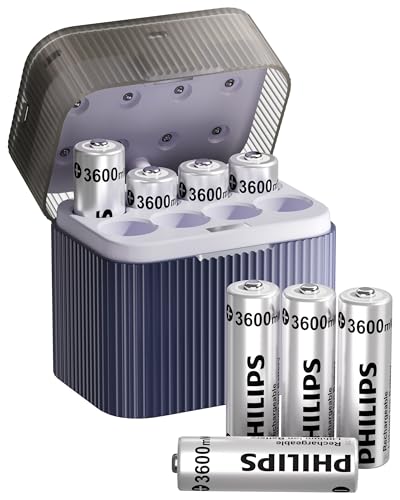
PHILIPS Rechargeable AA Lithium Batteries 8 Pack 3600mWh

Ostation 2 Pro AA AAA Rechargeable Battery Charging Station with 24 Batteries
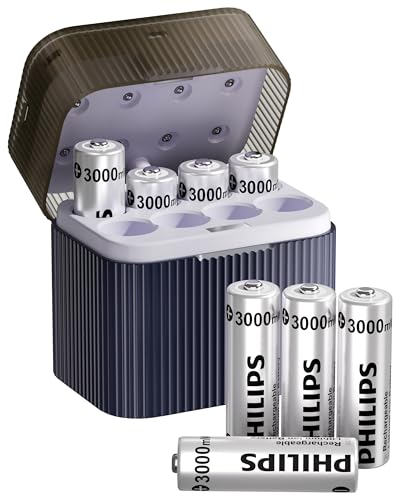
PHILIPS Rechargeable 3000mWh AA Lithium Batteries 8 Pack

Ostation 1.5V AA Rechargeable Lithium Batteries 2100mAh 8 Pack

Eneloop BQ-CC55KSBHA Charger with BK-3MCCA8BA AA and BK-4MCCA8BA AAA Batteries

Eneloop BQ-CC55KSBHA Charger with BK-3HCCA8BA Pro AA and BK-4HCCA8BA Pro AAA

PHILIPS Rechargeable AAA Lithium Batteries 8 Pack 1300mWh

PHILIPS Rechargeable AA Lithium Battery 4 Pack 3600mWh

Ostation 2 AA AAA Rechargeable Battery Charging Station with 24 Batteries
Inside Each Recommended Option
The classic Eneloop starter kit remains a sensible anchor for anyone stepping away from disposable alkalines. The four included AA cells ship pre-charged (so a TV remote works the moment the package opens), and the white charger handles each cell in its own bay rather than in pairs. That individual-slot design matters: paired charging is the usual culprit behind mismatched cells that age unevenly.
For most households running a remote, a wall clock, and a wireless mouse, this is the low-fuss kit that quietly pays for itself. Compared to the PHILIPS lithium options later in this list, Ni-MH cells like these trade constant voltage for forgiving storage, which is exactly what low-drain devices prefer.
Useful Touches
- Individual charging bays prevent the uneven wear that paired chargers tend to create.
- Pre-charged cells arrive ready for the remote on day one.
- Ni-MH chemistry tolerates partial top-ups without the memory effect older cells used to suffer.
- The charger is compact enough to live on a kitchen counter without crowding the outlet strip.
Things To Consider
- Ni-MH voltage drops steadily during use, so high-drain game controllers may feel weaker in the final stretch.
- Only four AAs ship in the box; AAA households will need a separate purchase down the line.
Quick Facts
Right Fit For
Households standardizing on AA cells for remotes, clocks, and low-drain electronics will get the cleanest experience from this kit.
Skip It When
Gamers running Xbox or PlayStation controllers should reach for the PHILIPS Rechargeable AA Lithium Batteries 8 Pack 3600mWh, since its constant 1.5V output keeps trigger response steady through long sessions.
Modern wireless game controllers punish traditional Ni-MH cells. The voltage sags mid-session, and rumble-heavy games feel noticeably softer before the cell is technically empty. The PHILIPS Rechargeable AA Lithium Batteries 8 Pack 3600mWh tackles that exact problem with lithium-ion chemistry that holds a steady 1.5V from full to nearly empty.
Eight cells in the box is the practical minimum for a two-controller household. The package covers both controllers plus a rotating spare set, so nobody waits on a charge mid-match. Compared to the Eneloop K-KJ55MCA4BA Charger earlier, this set is a different category: the cells are lithium, which means the charging hardware lives in a separate case (sold with other PHILIPS kits) rather than a typical Ni-MH wall charger.
What It Does Well
- Stable 1.5V output keeps rumble and trigger response consistent until the cell is genuinely depleted.
- 3,600mWh capacity translates to longer session times between swaps in power-hungry devices.
- Eight cells cover two controllers with spares, eliminating mid-game charging breaks.
Worth Noting
- Lithium cells require a compatible lithium charger; a standard Ni-MH wall unit is not the right tool.
- Higher cell cost per stick than Ni-MH, so casual remote-only households will not recoup the spend quickly.
Best Suited To
Dedicated console gamers and anyone running AA-powered microphones or photo flashes that demand steady voltage.
A Better Fit Elsewhere
Households that mostly run remotes and clocks should pick up the Eneloop BQ-CC55KSBHA Charger with BK-3MCCA8BA AA and BK-4MCCA8BA AAA Batteries for better long-term value at lower drain levels.
Anyone who has lost an afternoon hunting for a charged AAA in a junk drawer knows the real problem with rechargeable batteries: storage. The Ostation 2 Pro AA AAA Rechargeable Battery Charging Station attacks that head-on, combining a charger, a tester, and an organizer that holds up to 24 cells in one compact block. The unit ships with 24 cells so the system is useful from the first day.
What sets the Pro tier apart from the standard Ostation 2 (covered later) is its dual magnetic charging ports for Olight flashlights. That detail only matters to flashlight owners, but for those households the convenience is real. For everyone else, the smart sorting and thermal-adaptive charging are the headline features: drop in mixed cells and the station figures out what to charge.
Noteworthy Benefits
- All-in-one charging, testing, and storage cuts the clutter of separate chargers and battery caddies.
- Thermal-adaptive charging protects cells from heat stress during long top-ups.
- Dedicated magnetic ports add flashlight charging that traditional stations cannot match.
- 24 included cells mean the station is genuinely useful the day it arrives, no extra purchase required.
Honest Caveats
- The footprint is larger than a basic 4-bay wall charger; small apartments may struggle to find a permanent spot.
- Flashlight-specific ports only help shoppers already in the Olight ecosystem.
Built With In Mind
Multi-device households, content creators, and small studios where a constant rotation of AA and AAA cells is part of the daily routine.
Consider Something Else When
A casual household running four AAs in remotes will find the Ostation 2 AA AAA Rechargeable Battery Charging Station with 24 Batteries (Item 10) plenty without paying for flashlight extras.
The PHILIPS Rechargeable 3000mWh AA Lithium Batteries 8 Pack lands at a friendlier capacity than the 3600mWh set, which makes it a practical choice for households that want lithium’s constant-voltage behavior without paying the top-tier premium. The integrated 2-in-1 charging case design replaces a separate wall charger: drop the cells into the case, plug in USB-C, and the case handles the rest.
For shoppers who already own USB-C cables from a phone or tablet, the all-in-one case is the kind of feature that quietly simplifies a drawer full of chargers. Compare that to the PHILIPS 3600mWh set above, which leans into a higher-capacity cell; this version trades some runtime for a tidier charging experience.
Why It Works Well
- Constant 1.5V lithium chemistry keeps modern controllers and high-drain devices performing consistently.
- USB-C charging case consolidates the charging hardware into the storage box itself.
- Smart matching chip distributes power safely across all eight cells during a refill.
Small Caveats
- 3,000mWh capacity is modest compared to the 3600mWh PHILIPS option for marathon gaming sessions.
- USB-C cable is not always included, so check the box contents before assuming a household cable works.
Perfect Match For
Frequent controller users who value tidy charging and already live in a USB-C household.
Not Your Match When
Anyone running power-hungry photo strobes or studio flashes should look at the Eneloop BQ-CC55KSBHA Charger with BK-3HCCA8BA Pro AA and BK-4HCCA8BA Pro AAA, whose higher mAh rating suits bursts better.
The Ostation 1.5V AA Rechargeable Lithium Batteries 2100mAh 8 Pack introduces a smart chip and BMS (battery management system) into each cell, which means the battery itself participates in safe charging rather than relying entirely on the charger. For a household that’s still using a mix of older Ni-MH chargers, this kind of internal protection is reassuring.
Paired with the Ostation 2 Series chargers from earlier and later in this list, the cells refill in roughly 2.5 hours. That pace is genuinely fast for AA lithium. Compare that to the older Eneloop kits, which lean on slower Ni-MH charging cycles; the lithium route trades longevity for refill speed.
Benefits That Matter
- Smart chip in every cell adds a layer of safety that older rechargeable chemistries simply do not offer.
- 2.5-hour refill on Ostation 2 chargers keeps downtime low between heavy-use days.
- Constant 1.5V output preserves device performance across the discharge curve.
Trade Offs
- Best charging speed requires the matching Ostation 2 charger, which is a separate purchase.
- 2,100mAh capacity is modest, so heavy users will swap cells more often than with the 3,000mWh PHILIPS option.
Made For
Households ready to standardize on lithium cells and willing to invest in a matching Ostation 2 dock for the fastest refill experience.
Look Elsewhere When
A shopper who wants a single all-in-one purchase should consider the PHILIPS Rechargeable 3000mWh AA Lithium Batteries 8 Pack, which bundles the case in the same box.
The Eneloop BQ-CC55KSBHA Charger with BK-3MCCA8BA AA and BK-4MCCA8BA AAA Batteries bundles the popular CC55 charger with both AA and AAA cells in one purchase. The CC55 charges each cell individually (four separate LED indicators keep watch over each bay), which makes it easier to spot a weak cell before it strands a remote.
Both AA and AAA sizes shipping together means a household can finally retire the drawer of mixed disposables. The 2,100-cycle rating on these cells is the headline number; for context, that’s the kind of endurance where replacement costs effectively vanish over the decade. Compared to the lithium PHILIPS kits above, this Eneloop set trades constant voltage for longevity and storage stability.
The Value In It
- CC55 charger with four-color LED indicators shows each cell’s state at a glance.
- Up to 2,100 recharge cycles per cell keeps replacement costs minimal over a decade.
- Both AA and AAA included, so a household can standardize immediately.
- Ni-MH chemistry is forgiving of partial top-ups, unlike older rechargeable types.
Points To Keep In Mind
- 2,000mAh AA capacity is on the modest side for high-drain controllers.
- Charging is slower than the lithium kits that refill in a couple of hours.
Who It Suits Best
Long-term planners who want a charger-and-cells kit that survives a decade of weekly use across remotes, clocks, and toys.
Reach For A Different Pick When
Flashlight photographers and high-drain shooters will prefer the Eneloop BQ-CC55KSBHA Charger with BK-3HCCA8BA Pro AA and BK-4HCCA8BA Pro AAA for its higher 2,500mAh rating.
The Eneloop BQ-CC55KSBHA Charger with BK-3HCCA8BA Pro AA and BK-4HCCA8BA Pro AAA is the higher-output sibling of the previous Eneloop kit. The Pro AA cells deliver up to 2,500mAh typical, which is meaningful for camera flashes, audio recorders, and other gear that drains cells quickly during real use.
The trade-off shows up in cycle life: Pro cells are rated for roughly 500 recharge cycles versus 2,100 on the standard eneloop line. For a photographer firing a flash ten times a week, that still means years of service. The CC55 charger is shared with the previous kit, so households already running that charger can move up to Pro cells without buying new hardware.
Strengths Worth Knowing
- 2,500mAh AA capacity handles bursts from camera flashes without sagging mid-session.
- CC55 charger’s individual cell monitoring protects high-value Pro cells from overcharging.
- Both AA and AAA Pro cells ship together for full household coverage.
Possible Compromises
- Roughly 500 recharge cycles is a quarter of the standard eneloop rating; expect earlier cell replacement under daily use.
- Pro cells self-discharge faster than standard eneloop, so a long idle period may demand a top-up before use.
Whose Shelf It Belongs On
Working photographers, podcasters, and field-recording hobbyists who depend on AA power during active sessions.
Swap It Out When
Households that only need cells for remotes and clocks will get better long-term value from the standard Eneloop BQ-CC55KSBHA Charger with BK-3MCCA8BA AA and BK-4MCCA8BA AAA Batteries (Item 6).
AAA cells power the gadgets nobody thinks about until they go dead: TV remotes, stream sticks, flameless candles, and small flash units. The PHILIPS Rechargeable AAA Lithium Batteries 8 Pack 1300mWh brings lithium’s steady 1.5V behavior to that smaller form factor, which is genuinely useful for flameless candles that flicker and dim as cells weaken.
The 8-slot rapid charging station bundled with the pack is a quiet win. For most reading lamps and small electronics, eight cells is generous, and the fast station means a full refill takes less time than the older Ni-MH routines. Compared to the PHILIPS AA lithium sets earlier, this AAA kit targets a narrower use case.
A Favorable Mix
- Constant-voltage lithium keeps small devices (candles, stream remotes) running consistently until empty.
- Independent slot charging station treats each AAA cell as its own job, which protects weaker cells from overcharging.
- Eight cells cover multiple devices at once with spares to spare.
Practical Considerations
- 1,300mWh is modest for AAA, so high-draw devices like digital audio recorders may drain them quickly.
- Lithium AAA cells cost more per stick than Ni-MH equivalents.
Right Fit For
Households that rely heavily on AAA-powered remotes, candles, and small electronics and value steady voltage over maximum capacity.
Another Choice May Suit
A household that needs AA alongside AAA should consider the Eneloop BQ-CC55KSBHA Charger with BK-3MCCA8BA AA and BK-4MCCA8BA AAA Batteries for a single combined kit.
The PHILIPS Rechargeable AA Lithium Battery 4 Pack 3600mWh trims the larger 8-pack down to four cells without sacrificing the 3,600mWh capacity. That makes it the right kit for a single-controller household or a weekend traveler who wants one set of lithium cells in the camera bag.
The integrated storage and charging box stays useful even after the cells are topped up: drop the cells in the box, close the lid, and they travel without rolling around in a side pocket. For most laptops bags and carry-ons, the box footprint is genuinely pocketable.
Everyday Advantages
- 3,600mWh capacity matches the larger 8-pack for runtime per cell.
- Compact 4-cell box fits camera bags and laptop sleeves.
- Constant 1.5V output keeps gear responsive until the cell is truly empty.
Less Ideal Details
- Four cells is light for multi-controller households; an 8-pack makes more sense for two active gamers.
- USB-C charging cable may not ship with every bundle; verify before relying on a household cable.
Perfect Match For
Traveling photographers and single-controller gamers who want one or two spare cells on hand without carrying eight.
Where Another Pick Suits Better
Two-controller households should move up to the PHILIPS Rechargeable AA Lithium Batteries 8 Pack 3600mWh for spare coverage.
The Ostation 2 AA AAA Rechargeable Battery Charging Station with 24 Batteries is the standard-tier sibling of the Pro station reviewed earlier. It keeps the core 24-slot charging, testing, and organizing concept but drops the flashlight-specific magnetic ports, which is exactly the right trim for shoppers who never bought into the Olight ecosystem.
Twenty-four cells ship in the box, so the system is useful from day one for any household with a steady rotation of toys, remotes, and small electronics. The thermal-adaptive charging behavior carries over from the Pro version. Compared to the Ostation 2 Pro earlier, this version is the cleaner value pick for households without flashlight charging needs.
Positive Points
- 3-in-1 charging, testing, and storage in a single compact block removes the junk drawer problem.
- Broad compatibility with Ni-MH and lithium cells from any maker, not just Ostation cells.
- Twenty-four included cells let a household replace most of its disposable use immediately.
Trade-Offs To Consider
- Larger footprint than a basic 4-bay wall charger, which matters in studio apartments.
- No magnetic flashlight ports means Olight owners should still consider the Pro version.
Best Suited To
Busy households juggling mixed AA and AAA devices who want one organized place to charge, test, and store every cell.
Not Your Match When
Anyone who only runs four AA cells a year will find a simple starter kit like the Eneloop K-KJ55MCA4BA Charger with 4 AA Rechargeable Batteries far easier to live with.
What To Weigh Before Choosing A Rechargeable Battery Kit
The first decision is chemistry. Ni-MH cells (the classic Eneloop line) trade constant voltage for storage stability and a long cycle life, so they’re the friendlier choice for remotes, clocks, and low-drain electronics. Lithium 1.5V cells (the PHILIPS and Ostation lithium sets) hold steady voltage through the discharge cycle, which matters for game controllers, photo flashes, and any device that sags under Ni-MH.
The second decision is the charger’s role. A simple 4-bay wall charger is enough for a household running four AA cells at a time. A multi-bay station (the Ostation 2 line) earns its space once a household has a dozen or more cells in circulation, because storage and testing become the real bottleneck. Cells with integrated charging cases (the PHILIPS USB-C kits) sit in the middle: portable enough for travel, but slower than a wall unit.
Third, count the devices actually in use. A two-controller household running AA-powered pads needs a minimum of eight cells to rotate. A house with mixed AA and AAA needs both sizes shipped together (the Eneloop CC55 kits handle that). A single-camera weekend kit only needs four cells, which is where the compact PHILIPS 4-pack fits.
Key Considerations Across These Picks
Traps First Timers Fall Into
The most common mistake is buying lithium cells and trying to charge them in a Ni-MH wall charger. The voltage profiles are different, and a mismatched charger can damage lithium cells or refuse to top them up properly. Match the chemistry to the charger, every time.
A second trap is ignoring storage. A loose cell rolling in a drawer can lose a contact cap, dent a terminal, or short against a paperclip. Kits like the Ostation 2 stations exist because the storage problem is real for any household running more than a handful of cells.
When Paying More Pays Off
Higher-tier picks earn their price in three places: longer cycle life (the standard eneloop’s 2,100 cycles versus the Pro’s 500 cycles means fewer replacements over a decade), higher capacity per cell (the 2,500mAh Pro AA versus the 2,000mAh standard matters for flashes and audio gear), and integrated safety (smart BMS chips in Ostation lithium cells prevent overcharge damage that older chemistries cannot catch on their own). For shoppers running gear daily, those upgrades compound quickly. For remotes and clocks, the standard tier is plenty.
Frequently Asked Questions
Can I mix Ni-MH and lithium cells in the same charger?
No. Ni-MH chargers use a different charging profile than lithium 1.5V cells. Using a Ni-MH wall charger on lithium cells can damage them, and vice versa. Always match the chemistry to the charger.
How many recharge cycles do these batteries actually deliver?
Standard eneloop Ni-MH cells are rated for up to 2,100 recharge cycles, while eneloop Pro cells trade cycle count for higher capacity at roughly 500 cycles. The PHILIPS lithium cells are rated for up to 1,200 cycles based on the manufacturer description.
Are 1.5V lithium rechargeable cells worth the higher price?
For game controllers, photo flashes, and any device that sags under Ni-MH voltage, yes. The constant 1.5V output keeps performance steady until the cell is empty. For remotes and clocks, Ni-MH remains the better value.
Do I have to use the bundled charger with these kits?
For best results, yes. Kits like the Ostation 1.5V AA cells charge fastest on Ostation 2 Series chargers, and the PHILIPS USB-C cases are tuned for the cells they ship with. Third-party chargers work, but performance may vary.
How should I store rechargeable cells long term?
Keep cells at room temperature in their original case or a dedicated organizer. Avoid fully discharging Ni-MH cells before storage, since deep discharge can shorten their lifespan. Lithium cells hold a charge better in storage but should still be kept away from heat.
The Takeaway
The right rechargeable battery kit depends less on a brand and more on the gear it actually powers. Low-drain households get the cleanest experience from long-cycle Ni-MH kits like the Eneloop CC55 bundles, while high-drain users will appreciate the steady voltage of 1.5V lithium packs from PHILIPS and Ostation. For multi-device households juggling AA, AAA, and a dozen cells at once, an all-in-one station is the move that finally retires the junk drawer. Match the chemistry to the devices, match the charger to the chemistry, and the rest of the decision tends to fall into place.
