

Prices On Solar Panels can mean very different things, from a foldable panel for weekend camping to a full rooftop array for steady home backup. You need the right match for your space, wiring, and power goals, because the wrong size or format turns into wasted money and extra hassle.
This roundup focuses on nine distinct setups, including portable panels, rigid modules, wiring, and small cells for DIY work. You’ll see which ones fit travel, off-grid cabins, motorized blinds, and larger installations, so your shortlist starts with use case instead of guesswork.
Quick Shortlist for Real-World Solar Setups

Renogy 200W Portable Solar Panel Black

ECO-WORTHY 400W Solar Panels N-Type 4pcs 100 Watt 18V Monocrystalline

Solar Panel Wire 50Ft Black and 50Ft Red Kit 10AWG

10pcs Mini Monocrystalline Solar Cells Solar System Kit 50mm X 50mm

N-Type 16BB 400W Bifacial Solar Panel 2Pcs 200 Watt

Renogy Solar Panels 200 Watt N-Type 200W Solar Panel 16BB
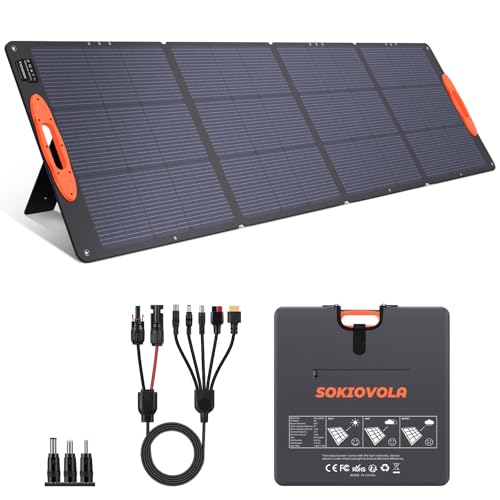
SOKIOVOLA N-Type 16BB 220W Portable Solar Panel

2PCS Solar Panels 3.4W 6V Charge for Motorized Blinds
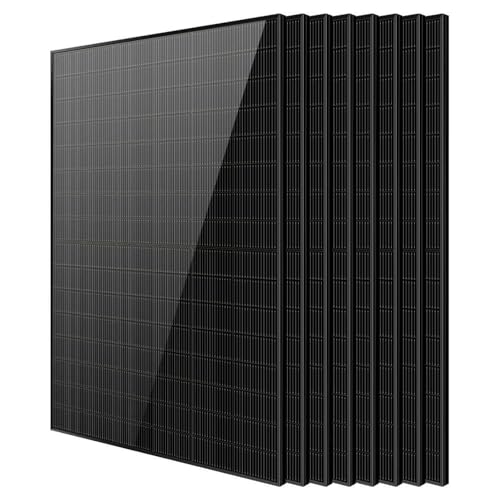
SUNGOLDPOWER UL61730 N-Type 8PCS 450W Bifacial Solar Panels
More Details On Our Top Picks
Foldable panels make the most sense for travel, backup power, and day trips where storage space matters. This Renogy option keeps the setup mobile, and the USB-A and USB-C outputs give you more ways to top up small devices while the panel sits out in the sun.
The IP65 rating means the housing is built to shrug off dust and light water exposure, which matters for campsites, tailgates, and RV stops. The kickstand format also suits a user who wants a panel that leans into the sun without turning setup into a puzzle.
Strong Points
- Foldable build makes storage easy in a van or trunk.
- USB-A and USB-C outputs support smaller charging jobs without extra adapters.
- Kickstand support helps you angle the panel more neatly at camp.
- IP65 protection suits dusty patios and damp outdoor spaces.
Small Caveats
- Portable format suits shorter sessions more than fixed home installs.
- You’ll still need compatible gear for larger battery-bank setups.
- Foldable panels need a bit more handling than rigid rooftop panels.
Feature Snapshot
Who It Suits Best
You’re a strong match for this panel if you camp, travel by RV, or want a tidy backup option for occasional outages.
A Better Fit Elsewhere
Callsun N-Type 16BB 400W Bifacial Solar Panel fits better for you if you want a fixed, higher-output setup for a rooftop or open mounting area.
Four separate 100-watt panels give you flexibility that a single larger slab doesn’t always offer. That split layout works well for a shed, RV roof, small cabin, or a mixed mounting plan where space comes in uneven sections.
The N-type cell design and 16BB layout, meaning sixteen busbars that help carry current across the cell, point toward a more modern build than basic starter panels. IP68 waterproofing is a stronger protection class than the lighter portable picks above, so this one suits a more permanent outdoor installation.
Upsides
- Four-panel format gives you flexible placement choices.
- 100-watt pieces are easier to position than one oversized module.
- IP68 rating fits exposed outdoor mounting better than casual portable gear.
- Works across 12V and 24V battery setups.
- Good match for layered systems on homes, boats, and farms.
Worth Noting
- Four panels mean more mounting and wiring decisions.
- Rigid modules need a proper structure, not a quick grab-and-go setup.
- Plenty of output, but the installation plan needs to be sorted first.
Core Details
Who Should Grab It
You’ll get the most from this set if you want a flexible, fixed installation for a cabin, RV, boat, shed, or farm outbuilding.
Where A Sibling Pick Shines
Renogy 200W Portable Solar Panel Black suits you better if you need something foldable for trips and temporary backup use.
Solar gear often gets attention while the wiring gets overlooked, yet the cable run can shape how cleanly a system works. This 10AWG kit gives you 50 feet in black and 50 feet in red, which helps keep polarity clear across longer outdoor runs.
That tinned copper construction matters because copper wire with a protective tin coating tends to resist corrosion better in RV, marine, or off-grid environments. It’s a sensible add-on for someone finishing a roof array, battery bank, or custom build where reaching the controller is half the job.
Bright Spots
- Long paired lengths support larger layouts and wider spacing.
- Black and red insulation makes polarity easier to track.
- 10AWG sizing suits many photovoltaic extension jobs.
- Tinned copper is a smart fit for outdoor and marine use.
Areas To Watch
- Wiring is useful, but it’s only one part of the system.
- Long cable runs still need careful planning to reduce wasted space.
- Connector matching matters, so check your components first.
Details At A Glance
Built With In Mind
You’re the right match for this kit if you’re wiring a solar array, battery setup, RV, boat, or cabin and want generous cable length.
Skip It When
ECO-WORTHY 400W Solar Panels N-Type 4pcs 100 Watt 18V Monocrystalline makes more sense when you need the actual panels rather than the extension wiring.
Small solar cells serve a very different job from the panels above, and that’s the point. These 50mm by 50mm monocrystalline cells are aimed at DIY charging projects, classroom builds, and compact custom panels where you care more about experimentation than raw output.
The listed 2V, 160mA rating gives you a grounded sense of scale, and the source note says the figures are measured under strong sunlight. In full sun, the voltage can rise above 2V, so the cells fit tinkering and learning more naturally than heavy everyday charging.
Reasons To Buy
- Mini format suits craft-style solar projects.
- Monocrystalline cells fit compact panel assembly.
- Useful for learning how solar builds are put together.
- Small size makes handling easier for hands-on work.
Softer Spots
- Output is modest, so expectations need to stay realistic.
- These cells suit builds, not whole-house charging.
- Careful soldering and layout planning matter more here.
Feature Rundown
Perfect Match For
You’ll like this set most if you enjoy small-scale solar projects, school builds, or prototype work that rewards careful assembly.
Another Choice May Suit
SUNGOLDPOWER UL61730 N-Type 8PCS 450W Bifacial Solar Panels fit much better for a full installation on a home, shed, or energy-storage setup.
Bifacial panels collect light on both sides, so they make the most sense in open setups where the rear face can catch reflected light. That design pairs nicely with rooftops, marine mounts, and ground frames, especially when the mounting surface is bright or spaced off the deck.
The 16BB cell layout and the 25% efficiency claim point toward a more advanced module than the portable foldables earlier in the list. Dual-module parallel anti-shade design suggests that shading on one section does not automatically ruin the whole panel pair, which matters in van roofs and uneven mounting spots.
Highlights
- Bifacial construction can make better use of reflected light.
- Two 200W panels give you flexible placement.
- Anti-shade layout helps in partly obstructed locations.
- Works across 12V and 24V systems.
- Strong fit for rooftop and off-grid installations.
Points To Note
- Bifacial panels need the right mounting conditions to shine.
- Rigid modules are more installation-heavy than portable gear.
- High output can be overkill for very small systems.
Technical Sheet
Right Fit For
You’re a strong match here if you’re building a rooftop, marine, or home backup setup and want more output per panel pair.
Look Elsewhere When
Renogy 200W Portable Solar Panel Black suits you better if portability matters more than fixed-install output.
Compared with the bifacial Callsun set, this Renogy panel leans into straightforward single-face design for a cleaner, more familiar install. That makes it appealing for van roofs, cabin roofs, home backup arrays, and farm outbuildings where you want solid output without extra mounting complexity.
The N-type 16BB cell structure and the 25% high-efficiency claim point to a modern panel built for practical use rather than tinkering. For a standard 12V or 24V system, it fits the kind of setup that needs to keep working after the first season, not just on day one.
Best Bits
- Single-panel format keeps the install straightforward.
- 16BB layout supports a more current-focused cell design.
- Works with 12V and 24V systems.
- Good for rooftops, cabins, vans, and farm power plans.
Honest Caveats
- No bifacial rear-side capture for reflective mounting setups.
- Rigid panel needs a permanent mounting plan.
- Better suited to planned systems than casual carry-along use.
At A Glance
Whose Shelf It Belongs On
You should consider this panel if you want a dependable fixed-install module for a van, roof, cabin, or small property power plan.
Swap It Out When
SOKIOVOLA N-Type 16BB 220W Portable Solar Panel is the better match for travel use and folding storage.
Portable power-station users usually want a panel that folds well, sets up quickly, and stores without hogging the van. This SOKIOVOLA model fits that rhythm, and the compatibility list covers EF, Jackery, Bluetti, and Anker power stations.
ETFE, a durable fluoropolymer top layer, adds a more hard-wearing finish than plain entry-level surfaces, and IP68 protection gives it a stronger outdoor profile than the Renogy portable pick above. That combination makes it a sensible travel companion for camping and short RV trips, though it still asks for a little handling care because foldables always do.
Standout Traits
- Foldable format suits travel and compact storage.
- Power-station compatibility covers several common names.
- ETFE surface supports a tougher outer layer.
- IP68 rating suits exposed outdoor use well.
- 220W output gives you a useful portable step up.
Trade Offs
- Portable structure still needs careful packing and setup.
- Best value comes when your power station matches it closely.
- Foldable panels are less set-and-forget than rigid ones.
Feature Card
Who Will Love This
You’re the right match for this panel if you travel with a compatible power station and want a foldable charging source for campsite use.
Where Another Pick Suits Better
Renogy Solar Panels 200 Watt N-Type 200W Solar Panel 16BB is a better fit for permanent roof or cabin installs.
Motorized blinds need a very different kind of solar support than rooftop modules, and this pair is built around that narrow job. The 3.4W, 6V format suits lithium battery operated shades with a USB-C connector, so the focus stays on steady low-power charging rather than household-scale output.
That makes it a neat fit for windows, sunrooms, and rooms where you’d rather keep cords out of sight. The trade-off is obvious, though: this is a specialty piece, so it belongs in a blind system, not in a broad solar plan.
Best Bits
- Purpose-built for motorized shades and blind systems.
- USB-C connector lines up with modern low-power setups.
- Two-panel pack gives you a matched pair.
- Small footprint keeps window areas tidy.
Room For Improvement
- Very narrow use case compared with the bigger panels above.
- Low wattage limits it to specific accessory charging jobs.
- Needs the right blind hardware to make sense.
Core Details
The Right Fit
You’re the best match for this pair if your home uses lithium battery operated shades and you want a tidy charging solution for them.
Another Choice May Suit
Renogy 200W Portable Solar Panel Black fits you better if you need a general-purpose portable panel for camping or backup power.
This is the heavy-duty end of the shortlist, and the scale shows it immediately. Eight 450W bifacial panels suit larger energy-storage builds, charging stations, and home systems where output matters more than portability.
Compared with the 200W Renogy and SOKIOVOLA picks, this set is about serious array planning rather than travel convenience. The 16BB monocrystalline construction is built for a more permanent solar job, and bifacial design gives you more reason to think about mounting height, spacing, and the surface below.
Reasons To Buy
- Eight-panel package suits larger system planning.
- 450W rating per panel points to serious output.
- Bifacial design can make use of reflected light.
- Good fit for storage banks and fixed power stations.
- Monocrystalline build matches a mainstream solar setup style.
Minor Gripes
- Large set demands a real installation plan.
- Heavy-duty format is not meant for quick mobility.
- Bifacial panels work best with careful mounting conditions.
Quick Facts
Made For
You’re looking at the right pick if you’re building a large home, storage, or charging system and need a high-output panel set.
Reach For A Different Pick When
JaeJaes 2PCS Solar Panels 3.4W 6V is the better match for motorized blinds and other tiny load jobs.
How To Choose The Right Prices On Solar Panels
Start With The Job, Not The Wattage
Solar panels do very different jobs, so the first question is always what you want to power. A 200W foldable panel can make sense for a camper or backup kit, while an 8-panel 450W array belongs in a much larger installation.
That’s why size alone can mislead you. Match the panel style to the place you’ll use it, like a van roof, a shed, a cabin, or a window blind system, and the shortlist gets easier fast.
Check The Build Type And Mounting Plan
Portable panels work well for travel and temporary setups because they fold and store cleanly. Rigid modules, by contrast, fit roof mounts and fixed frames better because they expect a more permanent home.
Bifacial panels add a rear-side light capture angle, which can help in open spaces with reflective surfaces below. The trade-off is that they need a smarter mounting plan than a plain flat panel.
Match Voltage And System Compatibility
Voltage is the quiet detail that keeps a solar plan from becoming a headache. A 12V or 24V compatible module fits common battery systems, while a 6V accessory panel belongs in a much smaller setup.
That same idea applies to connectors and outputs, too. USB-A, USB-C, and power-station compatibility matter because the right plug saves you from adapter clutter and mismatched gear.
Think About Daily Handling
Some panels will live on a roof for years, while others move in and out of a trunk every weekend. Folding hinges, panel count, and cable length all shape how easy the system feels after the first month.
For most home or RV setups, the smoother choice is the one you can install, clean, and store without fuss. That’s the sort of practical detail that turns a decent panel into a sensible long-term fit.
Things Worth Knowing First
Common Shopping Slip Ups
One common mistake is pairing a panel with the wrong job, like expecting a tiny blind charger to handle broad off-grid power. Another is ignoring installation needs, which matters a lot with rigid and bifacial panels.
Connector mismatch is worth watching too. A simple look at voltage, output type, and system compatibility keeps you from ending up with gear that looks right but doesn’t suit your setup.
Where The Extra Money Goes
Higher-tier solar panels often bring better cell layouts, stronger weather resistance, or more advanced panel structures. N-type cells, 16BB layouts, and bifacial construction are the kinds of details that usually push a panel above the basic tier.
You’re also paying for convenience in some cases, such as easier placement, more flexible mounting, or better fit with demanding environments. That matters most for rooftops, marine installs, and larger home systems where the gear stays in place.
Frequently Asked Questions
Are portable solar panels useful for backup power?
Yes, portable panels work well for small backup needs, especially with battery stations and travel gear. They suit shorter sessions and lighter loads better than a full roof array.
What does bifacial mean in solar panels?
Bifacial means the panel can gather light from both the front and rear sides. That helps most in open setups with reflective surfaces below the module.
Do I need 12V or 24V compatibility?
You need the voltage that matches your battery system and controller plan. A compatible rating makes setup easier and helps the panel fit the rest of the system cleanly.
What makes 10AWG wire useful in solar setups?
10AWG refers to a conductor size that suits many solar extension jobs. It gives you a solid middle ground for routing power across longer distances.
Are small solar cells useful on their own?
Small cells are mainly for DIY projects, prototypes, and learning builds. They make more sense as building blocks than as stand-alone charging tools.
Closing Thoughts
Prices On Solar Panels make the most sense once you tie them to a real job, not a vague wish list. A foldable 200W panel, a 400W rigid set, a wire kit, and a blind charger all live in different lanes, so the right choice depends on your space and your load. Start with how you’ll mount it, how often you’ll move it, and what you need to charge, then the rest falls into place without much drama.
