

Keeping an RV battery topped up gets a lot easier once the solar kit matches the way you travel. A weekend camper, a full-time rig, or a storage setup all ask for different panel sizes, controller types, and carry weight, so the right pick saves hassle before the sun even comes out. Some of these fold flat for tight cabinets, while others lean more toward maintenance duty than campsite power. You’ll see both styles here, along with the trade-offs that come with each.
Quick Look At The Shortlist

Renogy 200W Portable Solar Panel

EBL 200W Portable Solar Panel

DOKIO 200W Foldable Solar Panel Suitcase
DOKIO 100W Foldable Solar Panel Suitcase

SOLPERK 30W12V Solar Battery Charger Maintainer

ECO-WORTHY 10W 12V Solar Battery Charger Maintainer

ZOUPW 100W Portable Solar Panel
FlexSolar 20W 12V Solar Panel Charger Kit
Renogy 100W Portable Solar Panel
More Details On Our Top Picks
Renogy’s 200W foldable setup gives your RV battery more breathing room than the smaller maintenance panels below. The built-in USB-A and Type-C outputs also make sense during a campground stop, especially when you’re juggling a power station, phones, and a trailer battery at the same time.
The kickstand format keeps setup straightforward, and the IP65 rating points to solid dust and splash resistance for outdoor travel. You’ll still want to plan for storage space, because a 200W folding panel is handy, but never tiny.
Strong Points
- 200W output suits longer stays and higher daily draw.
- USB-A and USB-C ports add useful device charging on site.
- Foldable build makes transport easier than a rigid panel.
- Kickstand layout helps you set a useful angle without fuss.
Small Caveats
- Bulk is the trade-off, so cabinet space matters.
- The extra outputs help, though they do not replace a full charging system.
- Owners may want to keep the folding hinges clean after dusty trips.
Feature Snapshot
Who It Suits Best
RV campers who want a portable panel with extra charging options will get the most from this one.
A Better Fit Elsewhere
DOKIO 200W Foldable Solar Panel Suitcase suits you better when suitcase-style carry and a more traditional controller-focused setup matter more.
EBL’s 200W panel looks built for campers who want connector flexibility without jumping into a more complex roof-mounted system. The MC-4 and Anderson output setup helps when your power station or RV hardware prefers one connector over the other, which saves adapter clutter.
The four kickstands matter more than they sound, because panel angle gets annoying fast on uneven ground. You may appreciate that extra stability during a long stop, though the broad folding format still needs room in a trunk or storage bay.
What We Like
- MC-4 and Anderson output support broad compatibility.
- Four kickstands help with placement on rough campsite ground.
- 200W size gives useful charging capacity for RV travel.
- Foldable format keeps the panel portable for moving days.
Points To Note
- Connector variety helps, though you still need the right input on your gear.
- Four kickstands add setup flexibility, but they also add parts to keep track of.
- The panel can feel large for quick, one-night stops.
Core Details
Who Will Love This
You’ll like this most if your RV setup already uses MC-4 or Anderson connections and you want flexible placement.
Swap It Out When
Renogy 100W Portable Solar Panel suits smaller rigs better when you want less bulk and a lighter carry.
DOKIO’s suitcase-style 200W panel leans into straightforward utility, which is exactly what many RV owners want. At 26 pounds and a folded size of 30 x 26 inches, it’s not light, but the carry format makes the weight easier to manage than a loose, awkward panel bundle.
The included charge controller keeps the kit more self-contained for 12V batteries, boats, and emergency use. Compared with Renogy’s 200W foldable unit, this one feels more like a classic field kit than a multi-port charging station.
Upsides
- Suitcase format helps you carry and store the kit neatly.
- Charge controller comes included, which simplifies the setup path.
- Works across RVs, boats, power stations, and backup use.
- 200W output gives useful range for longer off-grid stays.
- Self-contained style suits people who dislike piecing together extra parts.
Worth Noting
- Twenty-six pounds is a real carry, especially for frequent moves.
- The larger folded footprint needs more storage room than the 100W options here.
- Owners commonly prefer a padded spot to protect the suitcase edges in transit.
Technical Sheet
Best Suited To
RV owners who want a self-contained solar suitcase and do not mind extra weight should feel comfortable here.
Another Choice May Suit
EBL 200W Portable Solar Panel suits you better when connector flexibility and four kickstands matter more than a suitcase layout.
This DOKIO kit trims the footprint down to a friendlier 100W size, and that matters more than people expect during quick campsite setups. At 10.1 pounds with a folded size of 19.3 x 23.8 inches, it slips into the “easy to carry, easy to stash” category without feeling flimsy.
The waterproof 10A controller, USB ports, and 9.85-foot cable make it more flexible than a bare-bones panel. Compared with the 200W suitcase above, it gives up output, but it asks for less storage and less lifting, which is a fair trade for smaller RVs.
Highlights
- 100W size works well for lighter RV charging needs.
- 10.1-pound weight keeps transport manageable for one person.
- Included USB ports help with small device charging.
- 9.85-foot cable adds breathing room during placement.
- Built-in controller reduces the number of separate pieces you need to manage.
Room For Improvement
- 100W output is enough for modest needs, not larger power gaps.
- The controller helps, though full sun and panel angle still matter a lot.
- Storing the cable neatly keeps the kit less tangled between trips.
At A Glance
Right Fit For
You’ll appreciate this most in a smaller RV, where storage space and easy carrying matter as much as output.
Look Elsewhere When
DOKIO 200W Foldable Solar Panel Suitcase suits larger battery demands better when you can handle more size and weight.
SOLPERK’s 30W charger sits in a different lane from the larger folding panels above. It’s better thought of as battery upkeep gear for a car, RV, boat, or motorcycle, which makes it useful for storage periods and low-draw maintenance rather than campsite loads.
The MPPT controller is the real selling point here. MPPT means maximum power point tracking, a control method that helps the panel work more efficiently as light changes, so the kit feels more tuned for steady upkeep than a simple trickle setup.
Reasons To Buy
- MPPT control helps the panel adapt better to changing light.
- 30W output suits maintenance rather than heavy charging.
- Works across several vehicle types, which helps shared garages and mixed fleets.
- Waterproof design fits outdoor storage better than indoor-only gear.
Areas To Watch
- Thirty watts is modest, so this is not the answer for bigger RV charging jobs.
- It suits upkeep more than fast replenishment.
- Mounting hardware needs careful placement to keep the panel aimed well.
Details At A Glance
Whose Shelf It Belongs On
You’ll get the most value from this during storage seasons, especially for vehicles that sit more than they move.
A Better Fit Elsewhere
FlexSolar 20W 12V Solar Panel Charger Kit suits you better when you want a simpler maintenance setup with lighter-duty hardware.
ECO-WORTHY goes even smaller than SOLPERK, and that narrower focus can be exactly what an idle vehicle needs. The OBDII connection is the standout detail, since it gives a cleaner fit for certain car setups and makes the charger feel more tailored to storage duty.
This 10W maintainer belongs in garages, marinas, and RV storage spots where the goal is simple upkeep. You may find it less suitable for larger battery recovery jobs, but for light maintenance it stays pleasantly straightforward.
Best Bits
- 10W size is easy to live with for maintenance duty.
- OBDII connection suits select vehicle setups neatly.
- Waterproof build makes outdoor storage less fussy.
- Compact format is simple to move and tuck away.
Honest Caveats
- Output is modest, so expectations should stay centered on upkeep.
- OBDII fit narrows the best use cases.
- Cleaning the panel regularly helps preserve output in dusty storage areas.
Core Details
Built With In Mind
Drivers and RV owners who want a small maintenance panel for storage periods will appreciate the simple footprint here.
Reach For A Different Pick When
SOLPERK 30W12V Solar Battery Charger Maintainer suits you better when you want a stronger upkeep kit with MPPT control.
ZOUPW goes after durability in a very direct way, starting with a 1.6 mm tempered glass surface. Tempered glass is heat-treated glass made to handle more wear than thinner panel surfaces, so this kit feels better suited to rougher travel, dusty sites, and less pampered storage.
The included 20A PWM controller keeps the package practical for 12V batteries and power stations. PWM means pulse width modulation, a simpler controller style than MPPT, and that fits the product’s clear emphasis on a sturdy, self-contained 100W kit rather than a highly optimized one.
Bright Spots
- Tempered glass surface gives the panel a tougher feel for travel.
- IP68 waterproof rating suits harsher outdoor exposure than lighter-duty kits.
- 100W size is a sensible middle ground for many RV setups.
- 20A controller and included cables keep the kit ready to use.
- Storage bag adds convenience after you break camp.
Minor Gripes
- Tempered glass can add confidence, though it also suggests a more careful carry.
- PWM control is simpler than the more advanced controller style found in some pricier kits.
- Many owners will want to keep the glass clean so dust does not dull output.
Feature Rundown
Perfect Match For
You’ll like this most when your RV travel includes dirt roads, wet weather, or frequent pack and unpack cycles.
Where A Sibling Pick Shines
Renogy 100W Portable Solar Panel suits you better when you want a lighter-feeling foldable kit with tempered glass and a different controller approach.
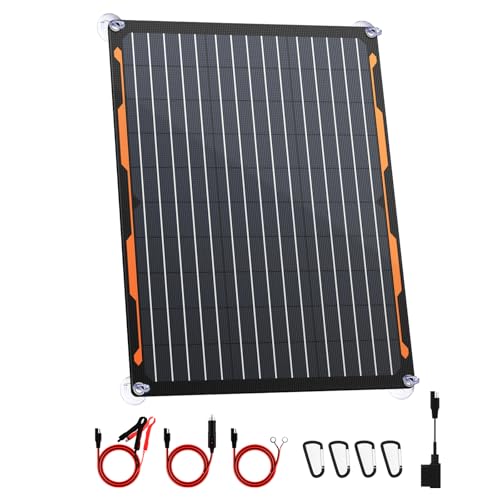
FlexSolar keeps things stripped down in a useful way, with a built-in charge controller and a 20W output that fits maintenance tasks more than active RV replenishment. That makes it a friendly match for vehicles that sit between trips, especially where a simple, portable charger is easier to manage than a larger panel kit.
The included cigarette plug and alligator clips widen its compatibility with cars, boats, RVs, and tractors. Compared with the larger Renogy and EBL panels, it’s a maintenance tool first, and that clarity is refreshing.
Best Bits
- Built-in controller keeps the kit compact and straightforward.
- Cigarette plug and alligator clips broaden the hookup options.
- 20W size fits light maintenance tasks nicely.
- Waterproof construction helps during outdoor storage use.
Trade Offs
- Low output means it belongs in maintenance duty, not bigger charging jobs.
- Small size is convenient, though it also limits speed.
- Keeping the panel aimed well matters a lot at this wattage.
Core Details
Who Should Grab It
You’ll get the most use from this on vehicles that spend long stretches parked and only need light maintenance.
Skip It When
SOLPERK 30W12V Solar Battery Charger Maintainer suits you better when you want more output and MPPT control.
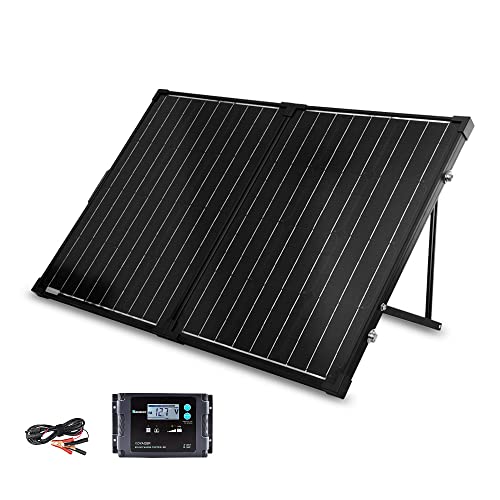
Renogy’s 100W kit feels like the neat middle ground in this lineup. The 25% efficiency claim matters because higher conversion can help in tight spaces, and that’s useful on an RV roofline, campsite table, or narrow storage deck where panel area is limited.
The 20A charger controller and tempered glass build make the package more complete than a bare panel. Compared with DOKIO’s 100W suitcase, this one leans more toward performance per square foot, which suits space-conscious setups that still want respectable charging behavior.
Highlights
- 25% efficiency helps make better use of available panel area.
- 100W output fits many RV battery charging needs well.
- 20A controller gives the kit a more complete charging setup.
- Tempered glass adds a sturdier feel for regular travel use.
Minor Gripes
- 100W is still a middle-weight option, so larger battery demands may call for more panel.
- The rigid tempered-glass style asks for a bit more care in transit.
- Cleaning and careful storage help preserve the better-efficiency advantage over time.
Feature Card
The Right Fit
You’ll appreciate this most when storage space is tight but you still want a 100W kit with stronger efficiency than basic options.
Where Shoppers Go Wrong
DOKIO 100W Foldable Solar Panel Suitcase suits you better when a lighter suitcase shape and USB ports matter more than efficiency.
How To Choose The Right Portable Solar Panels For Rv Battery Charging
Match Panel Size To Your Battery Habits
Start with how often your RV sits still and how much power you draw between drives. A 10W or 20W maintainer works for storage duty and light upkeep, while 100W and 200W panels fit camping, boondocking, and longer off-grid stays better.
The right number depends less on marketing language and more on your real routine. A family that uses lights, fans, and a power station at camp will feel the difference fast, while a weekend storage setup can stay simple and small.
Look Closely At Controllers And Connectors
The controller manages how power reaches the battery, so its type matters. MPPT usually suits owners who want more efficient adjustment in changing light, while PWM gives you a simpler, more direct setup that often keeps costs and complexity down.
Connector style matters just as much. MC-4, Anderson, alligator clips, cigarette plugs, and OBDII each fit different gear and vehicle layouts, so the best panel is the one that matches your RV battery path without extra adapters cluttering the compartment.
Think About Portability In Real Life
Weight, folded size, and handle style decide how pleasant the panel feels after the first trip. A 26-pound suitcase works fine for a set place, but a 10-pound foldable panel feels easier for quick moves, shorter stops, and smaller storage bays.
Durable surfaces also matter. Tempered glass usually adds a tougher outer layer, while waterproof ratings like IP65, IP68, or a simple waterproof claim help the panel stand up better to campsite weather and road dust.
Balance Output With Storage Space
Higher wattage helps, yet bigger panels ask for more room and more careful handling. That’s why a 200W unit often suits long stays, while a 100W kit feels friendlier for mixed travel, and a 30W maintainer keeps parked vehicles ready without crowding the garage.
The cleanest choice is the one you’ll actually carry, aim, and store without frustration. For many RV owners, that practical fit matters as much as raw power.
Things Worth Knowing First
Mistakes Worth Dodging
Many shoppers focus on wattage alone and forget the controller, connector, and storage size. That can leave you with a panel that sounds strong on paper but feels awkward in a real RV compartment.
Another common miss is buying more output than your routine needs. A storage-only vehicle rarely needs a 200W panel, and a small weekend rig often does fine with a lighter foldable kit.
When Paying More Pays Off
Higher-tier panels usually justify the extra spend with stronger materials, better controller hardware, or more usable efficiency. Tempered glass, larger panels, and more complete accessory sets can reduce the need to patch together separate parts.
The upgrade makes sense when your RV stays out often, your battery demands are higher, or your storage area rewards a cleaner all-in-one kit. In that setting, the added convenience can matter more than the upfront gap.
Frequently Asked Questions
Can A Portable Solar Panel Really Maintain An RV Battery?
Yes, the right panel can keep a 12V RV battery topped up during storage or lighter use. A maintainer-sized model works best for parked vehicles, while larger foldable panels suit active off-grid use.
What Size Panel Works Best For Weekend RV Trips?
For many short trips, 100W gives a sensible balance between output and portability. A 200W panel makes more sense when your battery load is heavier or your stays stretch longer.
Do You Need MPPT Or PWM?
MPPT is the more efficient style and often suits people who want better performance in changing light. PWM is simpler and still works well for straightforward setups, especially on smaller kits.
Are Foldable Panels Easier To Store?
Yes, foldable panels usually fit RV bays and closets more easily than rigid panels. The trade-off is that hinges, latches, and cable management deserve a little care.
What Matters More, Wattage Or Portability?
Wattage matters for charging reach, but portability matters for everyday use. The best balance comes from a panel you can carry, place, and store without dreading the process.
Final Thoughts
The right portable solar panel for RV battery charging depends on how you travel, not just how much power the box claims. Larger 200W panels suit longer stays and fuller setups, while 100W kits feel easier to live with for mixed travel, and the small maintainer models shine during storage. Connector fit, controller type, and folded size all matter once the panel leaves the product page. Choose the one that fits your rig, your storage space, and your habits, and the rest gets much easier.
