

Portable solar charging makes sense when wall outlets are far away and your gear still needs to stay useful. Campers, hikers, RV travelers, and anyone putting together a backup setup will find very different strengths in the seven picks below. Some are panel-first choices built for direct sunlight, while others are power banks with solar support for slower top-ups. The right fit depends on how much power you carry, how you store it, and how often you’re moving.
The Shortlist At A Glance

SOLUPUP Solar Panels 30W Portable Foldable Solar Charger

Jackery HomePower 3600 Plus Portable Power Station

BLAVOR Solar Power Bank 10,000mAh Portable Wireless Charger

YELOMIN 38800mAh Solar Power Bank

SOARAISE Solar Power Bank 48000mAh Wireless Portable Charger
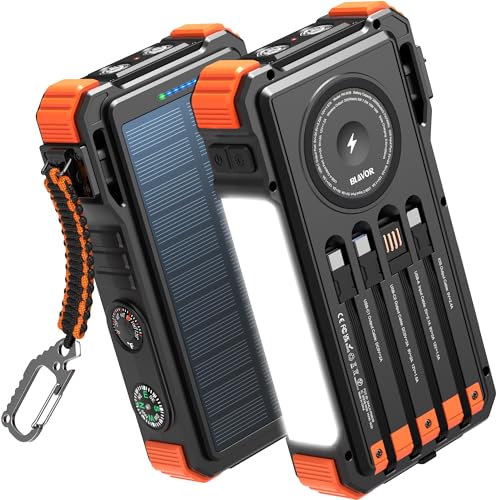
BLAVOR Solar Power Bank 20000mAh Built-in Cables

BigBlue 28W High-Efficiency Solar Panel Charger
More Details On Our Top Picks
That 30W foldable panel setup is aimed at people who want sunlight to do the work without hauling a bulky rig. The USB-A and USB-C outputs make it friendlier for phones, tablets, and smaller power banks, and the built-in smart chip is there to help match devices and steady the charge flow.
You may find this especially handy on camping weekends or long park days, where a panel can sit open while your devices stay nearby. The IPX5 water resistance rating points to splash tolerance, not submersion, so the practical sweet spot is dry bags, tent edges, and decent weather.
What We Like
- USB-A and USB-C outputs cover common gear without adapters.
- Foldable design stores neatly in a pack or vehicle bin.
- Smart charging logic helps match output to the connected device.
- Auto-reconnect behavior is useful after passing clouds or shade.
- IPX5 splash resistance suits outdoor use around damp ground.
Small Caveats
- Panel charging depends heavily on direct sun and open placement.
- It is built for lighter electronics, not large appliances.
- The folding surfaces need careful packing to avoid wear.
Feature Snapshot
Who It Suits Best
Campers, hikers, and weekend road trippers who want a direct solar panel for small electronics will get the most from it.
A Better Fit Elsewhere
BigBlue 28W High-Efficiency Solar Panel Charger fits backpackers who want a slimmer panel-first setup with dual USB-C and USB-A output.
This one sits in a different lane from the panel-first picks, because a portable power station stores energy rather than just passing it through. The included 2 x 200W solar panels and 3,584Wh LFP battery give you a setup built for home backup, RV stops, and longer outages, with room to expand far beyond a casual weekend kit.
LFP means lithium iron phosphate, a battery chemistry known for steady output and long service life patterns in larger systems. The trade-off is weight and footprint, so this is the sort of unit that lives in a garage, an RV bay, or another fixed spot instead of your daypack.
Reasons To Buy
- Large battery capacity supports more demanding backup needs.
- 3600W AC output opens the door to household-style gear.
- Expandable architecture gives you room to scale later.
- Included solar panels simplify a fuller off-grid setup.
- Well suited to RV living, emergency prep, and base-camp use.
Areas To Watch
- Size and weight make it impractical for carry-around use.
- More capacity means more space planning at home or in an RV.
- It does far more than the smaller phone-focused picks, which raises the commitment.
Core Details
Built With In Mind
Homeowners, RV travelers, and off-grid planners who need stored power instead of a simple charger will appreciate it most.
Swap It Out When
Jackery HomePower 3600 Plus is overkill for quick phone top-ups, where SOLUPUP Solar Panels 30W Portable Foldable Solar Charger stays lighter and easier to carry.
BLAVOR keeps the format small, which makes sense for commuters and light travelers who want backup power without a brick in the bag. A 10,000mAh battery is enough to steady a phone through a busy day, while the wireless pad and USB-C port keep cable clutter down.
The twin flashlight setup adds utility after dark, especially on camping trips or during a packed-out commute home. Solar input on a power bank like this is better treated as emergency support than a primary charging plan, so the stored battery is doing most of the real work.
Highlights
- 10,000mAh capacity suits everyday phone backup.
- Wireless charging trims the number of cords you need.
- USB-C support keeps it current with common charging setups.
- Dual flashlights help in tents, cars, and dark corners.
- Compact size slips into a day bag with little fuss.
Points To Note
- Solar input should be viewed as a backup option.
- Smaller capacity means less room for tablets or long stretches away from outlets.
- Wireless charging can be slower than a direct cable in common use.
Details At A Glance
Who Should Grab It
Shoppers who want a small, everyday power bank with a few outdoor-friendly extras will get along with it well.
Another Choice May Suit
YELOMIN 38800mAh Solar Power Bank fits campers who want a much larger reserve and do not mind a larger carry load.
YELOMIN aims at capacity-first use, which is useful on long weekends, fishing trips, and emergency kits where you want more reserve than a pocket-sized bank gives you. USB-C fast charging and three output paths make it more flexible than the leaner BLAVOR 10,000mAh option, though it also asks for more bag space.
The dual LED flashlights are a sensible add-on for tents and car trunks, and the bigger battery helps reduce how often you need to think about recharging the pack itself. The honest read is that this kind of unit rewards people who plan ahead rather than people who travel ultra-light.
Upsides
- 38,800mAh capacity offers a much larger reserve than compact banks.
- USB-C fast charging helps keep turnaround time reasonable.
- Three output paths support multiple charging styles.
- Dual LED flashlights add practical utility after dark.
Worth Noting
- Bigger capacity usually means a larger and heavier carry.
- Solar power bank charging still depends on usable sunlight.
- The size makes it less pocket-friendly than BLAVOR’s smaller model.
Quick Facts
Whose Shelf It Belongs On
Campers, emergency-prep shoppers, and anyone who wants a high-capacity backup bank will appreciate the format.
Look Elsewhere When
BLAVOR Solar Power Bank 10,000mAh Portable Wireless Charger fits everyday carry better for people who care more about size than reserve.
SOARAISE leans into sheer versatility, and that matters if your pack needs to cover several devices without much planning. Wireless charging, four attached cables, four solar panels, and both PD and QC 3.0 fast charging give it a toolbox feel rather than a single-purpose profile.
That kind of layout works well for group camping, shared travel bags, or a desk drawer that pulls double duty in emergencies. The trade-off is that more features usually mean a more cluttered body, so this is less elegant than the BLAVOR 20,000mAh model and less mobile than the smaller banks.
Best Bits
- 48,000mAh capacity gives you a very large power reserve.
- Four built-in cables cut down on accessory juggling.
- Wireless charging adds another convenient option.
- PD and QC 3.0 support broaden fast-charge compatibility.
- Four solar panels suit long outdoor backup use.
Honest Caveats
- Many built-in parts can make the body feel busy.
- Large capacity and extra hardware usually add bulk.
- Solar charging remains dependent on daylight conditions.
Technical Sheet
The Right Fit
Travel groups and outdoor setups that juggle several devices at once will get the most from it.
Skip It When
BLAVOR Solar Power Bank 20000mAh Built-in Cables is easier to carry for daily use and smaller bags.
This version splits the difference between pocket-friendly and carry-everything, which is why it stands out for daily backup use. Built-in cables, wireless charging, USB-C, and support for Apple Watch charging make it especially handy for commuters who want fewer loose accessories in a bag.
The flashlight and 20W fast charging add practical value without turning the unit into a bulky emergency brick. Compared with SOARAISE, it feels more restrained and easier to live with, though the trade-off is less sheer capacity for long camping stretches.
Positives
- Built-in cables reduce the need to pack extras.
- Wireless charging helps with quick phone placement.
- Apple Watch charging support adds useful niche compatibility.
- 20W fast charging fits routine daily top-ups well.
- Flashlight and mid-size capacity suit mixed everyday use.
Softer Spots
- It gives up some reserve compared with the largest banks.
- Built-in parts can make cleaning and storage a bit fussier.
- Solar support is still best treated as supplemental power.
Feature Rundown
Best Suited To
Commuters and travelers who want one bank to cover several small devices will like its tidy approach.
Where A Sibling Pick Shines
SOARAISE Solar Power Bank 48000mAh Wireless Portable Charger makes more sense for longer outdoor stays and bigger charging loads.
BigBlue is the cleanest panel-first option in the group, and that matters for backpackers who want a charger to disappear into the rest of the load. Dual USB-C and USB-A output make it easier to serve modern phones, tablets, GPS units, and a backup power bank from one folding panel.
Compared with SOLUPUP, it shifts the emphasis toward a slimmer solar panel charger profile instead of splash resistance and smart-chip language. The trade-off is plain enough: you gain simplicity and lose the extra device-facing features that some campsite setups like.
Strong Points
- 28W output is well matched to light portable charging needs.
- Dual USB-C and USB-A ports improve connection flexibility.
- Folding panel form helps with packing and transport.
- Works well for phones, tablets, GPS units, and power banks.
Points To Note
- Like most panel chargers, it still depends on strong sunlight.
- It does not try to do as much as the larger bank-style picks.
- Open-panel use takes a bit more setup space than a pocket bank.
Core Details
The Right Fit
Backpackers and field travelers who want a lean panel charger with broad device compatibility will appreciate it most.
Reach For A Different Pick When
SOLUPUP Solar Panels 30W Portable Foldable Solar Charger makes more sense for campers who want IPX5 splash resistance and smart charging behavior.
How To Choose The Right Portable Solar Chargers
Match The Form To The Trip
Panel chargers and power banks solve different problems, so the first question is how you travel. A foldable panel makes sense for camping tables, RV sites, and base camps, while a battery bank fits bags, pockets, and car consoles better.
That split matters more than wattage alone. A 30W panel is handy in daylight, but a 20,000mAh or 48,000mAh bank behaves more like stored insurance once the sun drops.
Check Output And Device Fit
USB-C, USB-A, wireless pads, built-in cables, and AC output each serve a different kind of gear. Phones and earbuds are easy to cover, but tablets, watches, and small appliances need the right port mix and enough power headroom.
Think about the device you carry most often, then check the connector path that saves the most fuss. That is usually where the best match shows up.
Look At Capacity With Real Use In Mind
mAh, or milliamp-hour, is the battery size figure on power banks, and bigger numbers usually mean more stored charge. The catch is that larger capacity also brings more size and weight, which can turn a simple carry into a chore.
For daily carry, moderate capacity keeps the load sane. For car camping, emergency kits, or RV living, the larger packs start making sense fast.
Don’t Ignore Build And Outdoor Handling
Outdoor gear takes knocks, heat, dust, and awkward packing, so construction matters. Folding seams, port covers, splash resistance, and cable storage all affect how well the item survives normal use.
You do not need the toughest shell for every trip, but you do need a design that matches the environment. A lightweight panel can be enough for fair-weather hikes, while a bigger bank suits gear that stays in a glove box or emergency tote.
A Quick Reality Check
Common Shopping Slip Ups
Many people focus on the headline wattage and ignore the rest of the build. A solar panel with modest output can still work well if it folds neatly and has the right ports, while a huge bank can feel clumsy during short outings.
Another miss is expecting solar input to behave like wall charging. Sunlight is helpful, but storage capacity and device draw still do most of the heavy lifting.
What The Higher Tier Buys
More expensive models usually pay for larger batteries, more output options, better charging control, or a sturdier shell. In this category, you are often paying for convenience as much as raw capacity.
That upgrade makes sense for RV travel, emergency prep, or multi-device family use. For a phone and a headphone case, a simpler setup usually covers the job without the extra bulk.
Frequently Asked Questions
Are Portable Solar Chargers enough for daily phone use?
For many commutes and weekend trips, yes, especially when the unit includes a real battery and not just a small panel. Solar input works best as support, while the stored battery handles the everyday job.
What matters more, panel wattage or battery capacity?
Panel wattage matters most for direct solar charging, while battery capacity matters most for stored backup power. The right answer depends on whether you want sunlight-first use or a pack you can carry anywhere.
Do built-in cables help in practice?
They help a lot when you want fewer loose cords in a bag or glove box. The trade-off is that built-in parts can make the unit a little less tidy to clean and pack away.
Is wireless charging worth having?
Wireless charging is handy for quick placement and less cable clutter. It usually matters most for phones, while other devices still benefit more from a direct cable.
What should you choose for camping?
Camping setups usually do best with either a folding solar panel or a high-capacity power bank. Panel-first models suit sunny campsites, while larger banks suit shaded sites or night-heavy use.
Closing Thoughts
You now have a cleaner way to sort portable solar chargers by travel style, device mix, and storage space. The panel-first picks make sense for daylight setups, while the larger banks work better when you want reserve power on hand. For home backup or RV use, the Jackery class sits in a different category altogether, and that difference is worth respecting. Choose the format that fits how you actually move, not the one with the biggest number on the box.
