

Picking solar panels gets easier once you match the panel shape, wattage, and wiring style to your space. Portable foldable picks suit camping and backup power, while rigid modules make more sense for rooftops, cabins, sheds, and RV installs that stay put. The right choice can save you from awkward mounting, weak charging, or oversized panels that are hard to place.
This roundup focuses on monocrystalline options with different jobs in mind, from compact travel gear to higher-output arrays for fixed systems. You’ll see where each one fits, what it asks in return, and which setup it pairs with best. That makes the shortlist useful whether you want a lean off-grid kit or a more permanent solar layout.
Quick Look At Our Top 9

Renogy 200W Portable Solar Panel 200W Foldable Solar Panel with Kickstand

ECO-WORTHY 400W Solar Panels N-Type 4pcs 100 Watt 18V Monocrystalline

DOKIO 400W Solar Panel 31V Monocrystalline 24V Off-Grid Systems
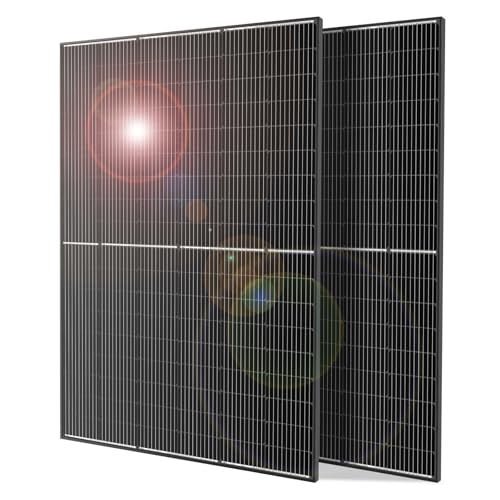
DOKIO 800W Solar Panel Set Two 400W 31V Panels for 24V Off-Grid Systems

JJN Bifacial 425 Watt Solar Panel N-Type UL 61730 16BB Solar Panels

Renogy ShadowFlux Solar Panels N-Type Anti-Shading Panels 200W

FlexSolar 100W Foldable Portable Solar Panel Charger IP67 Waterproof

N-Type 16BB 400W Bifacial Solar Panel 2Pcs 200 Watt Solar Panel for 12V/24V Systems

N-Type 16BB 200 Watt Solar Panel 2×100W Solar Panels 25% High Efficiency Monocrystalline PV Module
More Details On Our Top Picks
Portable panels live or die by how easily they move from trunk to site, and this Renogy unit leans into that job. The foldable format, kickstand, and USB-A plus Type-C outputs make sense for camping, roadside backup, or a small RV setup where convenience matters more than a permanent mount.
The IP65 rating points to dust resistance and protection against light water exposure, which helps in campgrounds and changing weather. You may still find the foldable style less tidy than a fixed panel on a roof, but for travel use that trade-off is usually worth it.
Strong Points
- Folds down for easier packing in a hatch, trailer, or storage bay.
- Built-in kickstand helps you angle it without extra hardware.
- USB-A and Type-C outputs add direct charging options for smaller devices.
- IP65 protection makes it a steadier pick for outdoor use than a bare indoor-style panel.
Things To Consider
- Foldable gear takes more setup and stow space than a rigid roof panel.
- The lighter travel design suits portable power more than a fixed homestead array.
- Owners commonly need to keep the hinges and folding seams clean so grit does not build up.
Feature Snapshot
Who It Suits Best
Weekend campers, RV travelers, and anyone who wants a panel they can move around easily will get the most from this layout.
A Better Fit Elsewhere
Renogy ShadowFlux Solar Panels N-Type Anti-Shading Panels 200W suits you better for a fixed spot with changing light and less need for portability.
This ECO-WORTHY set makes more sense for a system you plan to build out piece by piece. Four 100W panels give you layout flexibility, which helps on a roof, a shed, a boat deck, or a farm outbuilding where space gets divided in awkward ways.
The 18V format suits common 12V and 24V battery setups, so the set fits a broad range of off-grid jobs. The trade-off is simple, though: four smaller panels can mean more wiring and more mounting points than a single large module.
What We Like
- Four-panel layout gives you more placement options in tight or irregular spaces.
- 100W sections are easier to handle than a single oversized panel.
- 18V output suits common battery-based off-grid builds.
- IP68 protection is a strong fit for exposed outdoor installations.
- 16BB cell layout points to denser conductor spacing, which often helps energy capture on the panel surface.
Points To Note
- More panels usually mean more brackets, more cable routing, and a longer install day.
- The smaller format is less streamlined than a single rigid module.
- Regular cleaning matters on dusty roofs and barn tops, especially with multiple panels collecting debris in seams.
Core Details
Who Will Love This
You get the most from this set if your project needs modular placement, especially on a cabin roof, boat, or split mounting surface.
Skip It When
DOKIO 400W Solar Panel 31V Monocrystalline 24V Off-Grid Systems makes more sense for you if you want a single rigid panel and fewer parts to mount.
For a fixed installation, this DOKIO panel has the kind of straightforward shape that makes planning less fussy. The 31V output is aimed at 24V off-grid systems, so it fits yards, cabins, and sheds where a more permanent setup usually matters more than portability.
The included 9.84 ft cable, aluminum frame, and pre-drilled holes make the installation story clearer than it is with folding gear like the Renogy portable panel. The catch is that a rigid module needs a defined mounting surface, so it suits people who already know where the panel will live.
Highlights
- 31V output lines up well with 24V off-grid system planning.
- Pre-drilled mounting points can save time during install.
- Aluminum frame brings a sturdy feel without adding a lot of visual bulk.
- 9.84 ft cable gives you some breathing room for routing.
Minor Gripes
- Rigid format leaves less room for temporary or portable use.
- The single-panel setup offers fewer placement choices than ECO-WORTHY’s four-piece kit.
- Outdoor dust and leaf buildup still call for routine wipe-downs, especially on shed and yard installs.
Details At A Glance
Built With In Mind
This suits homeowners and cabin setups that want a single rigid module for a planned off-grid layout.
Look Elsewhere When
FlexSolar 100W Foldable Portable Solar Panel Charger IP67 Waterproof is the better match for travel use and frequent packing.
Where the 400W DOKIO panel is a clean single-module choice, this set is for setups that need more total output from the start. Two 400W panels give you a stronger base for larger off-grid systems, especially in yards, sheds, or other fixed locations.
The same 9.84 ft cable length, aluminum frame, and pre-drilled holes keep the install logic familiar. The trade-off is plain, though, since handling two large panels takes more space, more planning, and usually a steadier mounting plan than the smaller kits above.
Upsides
- Two-panel bundle gives you a higher-output starting point.
- Rigid build suits permanent outdoor mounting.
- Pre-drilled holes help keep installation straightforward.
- Aluminum frames support a more stable long-term setup.
Room For Improvement
- Bulk and weight matter more here than on the smaller Renogy or FlexSolar picks.
- It asks for more roof or ground space than a single 400W module.
- Owners commonly need to keep mounting points checked and tightened over time, especially on exposed structures.
Technical Sheet
The Right Fit
Choose this set for a stationary project that needs more total panel output and a straightforward mounting path.
Swap It Out When
JJN Bifacial 425 Watt Solar Panel N-Type UL 61730 16BB Solar Panels suits you better if you want a single higher-output module with bifacial design.
This JJN panel moves into a more ambitious tier, with bifacial construction that can capture light from both sides. That design matters most on rooftops, farms, and open ground where reflected light has a chance to do real work.
It also supports 12V, 24V, and 48V PV systems, so the panel suits a broader range of electrical plans than the DOKIO fixed panels. The honest trade-off is that bifacial benefits depend on the mount and surrounding surface, so a dark, cramped install may not use the format as well.
Reasons To Buy
- Bifacial layout can make smart use of reflected light.
- 425W output suits larger builds that need more per-panel capacity.
- 16BB cell arrangement points to a denser internal conductor structure.
- Support for 12V, 24V, and 48V systems widens compatibility.
- Works well for roof, farm, and open-site installations.
Softer Spots
- Bifacial gains depend on placement and surface reflection.
- It feels more specialized than the simpler DOKIO and Callsun options.
- Installers usually need to think carefully about tilt, spacing, and what sits beneath the panel.
Core Details
Best Suited To
This is a strong match for homeowners, farm setups, and larger off-grid builds that can use a high-output panel with room around it.
Where A Sibling Pick Shines
Renogy ShadowFlux Solar Panels N-Type Anti-Shading Panels 200W is the smarter fit for mixed-light spots where shade handling matters more than raw panel size.
Shade tolerance is the headline here, and that makes the ShadowFlux panel feel different from the more straightforward DOKIO modules. In mixed-light yards, tree-lined roofs, or RV spots that lose sun through part of the day, that kind of design can matter more than squeezing out a slightly simpler build.
The 12V and 24V support keeps it practical for common off-grid setups, while the 25% high-efficiency PV modules speak to a tighter electrical design. You may still want a tidy, well-planned mount, because even a shading-aware panel works better when the rest of the system is clean and organized.
What We Like
- Anti-shading design is useful where branches, vents, or railings cut across the light path.
- 200W size works for compact systems without feeling oversized.
- 12V and 24V compatibility keeps it easy to place in common builds.
- High-efficiency module design suits tight roof space.
Worth Noting
- The benefit depends on real-world shade patterns around your install site.
- It’s a more specialized choice than a plain single-panel setup.
- Cleaning still matters, especially where pollen or leaf debris collects along frame edges.
Feature Rundown
Perfect Match For
You fit this panel best when your installation sits near trees, railings, or other partial shade sources.
Another Choice May Suit
JJN Bifacial 425 Watt Solar Panel N-Type UL 61730 16BB Solar Panels is the better route for open, high-output installs with room to catch reflected light.
The FlexSolar unit keeps travel power simple, especially for phone charging, power banks, and portable stations. USB-C with PD 3.0, USB-A with QC 3.0, and DC ports give you several ways to plug in without relying on extra adapters.
Its foldable shape and IP67 protection make it easier to carry and easier to trust outdoors than many bare-bones panels. Still, a 100W portable charger belongs in the lightweight class, so it suits device charging and smaller station support more than a full home backup plan.
Bright Spots
- Foldable build packs neatly for travel or vehicle storage.
- USB-C, USB-A, and DC outputs cover several charging needs.
- IP67 rating gives strong outdoor protection for dusty or wet conditions.
- Lightweight format works well for day trips and short stays.
Areas To Watch
- 100W output is better for devices and smaller power stations than large backup systems.
- Foldable gear needs careful handling so the hinges and cable runs stay orderly.
- Compared with Renogy’s 200W portable panel, this one is more about compactness than capacity.
Quick Facts
Whose Shelf It Belongs On
This belongs with campers, road trippers, and anyone who wants a compact solar charger for small electronics.
Where A Sibling Pick Shines
Renogy 200W Portable Solar Panel 200W Foldable Solar Panel with Kickstand suits you better if you want more portable output for an RV or backup kit.
This Callsun set brings a lot into one package, starting with two 200W bifacial modules. That dual-module layout is useful for RV roofs, marine use, or home arrays where you want a more flexible arrangement than one large rigid panel.
The dual-module parallel anti-shade design gives it a different angle than the JJN bifacial pick. In practice, that makes the set easier to think about for installations that deal with mixed light or want to spread capture across two pieces rather than one broad slab.
Best Bits
- Two-module layout can simplify placement on split roof sections.
- Bifacial design may improve use of reflected light around the panel.
- 12V and 24V compatibility fits many off-grid builds.
- Parallel anti-shade structure helps it suit mixed-light situations.
Small Caveats
- Two modules still mean more mounting work than a single-panel setup.
- The advantages depend on your roof angle and surrounding surfaces.
- Keep the mounting hardware checked after installation, especially on moving platforms like RVs and boats.
Feature Card
Right Fit For
You’ll like this more if your build needs a pair of modules and you want room to place them across a roof or deck.
Reach For A Different Pick When
DOKIO 800W Solar Panel Set Two 400W 31V Panels for 24V Off-Grid Systems makes more sense for you if your main target is a simpler fixed array with higher total output.
This Callsun option keeps the footprint compact by splitting output across two 100W panels. That layout makes sense in RV bays, cabin roofs, marine installs, and other places where a single large panel would be harder to fit.
The 25% efficiency claim and 16BB cell structure push it toward a more refined compact setup than the simpler portable gear. You still get a split-panel system, so the upside is layout flexibility, while the trade-off is more wiring than a one-piece module.
Positives
- Two smaller panels are easier to place in tight spaces.
- Compact format works well on RVs, cabins, and marine setups.
- High-efficiency positioning suits installations where every inch matters.
- 16BB cell design suggests a denser internal path.
Honest Caveats
- Two pieces mean more connection points than a single-panel design.
- You’ll want a clean mounting plan so the split layout does not become messy.
- For larger arrays, JJN’s 425W bifacial panel offers more per-panel output.
Core Details
Who Should Grab It
This fits you best when your roof, van, or cabin needs a compact two-panel layout instead of one large panel.
A Better Fit Elsewhere
FlexSolar 100W Foldable Portable Solar Panel Charger IP67 Waterproof makes more sense for you if travel storage and device charging matter more than a fixed install.
How To Choose The Right Monocrystalline Solar Panels
Match Form Factor To The Space
Portable foldable panels suit travel, tailgate setups, and backup use because they pack away fast. Rigid panels make more sense for roofs, sheds, cabins, and farm structures where the panel can stay in one place. The wrong format causes the most frustration, especially when you need to move a heavy module through a narrow entry or store it in a small compartment.
Check Voltage And System Fit
Voltage matters because it needs to line up with your battery bank or charge controller plan. The 18V ECO-WORTHY set, the 31V DOKIO panels, and the 12V/24V Callsun and Renogy options all serve different build styles. Matching these numbers saves you from awkward compatibility problems and keeps the system easier to expand later.
Think About Shade, Weather, And Mounting
Shade-sensitive sites benefit from anti-shading or bifacial designs, while open rooftops can favor simpler high-output panels. Water resistance also matters, but it’s not the only durability clue, because frames, hinges, and mounting holes affect long-term use too. For a windy roof or a moving RV, sturdy mounting hardware matters almost as much as the panel itself.
Pick Output For Your Real Load
Smaller 100W portable panels work well for phones, small stations, and light camping gear. Larger 400W and 425W panels suit refrigerators, bigger battery banks, and fixed off-grid power plans. That extra capacity often costs more because you’re paying for more panel area, more complex cell construction, and in some cases bifacial or shade-aware engineering.
What To Weigh Before You Commit
Mistakes Worth Dodging
Many setups go sideways because the panel size looks good on paper but leaves no room for cabling, mounting, or airflow. Another common slip is pairing a panel with the wrong voltage range, which can make the rest of the system harder to tune. A compact RV roof or a narrow shed ceiling needs measurement first, not guesswork.
People also overlook cleaning and access. A panel that sits under trees or beside a dusty road needs easier reach than a panel on a clean, open roof. That practical detail often matters more than a flashy wattage figure.
The Upgrade Payoff
Higher-tier panels usually justify their price through stronger build materials, better cell layouts, bifacial surfaces, or more thoughtful shade handling. Those features matter most in demanding installs, like roofs with partial shadow or sites where space is tight and every watt counts. For a simple backup kit, a basic foldable panel can still be the smarter spend.
Spending up makes more sense when the panel will work hard every day. A farm array, an RV that travels often, or a cabin with limited roof space can benefit from the extra structure and output. For a casual weekend kit, that same upgrade can feel unnecessary.
Frequently Asked Questions
What makes monocrystalline panels a strong fit for small spaces?
They use a cell style that usually fits more output into a smaller footprint than bulkier alternatives. That makes them useful on RV roofs, cabins, and compact off-grid layouts.
Are foldable panels good for permanent installs?
Foldable models are better for travel, backup use, and temporary setups. Rigid panels are usually the cleaner choice for permanent mounting.
Why do some panels have bifacial designs?
Bifacial panels can collect light from both sides, which helps in open areas with reflective surfaces. The gain depends a lot on where and how you mount them.
Does 16BB matter for everyday use?
16BB refers to a denser conductor layout inside the panel, which can support more even current flow. It tends to matter most in performance-focused systems.
How do you choose between 100W and 400W panels?
Think about the loads you want to support and the room you have available. Smaller panels suit mobile charging, while larger panels fit bigger battery-backed systems.
Closing Thoughts
The best monocrystalline panel for you comes down to where it will sit and how much space you can spare. Renogy and FlexSolar make the portable side easier, while DOKIO, JJN, and Callsun lean into fixed installs with more capacity or smarter layout choices. Pick the format that matches your roof, your trip, or your off-grid plan, and the rest of the system gets easier to live with.
