

Ground-mounted solar gear makes sense when roof space is tight, shaded, or already spoken for. You get more room to aim panels properly, along with easier access for cleaning, seasonal angle changes, and routine checks. This roundup focuses on portable panels and mounting hardware that fit everyday setups, from RV stops and cabins to backyard power projects. You’ll also see which items suit simple add-ons and which ones make more sense as part of a larger off-grid layout.
Quick Look At The Shortlist

Renogy 200W Portable Solar Panel, Foldable N-Type

Renogy Solar Panels 50 Watt, Monocrystalline

28 inch Solar Panel Mount, Adjustable Bracket

14-27 IN Adjustable Solar Panel Mount, Silver

2 Set Adjustable Solar Panel Tilt Mount Bracket, Silver
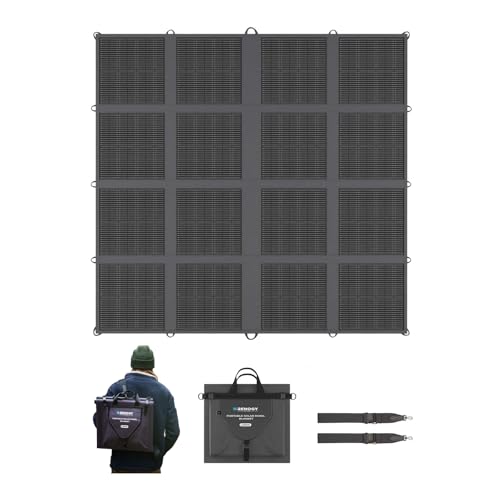
Renogy 400W Portable Solar Panel, Backpack-Size Foldable

14-27IN Solar Panel Mounting Brackets, 2 Sets
Renogy 200W Portable Solar Panel, Foldable N-Type

2 Sets (4Pcs) Solar Panel Mounting Brackets
More Details On Our Top Picks
Foldable panels like this make the most sense for mixed-use setups, where storage space matters as much as output. The kickstand helps you aim the panel without building a permanent frame, and the USB-A plus Type-C outputs give you a little more flexibility for everyday charging jobs.
The IP65 rating points to dust resistance and protection against water spray, which matters on campgrounds, job sites, and damp patios. Compared with the fixed mounts later in this list, this Renogy option is easier to move, though it asks you to set it up each time.
Strong Points
- Foldable format stores neatly in a vehicle or closet.
- Kickstand support makes angle changes quick and simple.
- USB-A and Type-C outputs add charging flexibility.
- IP65 protection suits damp outdoor use.
- Easy to reposition for changing sun paths.
Things To Consider
- Portable setup takes more handling than a fixed ground mount.
- The panel needs space to stand open and stay aimed well.
- Like most foldables, storing it carefully helps protect the hinges.
Core Details
Who It Suits Best
Travel campers and RV users who want a portable panel with a bit more everyday convenience will get the most out of it.
A Better Fit Elsewhere
Renogy 400W Portable Solar Panel, Backpack-Size Foldable suits heavier power station use better, especially for longer stays away from grid power.
A 50-watt panel sits in the sweet spot for small battery projects, where you want steady support without committing to a bulky setup. Monocrystalline means the panel uses single-crystal silicon, a panel type known for compact efficiency, so it can make sense for limited mounting space.
Compared with the bigger 200-watt portable picks, this one is a quieter fit for topping up 12V systems on an RV, trailer, cabin, or farm shed. The trade-off is obvious, though, since lower wattage means slower replenishment for larger loads.
Positives
- Small footprint suits tight mounting spots.
- Monocrystalline build favors efficient space use.
- Works well for 12V battery setups.
- Good match for add-on charging on RVs and cabins.
Worth Noting
- Fifty watts suits support duty more than heavy demand.
- Large battery banks will need more panel capacity.
- Permanent mounting hardware may still be needed.
Feature Snapshot
Who Will Love This
You’ll appreciate this most for starter solar builds, battery maintenance, and modest off-grid tasks.
Skip It When
Renogy 400W Portable Solar Panel, Backpack-Size Foldable makes more sense for travelers who need much more output in a single carry-ready package.
This bracket is built for owners who want to control the panel angle instead of leaving it flat and hoping for the best. The 0° to 90° adjustment range is useful in places where sun height changes a lot across the year, and that wider movement makes it more adaptable than the simpler tilt brackets later in the list.
The 28-inch length gives you a longer support arm, which can help in garden, roof, warehouse, or tree-house installations. The trade-off is that larger adjustability usually means a little more planning during installation, especially around spacing and clearance.
Highlights
- 0° to 90° adjustment gives wide aiming range.
- Long 28-inch arm supports flexible placement.
- Useful for several fixed-install settings.
- Lets you tune angle through the seasons.
Areas To Watch
- Setup takes more planning than a basic tilt stand.
- Moving parts usually reward careful hardware checks over time.
- Best results depend on solid mounting and clear sun access.
Details At A Glance
Built With In Mind
You’ll get the most from this in a fixed spot where seasonal angle control matters more than portability.
Where A Sibling Pick Shines
Oungy 14-27 IN Adjustable Solar Panel Mount, Silver is the simpler route for panel sizes up to 450 watts when you want a shorter, more compact mount.
Aluminum alloy usually lands well for mounts because it balances strength with manageable weight, and that matters on roofs, RV tops, and ground frames. This one also supports panel sizes from 100 to 450 watts, so you can pair it with a broader spread of setups than the smaller tilt brackets in this roundup.
The 15 to 30 degree tilt range is practical rather than flashy, which is often what you want once a panel is staying in one place. The catch is simple, you’ll need enough room for the tilted stance and enough care during installation to keep the angle stable.
Bright Spots
- Aluminum alloy build keeps weight down.
- Fits a wide panel wattage range.
- 15 to 30 degree tilt suits fixed installs.
- Good match for ground, roof, and RV use.
Small Caveats
- Mount-only format means the panel itself is separate.
- Tilt setup needs adequate clearance.
- Hardware checks matter in outdoor installations.
Quick Facts
Right Fit For
You’ll like this for semi-permanent mounting jobs where a sturdy, adjustable frame matters more than portability.
Look Elsewhere When
PFCTART 28 inch Solar Panel Mount, Adjustable Bracket suits bigger angle changes better when you need a wider tilt range for seasonal positioning.
This two-set bracket looks aimed at straightforward installs on flat roofs, RV tops, and boats, where you want a clean tilt without overcomplicating the mount. Like the Oungy option, it uses aluminum alloy, so the appeal is a fairly sturdy frame that still stays manageable during setup.
The supported panel range stretches from 50 to 400 watts, which gives you more room than you’d expect from such a compact hardware kit. The trade-off is that tilt mounts still need careful alignment and secure fastening, especially on surfaces that flex or vibrate.
Reasons To Buy
- Two-set format suits paired mounting jobs.
- Aluminum alloy keeps the hardware sensible and light.
- Wide wattage support fits many common panels.
- Good for flat surfaces that need tilt.
Points To Note
- Mount-only package means you still need panels separately.
- Flat-surface installs need careful fastening and spacing.
- Regular hardware checks help on mobile setups.
Feature Card
Made For
You’ll get the most value from this in a straightforward RV, boat, or roof install that needs tilt without extra complexity.
Another Choice May Suit
KCUT 2 Sets (4Pcs) Solar Panel Mounting Brackets works well for shoppers who want a similar tilt setup with a slightly different bracket layout.
This is the serious-output option in the list, aimed at people who want a portable panel blanket rather than a fixed ground frame. At 400 watts, it can support much larger energy needs than the 200-watt Renogy panel earlier in the roundup, while still folding into a shape that’s easier to stash than rigid panels.
Renogy describes it as backpack-size, which helps explain the appeal for pickup, marine, and camping use where storage space gets tight fast. The honest trade-off is that a high-output portable panel still needs room to deploy, so portability doesn’t mean zero setup.
What We Like
- 400 watts suits bigger portable power demands.
- Foldable blanket format stores more easily than rigid panels.
- High-efficiency design helps make the most of surface area.
- Works well for travel rigs with limited storage.
- Useful for power stations and longer stays off grid.
Room For Improvement
- Needs a fair bit of open space to deploy.
- More output usually means more weight and handling.
- Best suited to owners comfortable with setup and packing routines.
Feature Rundown
Perfect Match For
You’ll like this most for longer camping trips, pickup builds, and power station use where output matters more than compact wattage.
Swap It Out When
Renogy 200W Portable Solar Panel, Foldable N-Type makes more sense for lighter carry needs and smaller storage spaces.
Some hardware kits are all about a narrow job, and this one is a bit broader thanks to the two-set layout plus the 14 to 27 inch adjustable range. That gives you enough room to work with roof, RV, and boat installs without jumping into a much larger mounting system.
The supported panel range reaches from 100 to 450 watts, so it overlaps nicely with the heavier Oungy mount. You may find it appealing when you want a straightforward bracket set rather than a more elaborate frame, though the exact fit still depends on your available mounting space.
Positives
- Two sets make paired mounting easier.
- Adjustable length gives useful install flexibility.
- Supports a broad span of panel wattages.
- Fits several common mobile and fixed setups.
Minor Gripes
- Brackets only, so the panel is a separate purchase.
- Mobile use benefits from periodic fastener checks.
- Clearance matters once the panel is tilted into place.
Technical Sheet
Whose Shelf It Belongs On
You’ll appreciate this if you want a practical bracket set for a roof, camper, or boat without overbuilding the setup.
Where Another Pick Shines
Oungy 2 Set Adjustable Solar Panel Tilt Mount Bracket, Silver is a better match for shoppers who want a similar mount style with a different support range.
This 200-watt Renogy model follows the same foldable logic as the first item, but the power-station focus is spelled out more directly here. For travel rigs, blackout kits, and off-grid stops, that combination of portability and moderate output often hits a useful middle ground.
The kickstand helps you set the angle without extra hardware, and the USB-A plus Type-C outputs add direct charging options for compatible gear. Compared with the 400-watt blanket, this one is easier to carry and store, though it gives up raw output for that convenience.
Best Bits
- Foldable shape keeps storage manageable.
- Kickstand helps with quick angle setup.
- USB-A and Type-C outputs increase utility.
- Good fit for smaller power station loads.
Softer Spots
- Portable use still means setup and pack-away time.
- Direct-output convenience does not replace full system planning.
- Storage care matters around the folding sections.
Core Details
Made With In Mind
You’ll get the best fit here as a carry-friendly panel for road trips, campsites, and backup power setups.
A Better Fit Elsewhere
Renogy 400W Portable Solar Panel, Backpack-Size Foldable suits longer trips and larger power stations better when output matters more than portability.
This bracket set keeps the idea simple, four pieces arranged as two mounting sets for tilt-based solar placement on flat surfaces, RVs, roofs, and boats. The built-in angle range of 15 to 30 degrees is the main selling point, since it helps direct panels toward better sun exposure without needing a more elaborate structure.
The listing also notes support for panel sizes from 50 to 400 watts, which gives the hardware a wider use window than some smaller bracket kits. The trade-off is that tilt hardware only earns its keep when the installation is done cleanly, so secure mounting and regular checks matter more than they would on a fixed indoor device.
Standout Traits
- Two full sets give you flexible mounting options.
- 15 to 30 degree tilt suits many flat installs.
- Supports a wide spread of solar panel sizes.
- Good for campers, roofs, and boats.
Honest Caveats
- Mount-only kit means panels are separate.
- Tilt hardware needs enough room to sit at angle.
- Outdoor installs benefit from occasional fastener checks.
Feature Snapshot
The Right Fit
You’ll like this most for a straightforward tilt mount on a roof, trailer, or flat surface where simplicity matters.
Reach For A Different Pick
Oungy 14-27 IN Adjustable Solar Panel Mount, Silver is a stronger match when you want a mount with a broader panel range and a more substantial arm.
How To Choose The Right Ground Based Solar Panels
Start With Your Space, Not The Wattage
The right choice starts with where the panel or mount will sit. A ground setup in a backyard behaves differently from an RV rack or a cabin landing, and the real question is whether you have room to aim the panel without shading it or bumping into walls, rails, or stored gear.
Portable panels help when you need flexibility, while fixed mounts make more sense once the location is settled. That split matters more than most specs, because a 400-watt panel that is awkward to place can be less useful than a smaller panel that sits at the right angle every day.
Match The Mount To The Panel
Mounts are not interchangeable filler pieces, they shape how the whole system behaves. A tilt bracket with a 15 to 30 degree range works well for a fairly steady site, while a wider-angle bracket helps when the sun path changes more across the year.
Panel weight and size matter here too. Aluminum alloy mounts usually suit outdoor use well because they stay relatively light, but you still need enough structural support under them, especially on roofs, trailers, and other moving platforms.
Think About Storage And Handling
Foldable panels earn their place when you move often or store gear in tight quarters. They pack better than rigid panels, though the fold lines, kickstands, and ports deserve careful handling so the hardware keeps its shape over time.
Ground-mounted brackets have the opposite personality, since they are less convenient to move but easier to leave in place. That trade-off suits homeowners, cabin setups, and workshop spaces where the panel can stay put and do its job without constant attention.
Look At Output As Part Of The Whole System
Wattage matters, but it does not work alone. A 50-watt panel can be plenty for small battery maintenance, while 200 watts or 400 watts better fits power stations, backup kits, and longer off-grid stays.
Direct outputs such as USB-A and Type-C add convenience for compatible devices, yet they do not replace a broader solar plan. The best match is the one that fits your panel space, charging goals, and willingness to handle setup, not just the biggest number on the listing.
What To Weigh Before You Choose
Common Shopping Slip Ups
Many people focus on wattage first and forget the mounting surface. That usually creates trouble later, because a strong panel still needs the right angle, enough clearance, and hardware that matches the job.
Another easy mistake is overlooking storage. A foldable panel helps in a vehicle or closet, while a bracket kit is better when the panel can stay outdoors or on a fixed frame.
The Upgrade Payoff
More expensive options in this category usually buy you more output, better efficiency, or a more adaptable frame. You also tend to get stronger materials, wider angle control, or a cleaner balance between size and power.
That upgrade makes sense for frequent travel, larger power stations, or a setup that stays outdoors a lot. For a modest cabin, shed, or RV top, a simpler panel or bracket can be the smarter spend.
Frequently Asked Questions
What makes a ground-based solar setup different from a roof setup?
A ground setup gives you more control over panel angle and easier access for cleaning or repositioning. Roof setups save ground space, but they usually offer less flexibility.
Do portable panels make sense for permanent use?
They can, but only in places where you want flexibility more than a fixed structure. A portable panel is best when you move it often or store it between uses.
How much tilt adjustment do you really need?
For many steady setups, a modest tilt range does the job well. Wider adjustment helps more when seasonal sun changes are pronounced or the site sits low to the horizon.
What kind of mount works best for flat surfaces?
A tilt bracket usually fits flat roofs, boats, and trailers well because it raises the panel toward the sun. The right choice depends on how much angle range you need and how much space you have for the panel to lean back.
Should you choose higher wattage right away?
Higher wattage helps when your battery bank or power station needs more input. Smaller systems often work better with a modest panel that fits the space cleanly and stays easy to handle.
Closing Thoughts
You get the best results from ground based solar gear when the panel, mount, and space all work together. Portable Renogy panels suit travel and backup use, while the Oungy, FAHKNS, PFCTART, and KCUT mounts make more sense for fixed-angle installs. Start with the space you have, then match the wattage and hardware to that setup. That keeps the whole system practical instead of merely large.
