

Cheap solar panels can make sense when you want backup power, a cabin setup, or a small charging project without overbuilding the system. You still need the right match, because a roof array, a portable charger, and a tiny DIY cell kit solve very different problems. This roundup focuses on the kind of use that shows up in real life, from RV trips and sheds to hobby electronics and pocket-sized builds.
Some options suit full-size off-grid plans, while others are better for lights, toys, or science projects. That split matters, because a panel that looks inexpensive can still be wrong for your wiring, storage space, or power needs. You’ll see the differences clearly below.
Quick Look At The Shortlist

ECO-WORTHY 400W Solar Panels N-Type 4pcs 100 Watt 18V Monocrystalline

Callsun N-Type 16BB 400W Bifacial Solar Panel 2Pcs 200 Watt

SOLUPUP Solar Panels 30W Portable Foldable Solar Charger

Micro Solar Panels with Wire 5PCS 5V 200mA Photovoltaic Solar Cells Kit

Renogy Solar Panels 200 Watt N-Type 200W Solar Panel 16BB

100W Solar Panel 25% High Efficiency 18BB 100 Watt Solar Panel

10pcs Mini Solar Panel 3V 150mA Epoxy Polycrystalline Solar Cell Panel
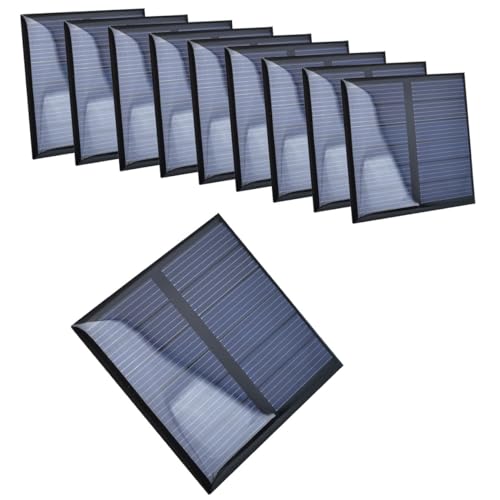
Ailejia 10pcs Mini High Efficiency Polycrystalline Solar Panel 3V 125mA
More Details On Our Top Picks
Four separate 100-watt panels give you layout flexibility that a single slab doesn’t. That matters on an RV roof, a shed, or a boat deck where space is awkward and mounting points rarely line up neatly.
The N-type cell design and 16-busbar layout point toward better current flow, while the IP68-rated waterproof housing adds peace of mind in damp, dusty places. The trade-off is simple, you’re handling a multi-panel setup rather than a single compact module, so planning and wiring take more attention.
Strong Points
- Four-panel layout makes placement easier on irregular surfaces.
- 100-watt pieces are easier to stage than one oversized module.
- IP68 enclosure suits outdoor use around rain, spray, and dust.
- Works across common 12V and 24V battery setups.
- Good fit for cabins, sheds, camping rigs, and marine spaces.
Things To Consider
- Four separate panels mean more mounting and cable planning.
- You’ll want a tidy install to keep the array easy to maintain.
- The format suits a planned system more than a quick grab-and-go setup.
Feature Snapshot
Who It Suits Best
You get the most from this pick when you’re building a small off-grid system and want to spread panels across a roof or frame.
A Better Fit Elsewhere
Callsun’s bifacial panel suits rooftop or ground-mounted setups better when you want rear-side light capture and a more performance-forward layout.
Compared with the ECO-WORTHY four-panel set, this Callsun pair leans harder into output-focused design. Bifacial means the rear side can also pick up usable light, which makes more sense on reflective roofs, bright ground surfaces, or open mounting frames.
The dual-module format is easier to organize than four separate panels, yet it still suits larger installs rather than tiny weekend kits. For van conversions or off-grid rooftops, that middle ground is handy, though the setup still rewards careful placement and plenty of open space around the modules.
What We Like
- Bifacial layout can take advantage of reflected light.
- Two 200-watt panels simplify layout versus a four-panel spread.
- 16-busbar cell design supports a cleaner current path.
- Fits common 12V and 24V systems.
- Strong match for rooftops, vans, marine installs, and open frames.
Points To Note
- Bifacial gains depend on the surface and mounting position.
- It still needs enough room to justify the panel size.
- Best results come from a neat, well-aimed install.
Core Details
Who Will Love This
You’ll appreciate this pick most in an RV, van, or rooftop build where you want stronger panel density without moving into a huge array.
Another Choice May Suit
Renogy’s 200-watt N-type panel suits you better when you want a single-module approach from a well-known solar brand with simpler placement.
After the fixed panels above, this foldable charger feels much more grab-and-go. The built-in USB-A and USB-C ports matter in camp or on a long hike because you can top up phones, tablets, or power banks without adding a bulky inverter.
The smart chip is a useful detail here, since it helps identify the connected device and manage charging behavior while the panel is in sun. Auto-reconnect after shade interruption is handy in mixed weather, though the real limitation is obvious, portable panels still depend on direct sunlight and a stable place to sit.
Highlights
- Foldable format packs more easily than rigid panels.
- USB-A and USB-C ports cover common handheld devices.
- Smart-chip control adds a more considerate charge path.
- Auto-reconnect behavior helps after brief cloud cover.
- IPX5 rating suits damp outdoor conditions and campsite use.
Worth Noting
- Direct sun matters more here than with roof-mounted panels.
- Folded gear needs dry, careful storage between trips.
- Thirty watts is practical for charging, not large appliances.
Details At A Glance
Built With In Mind
This suits campers, hikers, and commuters who want a portable top-up panel for phones and battery packs.
Where A Sibling Pick Shines
Callsun’s 400-watt bifacial pair is the better route for van builds or rooftop installs that need far more output.
Where the SOLUPUP charger serves travel, this FellDen kit sits at the opposite end of the scale. Each small panel is aimed at low-power projects, so it makes sense for school builds, basic charging experiments, or tiny solar demonstrations.
The wire-attached format is helpful because it removes a bit of setup friction for hobby work. Still, the modest output means this is about learning, lighting, and lightweight circuits, not household backup power, so expectations need to stay grounded.
Positives
- Small size works well for hobby benches and prototypes.
- Wire leads make starter wiring easier.
- Five-panel pack gives you extras for practice or repeat builds.
- Good for low-power learning projects and compact demos.
Softer Spots
- Output is modest, so it’s for small tasks only.
- Storage needs a bit of care to keep the leads tidy.
- Project success depends on using realistic low-power loads.
Quick Facts
Right Fit For
You’ll get the most value from this kit when you build small gadgets, classroom projects, or a miniature solar experiment table.
Skip It When
Renogy’s 200-watt panel fits much better for RV owners or cabin setups that need meaningful charging output.
The Renogy name matters to plenty of off-grid shoppers, and this 200-watt N-type panel fits that reputation without going overboard on size. Compared with the ECO-WORTHY multi-panel set, it simplifies planning by giving you a single higher-output module to place and wire.
That makes it a smart fit for van roofs, cabins, and farm sheds where you want a cleaner install and fewer separate pieces to manage. The trade-off is obvious, a single large panel asks for a more exact mounting plan, so cramped roof layouts may feel tighter.
Reasons To Buy
- Single-panel layout keeps the install straightforward.
- 200-watt output suits many mid-size off-grid jobs.
- N-type 16-busbar build points to a modern cell design.
- Works well in RV, marine, home, cabin, and farm settings.
- Good step up from smaller portable or hobby panels.
Areas To Watch
- One large module gives you less placement flexibility.
- The roof or frame needs enough clear space for mounting.
- Install planning matters more than it does with tiny panels.
Feature Rundown
Whose Shelf It Belongs On
This suits you best when you want one clean, mid-size panel for a more permanent off-grid install.
A Better Fit Elsewhere
The ECO-WORTHY four-panel set is easier to spread out across awkward roof space and may suit you better for a modular layout.
This Rvpozwer panel is the tidy middle path in the group. It’s still a 100-watt module, but the 18-busbar structure gives it a more modern build than the tiny hobby panels and a simpler footprint than the Renogy 200-watt option.
For RV roofs, trailers, marine setups, or a small home backup system, that size can be easier to place without crowding vents or racks. You may find the single-panel format friendlier for a first serious install, though you’ll still want enough open space to mount it cleanly.
Bright Spots
- 100-watt size fits compact systems neatly.
- 18-busbar design gives the panel a more current-minded layout.
- Works across RV, marine, rooftop, farm, trailer, and home use.
- Single-module format keeps storage and handling simpler.
Minor Gripes
- One panel still needs a clear mounting spot.
- It’s less flexible than a small multi-panel set.
- System sizing still needs to match your actual energy needs.
At A Glance
Made For
This is a good match for someone who wants a single 100-watt panel for a compact off-grid setup.
A Better Fit Elsewhere
Renogy’s 200-watt panel makes more sense for larger installs that need a stronger single-module output.
This Ailejia mini-panel pack is really about experiments, not heavy power. The 60 mm by 55 mm size keeps each panel easy to fit into toy builds, small science projects, or low-power lighting ideas without crowding the workspace.
The 3V, 150mA output means you’re working in a very modest range, which is useful for learning how solar charging behaves. The epoxy build should suit casual project handling, though these small pieces make the most sense when you keep wiring neat and expectations modest.
Best Bits
- Ten-panel pack gives you many practice parts.
- Small footprint suits toy builds and school projects.
- Epoxy finish helps the tiny panels feel more durable in casual use.
- Simple output profile makes it easy to learn with.
Room For Improvement
- Very low output limits the size of what you can power.
- Small parts need organized storage so they don’t get lost.
- Best suited to low-power electronics and demos.
Feature Card
Who Should Grab It
This fits hobbyists, students, and tinkerers who want a pile of tiny panels for learning projects.
Look Elsewhere When
Ailejia’s 3V 125mA mini panel is a better fit for little solar light builds where a smaller square footprint helps.
Compared with the FellDen mini pack, this Ailejia set trims the size a bit and drops into smaller spaces more easily. That makes it appealing for DIY solar lights, flashlights, and tiny charger concepts where the mount area matters as much as the output.
At 3V and 125mA per panel, it stays firmly in low-power territory, so you’ll want to treat it as a parts kit, not a power source for anything ambitious. For garden-light repairs or simple prototypes, that narrower focus can actually help.
Positives
- Smaller square format is handy in tight housings.
- Ten-piece pack gives you room for several builds.
- Good match for solar lights, flashlights, and practice circuits.
- Polycrystalline design keeps the format straightforward for hobby work.
Areas To Watch
- Output stays modest, so this is for tiny jobs.
- Small panels are easiest to manage with labeled storage.
- Better suited to light-duty projects than charging larger devices.
Feature Rundown
The Right Fit
This is a neat match for hobby setups, small solar lights, and compact device prototypes.
Where Another Pick Suits Better
FellDen’s 3V 150mA mini panel gives you a touch more output when a project needs a little extra headroom.
How To Choose The Right Cheap Solar Panels
Match Output To The Job
Start with the load, not the panel. A 100-watt or 200-watt module suits RV batteries, cabin storage, and small off-grid systems, while 30-watt portable gear is better for phones and power banks.
Mini 3V parts sit in a different category entirely, because they’re made for lights, toys, and science projects. The honest read is that the wrong output rating causes more frustration than the wrong brand name.
Decide Between Fixed And Portable
Rigid panels make sense on roofs, sheds, trailers, and marine frames where the panel can stay put. Foldable panels fit travel bags, campsite use, and quick charge sessions because they pack away with less fuss.
Portable gear usually gives you convenience, while fixed modules usually give you better long-term placement. That trade-off is easy to feel the first time you try to store a rigid panel in a tight vehicle.
Check The Cell Design And Mounting Needs
N-type and 16-busbar or 18-busbar layouts point to more modern panel construction, which matters when you want a cleaner path for current flow. Bifacial panels add another wrinkle, since the rear side can use reflected light in the right setup.
These features only help when the mounting environment matches them. A bifacial module on a dark roof with no clearance is a different story from one above a bright open surface.
Think About Everyday Ownership
Look at how you’ll store, clean, and wire the panel after the install. Four small panels may fit awkward roof shapes, yet they also mean more cables and more places for dust to gather.
Mini panels are easier to stash, but they disappear into tool drawers fast, so keep them sorted. Simple planning now saves you from fiddly maintenance later.
What To Weigh Before You Click
Mistakes Worth Dodging
One common slip is buying output that sounds useful but doesn’t match the device or battery bank. Another is treating a portable charger like a roof panel, then wondering why it needs direct sun and careful placement.
Mounting space gets overlooked too, especially on vans and trailers. Measure the real area first, then choose the panel shape that fits without blocking vents or hardware.
The Upgrade Payoff
Higher-tier panels usually earn their place through better cell design, stronger output, and more useful mounting formats. Bifacial construction, N-type cells, and multi-busbar layouts often cost more because they solve more specific problems.
That extra money tends to matter most on permanent installs, where cleaner wiring and better light use can pay off over time. For casual projects, a modest mini panel or a small portable charger is often enough.
Frequently Asked Questions
What Size Solar Panel Works For A Beginner?
A 30-watt portable panel or a 100-watt rigid panel is a manageable starting point. The better choice depends on whether you want travel charging or a fixed install.
Are Bifacial Solar Panels Worth Considering?
They make sense when the rear side can catch reflected light from a bright surface. On cramped or dark mounts, the extra capability matters less.
Can Mini Solar Panels Charge A Phone?
Mini 3V panels are better for lights, toys, and classroom builds than direct phone charging. The SOLUPUP portable charger is the stronger match for phone and power bank use.
Do Four Smaller Panels Work Better Than One Large Panel?
Four smaller panels can fit tricky spaces more easily and let you spread the layout around obstacles. One large panel is simpler to wire when the mounting area is open.
What Makes A Cheap Solar Panel A Smart Fit?
The right panel matches your storage space, output need, and installation style. A low-cost panel that fits the job well is usually the smarter purchase than a bigger module with the wrong shape.
Final Thoughts
The best cheap solar panels are the ones that fit your actual setup, not just your budget. A roof array, a foldable travel charger, and a handful of mini cells each solve a different problem, and the useful choice is the one that lines up with your space and power needs. For most households and weekend setups, that means starting with the simplest panel that still covers the job. From there, the shortlist above gives you a clear place to begin.
