

Camping power gets a lot easier when your panel fits the way you travel. Some setups need a lightweight foldable sheet for phones and a power bank, while others need enough output to keep a station topped off through a long weekend.
These eight picks cover that spread, from compact 30W options to heavier 400W suitcase-style panels. You can match the panel to your vehicle, your storage space, and how much off-grid gear you actually run.
Quick Look At The Shortlist

Renogy 200W Portable Solar Panel N-Type Foldable with Kickstand

ZOUPW 100W Portable Solar Panel 23.5% Efficiency Foldable Charger

FlexSolar 100W Foldable Portable Solar Panel Charger IP67 Waterproof

200W Portable Solar Panel 24% ETFE Foldable Charger

Renogy 400W Portable Solar Panel Foldable Suitcase for Power Stations

SOLUPUP Solar Panels 30W Portable Foldable Solar Charger USB-A USB-C
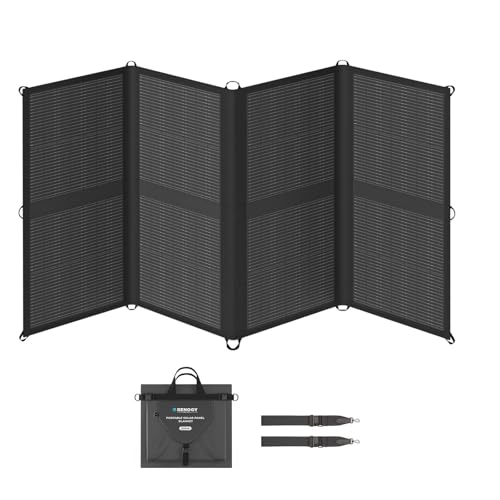
Renogy 200W Portable Solar Panel N-Type Solar Blanket Backpack-Size

110W Portable Solar Panel Foldable Charger 23.5% Efficiency
More Details On Our Top Picks
Renogy’s 200W foldable panel sits in a useful middle zone, big enough to matter for a power station, still manageable for campsite storage. The kickstand format helps you angle it toward the sun without much fuss, and the USB-A plus USB-C outputs make it handy for direct device charging on simple trips.
For most campers, the trade-off is obvious: you gain a stronger charging ceiling than the 100W picks, but you also carry more panel than a backpack-size blanket. The IP65 rating points to better dust and splash resistance than basic outdoor gear, which helps in dusty pull-offs or damp morning setups.
Strong Points
- 200W output gives you room for a power station instead of only small gadgets.
- Foldable construction packs down more neatly than a rigid panel.
- USB-A and USB-C outputs make short trips less dependent on extra adapters.
- Kickstand support helps you aim the panel without building a separate frame.
Points To Note
- It still takes more storage space than a 100W travel panel.
- Carrying and setup are easier with two people than alone for some trips.
- Folded fabric and hinges need a quick wipe before stowing after dusty use.
Feature Snapshot
Who It Suits Best
Weekend campers and RV travelers who want a balance between storage ease and meaningful charging capacity should look here first.
A Better Fit Elsewhere
Renogy 400W Portable Solar Panel Foldable Suitcase for Power Stations suits you better for larger station loads and longer off-grid stays.
The ZOUPW panel is for campers who want a straightforward 100W foldable charger that doesn’t eat up much room. Its 23.5% efficiency claim matters because higher conversion efficiency helps a smaller panel make better use of available sunlight, especially on shorter travel stops.
Compared with the Renogy 200W pick above, this one gives up raw output for easier packing and simpler handling. The IP67 waterproof rating is a useful comfort factor around wet grass, light rain, or a muddy picnic table, though you still want to dry and store it carefully after use.
Highlights
- 100W size fits neatly into smaller vehicle storage spaces.
- 23.5% efficiency helps the panel do more with the sun it gets.
- Compatibility notes for Jackery, EcoFlow River, Anker, and Bluetti make it easier to match a station.
- IP67 rating gives you a stronger wet-weather cushion than basic outdoor models.
Areas To Watch
- 100W output is better for lighter loads than for large stations.
- Foldable panels still need dry storage, especially after humid trips.
Core Details
Built With In Mind
You fit this panel best if your trips center on a smaller power station and your priority is easy transport over maximum output.
Where A Sibling Pick Shines
Renogy 200W Portable Solar Panel N-Type Foldable with Kickstand suits you better when you want more headroom for heavier campsite loads.
FlexSolar leans hard into direct device charging, which is useful when your trip is more about phones, power banks, and small electronics than about a large station. The PD3.0 USB-C port, QC3.0 USB-A port, and DC outputs cover a lot of modern gear without making you chase extra adapters.
That makes it different from the ZOUPW model above, which focuses more on station compatibility than built-in output variety. The honest read is that this is a very practical carry for short camping stops, though the 100W class still has the limits of a lighter panel.
Best Bits
- PD3.0 USB-C supports modern device charging needs.
- QC3.0 USB-A helps older cables and accessories stay useful.
- DC output broadens what you can plug in without extra hardware.
- IP67 resistance adds confidence around changing outdoor conditions.
Worth Noting
- Built-in port variety is handy, but it doesn’t replace a bigger station panel.
- More connectors also mean more cords to keep organized in camp storage.
Details At A Glance
Who Will Love This
Campers who charge several small devices directly, especially on weekend trips with limited gear, will get the most from this layout.
Reach For A Different Pick When
ZOUPW 100W Portable Solar Panel 23.5% Efficiency Foldable Charger suits you better if compatibility with a dedicated power station matters more than on-panel ports.
This TWELSEAVAN panel is built for campers who want strong output and a more feature-dense setup. ETFE means an ethylene tetrafluoroethylene surface layer, a protective coating that tends to hold up better than plain plastic film in outdoor use, and the 4 kickstands plus solar angle guide help you aim it with less guesswork.
Compared with Renogy’s 200W option, this one pushes harder on accessory count and panel aiming aids. The mix of MC4 output, Type-C 60W, QC3.0, and USB support makes it versatile, though the more feature-heavy layout also means more to manage during setup and packing.
Positives
- 24% efficiency gives this panel strong performance for its class.
- ETFE surface material is a smart choice for outdoor wear.
- Four kickstands help you stabilize the panel in more positions.
- Type-C 60W and MC4 output widen its use with stations and devices.
- Angle guide can make campsite positioning less of a guessing game.
Minor Gripes
- The extra ports and supports add setup steps.
- More parts mean more pieces to keep clean before folding away.
- It may feel like more panel than you need for very light outings.
Feature Rundown
The Right Fit
You suit this panel best when you want a feature-heavy 200W option for RV stops, base camp setups, or steady station charging.
Swap It Out When
Renogy 200W Portable Solar Panel N-Type Foldable with Kickstand is the simpler call for you if you prefer a cleaner layout and fewer pieces to manage.
Renogy’s 400W suitcase-style panel is the serious option in this group, aimed at people running larger power stations or handling broader campsite loads. It’s the kind of setup that makes sense for longer stays, multi-device households, or RV use where smaller panels would feel like a trickle instead of a stream.
The trade-off is plain: more output usually means more bulk and more handling, so this isn’t the casual grab-and-go choice of the SOLUPUP 30W panel. The IP67 rating is reassuring for outdoor use, and the sturdy kickstand helps, but storage space and setup room still matter a lot here.
Upsides
- 400W output gives you a much larger charging ceiling.
- Suitcase-style fold makes it easier to carry than a rigid panel of similar size.
- Plug-and-play design reduces setup friction for power-station users.
- Sturdy kickstand helps keep the panel angled during camp use.
- IP67 protection helps it cope with outdoor conditions.
Small Caveats
- It takes more room in a vehicle than smaller foldable picks.
- Large panels are easier to manage with open ground than with tight campsites.
- Wiping down hinges and fabric before storage helps keep it tidy.
At A Glance
Made For
You fit this panel best if your camping setup runs a larger station, an RV system, or several devices over longer stretches.
Look Elsewhere When
Renogy 200W Portable Solar Panel N-Type Foldable with Kickstand is the easier match for shorter trips and tighter storage spaces.
SOLUPUP keeps things simple, and that’s the whole point. The 30W output suits phones, small power banks, and light-duty topping off, while the built-in smart chip helps the charger identify devices and adjust output behavior without you doing anything extra.
Compared with every 100W and 200W option above, this is much more of a personal electronics panel than a station workhorse. The auto-reconnect function after sunlight returns is useful in changing shade, though the lower wattage means you’re planning for convenience rather than heavy campsite power.
Bright Spots
- 30W output keeps the panel light in scope and easy to carry.
- USB-A and USB-C ports make direct device charging straightforward.
- Smart chip handling helps with device recognition and charging control.
- Auto-reconnect behavior is handy after clouds or shade pass over camp.
Softer Spots
- Thirty watts is fine for small gear, not large stations.
- Built-in ports are practical, but they also limit how much you can power at once.
- Like most foldable gear, it’s better stored dry and flat after outdoor use.
Technical Sheet
Whose Shelf It Belongs On
You suit this panel best if your camping kit is small and your main job is keeping phones and a power bank going.
Where A Sibling Pick Shines
FlexSolar 100W Foldable Portable Solar Panel Charger IP67 Waterproof makes more sense for you if a power station enters the picture.
This Renogy model is the most storage-savvy 200W pick in the group, because the backpack-size blanket format aims to use less space without dropping into tiny-panel territory. A 25% efficiency claim is meaningful here, since a compact panel that converts sunlight well can be a smarter carry than a larger but less space-conscious setup.
Compared with the first Renogy 200W model, this one leans harder into packability and travel convenience. That makes it appealing for SUV trips, marine setups, and campers who care more about easy stowage than about a rigid suitcase-style shape.
Reasons To Buy
- Backpack-size blanket design uses less storage space than bulkier 200W panels.
- 25% efficiency helps the panel make stronger use of available sun.
- USB-A and Type-C outputs support smaller gear without extra accessories.
- 200W rating keeps it useful for larger charging jobs than 100W panels.
Room For Improvement
- Space-saving design is the point, but it may not feel as rigid as a suitcase panel.
- Folded fabric gear still benefits from dry, careful storage after a muddy trip.
- Some camp setups will still prefer a kickstand-heavy frame for easier aiming.
Quick Facts
Perfect Match For
You fit this panel best if storage room matters and you still want 200W-level capability for weekend or extended travel.
Not Your Match When
Renogy 400W Portable Solar Panel Foldable Suitcase for Power Stations suits you better for heavier power draws and bigger base-camp setups.
MHPOWOS lands in a useful middle spot for campers who want more than a tiny personal charger but less than a full 200W rig. The 7-in-1 output connector and adjustable bracket give it a flexible feel, so you can pair it with different gear and angle it more easily at camp.
Compared with the FlexSolar 100W pick, this one pushes a little farther in overall campsite flexibility while staying in a similar portable class. The IP67 rating is reassuring, and the 20V note matters for power-station compatibility, though you still need to manage cables and placement like any foldable panel.
Standout Traits
- 110W output sits in a practical middle range for camping.
- 23.5% efficiency helps the panel make good use of daylight.
- 7-in-1 connector broadens compatibility with different setups.
- Adjustable bracket helps with campsite positioning.
- IP67 rating adds confidence for outdoor use.
Things To Consider
- It still needs room to unfold and aim properly.
- More connectors are helpful, but they also take more sorting during packing.
Core Details
Best Suited To
You fit this panel best if your camping style sits between light phone charging and larger station charging.
Another Choice May Suit
ZOUPW 100W Portable Solar Panel 23.5% Efficiency Foldable Charger works better for you if you want a simpler 100W footprint.
How To Choose The Right Camping Solar Panels
Match Output To Your Actual Load
Panel wattage matters because it tells you how much charging headroom you have. A 30W or 100W panel suits phones, lanterns, and smaller banks, while 200W and 400W options make more sense for power stations and heavier campsite use.
The useful question is not just how much power the panel can make, but how much gear you plan to run at once. A compact weekend kit can stay lean, while a family camp or RV setup usually needs more margin.
Look At Port Layout And Compatibility
Some panels focus on direct device charging, and others are built mainly for station input. USB-A, USB-C, DC, MC4, and connector bundles matter because they decide how easily your gear connects without extra adapters.
That detail also affects convenience at camp. Fewer cables can mean less mess on the table, but more output options can make a panel more useful across trips.
Weight, Fold Size, And Storage Matter More Than You Think
Camping gear lives in vehicles, tents, sheds, and bins, so packed size matters just as much as wattage. A backpack-size blanket is easier to tuck away than a suitcase-style 400W panel, though the larger panel can pay you back in charging capacity.
Think through where it will ride between trips. A panel that fits your storage routine gets used more often, and that beats a stronger panel that stays home because it’s awkward to move.
Weather Resistance And Build Materials Are Part Of The Decision
Water-resistance ratings and surface materials tell you how prepared a panel is for outdoor handling. IP67 and IP65 help with dust and splash exposure, while ETFE surfaces usually point to a tougher outer layer than basic film.
That does not make any panel invincible, so dry storage and careful folding still matter. For damp camps, dusty sites, or vehicle travel, those details are worth more than flashy wording on the box.
Things Worth Knowing First
Mistakes Worth Dodging
Many shoppers focus only on wattage and miss the connector layout. A strong panel that does not match your power station or device charging setup can turn into a very expensive inconvenience.
Another common miss is ignoring storage size. A large panel sounds useful until it has to live under a seat or in a packed cargo bay.
What The Higher Tier Buys
Higher-tier camping panels usually pay for better efficiency, more durable outer materials, and more stable support hardware. That often means better sun use, sturdier folding parts, and easier setup at uneven sites.
For frequent campers, RV owners, or people running larger stations, the extra cost often makes sense because the panel feels less fiddly and more useful across seasons.
Frequently Asked Questions
What size camping solar panel works for a weekend trip?
For light gear, 30W to 100W is usually the most practical range. That covers phones, small batteries, and modest power needs without taking over your storage space.
Can you use a camping solar panel with a power station?
Yes, as long as the panel and station connect properly. Match the plug type, input range, and output style before you set out.
Is a higher efficiency rating always better?
Higher efficiency helps a panel make more of the sunlight it gets, especially in a smaller size. It does not replace adequate wattage, so both numbers matter.
Do foldable panels hold up well for camping?
Foldable models suit camping because they pack away more easily than rigid panels. Careful drying, folding, and storage help them stay in better shape over time.
What matters more, waterproofing or output?
Both matter, but for outdoor travel you need enough resistance to handle dust and splashes first. After that, output decides how useful the panel feels for your gear.
Final Thoughts
The right camping solar panel depends on how much gear you carry, where you store it, and whether you need to charge a phone or a larger power station. The compact 30W and 100W picks suit lighter travel, while the 200W and 400W panels make more sense for longer stays and bigger loads. Renogy, ZOUPW, FlexSolar, TWELSEAVAN, SOLUPUP, and MHPOWOS each serve a different kind of camp setup, which is exactly what makes this category worth narrowing down carefully. Choose the size that fits your real routine, and the panel becomes useful instead of just impressive.
