

Big solar panels make sense when your roof space, shed, RV, or backup system needs more output from fewer modules. You care about physical size, voltage match, mounting ease, and whether the panel layout fits a simple home setup or a more flexible off-grid build. The right choice saves you from awkward wiring and wasted space. It also makes day-to-day ownership feel calmer, which matters more than glossy specs.
Quick Look At The Shortlist

JJN 550 Watt Bifacial Solar Panels 2PCS

JJN UL61730 N-Type 850 Watt Bifacial Solar Panel 2Pcs
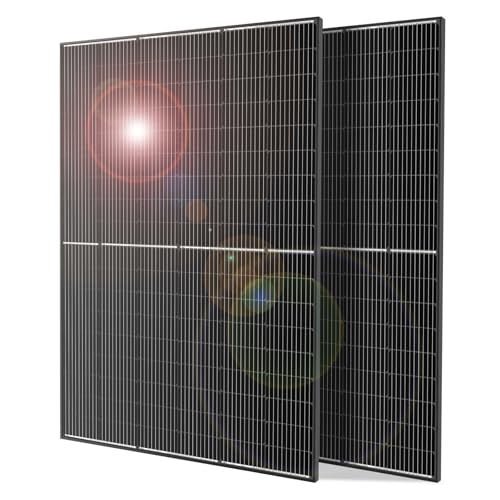
DOKIO 800W Solar Panel Set 400W 31V Panels

JJN Bifacial 425 Watt Solar Panel N-Type UL 61730

JJN Bifacial 2PCS 425 Watt Solar Panel N-Type 16BB

ECO-WORTHY 400W Solar Panels N-Type 4pcs 100 Watt 18V Monocrystalline

DOKIO 800W Solar Panels 2-Pack of 400W 31V

ZOUPW 450W Portable Solar Panel N-Type 16BB
More Details On Our Top Picks
Two 550-watt bifacial panels make this JJN set feel built for a larger footprint, not a tiny patio setup. Bifacial means the rear side can also capture light, so reflective ground or roof surfaces matter more than they do on a plain front-only panel. That extra reach helps in roomy home, farm, or RV systems.
The trade-off is obvious, bigger panels ask for more mounting space and a sturdier plan. The 12/24/48 volt compatibility gives you room to match different system layouts, which suits off-grid owners who want flexibility without juggling multiple panel types.
Strong Points
- Large two-panel output suits broader energy needs.
- Bifacial design can make use of reflected light.
- Works across 12, 24, and 48 volt setups.
- Useful for roof arrays that need fewer modules.
- Good fit for larger backup or farm projects.
Small Caveats
- Size asks for careful mounting space planning.
- Heavier handling can make installation less relaxed.
- Best results depend on a thoughtful layout underneath the panels.
Feature Snapshot
Who It Suits Best
You get the most from this set when you’re building a roomy off-grid array, powering a farm structure, or planning a roof system with plenty of surface area.
Where A Sibling Pick Shines
JJN Bifacial 425 Watt Solar Panel N-Type UL 61730 suits smaller setups better, especially when you want a single panel with more manageable handling.
Compared with the first JJN pair, this one leans harder into cell tech, thanks to its N-type construction and 16-busbar layout. N-type refers to a solar cell design often chosen for strong output behavior, while busbars are the conductive lines that move current across the panel. That matters most in home backup or charging-station setups where steady output is the whole point.
The 425-watt pair gives you a cleaner way to scale a system without jumping to the heavier 550-watt format from Pick 1. You may find that balance easier to place on a roof or to integrate into a mixed on-grid and off-grid plan.
Highlights
- N-type cell structure gives it a modern build profile.
- 16-busbar layout supports efficient current handling.
- Bifacial design suits bright, reflective installations.
- Fits 12V, 24V, and 48V systems.
- Well matched to backup and charging use cases.
Points To Note
- Two-panel format still needs enough mounting room.
- The more technical build may feel like overkill for tiny projects.
- Long-term upkeep still depends on keeping the glass clean and unobstructed.
Core Details
Made For
You’ll like this pair most in a home backup system, a charging station, or any larger installation that still needs flexible panel placement.
Another Choice May Suit
DOKIO 800W Solar Panel Set 400W 31V Panels is easier to think through for shed or yard installs that favor a simpler two-panel layout with ready-made cable length.
This DOKIO set feels very installation-minded, and that’s its big appeal. Each 400-watt panel runs at 31V, while the included 9.84-foot cables give you some breathing room during placement. That helps in yards, sheds, and other spots where the run from panel to controller is not perfectly tidy.
Unlike the JJN panels above, this one leans less on high-end cell language and more on straightforward mounting hardware and cable length. For a basic off-grid project, that can be exactly the kind of clear, low-drama setup you want.
Upsides
- Longer cable runs help simplify placement.
- Pre-drilled holes support easier mounting.
- Aluminum framing usually suits outdoor use well.
- Matched two-panel layout keeps the build straightforward.
Areas To Watch
- 31V output needs the rest of the system to match well.
- Full-size panels still need secure support during installation.
- Owners commonly keep an eye on cable routing so the run stays neat.
Technical Sheet
Right Fit For
You’ll get the most from this set in a shed, yard, or cabin build where clean cable routing matters as much as panel output.
Look Elsewhere When
ZOUPW 450W Portable Solar Panel N-Type 16BB fits better for power-station owners who want a foldable format instead of fixed mounting.
This single-panel JJN option sits in a useful middle zone. It keeps the bifacial and N-type setup, but drops the paired format, so you get something easier to fold into a smaller roof section or a more incremental build. That makes it a sensible step for homes and RVs where space comes first.
The 25 percent efficiency claim points to strong conversion potential on paper, though real-world ownership still depends on placement and system matching. You may find it more approachable than the bigger JJN pair, especially when the goal is to grow a system one panel at a time.
Bright Spots
- Single-panel format keeps planning simpler.
- Bifacial design adds flexibility in bright spaces.
- N-type cell build signals a modern panel layout.
- Works with 12V, 24V, and 48V systems.
Softer Spots
- A lone panel may leave you wanting more total output sooner.
- Careful orientation still matters for the rear-side light benefit.
- Mounting hardware and wiring still need to be matched to the rest of the system.
Details At A Glance
The Right Fit
This is a strong match for someone who wants one capable panel for a roof, RV, or small off-grid setup without jumping straight into a full pair.
Swap It Out When
JJN Bifacial 2PCS 425 Watt Solar Panel N-Type 16BB is the better route for a larger project that calls for matched dual-panel output.
Same core DNA as the single-panel JJN above, but here you get the paired format back, which helps a larger system grow in a cleaner way. The 425-watt-per-panel structure can be easier to plan than a giant single module, especially on rooftops that already have vents or odd spacing.
The honest read is that this pick lands well for people who want a middle ground between the heavier 550-watt set and the more compact single-panel option. It gives you a lot of usable output without moving into an oversized format that can feel awkward to handle.
Best Bits
- Two matched panels make expansion easier.
- N-type, 16BB design points to a more advanced build.
- Good fit for rooftops with broken-up space.
- Useful for RV and off-grid planning.
Worth Noting
- Pair format still needs careful mounting and alignment.
- Not as compact as a single-panel path.
- Output planning still depends on the rest of the electrical system.
Core Details
Whose Shelf It Belongs On
This suits rooftop and RV setups where you want a strong two-panel starting point without jumping to the heaviest format in the group.
Reach For A Different Pick When
DOKIO 800W Solar Panel Set 400W 31V Panels makes more sense for a fixed installation that benefits from longer included cabling and pre-drilled mounting points.
This ECO-WORTHY set spreads 400 watts across four 100-watt modules, which is a practical shape for owners who value layout flexibility over a single oversized panel. The 18V monocrystalline design keeps the system straightforward for off-grid power in a home, boat, RV, shed, or camping setup. IP68 waterproofing is the sort of detail that matters most once the panels live outdoors full-time.
Compared with the bigger JJN and DOKIO panels, this set asks less of your mounting area at any one spot, but more of your planning across multiple panels. That makes it friendly for mixed spaces where a few smaller modules fit better than one large sheet.
Positives
- Four-panel layout gives you placement flexibility.
- 100-watt modules are easier to position one by one.
- IP68 rating suits exposed outdoor use.
- Works across home, boat, RV, shed, and camping setups.
- Monocrystalline cells keep the design familiar and efficient.
Minor Gripes
- Four panels mean more mounting points to organize.
- Smaller modules can take more wiring effort.
- Cleaning is more repetitive because there are more surfaces.
Feature Rundown
Who Should Grab It
You’ll appreciate this set most when your project needs several smaller panels instead of one large, awkward rectangle.
Skip It When
JJN Bifacial 550 Watt Solar Panels 2PCS is the better fit for shoppers who want a larger two-panel solution with fewer pieces to place.
Another DOKIO pair lands here with a similar shape but a different use story, since this one is pitched for 12V and 24V systems rather than the earlier 24V off-grid framing. That broader compatibility can matter in cabins, patios, or mixed home layouts where the electrical plan is still evolving. Each panel is still 400 watts, so you get the same large-panel feel without moving into oversized territory.
The 9.84-foot lead remains useful for cleaner routing, and it’s the kind of detail that saves a little frustration during installation. For most standard backyard or cabin projects, that kind of practical length is worth more than flashy language.
Reasons To Buy
- Two-panel format keeps the system easy to map out.
- 31V output supports common 12V and 24V use cases.
- Long leads help during roof or yard placement.
- Monocrystalline panels suit familiar off-grid builds.
Things To Consider
- Still a fixed-installation choice rather than a portable one.
- Two full-size modules need enough clear mounting space.
- Outdoor upkeep means regular dust and debris checks.
Quick Facts
Built With In Mind
This pair suits someone who wants a straightforward installation for a cabin, patio, or backyard off-grid setup with room to plan.
Where A Sibling Pick Shines
ECO-WORTHY 400W Solar Panels N-Type 4pcs 100 Watt 18V Monocrystalline is better for flexible multi-panel placement where smaller modules fit the space more cleanly.
Unlike the fixed-mount panels above, this ZOUPW model is built around portability, which changes the whole ownership feel. The foldable format and power-station compatibility make it useful for travel, RV backup, and camping-style setups where the panel moves with you. IP68 waterproofing adds comfort for outdoor use, though storage and handling still need attention.
The 25 percent efficiency claim and N-type 16BB design put it in a more technical lane than many portable panels. That helps most when you want a compact carry form without giving up the bigger-panel class of output.
Best Bits
- Foldable format is easier to store and move.
- Works with several well-known power station brands.
- N-type 16BB design gives it a modern panel build.
- IP68 rating suits rough outdoor conditions.
- Useful for RV power backup and travel setups.
Room For Improvement
- Portable design usually means more setup and take-down steps.
- Folded storage needs a dry, protected spot.
- Best fit depends on your power station’s input rules.
At A Glance
Perfect Match For
This is the pick for power-station users who want portable solar support for RV travel, camping, or backup use away from a fixed roof.
Another Choice May Suit
DOKIO 800W Solar Panels 2-Pack of 400W 31V fits better for fixed home or cabin installs where portability matters less than permanent mounting.
How To Choose The Right Big Solar Panels
Match Output To Your Real Load
Start with the appliances and charging habits you actually plan to cover. A larger roof array can make sense for home backup, while a smaller pair may be enough for lighting, battery charging, or a modest shed setup. Big panels help most when your system needs fewer pieces and simpler wiring.
Voltage matters just as much as output. A 12V, 24V, or 48V panel set has to fit your controller, battery bank, and inverter plan, or the rest of the system becomes harder to manage. The right match keeps installation cleaner and ownership less annoying.
Think About Space And Handling
Full-size panels are not the same as portable panels, and that difference shows up quickly during mounting. A 550-watt module asks for more roof space and more careful handling than a 100-watt unit, even though it may cover the same job with fewer pieces. That trade often saves space, but it can make installation feel like moving furniture instead of hanging a picture.
Smaller modules help in tight or irregular spaces, especially when vents, skylights, or rack layout limit your options. Four smaller panels can be easier to place around obstacles, while two bigger panels reduce the number of brackets and connection points.
Look Closely At Cell Type And Build
Monocrystalline panels use single-crystal silicon, which is common in higher-output designs and compact arrays. N-type panels are a different cell design that many shoppers favor for more advanced layouts, while bifacial models can gather light from both sides in the right setting. Those details matter most in bright locations, reflective roofs, or systems where every bit of surface efficiency counts.
Build quality shows up in the frame, cable length, pre-drilled holes, and outdoor resistance claims. Aluminum framing, longer leads, and waterproof ratings all affect the ease of setup and the amount of upkeep you deal with later.
Choose For The Way You’ll Use It
Fixed home or farm systems usually benefit from fewer, larger panels and a clear electrical plan. RV owners and campers often care more about portability, weight, and storage, especially with foldable panels or smaller modules. The best fit is the one that matches your space and the way you’ll actually live with it.
A panel that looks impressive on paper can become a hassle in a cramped install. The cleaner choice is usually the one that balances output with practical mounting, routing, and maintenance.
A Quick Reality Check Before You Commit
Mistakes Worth Dodging
Many people focus on wattage alone and skip voltage compatibility. That usually causes more trouble than the panel size itself. You also want to watch for physical fit, because a large module can crowd roof hardware or make a simple install feel cramped.
Cable length and mounting details deserve attention too. A panel that sits well on the sheet but needs awkward routing later can turn into a more frustrating ownership experience.
The Upgrade Payoff
Higher-tier models often cost more because of the cell structure, bifacial layout, stronger framing, or better outdoor resistance. Those details can matter a lot in large roof arrays or backup systems where performance consistency is worth paying attention to. The upgrade is easier to justify when you need fewer panels to cover a larger load.
More advanced models also tend to make planning simpler for complex layouts. That said, a more basic panel can still be the smarter move for a small shed, cabin, or RV route where simplicity matters more than advanced cell tech.
Frequently Asked Questions
What Makes Big Solar Panels A Better Fit Than Smaller Ones?
Big panels reduce the number of pieces you need for a given output target. That often means fewer mounts, fewer connections, and a tidier layout.
Do Bifacial Panels Need Special Placement?
Bifacial panels work best where the rear side can catch reflected light. Bright roofs, pale ground surfaces, and open mounting spaces help more than dark, crowded installs.
Are Portable Solar Panels Good For Backup Use?
Portable panels work well for power stations, RV travel, and temporary backup setups. Fixed roof panels usually fit better for permanent home or cabin systems.
Why Does Voltage Matter So Much?
Voltage helps determine how a panel set fits your batteries, controller, and inverter. A mismatch can complicate the whole build, even when the wattage looks fine.
What Maintenance Do Large Panels Usually Need?
Most of the work is simple, like keeping dust, leaves, and grime off the glass surface. You also want to check mounting points and cable routing from time to time.
Closing Thoughts
Big solar panels make the most sense when you want fewer modules, cleaner wiring, and a setup that can cover real household or off-grid demand. Your best match depends on roof space, voltage planning, and whether you want a fixed array or a portable layout. JJN and DOKIO lean strongest for permanent systems, while ZOUPW gives you a travel-friendly route. ECO-WORTHY suits flexible multi-panel installs. Choose the panel shape that fits your space first, and the rest gets easier.
