

Bendable solar panels suit you best when rigid glass panels feel too bulky for a curved roof, a van shell, or a boat deck. The real question is fit, not flash, because the wrong panel can waste surface area or make mounting harder than it should be. This roundup focuses on compact, flexible choices that make sense for camping rigs, marine setups, cabin power, and other space-tight installs.
The Shortlist At A Glance

Renogy Flexible Solar Panel 100 Watt, 240° Ultra Flex Bendable

100W 12V Flexible Solar Panel 9BB Monocrystalline Cell

Renogy Flexible Solar Panel 50 Watt, 240° Ultra Flex Bendable
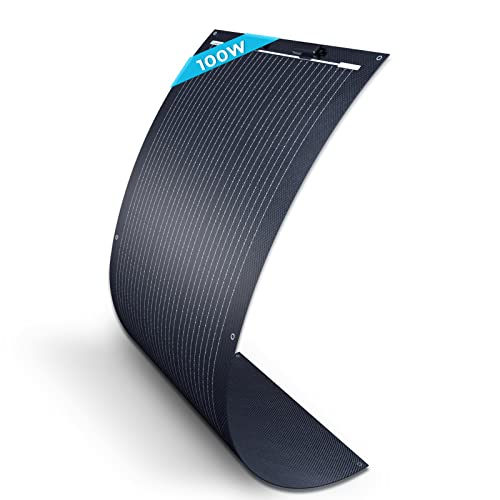
Renogy Flexible Solar Panel 100 Watt, 240° Ultra Flex Bendable

110W Portable Solar Panel, Foldable Solar Charger for Power Station 20V

BougeRV Arch Pro 200W Anti-Shading N-Type Fiberglass Flexible Solar Panel

200W Flexible Solar Panel Kit (2x100W), Ultra-Thin ETFE
More Details On Our Top Picks
Renogy’s 100-watt flexible panel suits curved roofs, boat decks, and van tops where rigid glass would be awkward. The 0.1-inch profile stays close to the surface, and that low height helps on setups that need to keep wind drag and visual bulk down.
The IP68 rating points to a sealed build that fits outdoor, marine, and travel use better than a bare-bones panel. You may find the appeal strongest on a long-term roof mount, where clean fit matters more than portability, and the trade-off is simple: this is a fixed-install style choice rather than a grab-and-go panel.
Strong Points
- 240-degree bend range suits curved mounting spots.
- The slim 0.1-inch profile keeps the install low.
- 100 watts works well for small off-grid systems.
- IP68 sealing suits damp or exposed environments.
- Good fit for RVs, cabins, boats, and vans.
Things To Consider
- Best for permanent placement, not quick carry use.
- Flexible panels still need careful surface prep before mounting.
- Output suits modest power needs more than heavy loads.
Feature Snapshot
Who It Suits Best
You get the most from this panel when your setup needs a low-profile 100-watt module for a curved RV, boat, or cabin surface.
A Better Fit Elsewhere
BougeRV Arch Pro 200W Anti-Shading N-Type Fiberglass Flexible Solar Panel suits you better when your roof space is wide enough for a higher-output system.
This Topunive panel leans into straightforward 12V compatibility, which makes it easier to picture in a trailer, cabin, or van charging setup. The 9BB monocrystalline cell design uses more busbars than a basic cell layout, a detail that can help current flow stay steadier across the panel surface.
The honest read is that this one feels practical rather than flashy, which suits you well for a small battery bank or a simple accessory-charge setup. Compared with Renogy’s 100-watt option, it reads more like a direct utility panel for uneven surfaces, not a polished premium install piece.
What We Like
- 12V-friendly design keeps common setups simple.
- 9BB cell layout adds a more refined cell structure.
- Works across trailers, vans, boats, and cabins.
- Semi-flex format helps on uneven mounting areas.
Points To Note
- The naming leans technical, so setup details deserve a careful read.
- Utility-focused styling may feel plain beside Renogy’s more polished variants.
- Best suited to moderate charging needs, not larger household-style loads.
Details At A Glance
Who Will Love This
You fit this panel best when you want a simple 12V solar source for a trailer, van, or cabin with uneven mounting space.
Skip It When
Renogy Flexible Solar Panel 100 Watt, 240° Ultra Flex Bendable suits you better when a more widely recognized low-profile roof panel matters most.
The 50-watt Renogy panel makes the most sense where roof space is tight and your power needs stay modest. Think battery tending on a small camper, a maintenance-style add-on on a cabin roof, or a backup panel for a light-duty marine setup.
Compared with the 100-watt Renogy panel above, this one asks for less space and gives up output to match. That trade-off is fine for small jobs, though you may outgrow it faster than the larger models on this list.
Highlights
- Half-size output keeps the footprint more manageable.
- Same 240-degree flex range as the larger Renogy panel.
- Good fit for smaller battery maintenance roles.
- Light weight helps on compact mounts and trim roofs.
Minor Gripes
- 50 watts feels limited for broader off-grid ambitions.
- Small systems need more careful energy planning.
- Works best as a support panel rather than the main event.
Core Details
The Right Fit
You suit this panel best when you want a compact flexible module for a small roof, tender battery, or backup solar task.
A Better Fit Elsewhere
Callsun 200W Flexible Solar Panel Kit (2x100W), Ultra-Thin ETFE fits you better when you want a bigger two-panel setup for a van or motorhome.
This Renogy version shares the same 100-watt, 240-degree flexible format as the first model, but the black finish gives it a cleaner visual presence on darker roofs. That matters more than many people expect, especially on camper tops where equipment is visible from every angle.
It feels like the stealthier twin of Item 1, with the same low-profile purpose and a slightly more understated look. You may appreciate it most on a van or RV where the panel should blend in instead of standing out.
Upsides
- Black finish blends better on darker roof surfaces.
- Same slim 0.1-inch profile as the other 100-watt Renogy panel.
- Flexible shape suits curved marine and RV mounts.
- Good choice for a cleaner visual install.
Areas To Watch
- It overlaps heavily with Item 1 in purpose and output.
- Appearance is the main difference, so the value is style-led.
- Still best for fixed installs, not portable use.
Quick Facts
Built With In Mind
You suit this panel best when your roof layout calls for a dark, low-profile solar panel that does not shout for attention.
Where A Sibling Pick Shines
Renogy Flexible Solar Panel 100 Watt, 240° Ultra Flex Bendable from Item 1 fits you better when the standard appearance matters less than the same core mounting flexibility.
MHPOWOS takes a different path from the flexible roof panels above, because this one folds for transport and pairs with a power station at 20 volts. The 7-in-1 output connector and adjustable bracket make it more like a camping kit than a permanent roof panel.
That setup suits you well on weekend trips, blackout prep, or a driveway charging station where you want the panel aimed with less fuss. The trade-off is obvious, though, since portability adds setup steps that fixed-mount panels do not ask for.
Reasons To Buy
- Foldable design is easier to pack and store.
- 7-in-1 connector broadens compatibility with charging setups.
- Adjustable bracket helps with panel angle control.
- 23.5 percent efficiency gives the panel a stronger output profile.
- IP67 protection suits damp outdoor use and camp conditions.
Softer Spots
- Less suited to permanent roof mounting than the Renogy options.
- Foldable gear usually asks for more handling and storage care.
- Best paired with a power station rather than a fixed array.
Feature Rundown
Whose Shelf It Belongs On
You suit this pick best when you want a portable charging panel for trips, camp use, or a power station at home.
Look Elsewhere When
BougeRV Arch Pro 200W Anti-Shading N-Type Fiberglass Flexible Solar Panel fits you better when you want a fixed high-output panel rather than a foldable kit.
BougeRV’s Arch Pro moves into higher-output territory with a 200-watt rating and a fiberglass build that should feel more structured than ultra-thin film-style panels. The anti-shading design is the headline here, and that matters on van roofs, boat decks, or odd layouts where shadows from rails or gear can interrupt sunlight.
Compared with the 100-watt Renogy panels, this one is built for bigger power demands and a more serious energy budget. You may find it a better long-term fit for RVs or marine setups that need more output from fewer panels, though the larger size asks for more installation planning.
Best Bits
- 200 watts gives you far more output headroom.
- Anti-shading design helps in imperfect roof layouts.
- Fiberglass construction adds a more structured feel.
- 16BB mono cell layout suggests a more advanced internal build.
- Good fit for larger RV and marine systems.
Room For Improvement
- More output usually means a larger install footprint.
- Advanced features make it less simple than smaller starter panels.
- Best suited to setups that can use the extra capacity.
Technical Sheet
Made For
You suit this panel best when your RV, boat, or cabin setup needs higher output and a more capable flexible module.
Not Your Match When
Renogy Flexible Solar Panel 50 Watt, 240° Ultra Flex Bendable fits you better when you only need a small support panel for limited space.
Callsun packages this as two 100-watt panels, which gives you more room to split coverage across a motorhome roof, van top, or camper shell. ETFE, a tough fluoropolymer top layer often used on solar gear, helps explain why this kit leans toward a more durable finish than basic flexible film.
That split-panel approach is handy for layouts with vents or roof clutter, because you can work around obstacles more easily than with one large sheet. The trade-off is that a kit like this adds planning and spacing decisions, so it suits you best when you want flexibility in both panel shape and placement.
Positives
- Two-panel kit lets you spread coverage across more roof space.
- 11BB cell layout gives the modules a more refined electrical structure.
- ETFE top layer suits rougher outdoor exposure.
- Works across 12V and 24V systems.
- Good choice for roofs with vents or other obstructions.
Worth Noting
- Two panels mean more layout planning during installation.
- Split coverage may not suit very small roofs.
- Best for people comfortable managing a multi-panel setup.
Core Details
Perfect Match For
You suit this kit best when your 12V or 24V RV, motorhome, boat, van, or camper needs split-panel flexibility and higher output.
Where Shoppers Go Wrong
Renogy Flexible Solar Panel 100 Watt, 240° Ultra Flex Bendable fits you better when you want a simpler single-panel roof layout with less planning.
How To Choose The Right Bendable Solar Panels
Match The Panel To The Surface
Curved roofs, boat decks, and van shells call for flexibility first, not just wattage. A 240-degree bend rating is useful on awkward contours, while a slimmer profile helps the panel sit flatter and look neater after installation.
Surface material matters too. Fiberglass builds usually feel more structured, while ETFE tops are valued for tougher outdoor wear on portable or exposed setups.
Size The Output To Your Routine
A 50-watt panel fits light tasks, like topping up a small battery or supporting a modest cabin setup. A 100-watt panel makes more sense for regular weekend use, small RV loads, or a simple van power system.
Once you move to 200 watts, you’re planning for larger energy needs and more roof space. That step up suits campers and off-grid setups that run lights, fans, or charging gear often.
Check The Install Style
Flexible roof panels stay put, so the mount surface should be clean, dry, and well planned. Portable foldable panels are easier to move and aim, but they ask for more handling and storage care.
The practical question is whether you want a permanent roof solution or a kit you can stow in a cabinet. That choice usually matters more than small feature differences.
Think About The System Around It
Voltage compatibility needs attention, especially for 12V and 24V setups. A panel that matches your battery bank and charging hardware saves time and reduces guesswork during installation.
Connectors, output layout, and available roof space all shape the final result. A well-matched panel feels almost invisible in daily use, while a poor match becomes a constant workaround.
A Quick Reality Check
Common Shopping Slip Ups
Many people focus on wattage first and forget the mounting surface. A flexible panel still needs a roof shape, size, and finish that suit the install.
Another common mistake is buying portable gear for a permanent roof job. Foldable models suit camp use better, while fixed panels usually make more sense on RVs and boats.
What The Higher Tier Buys
Higher-tier flexible solar panels usually cost more because of cell layout, top-layer materials, and shade handling. Features like 11BB or 16BB cell designs, ETFE surfaces, and anti-shading layouts can improve real-world usefulness in difficult installs.
You feel the upgrade most when roof space is tight, shadows are common, or you need more output from fewer panels. For simple low-demand charging, a basic flexible panel is often enough.
Frequently Asked Questions
What makes bendable solar panels different from rigid ones?
Bendable panels can follow curved or uneven surfaces more naturally than glass-framed modules. That makes them easier to use on vans, boats, and some RV roofs.
Do flexible solar panels suit permanent roof mounting?
Yes, many of them do, especially low-profile models built for marine and RV use. The surface needs to be prepared carefully so the panel sits securely.
What wattage makes sense for a small camper?
50 watts suits light charging and backup use, while 100 watts fits many everyday camper needs. Larger setups often move to 200 watts or more.
Is a portable foldable panel the same thing as a bendable panel?
No, they solve different problems. Foldable panels are meant to move and store, while bendable panels are usually aimed at mounted use on curved surfaces.
What matters more, cell count or surface material?
Both matter, but in different ways. Cell layout affects how the panel handles power internally, while surface material affects outdoor wear and handling.
Closing Thoughts
The right bendable solar panel depends on where it will live and how much power you actually need. A slim 100-watt panel works well for many RV and marine setups, a 50-watt model suits smaller tasks, and a 200-watt kit makes sense when your load grows. Portable foldable panels belong in a different lane, so keep your roof, your battery bank, and your storage space in the same conversation. Choose the fit that matches your setup, and the panel tends to feel like part of the rig rather than an add-on.
