

Battery Packs With Solar make more sense once you’ve lived through a dead phone on a train, a dim campsite at dusk, or a long day away from a wall outlet. You want something that charges cleanly, travels well, and doesn’t turn into dead weight in your bag. The picks below cover pocketable power banks, cable-heavy travel options, and larger solar generator setups for longer outages or outdoor stays. You’ll see where each one fits best, and where a simpler option may be the smarter move.
The Shortlist At A Glance

MINRISE Solar Power Bank 40000mAh, Portable Charger PD 20W Fast Charging
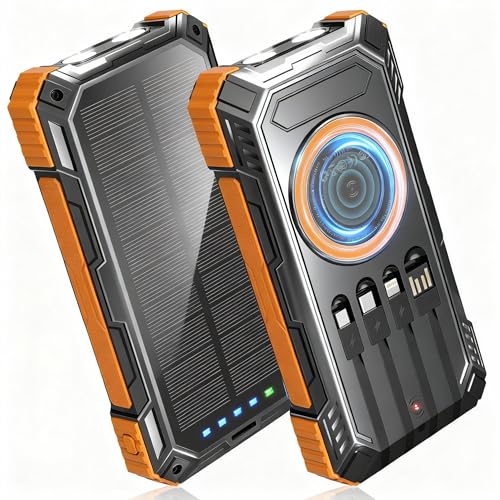
Solar Power Bank 49800mAh Wireless Portable Phone Charger

Anker SOLIX C200 DC Power Bank Station and 60W Solar Panel

Jackery Solar Generator 300 and 40W Solar Panel

Miady 2-Pack Portable Charger, Slim 10000mAh Power Bank Travel Battery Pack

Portable Solar Generator 300W Portable Power Station with 60W Solar Panel
More Details On Our Top Picks
MINRISE leans into convenience first, with built-in cables and USB-C input and output reducing the number of loose cords in your bag. That makes it a practical travel companion for commuting, short trips, or a weekend tent setup where you want one tidy charge source.
The 40,000mAh capacity gives you a much larger buffer than a slim everyday bank, though the trade-off is more bulk in hand and in luggage. The flashlight feature is useful around a campsite or during a power cut, and the 20W PD, or Power Delivery, spec matters most for faster phone charging rather than laptop work.
Strong Points
- Built-in cables cut down on packing clutter.
- USB-C input and output add flexibility.
- Large capacity supports repeated phone top-ups.
- Flashlights help in low-light settings.
Things To Consider
- Size is less pocket-friendly than smaller banks.
- Best for phones and tablets, not high-draw gear.
- The built-in cable layout can be less replaceable over time.
Feature Snapshot
Who It Suits Best
You’ll get the most from this on trips where packing light still matters, but you also want a larger reserve than a slim travel bank gives you.
Where A Sibling Pick Shines
Miady 2-Pack Portable Charger fits better for shoppers who want two smaller banks for bags, cars, or shared family use.
This BLASOUL pick pushes flexibility hard, with wireless charging, built-in cables, and USB-C in and out all in one body. That mix is handy in a packed day bag, because you can charge a phone without always digging for a cable.
The 49,800mAh capacity is large enough to feel reassuring on road trips, hiking weekends, or shared use around the house. The trade-off is plain enough, a larger body usually asks for more pocket space and a little more patience during carry.
Highlights
- Wireless charging keeps quick top-ups simple.
- Built-in cables reduce accessory clutter.
- 22.5W output supports faster phone charging.
- Large capacity suits long weekends away.
- USB-C in and out improve day-to-day compatibility.
Room For Improvement
- Wireless charging is convenient, though not as fast as a direct wired connection.
- The larger shell can feel bulky in a small sling bag.
- More features also mean a more complex setup to keep tidy.
Core Details
Made For
You’ll appreciate this most if you carry more than one device and like the ease of wireless charging for quick moments on the move.
A Better Fit Elsewhere
MINRISE Solar Power Bank 40000mAh suits you better if built-in cords matter more than wireless charging and you want a slightly simpler layout.
The Anker SOLIX C200 moves beyond pocket-bank territory and starts behaving like a compact station. Its 192Wh battery, meaning watt-hours or the amount of energy stored, gives you a more serious backup feel for camping setups and emergency shelves.
You also get the 60W solar panel in the package, which matters if you want a paired setup instead of piecing things together later. Compared with the smaller phone banks above, this choice asks for more space, yet it returns that space with broader utility for lights, cameras, and other low- to mid-draw gear.
Upsides
- 192Wh storage feels well suited to longer trips.
- LiFePO4 battery chemistry is built for steady cycling habits.
- Bundled solar panel simplifies setup.
- Station-style format works better than a phone-only bank for many outdoor rigs.
- Backups and emergency storage become easier to organize.
Softer Spots
- Station-style gear takes more room than a slim bank.
- The setup is more than you need for simple phone top-offs.
- Moving it around feels less casual than carrying a travel charger.
Details At A Glance
Built With In Mind
You’re looking at the right kind of setup for campers, van travelers, and households that want a more serious backup option on hand.
Another Choice May Suit
Jackery Solar Generator 300 and 40W Solar Panel makes more sense for travel-focused users who want a lighter carry and a simpler power profile.
Jackery keeps this setup on the lighter side for a solar generator, and that matters when you’re moving gear between an RV, a trunk, or a campsite. At 7.5 pounds, it still asks for a little carrying effort, but not so much that it feels like dead cargo.
The 2 AC outlets, 100W USB-C PD port, 2 USB-A ports, and 120W car port give it a wider port mix than the smaller phone-only banks. Pure sine wave AC, which means smoother household-style output, is a useful detail for sensitive electronics like laptops and cameras, though the larger station format is still more than a casual pocket charger.
Bright Spots
- 7.5-pound weight keeps it manageable for travel.
- Pure sine wave AC suits sensitive electronics.
- Multiple outlet types cover more gear.
- The integrated handle makes carrying easier.
Areas To Watch
- It still takes more space than a phone bank.
- AC support adds usefulness, though it also places this above simple charger territory.
- Pairing with panels makes the overall setup less minimal.
Technical Sheet
Who Should Grab It
You’re the best fit here if you travel by RV, camp with electronics, or want a solar generator that still feels reasonably portable.
Skip It When
ZeroKor Portable Solar Generator 300W is the easier pick for shoppers who want a similar class of backup power with a more compact orange unit.
This two-pack stands out because it solves a simple problem, one bank in your backpack and one in reserve. For daily commuting, school bags, or family trips, that split can feel more useful than carrying a single larger unit.
The 10,000mAh size keeps each bank relatively slim, which matters when you care about pocket or pouch space. The trade-off is obvious, smaller capacity means fewer full refills than the larger models above, but the easier carry often offsets that for everyday use.
Best Bits
- Two banks give you built-in backup.
- Slim shape is easier to pack.
- Dual USB and multiple inputs add flexibility.
- Good fit for shared household use.
Small Caveats
- Capacity is smaller than the big travel banks.
- Each unit is better for phones than for heavier gear.
- Two pieces also mean two items to keep track of.
Core Details
Perfect Match For
You’ll like this most if you want a simple, slim backup setup for bags, short trips, or handing one charger to another person.
Look Elsewhere When
Solar Power Bank 49800mAh Wireless Portable Phone Charger fits better for long weekends or heavier device use, thanks to its larger capacity and wireless charging.
ZeroKor takes a balanced route, giving you a 280Wh battery, a 60W panel, and 300W output in one orange package. That makes it easier to plan for a tent weekend, a van shelf, or a modest home backup corner without building a system piece by piece.
The 110V pure sine wave outlet is the detail that separates this from simpler phone banks, since it gives connected devices a smoother AC-style supply. You also get USB QC3.0, DC, and AC outlets, so the shape is broad enough for a mix of smart devices, though not so large that it belongs in the same class as a full-size household generator.
Reasons To Buy
- 280Wh capacity gives useful reserve without going oversized.
- Included 60W panel makes the set more complete.
- Pure sine wave output supports a wider device mix.
- USB, DC, and AC ports improve flexibility.
Points To Note
- More capable than a pocket charger, so storage needs increase.
- Panel pairings work best with a bit of space and patience.
- Setup is more involved than a simple USB power bank.
Feature Rundown
Whose Shelf It Belongs On
You’re a strong match for this one if you want a compact solar generator for RV use, outdoor weekends, or small backup duties at home.
Reach For A Different Pick When
Jackery Solar Generator 300 and 40W Solar Panel suits you better if lighter weight and a more travel-forward package matter more than extra panel size.
How To Choose The Right Battery Packs With Solar
Start With Capacity And Port Mix
Capacity tells you how much reserve you’re carrying, but it doesn’t tell the whole story. A 10,000mAh bank like the Miady pair works well for phones and lighter travel, while larger units such as the MINRISE or BLASOUL banks give you more breathing room over a weekend.
Port mix matters just as much. USB-C, USB-A, wireless charging, AC outlets, and DC ports shape how many devices you can cover without carrying extra adapters.
Match The Form Factor To The Trip
A slim power bank belongs in a commuter bag or day pack. A station-style unit belongs near a campsite, RV bench, or emergency shelf.
The difference is simple: smaller packs stay easy to carry, while generator-style products ask for more space in return for broader use. That trade-off is worth thinking through before you chase capacity alone.
Check Solar Input And Charging Speed
Solar panel size changes how the system behaves outdoors. A 40W panel is more modest and easier to move, while a 60W panel gives the larger generator-style picks a more serious recharging partner.
Charging speed also matters for daily life. Power Delivery, often shortened to PD, and higher-watt outputs help compatible phones and tablets refill faster, which saves time during layovers, breaks, or short stops at camp.
Think About Carry, Storage, And Maintenance
Larger battery packs ask for more attention to storage and cable management. Built-in cables help, but they also call for a tidy habit so the setup stays usable and the cords don’t become a tangle in your bag.
For frequent travel, shape can matter more than raw numbers. A lighter model may serve you better than a heavy one that stays in the trunk, even though the heavier unit looks stronger on paper.
Things Worth Knowing First
Common Shopping Slip Ups
A common miss is focusing on capacity without checking the ports. That leaves you with plenty of stored power and the wrong connection style for your phone, tablet, or camera.
Another easy mistake is treating solar input like a fast wall charger. Solar is helpful for extended outdoor use, but it usually behaves more like a support feature than a quick refill method.
The Case For Spending Up
Higher-tier models cost more because they usually bring larger cells, more output types, sturdier construction, or a bundled solar panel. You’re also paying for better fit across more situations, especially once you move from phone-only charging to generator-style use.
That extra spend makes sense for campers, RV setups, and home backup planning. For a daily commute, a simpler bank often makes more sense and takes less space.
Frequently Asked Questions
Can Battery Packs With Solar Fully Charge In The Sun?
Solar charging helps replenish the pack, but it usually works best as an assist rather than the only charging method. A wall outlet still gives you the most predictable refill.
Are Larger mAh Numbers Always Better?
Not always, because a larger battery usually means more size and weight. The better choice is the one that matches how much carry space you actually have.
What Does PD Mean On A Power Bank?
PD stands for Power Delivery, a charging standard that supports faster power transfer for compatible devices. It matters most when you want shorter charge times for phones and tablets.
Do Solar Generator Units Differ From Slim Power Banks?
Yes, solar generator units usually add AC outlets, DC ports, and a much larger battery reservoir. Slim power banks stay easier to carry and work better for phones on the go.
Which Pick Makes Sense For Travel?
The Jackery Solar Generator 300 and MINRISE Solar Power Bank both suit travel, but for different reasons. Jackery fits heavier travel needs, while MINRISE stays simpler for everyday packing.
Closing Thoughts
You’ve got a wide range here, from slim backup banks to fuller solar generator setups, and the right choice comes down to how much gear you carry and how long you stay away from an outlet. The smaller options make daily life easier, while the station-style picks pay off when your phone is only part of the load. For most trips, a clear match between capacity, ports, and carry size matters more than chasing the biggest number on the page. Pick the shape that fits your routine, and the rest gets much easier.
