

I’ve watched too many remotes, game controllers, and wireless mice eat through disposable batteries like they’re candy. Once I switched to rechargeables and a proper charger, the cost savings and convenience made me wonder why I waited so long. If you’re stocking a household with AA and AAA cells, or you’re tired of replacing coin-style cells in every gadget, this lineup covers the setups I’d actually recommend to friends.
A Fast Comparison Of The Options

POWEROWL Rechargeable AA and AAA Batteries with Fast Charger

Eneloop Panasonic K-KJ55MCA4BA Advanced Individual Quick Charger

Eneloop Panasonic K-KJ55MC84CZ Power Pack with 8 AA and 4 AAA

POWEROWL 8 Bay AA AAA Battery Charger 2 Pack

Ostation 2 Pro AA AAA Rechargeable Battery Charging Station
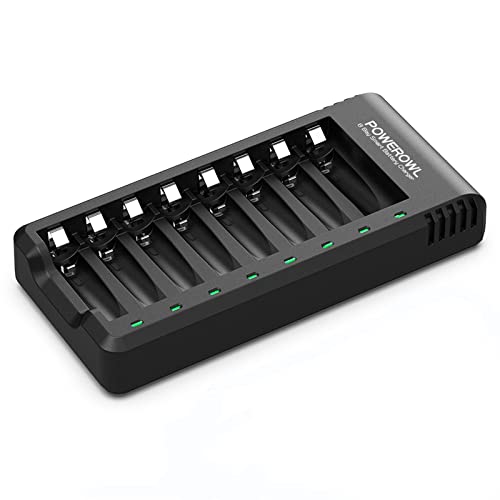
POWEROWL 8 Bay AA AAA Battery Charger USB

Eneloop Panasonic BQ-CC55KSBHA Advanced Pro Charger Kit
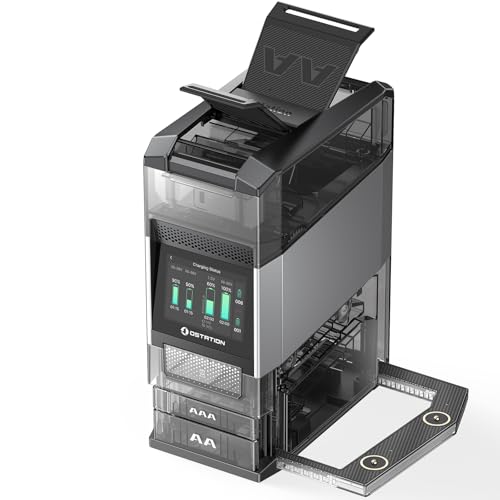
Ostation 2 Pro AA AAA Battery Charging Station

Ostation 2 Smart AA AAA Battery Charging Station

Eneloop Panasonic BQ-CC55KSBHA High Capacity Pro Charger Kit
Why These Options Stand Out
This bundle is built for someone just stepping into rechargeables. You get four AA cells at 2800mAh, four AAA cells at 1000mAh, and an eight-bay smart charger that handles both sizes in any combination.
For most households running remote controls, wireless mice, and small toys, the included capacity covers the basics without forcing a second purchase. The chip-controlled charging stops the current once cells reach full, which means less babysitting the charger during late-night top-ups.
Everyday Advantages
- Mixed AA and AAA bundle covers the two formats every household reaches for
- Independent charging bays let you top up a single cell without pairing
- Auto shut-off at full charge reduces wear on both cells and charger
- LED indicators show charging status at a glance
- 1.2V NiMH chemistry (nickel-metal hydride, the standard for modern rechargeables) plays nicely with most low-drain devices
Trade Offs
- Eight batteries total may run short in gadget-heavy homes that rely on AAAs for slim remotes
- Charging speed is steady rather than rapid, so a full set takes several hours
Right Fit For
First-time rechargeable owners who want one box that handles AA and AAA without learning curves.
A Better Fit Elsewhere
The Eneloop Panasonic K-KJ55MC84CZ Power Pack with 8 AA and 4 AAA suits shoppers who want more cells out of the gate.
Eneloop has earned its reputation over many years, and this four-cell charger with four pre-charged AA cells is a tight little package. The cells arrive ready to drop into a remote or game controller, no priming required.
The charger monitors each slot separately, so you can leave a partial set running while topping up two others. For shoppers who value brand consistency and proven longevity, this is the kind of starter that tends to outlast the drawer it sits in.
Useful Touches
- Cells come pre-charged using solar energy at the factory, ready for first use
- Each slot charges independently, which prevents weaker cells from slowing stronger ones
- Compact footprint fits neatly on a desk or kitchen counter
- Solid reputation for low self-discharge, meaning cells hold their charge while sitting idle
Worth Noting
- Only AA cells included, so AAA shoppers need to buy those separately
- Four-slot limit feels tight during big recharge sessions
Feature Snapshot
Who Should Grab It
Long-term reliability seekers who want a brand-name kit and don’t need AAA cells included.
Reach For A Different Pick When
The POWEROWL Rechargeable AA and AAA Batteries with Fast Charger fits better when AAA cells matter just as much as AA.
Where the previous Eneloop kit ships with just four AAs, this power pack doubles down. Eight AA plus four AAA cells come pre-charged, paired with the same individual-slot quick charger.
That stockpile matters in homes where multiple devices compete for batteries. Think gaming controllers, wall clocks, flashlights, and a TV remote that always seems to die at halftime. Having ready spares on hand keeps the swap-and-go routine painless.
A Few Highlights
- Twelve total cells out of the box covers most household devices immediately
- Cells factory-charged, so the first use doesn’t require any pre-conditioning
- Eight-slot charger handles the whole kit in a single session
- Low self-discharge rate keeps spare cells usable months later
Things To Consider
- Higher upfront cost than smaller bundles
- Storage gets tight if you don’t dedicate a small bin to spares
Built With In Mind
Multi-device households juggling several AA and AAA gadgets at once.
Look Elsewhere When
The Ostation 2 Pro AA AAA Rechargeable Battery Charging Station fits shoppers who want bulk capacity and a built-in organizer.
Two eight-bay chargers in one box, each running off USB power. Place one in the kitchen for daily-use gadgets, keep the other in an office or garage, and you’ve covered two zones without buying separately.
Each bay operates independently, so you can charge one cell or eight at a time. USB input also makes these easy to power from a laptop, power bank, or any USB wall adapter you already own.
The Good Stuff
- Sixteen total slots across two units means less juggling during big recharge nights
- USB input sidesteps bulky wall bricks and works with existing adapters
- NiMH and NiCD (nickel-cadmium, an older rechargeable chemistry) compatibility broadens what you can refresh
- Smart chip control stops charging when cells are full
Points To Keep In Mind
- Cells not included, so first use requires sourcing NiMH batteries separately
- USB cables add to the cable drawer, depending on your outlet situation
Whose Shelf It Belongs On
Gadget-dense homes that want charging stations in multiple rooms.
Swap It Out When
The Eneloop Panasonic K-KJ55MC84CZ Power Pack with 8 AA and 4 AAA suits newcomers who need cells and charger in one shot.
This is a different beast entirely. The Ostation 2 Pro holds up to 24 cells in a tower-style station, sorting charged and depleted batteries automatically. Twenty-four cells ship in the box, so you can populate it fully on day one.
It’s designed for heavy users, think households with multiple game controllers, photographers running flash units, or small offices powering wireless keyboards across several workstations. The hands-free sorting is what sets it apart from the typical flat charger.
A Favorable Mix
- Tower design saves counter space compared to sprawling eight-bay units
- Auto sorting separates ready and depleted cells without manual inspection
- Bulk capacity suits offices, schools, and gadget-heavy families
- Smart thermal management adjusts to cell condition during charging
Small Caveats
- Larger footprint than pocket-friendly chargers, so it’s not a travel piece
- Learning curve for first-time users figuring out the sorting bay
Feature Card
Best Suited To
Power users, busy families, and small offices running battery-hungry devices around the clock.
Consider Something Else When
The POWEROWL 8 Bay AA AAA Battery Charger 2 Pack fits shoppers with lighter demand who don’t need a tower.
This is the single-unit version of the two-pack above. Eight bays, USB power, no adapter bundled, so you bring your own USB wall plug.
For renters, travelers, or anyone who wants to avoid extra wall clutter, USB-powered charging is convenient. Pop it behind a nightstand, plug into a phone charger, and you’re set. Independent slots handle any cell mix without forcing pairs.
What Helps Most
- USB input keeps the charger compact and travel-ready
- Eight independent slots handle mixed loads efficiently
- Smart chip control shuts off when cells reach full capacity
- NiMH-only compatibility matches the cells most shoppers already own
Honest Caveats
- No power adapter in the box, so you’ll need a USB wall plug to drive it
- No batteries included, meaning a separate cell purchase for first-time setups
Made For
Travellers and renters who prefer USB-based charging over wall-brick setups.
Skip It When
The Eneloop Panasonic K-KJ55MCA4BA Advanced Individual Quick Charger is a friendlier match for newcomers who want cells in the box.
The CC55 charger is the detail-oriented sibling in Eneloop’s lineup. Each slot has its own LED indicator that shifts color based on charge level: green for 80 percent and up, orange for the middle range, and red for depleted cells.
That color-coded readout removes guesswork when you’re juggling cells at different states of charge. Pair it with the included AA and AAA cells and you get a kit that rewards patience with clear status updates.
Advantages To Know
- Per-slot LED color indicators show charge status without removing cells
- Compatible with both standard and pro Eneloop lines
- Cells rated for up to 2100 recharge cycles, a long service life
- Individual slot charging prevents mismatched pairs from slowing each other
Factors To Consider
- Four-slot capacity feels limited compared to eight-bay alternatives
- Color indicators take a beat to learn for first-time users
Feature Rundown
Who It Suits Best
Detail-oriented owners who want a clear readout of each cell’s charge state.
Where Another Pick Suits Better
The POWEROWL 8 Bay AA AAA Battery Charger 2 Pack serves shoppers needing more slots and don’t mind fewer status lights.
This is the Ostation 2 Pro in its charger-only configuration, no cells in the box. If you already own a stockpile of NiMH batteries and want the tower experience without paying for cells you don’t need, this version makes sense.
The same auto-sorting and thermal-adaptive charging apply, and the dual MCC magnetic charging ports add compatibility with select Olight flashlights. For tech-forward shoppers, the magnetic ports are a quiet perk.
Points In Its Favor
- Tower design consolidates charging into a single countertop footprint
- Compatible with both NiMH and lithium chemistries for flexibility
- Magnetic charging ports work with compatible Olight flashlight models
- Real-time monitoring shows charging progress without manual checks
Practical Considerations
- No batteries included, so it’s only useful if you already have NiMH cells on hand
- Larger footprint than travel-friendly chargers
Perfect Match For
Tech-forward households that already own NiMH cells and want a premium charging station.
Not Your Match When
The POWEROWL Rechargeable AA and AAA Batteries with Fast Charger suits newcomers who need a complete starter kit.
The Ostation 2 Smart adds polarity-free drop-in loading to the tower formula. Drop a cell in either direction and the station figures out orientation automatically, a small detail that removes a real source of fumbling.
For gamers cycling through controller batteries or smart-home users with motion sensors scattered around, the hands-free sorting and auto-detection cut down on routine friction. It’s the kind of upgrade that makes the charging ritual disappear into the background.
What Earns Its Place
- Polarity-free loading means no aligning positive and negative ends
- Auto detection reads cell condition and adjusts charging behavior
- Storage organizer mode keeps charged cells sorted and ready
- Works with any NiMH brand and Ostation 1.5V lithium rechargeables
Worth Bearing In Mind
- Premium pricing compared to flat chargers
- Requires existing cells to be useful, since none are bundled
Quick Facts
Right Fit For
Gamers and smart-home owners who want a hands-free, drop-and-go charging station.
Another Choice May Suit When
The Eneloop Panasonic BQ-CC55KSBHA Advanced Pro Charger Kit fits shoppers who want traditional flat charging with color-coded status.
Where the standard Eneloop kit delivers solid everyday performance, the pro version pushes capacity higher. The AA cells here run up to 2500mAh typical, roughly 25 percent more than the standard 2000mAh cells in earlier kits.
That extra capacity matters for high-drain devices, think camera flashes, handheld game consoles, and motorized toys that chew through batteries in a single afternoon. The CC55 charger’s per-slot LED indicators return, so you still see clear charge status for each cell.
The Upside
- Higher mAh rating (milliampere-hours, the measure of how much energy a cell stores) means longer runtime per charge for demanding devices
- Per-slot LED indicators display charge state clearly
- Compatible with both standard and pro Eneloop cell lines
- Pre-charged cells arrive ready for first use
Less Ideal Details
- Pro cells have fewer recharge cycles than standard Eneloop, around 500 versus 2100
- Higher cost per cell compared to standard-capacity kits
Feature Snapshot
Who Will Love This
High-drain device users running flashes, motorized toys, or portable game consoles.
Where A Sibling Pick Shines
The Eneloop Panasonic K-KJ55MCA4BA Advanced Individual Quick Charger fits shoppers who want longer cell life over higher capacity.
What Matters Most Before Choosing Aa Battery Rechargers
Capacity And Chemistry Basics
NiMH cells dominate the rechargeable AA and AAA market because they hold more energy than older NiCD chemistry and don’t suffer the same memory effect (a phenomenon where cells lose capacity if repeatedly recharged before fully draining). Most modern chargers work exclusively with NiMH, which keeps things simple.
Higher mAh ratings mean longer runtime per charge. A 2500mAh AA cell outlasts a 2000mAh cell in the same device, but capacity isn’t everything. Cells with very high capacity sometimes have fewer recharge cycles, so weigh runtime against longevity.
Slot Count And Charging Speed
A four-slot charger is fine for low-volume households. Eight slots handle medium traffic. Tower stations holding 20-plus cells suit offices and heavy users. Charging speed varies; quick chargers finish a full set in a few hours, while standard chargers may take longer but tend to be gentler on cells.
Compatibility And Indicators
Make sure the charger matches your cell type. NiMH-only chargers won’t touch lithium rechargeables. LED indicators, especially color-coded ones, remove the guesswork of “is it done yet?” without forcing you to pull cells out and test them elsewhere.
Real-World Use Scenarios
Gamers cycling through controller batteries want fast turnaround and high capacity. Parents running motorized toys need bulk storage and durability. Travellers care about USB power and compact size. Match the kit to your actual household rhythm rather than chasing the biggest spec sheet.
Key Considerations Across These Picks
Mistakes Worth Dodging
Buying a charger without checking cell chemistry is the most common slip. A NiMH-only charger won’t help if you’ve invested in lithium rechargeables, and vice versa. Another trap is assuming all “high capacity” cells behave the same; pro cells with extreme mAh ratings often trade cycle life for runtime, so check both numbers before committing.
When Paying More Pays Off
Premium kits earn their keep when you want per-slot status readouts, auto-sorting convenience, or higher per-cell capacity. For casual use, a basic four-bay charger handles the job. The upgrade path makes sense once you’re charging batteries daily and want the routine to disappear into the background, but for occasional swaps, the simpler kits already do the work.
Frequently Asked Questions
How long do rechargeable AA batteries actually last?
Most NiMH cells hold usable charge for several years with light use, and they can be recharged hundreds to thousands of times depending on the specific line. Low self-discharge models like Eneloop are designed to retain most of their charge while sitting idle, so they stay ready between uses.
Can I mix brands in the same charger?
In most cases, yes, as long as the chemistry matches. Charging NiMH cells from different brands together is generally fine. Mixing NiMH and NiCD in the same bay is where problems start, since the charging profiles differ.
What’s the difference between standard and pro Eneloop cells?
Standard Eneloop cells have lower mAh ratings but handle many more recharge cycles, often over 2000. Pro cells deliver higher capacity per charge but typically last around 500 cycles. Standard suits everyday gadgets; pro fits high-drain gear where runtime matters more than cell lifespan.
Do USB-powered chargers charge slower than wall models?
USB input generally delivers less current than a dedicated wall adapter, so charging times can run longer. For occasional overnight charging, that trade-off rarely matters. For heavy daily use, a wall-powered unit may finish faster.
Is it worth buying cells without a charger?
If you already own a quality charger, buying cells separately saves money. If this is your first rechargeable setup, a kit with included cells and a matched charger removes compatibility guesswork and tends to be the smoother path for newcomers.
The Takeaway
Pick the kit that matches your daily routine, whether that’s a small four-bay setup for occasional swaps or a tower station for serious battery traffic. The right AA and AAA recharging system pays for itself quickly and keeps the drawer stocked with ready cells instead of half-used disposables.
