

I’ve watched households burn through hundreds of disposable AAs in a single year, and I know the frustration of a kid’s toy dying mid-game or a TV remote going dark during movie night. The right AA rechargeable setup pays for itself quickly, especially once you start juggling game controllers, wireless mice, and outdoor cameras that chew through cells. This list sorts the genuinely useful AA charging kits from the overhyped ones, so you can match a setup to the way you actually live.
The Leading Options At A Glance

Eneloop K-KJ55MCA4BA Individual Battery Charger with 4 AA

NICEBATT 8 Pack AA Batteries with 2800mAh Charger

NICEBATT 4 AA + 4 AAA with 8-Bay Charger

Ostation 2 Pro Charging Station with 24 Batteries

NICEBATT Smart 8 Bay USB-C Charger

Eneloop CC55 Charger with AA + AAA 2100-Cycle Set
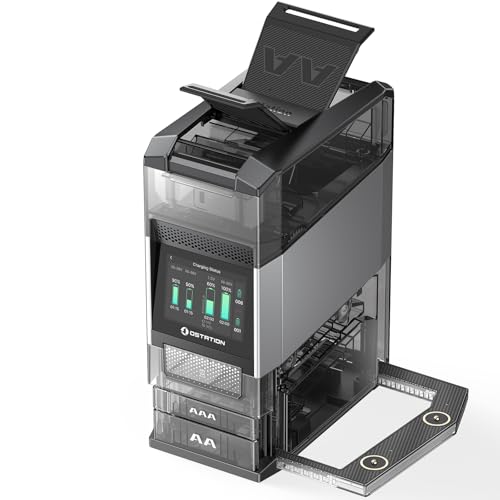
Ostation 2 Pro Station for NiMH and Lithium

Ostation 2 Smart Charger with Polarity-Free Bays

Eneloop CC55 Charger with Pro AA + AAA High-Capacity Cells

Batechon 8-Pack Rechargeable Lithium AA with Charger
A Breakdown Of The Leading Choices
For a first rechargeable setup, this Eneloop K-KJ55MCA4BA kit tends to be the easiest entry point. The charger monitors each cell on its own (a feature called individual channel charging, which means slot one and slot four can finish at different times without the unit forcing them to wait), and the bundled AAs arrive pre-charged enough to drop into a remote right out of the box. NiMH (nickel-metal hydride) is the standard rechargeable chemistry for AA cells, and Eneloop’s reputation here is built on consistency.
Compared to the bulkier NICEBATT bundles covered below, this kit is compact and approachable, more at home on a kitchen counter than a workshop shelf. The four included AAs are enough to cover a remote plus a game controller, with two left over to rotate. For most households, this is the kind of starter set that quietly runs for years without anyone thinking about it.
What Makes Sense
- Individual channel charging keeps each AA topped up properly, even when you only need to refresh one cell.
- Eneloop’s NiMH cells are widely reported to hold their charge in storage, so a backup pair stays ready for months.
- Pre-charged out of the package, useful when you need replacements immediately after unboxing.
- Compact white housing fits easily on a power strip shared with a phone charger and a lamp.
- Compatible with both AA and AAA cells from the same brand family, handy if you add AAA cells later.
Small Caveats
- Only four cells are included, so households with several remotes and toys will need a second batch.
- Charging speed is steady rather than rapid, and you may find the roughly three-hour cycle slow when you’re in a hurry.
- No LCD readout, just simple indicator lights, which feels basic next to the Ostation stations.
Right Fit For
First-time rechargeable buyers and small households that want a dependable, no-fuss AA starter kit without managing a giant battery library.
Skip It When
You’re juggling more than eight AAs across the house; the Ostation 2 Pro Charging Station handles that kind of volume with far less daily babysitting.
When your house seems to swallow AAs by the handful, an eight-cell bundle starts to make financial sense. The NICEBATT kit ships with eight 2800mAh NiMH AAs (milliamp-hours, a measure of how much energy the cell stores, and higher generally means longer runtime per charge) and a multi-bay USB charger that tops them up in groups. For families running game controllers, flash units, and a string of remote controls, this is a more honest starting line than the four-pack from Eneloop.
The trade-off shows up in cell longevity; NICEBATT rates these cells for fewer recharge cycles than the Eneloop nameplate, and high-capacity NiMH AAs are widely reported to self-discharge faster than lower-capacity alternatives. That means keeping them on a charger rotation matters more than it would with Eneloop.
Everyday Wins
- Eight 2800mAh AAs are enough to power a household’s worth of remotes and small gadgets from day one.
- USB-input charger plugs into a laptop, power bank, or wall adapter for flexible placement.
- Cost per cell lands lower than premium-tier options, useful when you need quantity over longevity.
Worth Noting
- Higher mAh ratings on NiMH often come with faster self-discharge in storage, so a fully charged spare may be partly drained after a few weeks on a shelf.
- No AAA cells included, which is fine if your devices are AA-only, limiting otherwise.
- Standard NiMH chemistry, not lithium, so voltage stays around 1.2V rather than the 1.5V some specialty devices prefer.
Built With In Mind
Households that burn through AA cells weekly and want a budget-friendly bulk pack to rotate through without rationing.
Not Your Match When
You also need AAA support, in which case the NICEBATT 4 AA + 4 AAA kit (covered next) covers both sizes without buying a second charger.
Most homes don’t run on AAs alone. Remotes and small electronics lean on AA, while things like small flashlights, TV remote sensors, and some game controllers lean on AAA, and this NICEBATT kit is one of the few bundles that ships both. The 8-bay USB charger accepts any combination, and the cells are pre-charged enough to use right away. It’s a practical answer to the “do I need two separate chargers” question.
Where the Eneloop CC55 kit covered later offers individual LED status lights per slot, this charger runs simpler indicators, which keeps the price down but trades away some precision. The 1100mAh AAA rating is a common figure for NiMH triple-As, and it runs devices fine without standing out.
A Favorable Mix
- Includes both AA and AAA cells in the box, covering the two sizes that power roughly 90% of home battery devices.
- 8-bay charger handles any combination of sizes, useful for topping up one odd cell without a dedicated slot.
- USB input means the charger works off a laptop, a car adapter, or a wall brick.
Trade Offs
- Indicator lights are basic, so you won’t see exact charge percentages, just rough status.
- Four of each size is fine for a starter, but larger households may need a second batch within months.
Feature Snapshot
Whose Shelf It Belongs On
Mixed-device households that want one charger covering both AA and AAA without buying two separate units.
Look Elsewhere When
You’d rather pay more for a charger that shows exact battery percentage per slot, in which case the Eneloop CC55 charger offers that clarity.
When AA batteries are part of the daily workflow, a four-slot charger becomes a bottleneck. The Ostation 2 Pro reframes the problem as a charging station: drop cells in, walk away, and the unit handles sorting, charging, and storage. With room for up to 24 batteries in the bay, this is built for households that have already decided disposables are no longer part of the budget.
The bundled cell count is generous, and thermal-adaptive charging (the station adjusts current based on cell temperature to avoid overheating) makes it safer to leave a full load on overnight. This isn’t a quick grab-and-go charger, it’s a desktop hub, more comparable to a tool chest than a kitchen drawer accessory.
Practical Pluses
- 24-bay capacity means a household rarely runs out of ready-to-use cells, since charged and depleted batteries can coexist in the same station.
- Built-in tester identifies weak cells before they end up in a kid’s toy that won’t turn on.
- Storage organizer keeps loose batteries from rolling around in a junk drawer, solving a real clutter problem.
Points To Keep In Mind
- The footprint is larger than a typical plug-in charger, so it earns a permanent spot on a desk or shelf rather than hiding in a cabinet.
- Premium price tier means this only makes sense for households that genuinely use that many cells; smaller setups overpay for unused capacity.
Made For
Busy families, content creators, and anyone running dozens of AA-powered devices who wants a single station handling charging, testing, and storage.
Reach For A Different Pick When
Your battery count stays under ten; the Eneloop K-KJ55MCA4BA covers that scale more economically without the desktop footprint.
Most chargers treat deeply discharged NiMH cells as a lost cause. This NICEBATT 8-bay model goes the other way, attempting over-discharge damage repair on cells that have sat too long at zero charge. For anyone who has dug out a battery from a drawer after two years and found it dead, that recovery feature has real value.
The USB-C input is a small but useful update over the older Micro-USB era, letting the charger share a cable with a phone or laptop. LED indicators give real-time status per bay, which is a meaningful upgrade over single-color lights.
Where It Delivers
- Over-discharge repair mode may revive cells that other chargers refuse to touch, extending the usable life of forgotten batteries.
- USB-C input matches modern cables, removing the need to keep a separate charging brick around.
- LED indicators show per-bay charging progress, useful when juggling a mix of full and partial cells.
Possible Compromises
- Cells are not included, so this is a charger-only purchase, adding cost for first-time shoppers without an existing battery stash.
- Repair mode is not a magic fix, and cells that have physically degraded won’t come back, a realistic expectation worth setting.
Best Suited To
Shoppers who already own a collection of NiMH cells and want a USB-C charger with smarter recovery features.
Where Another Pick Suits Better
You need cells in the box too, since the NICEBATT 8 Pack AA bundle ships batteries and charger together for a similar starting line.
Eneloop’s CC55 charger is the upgrade path for shoppers who already trust the brand. Each slot has its own LED color indicator (green for 80%+, orange for mid-range, red for low), which removes the guesswork from a mixed batch. The bundled AAs and AAAs are rated for 2100 recharge cycles, a number that, in real use, often translates to a decade of household service before noticeable wear.
Compared to the simpler K-KJ55MCA4BA starter kit, this bundle adds AAA support and more granular status feedback. The trade-off is a slightly higher price per cell, which is offset by the longer rated cycle life.
Features That Help
- Individual color-coded LEDs make it obvious which cells are ready and which need more time, no app or guesswork required.
- Both AA and AAA cells included, covering remote controls and smaller electronics from day one.
- 2100-cycle rating is among the higher figures in consumer NiMH, useful for households planning to keep cells for years.
Some Limits To Know
- Premium price per cell compared to budget NiMH bundles, and the savings show up only over many years of use.
- Standard 1.2V NiMH output rather than 1.5V lithium, so a few specialty devices may underperform.
Key Specs
Who Should Grab It
Long-term shoppers who want premium NiMH cells with the longest rated cycle life and a charger that shows charge status per slot.
Swap It Out When
You need maximum capacity per cell, since the Eneloop pro kit covered next delivers 2500mAh AAs for power-hungry devices.
This Ostation 2 Pro model expands on the standard version by accepting both NiMH and 1.5V lithium rechargeable cells. For households that mix chemistries across devices, that flexibility is the main reason to step up. Outdoor cameras and some modern flashlights increasingly use 1.5V lithium AA cells because they hold a steadier voltage under load, while older remotes still run fine on NiMH.
The unit doubles as a tester and organizer, so it pulls triple duty in a single desktop footprint. The catch is that running it without dedicated Olight batteries (the brand’s MCC magnetic flashlights pair natively with this station) means the magnetic charging ports sit unused.
Real-World Strengths
- Accepts both NiMH and 1.5V lithium rechargeable AAs, a useful bridge for households transitioning between chemistries.
- Dual MCC magnetic ports add flashlight charging for compatible Olight Baton and Warrior series models, removing a separate cable from the desk.
- Thermal-adaptive charging protects cells during long overnight sessions, a practical safety plus.
Practical Considerations
- Higher tier pricing reflects the dual-chemistry support, and the extra cost mainly makes sense for mixed-chemistry households.
- Cell bundles vary, and you may end up sourcing NiMH and lithium cells separately, depending on inventory.
Perfect Match For
Smart home enthusiasts and flashlight users who want one station covering both NiMH and lithium cells alongside flashlight top-ups.
Consider Something Else When
You only run standard NiMH AAs, since the regular Ostation 2 Pro delivers the same core charging and organizing without the lithium premium.
Anyone who has fumbled with a battery trying to figure out which end goes up will appreciate the polarity-free design here. Drop a cell in either direction and the station figures out the rest, which speeds up the routine of swapping depleted cells for fresh ones. The 3-in-1 design handles charging, testing, and organizing in a single footprint, similar to the larger Ostation Pro, but with smart detection front and center.
Gamers running wireless controllers and smart home owners with motion sensors both tend to cycle through AA cells quickly, and the auto-detection feature takes a real chore off the daily list. The honest read is that this station rewards people who treat batteries as infrastructure rather than an occasional purchase.
The Upside
- Polarity-free bays remove a small but real annoyance, especially for kids or anyone with limited dexterity.
- Auto-detection identifies cell type and charge state, deciding what needs topping up without manual input.
- Built-in storage organizer keeps charged and depleted cells separate, cutting the “are these any good?” guesswork.
A Few Limitations
- Smaller battery capacity than the Ostation 2 Pro bundle, so high-volume households may still want the bigger station.
- Premium pricing reflects the smart features, and the value is clearest when you actually use the detection routinely.
At A Glance
Who It Suits Best
Gamers and smart home owners who swap AA cells daily and want the polarity-free convenience of dropping cells in without thinking.
A Better Fit Elsewhere
You want the maximum cell count included out of the box, since the Ostation 2 Pro bundle covers that scale more completely.
For devices that drain cells fast, capacity matters more than cycle count. This Eneloop pro kit swaps the standard 2000mAh AAs for higher-capacity 2500mAh pro cells, which deliver noticeably longer runtime in flash units, handheld game consoles, and high-drain toys. The CC55 charger’s per-slot LED indicators stay the same as the standard kit, so charging feedback doesn’t take a back seat.
The trade-off is a shorter rated cycle life on the pro cells (around 500 cycles versus 2100 on standard Eneloop). For heavy daily users, the higher capacity earns its keep long before that ceiling matters; for light users, the standard kit covered earlier is the better deal.
Benefits That Matter
- 2500mAh pro AAs outlast standard NiMH cells in high-drain devices, useful for game controllers and flash units.
- CC55 charger keeps the same per-slot color indicators, so you see charge progress without guessing.
- Pre-charged at the factory, ready to use on arrival for a quick replacement.
Honest Caveats
- Pro cells have a lower cycle rating (around 500) than standard Eneloop, so longevity per cell is shorter.
- Premium price tier, and the upgrade makes sense only for power-hungry device owners.
Best Suited To
Photographers, gamers, and anyone running high-drain AA devices who values runtime over cycle count.
Where A Sibling Pick Shines
Your usage is moderate and you’d rather maximize cell lifespan, since the standard Eneloop CC55 kit covered earlier offers 2100 cycles per AA.
Lithium rechargeable AAs behave differently from NiMH, and the Batechon 8-pack leans into those strengths. The cells hold a steadier 1.5V output under load, which suits outdoor cameras and trail cams that flag low voltage early. The 2000+ cycle rating puts it in the long-running conversation alongside Eneloop pro, and the low self-discharge rate helps when cells sit between uses.
The honest trade-off is that lithium AAs need their own dedicated charger, which is included, but the cells aren’t a drop-in replacement for every NiMH device. Some remotes run fine, others behave oddly. For high-drain outdoor gear, this kit tends to land well.
Useful Highlights
- 1.5V lithium output stays steady under load, ideal for trail cameras and outdoor security devices.
- Low self-discharge keeps spare cells ready for months, useful for seasonal gear storage.
- 8-pack covers the typical outdoor camera and trail cam setup with cells to spare.
Trade-Offs To Consider
- Lithium AAs are not universal NiMH replacements, and some legacy devices may not behave as expected.
- Higher per-cell cost compared to NiMH bundles, with the value clearest in high-drain use cases.
Quick Facts
The Right Fit
Outdoor camera owners and high-drain gadget users who need steady voltage and low self-discharge from their AA cells.
Not Your Match When
You mostly run remotes and small electronics on NiMH, since the NICEBATT 4 AA + 4 AAA kit covers that use case at a lower starting price.
What Matters Most Before Choosing Aa Rechargeable Battery Chargers
Counting Up The Cells You Actually Use
Start by counting the AA-powered devices you touch in a week, not the ones stuffed in a drawer. A household running four or five remotes and a game controller needs far fewer cells than one running outdoor cameras, a VR headset, and a string of holiday decorations. The right starter kit matches that count, with a few spares, rather than guessing at a round number.
Understanding NiMH Versus Lithium
NiMH cells run at 1.2V and are the standard rechargeable AA for most households. They cost less, hold up to thousands of cycles, and pair with simple chargers. Lithium rechargeable AAs deliver 1.5V, hold steadier voltage under load, and suit high-drain or outdoor gear better, but cost more and need their own chemistry-specific charger. Picking the right one comes down to which devices dominate your weekly battery budget.
Why Per-Slot Charging Matters
Chargers that handle each cell independently let you top up one or two depleted cells without waiting for the rest. Chargers that pair slots force full sets in and out, which wastes time when only one remote needs a refresh. The Ostation stations and the Eneloop CC55 both handle cells individually, while some budget bundles pair them, worth checking before buying.
Plan For Storage And Self-Discharge
Rechargeable cells lose charge sitting in a drawer, and the rate varies by chemistry and capacity. High-capacity NiMH cells often drain faster than lower-capacity ones, while lithium rechargeables hold charge longer. If you keep spares for emergencies, lean toward cells and chemistries known for low self-discharge, so a backup from six months ago still works when you reach for it.
Key Considerations Across These Picks
Common Shopping Slip Ups
A frequent miss is buying capacity without thinking about cycle life, ending up with cells that run longer per charge but die younger overall. Another is grabbing a charger that pairs slots, only to discover you can’t refresh a single dead cell without swapping the whole pair. Match the kit to your real device count, and double-check that the charger treats each slot independently.
What The Higher Tier Buys
Stepping up to a pro-tier Eneloop kit or an Ostation station adds per-slot charge feedback, polarity-free bays, and a tester that flags weak cells before they end up in a kid’s toy. The extra money buys convenience, and over a decade of daily use, that convenience tends to be the difference between a kit that stays on the counter and one that gets shoved in a closet. For light users, the standard tier does the job; for heavy users, the upgrade pays back in saved frustration.
Frequently Asked Questions
How long do rechargeable AA batteries typically last per charge?
Most NiMH AAs run a remote control for weeks and a game controller for roughly 20 to 40 hours before needing a top-up, depending on the device’s draw. Lithium rechargeables tend to last longer per charge in high-drain gear because of the steadier voltage output.
Can I mix different brands of rechargeable batteries in the same charger?
Most modern smart chargers handle mixed brands without issue, since they detect chemistry and charge state per slot. Avoid mixing old and new cells in the same charging session, though, since aged cells can confuse the charger’s cutoff logic.
How many recharge cycles can I expect from NiMH AAs?
Standard NiMH AAs typically last 500 to 2100 recharge cycles, depending on the brand and capacity tier. Pro high-capacity cells often land near the lower end of that range, while standard cells from Eneloop and similar brands stretch toward the higher end.
Do rechargeable AA batteries work in extreme cold?
Lithium rechargeable AAs handle cold better than NiMH, which lose capacity quickly below freezing. For outdoor trail cameras and winter gear, lithium rechargeables are usually the more reliable choice.
Is it worth buying a charger with a built-in battery tester?
A built-in tester saves the guesswork of identifying weak cells, especially in large households where multiple devices share a battery pool. For anyone managing more than ten cells, that tester feature tends to pay for itself in avoided frustration.
Final Verdict
The right AA rechargeable setup depends less on chasing the biggest capacity number and more on matching your real device count and usage pattern. Small households get the most value from a compact kit like the Eneloop K-KJ55MCA4BA, while busy families and content creators benefit from the Ostation 2 Pro’s 24-bay design. Pick the kit that fits your week, and the savings on disposables stack up faster than most people expect.
