

Running three-phase equipment in a shop wired for single-phase power is one of those quietly frustrating problems. The machinery is sitting right there, the building has plenty of capacity, but the outlet on the wall simply will not feed it. I put together this roundup of solid options that bridge that gap, covering a wide spread of horsepower needs from home workshops up through small commercial operations.
Your Options, Compared

American Rotary AR15 Rotary Phase Converter 15HP
VEVOR 3000W Voltage Converter Transformer

American DPS Digital Phase Converter 5HP
American DPS Digital Phase Converter 7.5HP

American DPS Digital Phase Converter 10HP
The Picks, Examined More Closely
The American Rotary AR15 is a rotary phase converter, which means it generates the missing third leg of power using a spinning motor of its own rather than solid-state electronics. That older approach tends to handle the brutal inrush current that big machine tools pull at start-up, and the AR15 leans into that strength. It is rated to start a 7.5 HP motor on light loads and feed up to 21 amps of resistive demand, which lands it squarely in small-shop and light-commercial territory.
For anyone running a CNC mill, a sizable lathe, or a three-phase compressor on a property fed only single-phase service, this unit is one of the more proven options on the market. Compared to the digital DPS models further down this list, it is physically larger and heavier, but it trades that footprint for raw starting muscle.
Why It Works Well
- Handles the tough inrush surge that three-phase motors demand at start, which is where cheaper units often stumble
- 21 amp resistive capacity covers a decent spread of mid-size equipment without taxing the supply
- 208-240 volt input range fits the standard single-phase service found in most North American shops
- Rotary design runs cool under continuous load, which matters for a workshop that sees daily use
- Long-standing American Rotary reputation means replacement parts and documentation are easier to track down
Things To Consider
- Physical size is substantial, so plan floor or wall space before ordering
- Initial setup typically wants a qualified electrician for safe wiring into your panel
- The single-motor 7.5 HP ceiling means oversized equipment is off the table
Key Specs
Who It Suits Best
Owners of small fabrication or woodworking shops running a single big three-phase machine, like a 5 to 7.5 HP mill or compressor, who need proven starting power.
Consider Something Else When
The American DPS Digital Phase Converter 10HP is a better match for someone wanting a quieter, more compact digital unit and running closer to 10 horsepower of combined load.
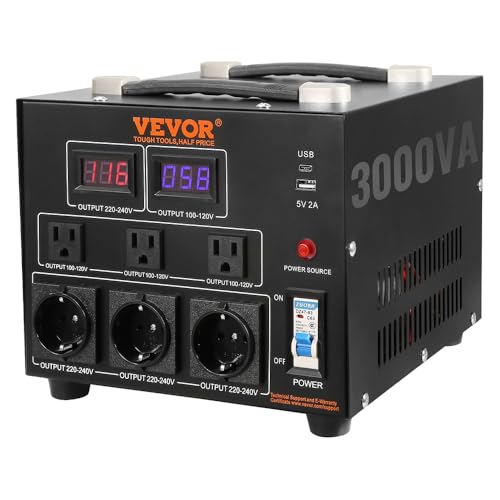
This VEVOR unit is technically not a phase converter in the same sense as the others here. It is a step-up and step-down voltage transformer, which solves a related but different problem: bridging 110 V and 220 V appliances across regions. For someone who has imported a piece of equipment from Europe or Asia, or who moves appliances between North America and a 220 V country, it quietly takes care of the mismatch.
At 3000 watts of capacity it has enough headroom for most household and prosumer electronics, but it does not generate a third phase for motor loads. I included it because shoppers searching for power conversion gear often confuse the two jobs, and this is the right tool for the voltage-only problem.
Practical Pluses
- Step-up and step-down in one box, so it works in either direction as needed
- Multiple outlet formats including US, European, USB, and Type-C cover a wide range of plug styles
- Dual LED voltage displays show real-time output, which helps avoid accidental overload
- Portability makes it a sensible companion for travelers and expats moving between voltage standards
Worth Noting
- This is a single-phase voltage transformer, not a three-phase converter, so it cannot run three-phase motors
- 3000 W is generous for electronics but limiting for high-draw heating appliances like space heaters or hair dryers at full setting
- Owners should keep the unit ventilated during extended use, since heat builds up in the iron core
Feature Snapshot
Made For
Travelers, expats, and small-studio owners who need to bridge 110 V and 220 V appliances without rewiring their space.
Skip It When
Anyone running three-phase motor equipment should reach for the American Rotary AR15 or the American DPS Digital Phase Converter 5HP instead, since those are built for that job.
The DPS 5HP digital converter takes a fundamentally different approach from the rotary units above. Instead of a spinning motor generating the third leg, it uses solid-state electronics, which makes the whole package smaller, lighter, and quieter. For a home garage or basement workshop where space and noise both matter, that is a real quality-of-life improvement.
At 5 HP with 15 amp capacity, it slots into lighter-duty work. Think a small surface grinder, a modest CNC, or a single light three-phase machine. Where the larger AR15 above feels like commercial gear, this one feels like a consumer appliance in the best sense.
What Makes Sense
- Compact and light enough to mount on a wall shelf rather than dedicate floor space
- Sealed enclosure blocks dust and moisture, which is helpful in a garage that sees sawdust and humidity swings
- No high-frequency electrical noise means it will not interfere with sensitive audio or test equipment nearby
- Lower power draw at idle compared to rotary designs that keep a motor spinning continuously
Points To Note
- 5 HP ceiling is the limiting factor, so larger mills and compressors are out of reach
- Digital units can run warmer than rotary models under heavy sustained loads, so ventilation around the cabinet matters
- Less historical track record than the long-established rotary converters, which is worth weighing for critical work
Right Fit For
Hobbyists and home-shop owners running one small three-phase tool who want a quiet, tidy installation they can tuck out of the way.
Look Elsewhere When
Operators running multiple machines or anything above 5 HP will be happier with the American DPS Digital Phase Converter 7.5HP or the 10HP sibling in this list.
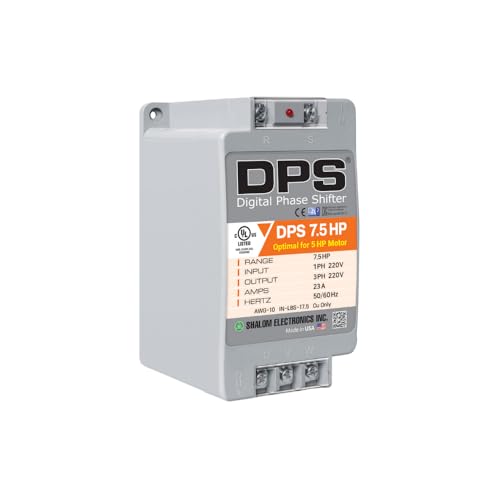
The 7.5HP model sits right in the middle of the DPS digital lineup, and for many shoppers it is the sweet spot. It carries the same sealed enclosure and quiet operation as the 5HP unit I covered above, but stretches capacity to 23 amps at 200-240 V input. That extra headroom opens up larger CNC routers, bigger air compressors, and the kind of equipment a serious hobbyist or small fabrication shop tends to collect.
The honest read is that this model often makes more sense than stepping all the way up to the 10HP unit, because most home shops never push past 7.5 HP of combined draw. It is also a quieter alternative to the American Rotary AR15 covered earlier, though rotary still wins on raw inrush.
Where It Excels
- 23 amp output handles a mid-size CNC or compressor comfortably without tripping
- Same sealed chassis as the smaller DPS units, so dust and moisture resistance carries up
- Quiet solid-state operation is friendlier in a home environment than rotary hum
- Compact footprint compared to a rotary unit of equivalent capacity
Honest Caveats
- Digital topology is more sensitive to voltage drops on long feeder wires than rotary designs, depending on the panel run
- Forgiving on most loads, but very high inrush tools may want the rotary AR15 instead
- Installation still benefits from a qualified electrician, which is a practical cost worth planning for
Feature Rundown
Best Suited To
Multi-tool hobby shops and small fabrication businesses that have outgrown the 5HP ceiling but do not need full 10HP output.
Not Your Match When
Heavy inrush loads above 7.5 HP, where the American Rotary AR15 Rotary Phase converter’s starting muscle is a better fit.
The 10HP DPS is the top of the digital line, delivering 30 amps at 200-240 V for shops that have pushed past the smaller units. It keeps the sealed enclosure, quiet operation, and compact form factor of the 5HP and 7.5HP models I covered above, simply with more output to spare. For a working garage or light-commercial space that runs multiple three-phase machines on rotation, that extra capacity feels less like a luxury and more like insurance.
Compared to the rotary AR15 at the top of this list, the trade-off is real. Rotary still wins on brute-force starting torque, while this digital unit wins on noise and footprint. For most modern CNC and inverter-driven loads, the digital approach lands the cleaner experience.
Everyday Perks
- 30 amp output covers larger CNC mills, bigger air compressors, and combined multi-machine loads
- Same quiet solid-state operation, friendly for shared spaces and home-adjacent workshops
- Sealed cabinet design shrugs off dust and shop humidity better than open-frame rotary units
- Idle draw is modest compared to rotary designs that keep an idler motor running
Practical Considerations
- Higher output demands a robust supply circuit, so panel and breaker capacity should be confirmed in advance
- Digital units can feel less forgiving on very heavy electromechanical inrush than rotary competitors
- Larger enclosure than the smaller DPS siblings, so wall or floor space planning still matters
Whose Shelf It Belongs On
Serious home and small-business workshops running larger three-phase equipment or multiple mid-size machines, where 10 HP of headroom keeps everything running smoothly.
Reach For A Different Pick When
Anyone working with a single heavy inrush motor above 7.5 HP should consider the American Rotary AR15 Rotary Phase converter for its superior starting torque.
What To Weigh Before Choosing A 3 Phases To Single Phase Converter
Match The Converter To The Load Type
The first decision is figuring out whether your equipment actually needs a real phase converter or just a voltage transformer. Three-phase motors on a mill, lathe, or compressor require a true single-to-three-phase unit like the rotary or DPS models. Imported appliances that just need 110 V versus 220 V conversion fall into a different category entirely, which is where a step-up and step-down transformer earns its keep.
Size The Capacity With Real Headroom
Manufacturers usually list two numbers, the single motor start rating and the running load capacity. The single motor start figure tells you the largest motor the unit can spin up cold. The running figure tells you how much combined draw it can sustain. Plan for at least 25 percent headroom above your largest expected load, because motors pull more than their nameplate at start.
Think About Installation And Placement
Rotary converters are heavier, louder, and produce more heat, so they usually want a dedicated floor spot with ventilation. Digital converters are quieter and lighter, often wall-mountable, and friendlier for home garages. Either way, a qualified electrician is the safer path for the panel work.
Decide Whether Quiet And Compact Matter More Than Starting Muscle
For modern CNC and inverter-driven equipment, the clean power and low noise of a digital converter is usually the better experience. For older straight-cut machines with brutal mechanical inrush, rotary starting torque is hard to replace.
Key Considerations Across These Picks
Pitfalls Shoppers Hit
The most common slip is mismatching the converter to the load. Buyers sometimes pick a digital unit for an old three-phase motor with brutal start-up demand, only to find the electronics struggle where a rotary would have cruised. The other trap is under-sizing, choosing a 5HP converter for a 7.5HP mill and wondering why the breaker trips every cycle. Measure the load before measuring the budget.
Where The Extra Money Goes
Stepping up in this category buys more output capacity, cleaner voltage regulation, and quieter operation. Higher-tier digital models also tend to ship with more robust internal components that handle sustained loads with less thermal stress. For a working shop that runs equipment daily, that extra margin usually pays for itself in reliability and fewer nuisance trips.
Frequently Asked Questions
What Does A 3 Phases To Single Phase Converter Actually Do?
It takes the single-phase power available in most buildings and synthesizes a third leg, producing the three-phase output that industrial motors and equipment need to run.
Can Any Converter Run Any Three-Phase Motor?
No. The motor’s horsepower and starting current have to fall within the converter’s ratings, and very high inrush loads tend to favor rotary designs over digital ones.
Do I Need An Electrician To Install One?
In most jurisdictions, yes. The unit connects to your main panel and the equipment it feeds, which is not a casual DIY project for most homeowners.
How Long Do These Converters Typically Last?
With proper sizing and ventilation, rotary units can run for decades. Digital units have less long-term field history but tend to last many years in normal hobby and light-commercial use.
Can I Run Multiple Machines At Once?
Only if their combined draw stays below the converter’s running capacity. Most home-shop users rotate between machines rather than running them simultaneously.
Bottom Line
Three-phase equipment on single-phase service is a solvable problem, and the right pick depends on whether the priority is starting muscle, quiet operation, or compact footprint. The rotary AR15 leads on raw power, the DPS digital line leads on everyday usability, and the VEVOR transformer covers a different but related job for voltage conversion. Match the unit to the load, and most shops can be up and running with three-phase tools in an afternoon.
