

Picking a three-phase disconnect sounds straightforward until you start weighing amperage, fused versus non-fused, and whether the enclosure needs to live outdoors. I’ve talked to plenty of folks running small shops, solar setups, and workshop machinery, and the disconnect almost always gets chosen last, even though it’s the part that protects everything else.
The seven switches below cover the main combinations you’ll actually see: indoor toggle-style motor controllers, weatherproof NEMA 3R enclosures, fused versus non-fused, and 30-amp versus 60-amp ratings. Each one earns its spot for a different reason, and I’ll point you to the right profile for each.
A Side-By-Side Look

Leviton MS303-DSW 30 Amp Manual Motor Controller

FixOasis 3P 60 Amp Disconnect Switch

FixOasis 3P 30 Amp Disconnect Switch

FixOasis 3P 60 Amp Fused Disconnect

FixOasis 2P 60 Amp Disconnect Switch
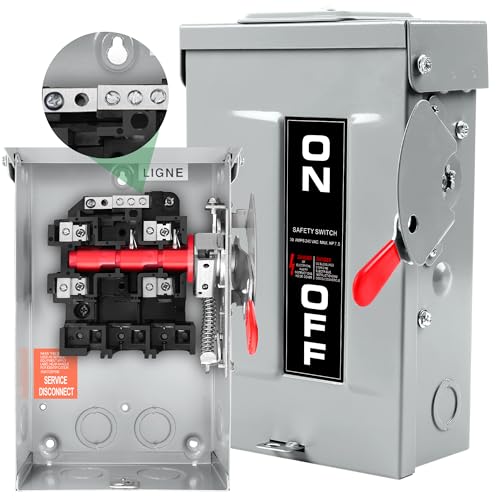
FixOasis 2P 30 Amp Disconnect Switch
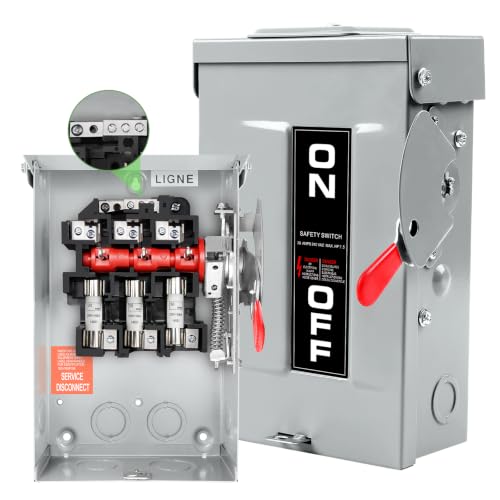
FixOasis 3P 30 Amp Fused Disconnect
A Breakdown Of The Leading Choices
The Leviton MS303-DSW is a toggle-style AC manual controller, which means it’s essentially a heavy-duty light switch rated for motor loads rather than a separate enclosure. In a small machine shop where you’d flip power on and off several times a day, that toggle format feels more familiar than turning a paddle handle on a metal box.
At 30 amps and 600 volts, it covers the typical three-phase motor you’d find on a piece of shop equipment, and it back- or side-wires for easier installation in a crowded panel. It’s the indoor option on this list, so I’d only reach for it when the disconnect lives inside a dry enclosure or control cabinet.
Standout Benefits
- Toggle action that feels intuitive if you’ve used residential switches your whole life
- Industrial-grade construction from a brand electricians have trusted for decades
- Back and side wiring options give flexibility in tight control panels
- Handles 600V, so it works for both 208V and 480V three-phase systems
Things To Consider
- No NEMA 3R weatherproof rating, so it’s strictly an indoor piece
- Non-grounding design means you’ll need a separate grounding path in the panel
Key Specs
Best Suited To
Workshop owners and electricians wiring three-phase motors inside dry, indoor control panels where a simple toggle beats a clunky paddle handle.
Swap It Out When
The FixOasis 3P 30 Amp Disconnect Switch is the better match for anyone who needs a weatherproof outdoor enclosure rather than an indoor controller.
Stepping up to 60 amps opens the door to bigger machinery, and this FixOasis switch lives in a heavy-gauge steel enclosure rated NEMA 3R, which is the National Electrical Manufacturers Association rating for rain-tight outdoor enclosures. That dual capability is what makes it stand out: it handles real loads and shrugs off weather at the same time.
The non-fusible design depends on upstream overcurrent protection, so you’d pair it with a properly sized breaker. For someone running a large air compressor, a water heater bank, or a substantial solar array, the capacity and the corrosion-resistant coating earn their keep.
What Helps Most
- 60-amp capacity covers heavier equipment than the typical 30A residential option
- Steel enclosure with corrosion-resistant paint holds up to years of weather exposure
- NEMA 3R rating means it can sit outside in a workspace, barn, or rooftop array
- 3-pole configuration matches true three-phase 120/240V service
Points To Keep In Mind
- Non-fusible, so you must rely on the upstream breaker for short-circuit protection
- Larger enclosure footprint than the indoor toggle style
Who Should Grab It
Contractors and property owners powering larger three-phase equipment outdoors who need headroom above a standard 30-amp disconnect.
Look Elsewhere When
The Leviton MS303-DSW works better in dry indoor control panels where you don’t need weatherproofing and prefer a simple toggle interface.
This is the smaller sibling of the 60-amp FixOasis, and for most home-shop or solar applications, 30 amps is plenty. I’ve seen plenty of folks spec a 60-amp disconnect they never come close to loading, so paying for capacity you don’t use can feel wasteful in retrospect.
The same NEMA 3R steel enclosure and three-pole layout apply, but the 30-amp rating makes it a comfortable match for solar disconnects, smaller air compressors, and pool equipment. The ground design addition is a small but welcome detail if your local inspector pushes back on older disconnect bodies.
Everyday Wins
- 30A rating covers the bulk of residential and small commercial three-phase loads
- Steel construction with anti-corrosion paint for outdoor longevity
- Includes a ground terminal, simplifying the grounding conductor landing
Honest Caveats
- Non-fusible design puts the burden on upstream breaker protection
- Less headroom for oversized equipment compared to the 60A sibling
The Right Fit
Residential solar installers and homeowners wiring a shed, detached workshop, or pool equipment pad where 30 amps is genuinely enough.
A Better Fit Elsewhere
Step up to the FixOasis 3P 60 Amp Fused Disconnect when you need both higher capacity and the added protection of fusing.
The fused version is the one electricians reach for when the equipment downstream is expensive enough to want dedicated overcurrent protection at the disconnect itself. Fuses react faster than breakers in many short-circuit scenarios, so for a 60-amp circuit feeding pricey machinery, the extra layer tends to feel worth the cost.
You get the same heavy-gauge steel body and NEMA 3R weatherproofing as the non-fused FixOasis, plus the fuse holder built into the enclosure. It’s the heavier-duty commercial choice on this list, and the 10-year manufacturer support is a quiet confidence-builder for a long-term install.
Key Advantages
- Integrated fuse holders add a dedicated overcurrent safety layer
- 60-amp capacity handles larger three-phase commercial loads
- NEMA 3R enclosure rated for outdoor installation in harsh weather
Worth Noting
- Fuses must be sized correctly for the protected equipment, adding a step during install
- Heavier and pricier than the non-fused alternatives
Feature Snapshot
Made For
Commercial electricians and shop owners who want fused local protection for expensive three-phase machinery in an outdoor-rated enclosure.
Consider Something Else When
The FixOasis 3P 30 Amp Disconnect Switch is a leaner fit for residential-sized three-phase loads that don’t justify fused protection.
A two-pole disconnect handles split-phase 240V equipment rather than full three-phase service, and it’s easy to confuse the two if you’re new to this category. Anyone running a well pump, a large 240V water heater, or a substantial workshop tool without three-phase service will find this is the right configuration.
The 60-amp rating gives you headroom for larger 240V appliances, and the steel enclosure matches the rest of the FixOasis line. The added wire-bending clearance and four knockout sides are thoughtful touches that make the actual wiring step less frustrating than it usually is in a tight box.
What Makes Sense
- Two-pole design correctly matches 240V split-phase service
- Heavy steel enclosure with rust- and corrosion-resistant coating
- Generous wire-bending clearance for easier conductor landings
- NEMA 3R rating suitable for indoor and outdoor installation
Less-Strong Areas
- Not a true three-phase switch, so it won’t work for 208V or 480V three-phase equipment
Whose Shelf It Belongs On
Homeowners and contractors installing a disconnect for a single 240V appliance like a water heater, well pump, or air compressor without three-phase service.
Reach For A Different Pick When
The Leviton MS303-DSW is a better match for indoor three-phase motor control where you specifically need a toggle-style controller.
The lower-amperage sibling of the 2P 60-amp model, this 30-amp version is sized for typical residential 240V equipment rather than the heavier commercial end. For a homeowner tackling their first disconnect installation, a smaller amp rating means a smaller enclosure and a less intimidating wiring job.
It still carries the NEMA 3R steel enclosure and the same corrosion-resistant paint as the rest of the FixOasis line, so you give up nothing on weather protection. It’s the gentlest entry point on this list for someone learning the difference between fused, non-fused, two-pole, and three-pole configurations.
Why It Works Well
- 30A rating pairs well with standard residential 240V appliances
- Same weatherproof steel enclosure as the larger siblings
- Compact form factor simplifies wall-mount placement
Room For Improvement
- Limited to lighter 240V loads; won’t handle large commercial equipment
Quick Facts
Perfect Match For
DIY homeowners installing a disconnect for a smaller 240V water heater, small workshop tool, or similar residential appliance.
Where Another Pick Suits Better
The FixOasis 3P 30 Amp Disconnect Switch is the better fit when you actually have three-phase service rather than split-phase 240V.
The last slot goes to a fused 30-amp three-phase option that closes the gap between the heavy commercial 60-amp fused model and the lighter residential gear. For someone running a moderate three-phase load outdoors who still wants the extra protection of fuses, this is the most balanced profile on the list.
It shares the same steel enclosure, anti-corrosion coating, and NEMA 3R rating as the larger FixOasis fused unit. The 10-year manufacturer support applies here too, which matters for outdoor installs where maintenance access can be inconvenient.
Good Reasons To Consider
- Fused protection at a more approachable amp rating than the 60A fused alternative
- NEMA 3R steel enclosure for outdoor longevity
- Three-pole layout suits true three-phase service
Trade-Offs To Consider
- Fuse sizing must be matched to the load during install
- Not enough capacity for heavier commercial machinery
Who Will Love This
Workshop owners and light-commercial installers who want fused three-phase protection at 30 amps rather than stepping up to the larger 60A fused model.
Not Your Match When
The FixOasis 2P 30 Amp Disconnect Switch is the better call for split-phase 240V equipment that doesn’t need three-pole configuration.
What To Weigh Before Choosing A Three-Phase Disconnect
Three-phase disconnects look similar from the outside, but the internal difference between 2-pole and 3-pole units is the first thing to get right. A 3-pole switch handles true three-phase service (208V, 240V, or 480V across three hot legs), while a 2-pole switch handles split-phase 240V service with two hots and a neutral. Wiring the wrong one is a common and frustrating mistake.
Amperage is the next call. Match the disconnect rating to your actual load with headroom to spare. A 30-amp disconnect feeding a 25-amp continuous load is fine; a 30-amp disconnect feeding a 35-amp motor is not. Fused versus non-fused is the third fork: fuses give you local overcurrent protection at the disconnect itself, which matters when the equipment is expensive or far from the main panel.
NEMA ratings decide where the enclosure can safely live. NEMA 3R is the most common outdoor rating, meaning rain-tight and ice-resistant for typical weather. Indoor-only enclosures cost less but rust quickly when mounted outside. Enclosure material (steel versus plastic) affects corrosion resistance over years of exposure.
Finally, think about how often you’ll actually flip the disconnect. Toggle-style controllers like the Leviton are easier on the hands for daily use, while paddle handles on metal enclosures are designed for less frequent switching and lockout/tagout procedures during service work.
Key Considerations Across These Picks
Pitfalls Shoppers Hit
Spec’ing a 60-amp disconnect when your load only draws 20 amps is the most common overshoot. You pay for capacity you never use, and the enclosure is harder to mount in tight spaces. Conversely, undersizing a disconnect to save money creates a chronic tripping or overheating problem that’s far more expensive to fix later.
The second trap is mixing up 2-pole and 3-pole units, especially in homes where 240V split-phase service gets casually called “three-phase.” True three-phase service is rare in residential settings; most homes have split-phase. Reading your panel labeling or calling your utility before ordering saves a return trip.
The Case For Spending Up
The jump from a non-fused to a fused disconnect usually buys faster fault-clearing speed and an extra layer of protection at the disconnect itself. For expensive motors, solar inverters, or commercial gear, fuses often react faster than the upstream breaker during a short circuit.
Higher-tier models also tend to use thicker-gauge steel, better paint finishes, and more generous wire-bending clearances inside the enclosure. Those differences show up years later as easier service access and fewer corrosion headaches, especially on outdoor installs where the box lives through several weather seasons.
Frequently Asked Questions
What is a 3 phase disconnect?
A 3 phase disconnect is a safety switch that cuts all three hot legs of a three-phase electrical circuit at once, allowing a piece of equipment to be de-energized for service or in an emergency.
Do I need a fused or non-fused disconnect?
Fused disconnects include local overcurrent protection through replaceable fuses, while non-fused versions rely entirely on the upstream breaker. Choose fused for expensive or remote equipment, non-fused when short-circuit protection is already handled at the main panel.
What does NEMA 3R mean?
NEMA 3R is an enclosure rating from the National Electrical Manufacturers Association that means the box is rain-tight and suitable for outdoor mounting in typical weather conditions.
Can I use a 2-pole disconnect for three-phase equipment?
No, a 2-pole switch only interrupts two hot legs and is designed for split-phase 240V service. Three-phase equipment requires a 3-pole disconnect to safely interrupt all three hot legs simultaneously.
Do these disconnects need professional installation?
Because they handle high amperage and live service entrance wiring, professional installation by a licensed electrician is the standard expectation for safety and code compliance.
The Takeaway
The right disconnect is the one that matches your actual service type, amperage, and mounting location, not necessarily the biggest one on the shelf. For most residential three-phase setups, the FixOasis 3P 30 Amp covers the bases without overkill. For commercial shops with heavier loads and a need for fused protection, the 60-amp fused model earns its place. The Leviton toggle remains the right call for indoor motor control where weatherproofing doesn’t matter. Match the spec to the install, and the rest takes care of itself.
