

A 1kw solar setup makes sense when you want serious daytime output without jumping into oversized gear. You might be powering a cabin, a roof array, an RV bank, or a backup setup for tools and essentials, so the real question is fit, not hype. The picks below focus on panel type, wiring style, mounting ease, and how each option suits everyday use in places where shade, space, or portability changes the plan.
The Shortlist At A Glance

JJN 550 Watt Bifacial Solar Panels 2PCS

STAR 990 Watt Solar Panel 2PCS 495W
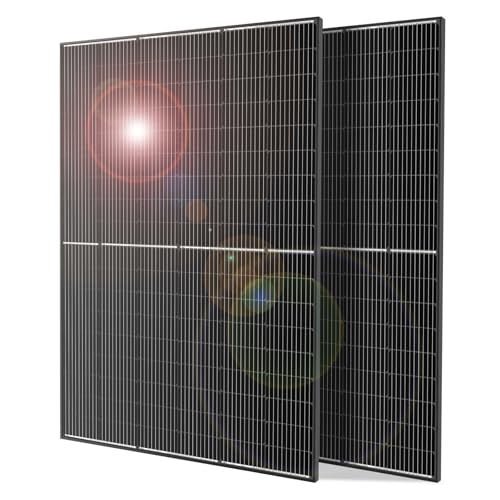
DOKIO 800W Solar Panel Set Two 400W

Renogy ShadowFlux Solar Panel 400 Watt

110W Portable Solar Panel Foldable Charger
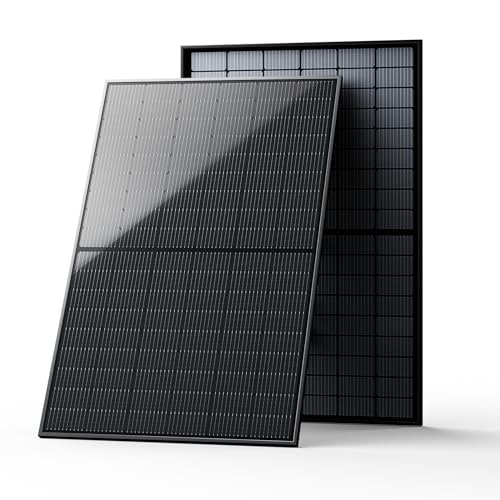
EPOCH 860W Bifacial Solar Panels

400W Portable Solar Panel for Power Station
More Details On Our Top Picks
JJN makes sense for a mixed setup, because the panel set is built around 12, 24, and 48 volt use. That kind of range helps when your system plan may shift from an RV bank to a home backup layout or a farm outbuilding.
The bifacial design can use light from both sides, which matters on reflective ground or a bright rooftop. The trade-off is simple, the setup only pays off when mounting height, spacing, and ground reflection work in your favor.
Strong Points
- Works across several system voltages, so it fits more build plans.
- Bifacial construction can help squeeze extra output from reflective surroundings.
- The two-panel format suits larger layouts that need more surface area.
- Good match for rooftop, farm, and off-grid use without feeling overly specialized.
Small Caveats
- Bifacial gain depends on mounting conditions, so placement matters a lot.
- The larger format asks for enough roof or ground space.
Feature Snapshot
Built With In Mind
You suit this pick best if you want a flexible panel set for a home, RV, or off-grid project and have room to position it well.
A Better Fit Elsewhere
Renogy ShadowFlux Solar Panel 400 Watt suits you better when partial shade is the bigger headache and you want a more shade-aware layout.
STAR leans toward users who want a higher-output pair without a lot of visual clutter. The frameless build also gives it a cleaner profile than the more traditional framed look on the JJN set, which some roof and marine installs will appreciate.
The 25.6% efficiency claim and 48V/24V support point to a serious power-focused layout, especially for RVs, roofs, and off-grid homes. The trade-off is that frameless panels can ask for more careful mounting and cleaning, since exposed edges and surfaces tend to reward regular attention.
What We Like
- High-output pairing suits systems that need stronger daily production.
- Frame-free styling can look cleaner on visible installs.
- 48V and 24V support gives you room to match different system designs.
- Monocrystalline construction fits setups where space matters.
Areas To Watch
- Frameless panels usually need a bit more care during mounting and cleaning.
- The pair is better suited to fixed installs than casual portable use.
- The focus here is output, so the look and handling are less forgiving than simpler travel panels.
Core Details
Who Will Love This
You fit this one best if you want a cleaner-looking, power-oriented set for a roof, marine setup, or home system.
Where A Sibling Pick Shines
JJN 550 Watt Bifacial Solar Panels 2PCS makes more sense when voltage flexibility matters more than the streamlined frameless look.
DOKIO keeps the structure straightforward: two 400W panels, a 31V setup, and cables that reach 9.84 feet. That makes it easier to think through placement in a yard, shed, or off-grid corner without immediately needing a tangle of extra hardware.
The aluminum frame and pre-drilled holes matter because they reduce the guesswork during mounting. Compared with the more style-forward STAR panel, this set feels more like a working installer’s choice, which suits you when reliability of placement matters more than cosmetic polish.
Highlights
- Two-panel format makes it easier to spread coverage across a build.
- 31V output and 24V system fit help with off-grid matching.
- Pre-drilled holes simplify mounting on sheds or fixed structures.
- 9.84-foot cables add placement flexibility for practical installations.
Things To Consider
- The fixed-panel setup asks for a dedicated install spot.
- Aluminum framing adds structure, but it also adds bulk compared with travel panels.
- Longer cable runs still need tidy planning so the layout stays clean.
Feature Rundown
Made For
You suit this pick best if you want an off-grid panel set for a shed, yard install, or another fixed spot where easy mounting matters.
Look Elsewhere When
MHPOWOS 110W Portable Solar Panel fits you better for camping or portable charging, where folding gear matters more than fixed mounting.
ShadowFlux is the shade-aware option in this group, and that changes the conversation fast for rooftops with trees, vents, dormers, or snow patches. N-type cell design is part of the appeal here, since it points to a more modern panel architecture than the simpler fixed-purpose sets above.
You may find this especially useful on a roof that never sees perfect sun all day. Compared with the DOKIO set, this one is less about easy mounting and more about keeping output steadier in messy light conditions.
Bright Spots
- Shade-focused design suits roofs with partial blockage.
- Two 200W panels give you a split-layout approach.
- N-type build points to a newer cell structure.
- Works across RV, marine, and home settings.
Points To Note
- Shade management helps, but it does not erase the need for a good location.
- The pair format may leave you wanting more total surface for larger loads.
- Clean rooftop placement still matters for the best everyday results.
Details At A Glance
The Right Fit
You suit this pick best if your roof, RV, or marine setup sees partial shade through the day and you want a steadier panel design.
Swap It Out When
JJN 550 Watt Bifacial Solar Panels 2PCS fits better when broad voltage compatibility matters more than shade-specific tuning.
MHPOWOS is the portable pick, so it belongs in campsites, blackout kits, and trips where a foldable panel makes more sense than a roof-mount array. The 20V output and seven-in-one connector setup point toward power-station charging, which keeps the use case nicely focused.
The IP67 rating means the enclosure is built for dust resistance and short water exposure, which is useful around wet ground or dusty sites. The trade-off is obvious, 110W is small compared with the fixed arrays above, so you gain mobility and lose a lot of raw total output.
Reasons To Buy
- Foldable layout packs down neatly for travel or storage.
- Seven-in-one connector support helps with wider power-station compatibility.
- Adjustable bracket makes it easier to angle the panel outdoors.
- IP67 construction suits rougher camping conditions and dusty environments.
Minor Gripes
- 110W output is modest compared with the larger home-focused sets.
- Portable gear needs more setup and packing attention.
- The main benefit is flexibility, not whole-house coverage.
Feature Card
Who Should Grab It
You suit this pick best if you need portable charging for a power station, RV trip, or emergency kit.
Reach For A Different Pick When
DOKIO 800W Solar Panel Set Two 400W is the better fit for a fixed off-grid install that needs much more surface area.
EPOCH feels built for hard-working setups where waterproofing and panel strength matter as much as wattage. The 12/24 volt support keeps it practical for RV, boat, and marine systems, while the bifacial structure gives it a broader use profile than a plain single-face module.
Compared with the JJN set, this one stays a little more focused on rugged utility than broad system flexibility. You may appreciate that balance on a camper roof or boat deck, where stable mounting and weather exposure are part of normal life.
Positives
- Bifacial layout can take advantage of reflected light in the right setting.
- 12V and 24V compatibility covers common mobile and off-grid builds.
- Waterproof module design suits harsher outdoor placement.
- Two 430W panels give you a substantial paired setup.
- Monocrystalline construction keeps the footprint efficient for the output.
Softer Spots
- The paired format needs enough room for clean placement.
- Bifacial use still depends on the install environment around the panel.
Technical Sheet
Whose Shelf It Belongs On
You fit this pick best if you want a tougher panel set for RV, boat, marine, or off-grid work.
Another Choice May Suit
Renogy ShadowFlux Solar Panel 400 Watt works better for rooftops where shade is the bigger challenge than raw ruggedness.
TWELSEAVAN lands in the middle ground between portable convenience and serious portable output. The foldable format, ETFE surface, and MC4 output make it a strong companion for a power station, especially during camping or backup use.
The four kickstands and solar angle guide help with setup, which matters more than people sometimes expect on uneven ground. Compared with the MHPOWOS 110W panel, this one gives you far more output while still keeping the travel-friendly shape.
Best Bits
- Foldable form stores more easily than fixed panels.
- ETFE surface material is a practical choice for outdoor use.
- MC4 output supports common solar connections.
- Four kickstands and an angle guide make field setup simpler.
- 400W output suits stronger portable charging needs.
Worth Noting
- Portable panels need setup time and storage space between uses.
- Large folding gear is easier to move than roof hardware, but still bulky.
- Best results depend on careful angle placement outdoors.
Feature Rundown
Perfect Match For
You suit this pick best if you want a foldable panel for camping, RV travel, or portable backup charging.
Where A Sibling Pick Shines
STAR 990 Watt Solar Panel 2PCS 495W makes more sense for a fixed roof or marine build that needs higher paired output.
How To Choose The Right 1kw Solar Panels
Match The Panel Type To Your Space
Panel style matters more than many people expect. Monocrystalline panels are common in this roundup because they use space efficiently, while bifacial panels can take advantage of reflected light from a bright surface behind them. That helps on a reflective roof, pale gravel, or a setup that sits a little higher off the ground.
Check Voltage Before You Commit
Voltage compatibility decides whether a panel set fits your battery bank and controller plan. The JJN and EPOCH sets support 12, 24, and 48 volt use, while DOKIO leans toward 24V off-grid layouts and STAR covers 48V and 24V. A tidy match here saves trouble later, especially in a cabin or RV build where space for rewiring is tight.
Think About Shade, Not Just Wattage
Shade tolerance can matter as much as raw output on rooftops with vents, trees, snow, or nearby walls. Renogy ShadowFlux stands out for that reason, since its design is aimed at partial shading rather than only peak sun. A panel that keeps working through mixed light can feel like a steadier engine on a messy day.
Portable And Fixed Builds Need Different Priorities
Foldable panels make sense for travel, emergency charging, and temporary setups, while framed panels suit roofs, sheds, and other permanent installs. MHPOWOS and TWELSEAVAN lean portable, while DOKIO, STAR, JJN, and EPOCH lean fixed or semi-fixed. Your best match depends on whether you need easy packing or longer-term mounting stability.
A Quick Reality Check
Common Shopping Slip Ups
A lot of people focus on wattage alone and skip the rest of the system. That’s how you end up with a panel that looks powerful on paper but does not match the battery voltage, mounting space, or controller you already have.
Another common miss is forgetting the install environment. Shade, cable length, and roof shape all change the result, and a panel that sounds ideal can feel awkward once it meets a vent pipe or a narrow mounting lane.
The Upgrade Payoff
Higher-tier panels usually cost more because of cell design, efficiency, shade handling, or stronger construction. N-type cells, bifacial layouts, frameless builds, and better weather resistance all add complexity, and that usually shows up in the build.
The upgrade is worth it when your roof is crowded, your site sees mixed light, or you want more output from limited space. For a plain sunny setup, a simpler panel can still make a lot of sense.
Frequently Asked Questions
What does 1kw solar panels usually mean?
It usually points to a system or panel group near 1,000 watts of total output. The actual setup can use one large panel or several smaller panels working together.
Are bifacial solar panels useful for home roofs?
They can be useful on reflective roofs or raised mounts where the rear side can catch extra light. On a dark or tight install, the added benefit is usually smaller.
Do portable solar panels work for power stations?
Yes, portable panels are commonly used with power stations. The key is matching the connector type and voltage range to the station’s input needs.
Why choose monocrystalline panels?
Monocrystalline panels are a good fit when you want strong output from limited space. They work well for RVs, roofs, and compact off-grid builds.
Does shade always ruin solar output?
Shade does not always ruin it, but it can reduce output a lot on many panel setups. Shade-aware designs help, yet a cleaner sun path still makes a noticeable difference.
Closing Thoughts
You have a solid set of paths here, from portable foldable gear to fixed bifacial arrays and shade-aware roof panels. The right choice depends on where the panels will sit, how much space you have, and whether you need easy travel storage or steadier daily output. For most home and off-grid setups, matching the panel style to the site matters more than chasing a bigger number on the listing. Pick the build that fits your space first, and the rest gets easier.
