

Twelve feet is the sweet spot for most extension needs. It’s enough reach to bridge a garage outlet to a driveway project, link a living room lamp to a wall socket hidden behind a bookshelf, or stretch across a backyard without leaving you with yards of tangled slack. I find people shopping for this length usually want something that disappears into daily life, handles a real load, and won’t fall apart after one season.
The five options below cover different scenarios: heavy-duty outdoor runs, short indoor reach, and one multi-outlet design for those hard-to-reach spots behind furniture. Each one earned its spot for a clear reason.
The Picks In Brief

Watt’s Wire 15 ft Heavy Duty Outdoor Extension Cord

Watt’s Wire 10 ft Outdoor Extension Cord

Watt’s Wire 2 ft Short Outdoor Extension Cord

Skrizcable 16/3 12 ft Indoor Extension Cord
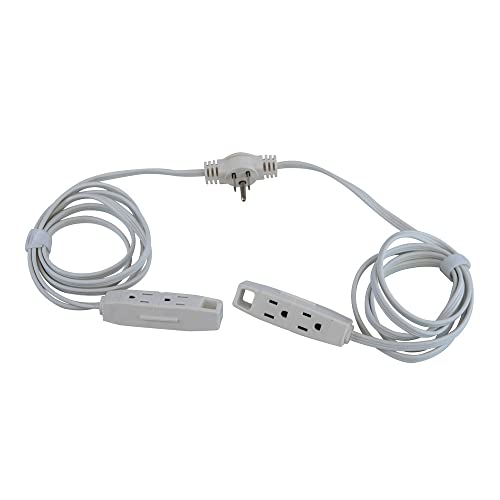
Woods 67014340 Sofa Cord, 6 Outlets
A Deeper Look At The Lineup
This Watt’s Wire cord stretches 15 feet in a 12-gauge build, which means thicker copper wiring than the lightweight indoor cords most people grew up with. That extra copper matters when you’re running a circular saw, pressure washer, or space heater across a distance. The 12-gauge rating keeps voltage drop minimal, so a motor at the far end still gets the current it expects.
It’s wrapped in a jacket designed to take weather, abrasion, and cold, and the three-prong grounded plug suits standard outdoor outlets. For someone running power to a deck project or lighting up a patio, this is the workhorse option.
The Practical Payoff
- 12-gauge wire handles demanding tools without sagging voltage at the far end.
- Weather-resistant jacket holds up to sun, rain, and rough surfaces.
- 15-foot reach covers most garage-to-driveway and deck setups.
- Three-prong grounded design fits standard outdoor outlets.
Things To Consider
- Heavier and stiffer than indoor cords, so it’s overkill for lamp duty.
- Plugs shouldn’t sit in pooling water, even with the weather-resistant jacket.
Key Specs
Who It Suits Best
Homeowners and hobbyists running real power tools, generators, or outdoor lighting across a typical yard.
Skip It When
The Watt’s Wire 10 ft Outdoor Extension Cord is a tighter fit for smaller workshop setups where 15 feet creates more slack than you need.
Where the 15-footer gives you room to roam, this 10-foot Watt’s Wire version trims things back for tighter workspaces. It’s the same 12-gauge construction, so you keep that steady power delivery for saws, drills, and other hungry tools. Ten feet is the right amount of reach when your workbench sits close to a wall outlet.
The outdoor-rated jacket and three-prong plug match the rest of the Watt’s Wire outdoor lineup, which is helpful if you’re building a small set over time. For a garage workshop or covered patio, this length often beats longer cords because there’s less cable to trip over or coil up.
Practical Pluses
- 12-gauge wire keeps voltage steady for mid-range tools.
- 10-foot length reduces trip hazards in compact shops.
- Weather-resistant jacket works in damp basements and covered patios.
- Sold in a multi-pack, useful for spreading tools across the workspace.
Worth Noting
- Not long enough for projects that stretch across a driveway.
- Stiffer feel than indoor cords, so it’s not ideal for casual lamp use.
Made For
Garage hobbyists and weekend woodworkers running tools within a short reach of an outlet.
A Better Fit Elsewhere
The Watt’s Wire 15 ft Heavy Duty Outdoor Extension Cord serves you better when the project sits farther from the outlet.
Sometimes you just need a couple of feet. This 2-foot Watt’s Wire cord acts like a bridge between an outlet that’s slightly out of reach and a tool or appliance that needs to sit closer to the wall. It’s the same outdoor-rated build as the longer siblings, which means the jacket handles weather and rough surfaces without complaint.
The grounded three-prong plug makes it a solid choice for outdoor holiday lights, a pond pump, or any device whose built-in cord falls just short. Two feet keeps everything tidy and prevents the sag and tangle you’d get with a longer cord stuffed behind a planter.
What It Does Well
- Short length keeps cords neat and off the ground.
- 12-gauge wire preserves power quality for small motors and pumps.
- Outdoor-rated jacket suits garden and patio use.
Room For Improvement
- Useless for any project that needs real distance from the outlet.
- Stiffer jacket means it doesn’t bend around tight corners as gracefully as indoor cords.
Best Suited To
Anyone extending power just a few inches for outdoor lights, pumps, or appliances with short built-in cords.
Reach For A Different Pick When
The Watt’s Wire 10 ft Outdoor Extension Cord is the right call when you need actual working distance, not just a gap-filler.
This Skrizcable cord flips the script: it’s built for inside the house. The 16-gauge wire is lighter than the outdoor Watt’s Wire options, which is exactly what you want for a lamp, phone charger, or computer setup. A 16-gauge cord is thinner and more flexible, so it slips behind furniture without bulging out.
The braided jacket adds a bit of texture and durability over standard vinyl, and the white color blends into most walls and baseboards. Twelve feet hits the right length for reaching across a room or around a desk without leaving coils of slack. It’s a simple, sensible indoor pick.
What Pays Off
- Flexible braided jacket bends easily around furniture legs and corners.
- White color blends with walls and baseboards in most rooms.
- Twelve-foot reach covers typical living room and office layouts.
- Lightweight build makes it easy to coil and store.
Some Limits To Know
- 16-gauge wire isn’t suited for heavy-draw tools or heaters.
- Indoor rating means it shouldn’t be used in wet outdoor conditions.
Who Will Love This
Anyone setting up a home office, entertainment center, or reading nook where aesthetics and flexibility matter.
Look Elsewhere When
The Watt’s Wire 15 ft Heavy Duty Outdoor Extension Cord is the better match for outdoor projects or power-hungry tools.
The Woods sofa cord solves a problem the others don’t touch: outlets hidden behind heavy furniture. Instead of pulling a couch away from the wall, this cord has six feet of cable on each side with three outlets at each end. You run one side to the wall and the other side peeks out where you actually need power.
The flat plug is the unsung hero. A flat plug sits flush against the wall, so furniture can push back without bending the cord or leaving a gap. The 16-gauge wire handles typical living room loads: lamps, chargers, a TV, maybe a soundbar. For a media setup behind a console, it’s hard to beat.
What Stands Out
- Flat plug lets furniture sit close to the wall without bending prongs.
- Six outlets across both ends eliminate the need for a power strip.
- Two six-foot cords reach outlets on either side of a piece of furniture.
- Neutral white color hides behind most couches and beds.
Points To Note
- 16-gauge wire isn’t built for high-draw appliances like heaters.
- Total reach tops out at 12 feet combined, so it won’t cover large rooms.
- Owners commonly report the cord runs warm when all six outlets carry a load, so spreading high-draw devices across outlets is wise.
Feature Snapshot
Perfect Match For
Living rooms and bedrooms where outlets are tucked behind couches, beds, or media consoles.
Not Your Match When
The Skrizcable 16/3 12 ft Indoor Extension Cord is a cleaner option for general indoor reach where multi-outlet splitting isn’t the priority.
What To Weigh Before Picking Your 12 Foot Extension Cord
Gauge And Load Capacity
Wire gauge is the single most important spec to understand. A 12-gauge cord uses thicker copper than a 16-gauge cord, which means it carries more current over distance without losing voltage. For tools, heaters, or anything with a motor, 12 gauge is the safer choice. For lamps, chargers, and electronics, 16 gauge is plenty and easier to handle. Running a heavy tool on a thin cord is a real safety risk, so match the gauge to the job.
Indoor Versus Outdoor Construction
Outdoor cords use jackets built to resist water, sunlight, abrasion, and cold. Indoor cords are lighter and more flexible but aren’t rated for wet conditions. The difference shows up in the materials: outdoor jackets are thicker and stiffer. Putting an indoor cord outside is a common shortcut that usually ends with cracked insulation. Pick the right environment from the start.
Length And Slack
Twelve feet is a comfortable middle ground, but more isn’t always better. Excess cord creates trip hazards, tangles in storage, and voltage drop over distance. Measure the actual gap you need to bridge, then add a small buffer. A 2-foot cord solves tight-gap problems better than a 12-footer stuffed behind a planter.
Plug Style And Outlet Fit
Flat plugs matter more than people expect. A standard plug sticks out two or three inches from the wall, which prevents furniture from sitting flush. A flat plug keeps things tight against the baseboard. For outlet-furniture scenarios, that small detail makes the setup look clean instead of improvised.
Key Considerations Across These Picks
Mistakes Worth Dodging
The biggest trap with extension cords is matching cord to use case. A 16-gauge indoor cord feels easier to handle, so people grab it for everything, including power tools. That’s a safety issue, not just an inconvenience. The flip side is buying a heavy 12-gauge outdoor cord to power a bedside lamp, which works fine but adds bulk you don’t need. Match the cord to the load and environment, and most other problems disappear.
When Paying More Pays Off
In this category, the jump from a basic cord to a better one usually shows up in the jacket material and the plug design. A braided or thicker jacket lasts longer when dragged across concrete or stored in a cold garage. A flat plug costs more to manufacture but lets your furniture sit where you want it. Spending slightly more for these upgrades pays off over years of daily use, not just the first season.
Frequently Asked Questions
What gauge extension cord do I need for power tools?
For most household power tools, a 12-gauge cord is the right starting point. It handles circular saws, drills, and pressure washers without significant voltage drop. A 16-gauge cord is too thin for sustained tool use and can overheat under load.
Can I use an outdoor extension cord indoors?
Yes, outdoor cords work indoors. They’re just heavier and stiffer than indoor cords, so they’re awkward for lamp or charger duty. Indoor cords should never be used outdoors because their jackets aren’t rated for moisture or sunlight.
Is a 12-foot extension cord long enough for a yard?
It depends on the yard. Twelve feet covers a typical patio or a garage-to-driveway reach. For larger yards or distant outlets, look at 25-foot or 50-foot cords. More length than you need creates trip hazards and storage headaches.
What does a flat plug do?
A flat plug sits flush against the wall outlet instead of sticking out. This lets furniture push close to the wall without bending the cord or leaving a visible gap. It’s especially useful behind beds, couches, and media consoles.
How many devices can I plug into a multi-outlet extension cord?
It depends on what you’re plugging in. A multi-outlet cord like the Woods sofa cord handles six typical living room devices: lamps, chargers, a TV, a soundbar. Avoid running multiple high-draw appliances on the same cord, since the total load adds up fast.
Closing Remarks
The right 12 foot extension cord is the one that matches your actual setup, not the one with the most features. Heavy-duty outdoor work calls for a 12-gauge jacket; indoor reach calls for a flexible braided cord; hidden furniture outlets call for a flat-plug multi-outlet design. Pick the scenario that fits your space, and the rest takes care of itself.
