

A good 12 gauge extension cord quietly solves one of the most annoying jobsite and backyard problems: getting full power to tools and appliances that are too far from the nearest outlet. Thicker wire means less voltage drop, which matters most when you’re running circular saws, block heaters, or pressure washers at the end of a long run. I put together this lineup for DIYers, homeowners, and small-shop pros who need a cord that won’t let them down when the workload gets serious.
A Closer Look At The Lineup

POWGRN 25 FT 12/3 Outdoor Extension Cord Waterproof, Heavy Duty Power Cord

POWGRN 50 ft 12/3 Outdoor Extension Cord Waterproof with Lighted Indicator

POWGRN 100 FT 12/3 Outdoor Extension Cord Waterproof, Heavy Duty Power Cord

DEWALT 50 Foot 12/3 SJTW Click-to-Lock Lighted Extension Cord

HONDERSON 20 Ft White Outdoor Extension Cord with Lighted End
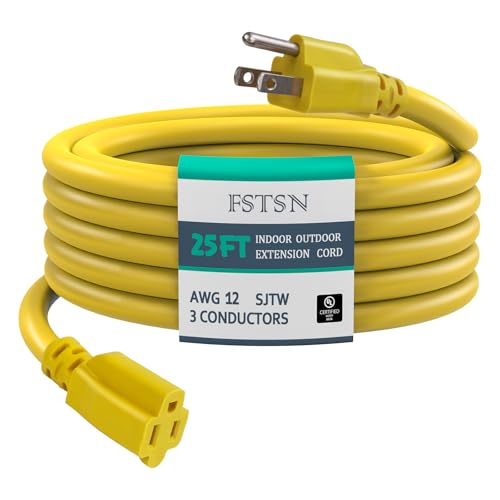
FSTSN 25 ft Heavy Duty Extension Cord Yellow 12/3 SJTW 15 AMP
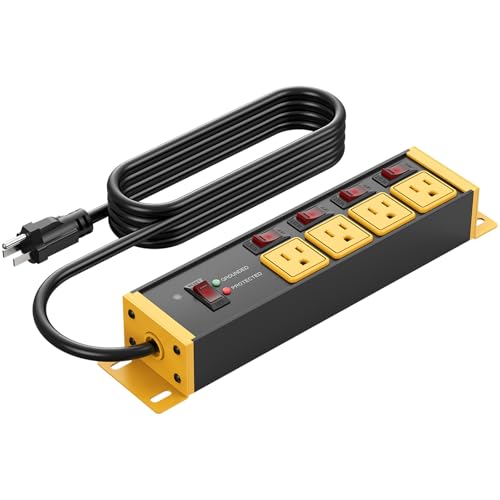
CCCEI 12 Gauge Heavy Duty Surge Protector 6FT
More Details On Our Top Picks
For porch outlets and patio tool runs, twenty-five feet usually covers the gap without leaving yards of cable coiled underfoot. The POWGRN 25 ft cord uses 12-gauge conductors, which means it stays well above the safe capacity for tools drawing up to 15 amps, even at full extension. SJTW is the jacket rating here, a thermoplastic cover rated for outdoor and light wet conditions.
Compared to the 50 and 100 ft POWGRN options later in the list, this shorter version is easier to wrangle for someone who just needs to reach a corner of the deck. The NEMA 5-15P plug and matching NEMA 5-15R receptacle match any standard household outlet.
Bright Spots
- Twelve-gauge wire handles full 15-amp tool loads without sagging voltage at twenty-five feet.
- SJTW jacket resists moisture and abrasion in light outdoor jobs.
- Short length stores in a small bin or bin hook, which keeps garage clutter down.
- ETL/cETL listing provides third-party confirmation of the safety claims.
Things To Consider
- No lighted end on this model, so confirming power at the tool requires a glance back at the outlet.
- Twenty-five feet runs short for larger yards, which is where the 50 ft version earns its keep.
Quick Facts
Made For
Homeowners running string lights, a small saw, or a patio heater from a nearby outlet.
Consider Something Else When
Anyone needing more reach should consider the POWGRN 50 ft Outdoor Extension Cord with Lighted Indicator End for its doubled length and at-a-glance power confirmation.
Fifty feet is the sweet spot for most homeowners who need to reach a detached garage, a driveway outlet, or the back corner of a modest yard. The POWGRN 50 ft cord adds an LED indicator on the female end that lights up when current is flowing, which saves a lot of guessing when a tool refuses to start. The bright yellow jacket helps prevent trip hazards on lawn days.
Where the 25 ft version above favors compact storage, this length stretches further while staying light enough to coil with one hand. The SJTW jacket stays flexible in cooler temperatures, which matters for shoulder-season landscaping.
Noteworthy Benefits
- Lighted end confirms at a glance whether the circuit is live at the tool.
- Bright yellow PVC jacket improves visibility against grass and concrete.
- Twelve-gauge wire supports demanding 15-amp equipment over the full run.
- ETL/cETL listing backs the rated capacity.
- Stays flexible in cold weather for easier coiling and uncoiling.
Points To Note
- Fifty feet of 12-gauge cable is heavier than light-duty 16-gauge cords and may tire out shorter users during long sessions.
Right Fit For
Yard-focused homeowners and small-shop owners who want a single cord that handles most everyday reach needs.
A Better Fit Elsewhere
Anyone running a tool across a long property line may prefer the POWGRN 100 ft Outdoor Extension Cord, which doubles the reach.
When the job is at the far end of a long lot, a workshop without its own sub-panel, or a string-lighting install around a big roofline, a hundred feet of cord opens up possibilities that shorter cables cannot. The POWGRN 100 ft version uses the same 12/3 conductor spec as the brand’s shorter siblings, so voltage drop stays manageable on heavy tools. The SJTW jacket shrugs off the kind of puddles and rough surfaces that chew up lighter cables.
For someone who already owns the 50 ft model above, this is the practical upgrade for reaching detached structures. It weighs more, which is the unavoidable trade-off of pushing reach that far with thick wire.
Useful Strengths
- Hundred-foot reach clears most residential property lines from a single outlet.
- Twelve-gauge construction limits voltage drop on heavier 15-amp tools.
- Waterproof jacket holds up against wet grass and dewy mornings.
- ETL/cETL listed for verified safety performance.
Worth Noting
- Hundred feet of 12-gauge cable is bulky to coil and heavier than many homeowners expect.
- For indoor garage work, the 50 ft version is easier to manage without sacrificing much reach.
Feature Snapshot
Best Suited To
Property owners with long driveways, distant workshops, or large yards who need one cord to reach everywhere.
Skip It When
Anyone working within fifty feet of an outlet should save space and reach for the POWGRN 50 ft Outdoor Extension Cord with Lighted Indicator End instead.
Anyone who has dragged a heavy tool across a yard only to have it pop loose mid-cut knows why a locking connector matters. The DEWALT 50 ft extension cord uses a click-to-lock design that grips the male end until a collar is pulled back to release it. The amber LED on the plug side tells you at a glance whether power is flowing through the cord itself, which makes troubleshooting faster when a tool refuses to run.
Compared to the POWGRN 50 ft option earlier, this cord trades a basic waterproof jacket for a heat- and corrosion-resistant build that contractors tend to favor. For daily jobsite use, that ruggedness usually justifies the spend.
The Case For It
- Click-to-lock design keeps the connection intact during heavy drag and pull work.
- Lighted plug confirms live power before walking to the outlet to check it.
- Heat- and corrosion-resistant jacket supports outdoor and shop environments.
- Twelve-gauge wire handles demanding 15-amp draws.
Trade Offs
- The locking collar only mates with DEWALT-style locking connectors, so standard plugs work but won’t click into place.
- Sitting at a higher tier, this cord tends to cost more per foot than non-locking options.
At A Glance
Who Should Grab It
Contractors and frequent DIYers who run heavy tools and want a connector that won’t vibrate loose mid-task.
Another Choice May Suit
Casual weekend users who don’t need locking connectors may find better everyday value in the POWGRN 50 ft Outdoor Extension Cord with Lighted Indicator End.
Most outdoor cords shout for attention in safety yellow or high-visibility orange, which is great for trip safety but ugly along a white porch railing. The HONDERSON 20 ft cord leans into a clean white jacket designed to blend with trim, siding, and patio decor. It still uses a 12-gauge conductor and a lighted end that confirms power is flowing when you flip the switch.
Where the longer POWGRN models above focus on raw reach, this shorter cord is built for visual integration. Holiday lights, café-style string lights, and porch heaters are the most likely jobs.
Everyday Wins
- White jacket disappears against most trim and siding colors.
- Lighted end shows live power at a glance.
- Twelve-gauge wire supports full 15-amp loads over a short run.
- Flexible jacket coils easily for off-season storage.
Honest Caveats
- White shows dirt, scuffs, and grass stains more obviously than safety-colored jackets.
- Twenty feet falls short for reaching distant yard outlets, where the 50 ft options earn their keep.
Feature Snapshot
Who Will Love This
Homeowners decorating porches, pergolas, or eaves who want a cord that doesn’t fight the paint color.
Look Elsewhere When
Anyone running power tools across a real yard will find more reach in the FSTSN 25 ft Heavy Duty Extension Cord Yellow with its safety-colored jacket.
Cold-weather flexibility is the headline trait of the FSTSN 25 ft cord. The vinyl jacket is rated to stay pliable across a wide temperature range, which means it uncoils without cracking on a frosty morning. Reinforced blades on the grounded plug resist bending when the cord gets yanked, which is a common failure point on cheaper options.
Sitting near the bottom of the price ladder, this cord competes directly with the POWGRN 25 ft model earlier. The trade-off is simple: similar 12-gauge specs, slightly different feature priorities.
The Good Stuff
- Vinyl jacket holds flexibility across cold and warm conditions.
- Reinforced plug blades resist bending at the most common stress point.
- Safety-yellow color improves visibility across grass and concrete.
- Three-prong grounded plug supports standard 15-amp household outlets.
Softer Spots
- No lighted end, so confirming power requires a walk back to the outlet.
- Twenty-five feet may fall short for larger yards where the 50 ft options reach farther.
Built With In Mind
Garage tinkerers and lawn-care homeowners who want a flexible cold-weather cord without paying for premium tiers.
Swap It Out When
Anyone wanting a longer run should consider the DEWALT 50 ft extension cord for its locking connector and rugged build.
The CCCEI 6 ft unit is technically a power strip rather than a plain extension cord, but its 12-gauge feeder cord puts it squarely in this category. Four outlets sit along the strip, each governed by its own 20-amp breaker. That means a single tripping tool does not darken the rest of the bench, which is a real workshop luxury.
Where the long outdoor cords above focus on reach, this one focuses on outlet density and control. Wall-mount slots on the back turn it into a semi-permanent bench fixture rather than a coil-and-go cable.
Strengths Worth Knowing
- Four individually switched outlets let each tool be killed without unplugging.
- 12-gauge feeder cord supports demanding shop tools on a 20-amp circuit.
- Wall-mount design keeps the bench top clear of cable clutter.
- Surge protection helps shield sensitive electronics from grid spikes.
Some Limits To Know
- Six feet of reach is short compared to the yard-focused cords above.
- Multiple outlets on one branch mean the total draw should stay within the breaker’s limit.
Feature Card
Whose Shelf It Belongs On
Workshop owners and benchtop hobbyists who want switchable, surge-protected outlets near the work area.
Reach For A Different Pick When
Anyone needing outdoor reach should choose the POWGRN 100 ft extension cord for long-distance jobs.
What To Weigh Before Buying A 12 Gauge Extension Cord
Gauge, Length, And Voltage Drop
A 12-gauge cord is thicker than 14 or 16 gauge, which is why it handles heavy amp draws without losing voltage at the far end. The trade-off is weight: longer runs get heavy fast. For most homeowners, fifty feet hits the sweet spot between reach and manageability.
Jacket Ratings And Weather Tolerance
SJTW jackets are the common standard here, meaning a thermoplastic cover rated for outdoor and wet conditions. If the cord lives outside year-round, look for a jacket that handles UV exposure and cold cracking. Reinforced plug blades add durability at the most common stress point.
Lighted Ends And Locking Connectors
A small LED at the female end saves real troubleshooting time when a tool refuses to start. Locking connectors, like the DEWALT model above, prevent accidental disconnection during heavy drag work. For occasional yard duty, these features are nice; for daily contractor use, they tend to earn their keep.
Outlet Density For Workshop Setups
A plain extension cord brings power to one tool at a time. A multi-outlet surge strip with individually switched breakers, like the CCCEI option, makes more sense for benchtop workstations. Match the cord type to the kind of work being done, not the other way around.
Key Considerations Across These Picks
Pitfalls Shoppers Hit
Reaching for the longest cord on the shelf is a common reflex, but a 100 ft cord coiled tight generates heat that can shorten its life. Match length to actual reach, and store longer cords loosely coiled. Buying a 14-gauge cord to save a few dollars is another frequent trap, since thinner wire sags under heavy tool loads.
Where The Extra Money Goes
Higher-tier cords typically spend the money on reinforced jackets, locking connectors, or individually switched outlets. For occasional weekend use, mid-tier options deliver most of the value. For daily contractor work, the upgrade usually pays back in fewer replacements and fewer mid-job interruptions.
Frequently Asked Questions
How long can a 12 gauge extension cord safely run?
For most 15-amp household tools, a 12-gauge cord can safely run up to about 100 feet with minimal voltage loss. Beyond that, stepping up to a 10-gauge cord becomes worth considering for very heavy loads.
Can I use a 12 gauge cord indoors?
Yes, 12-gauge cords work fine indoors and outdoors because the thicker wire only helps with current capacity. The jacket rating, not the gauge, determines where the cord is safe to use.
What’s the difference between SJTW and other cord jackets?
SJTW is a thermoplastic jacket rated for outdoor and wet conditions, which is why most outdoor extension cords use it. SJEOW uses a tougher elastomer jacket that stays more flexible in extreme cold.
Do lighted ends really matter?
A lighted end is a small convenience that quickly tells you whether the cord is receiving power. For tools that fail to start, that quick visual saves a trip back to the outlet.
Is a surge protector extension cord worth it?
For workshop benches with sensitive electronics or multiple tools, a surge protector strip with 12-gauge feeder cord adds useful protection. For simple yard tool runs, a basic outdoor cord handles the job.
Wrap Up
The right 12 gauge extension cord depends mostly on reach, environment, and how often it gets used. Homeowners with short patio runs get the most from compact 20 to 25 ft options, while longer yards and detached shops benefit from 50 to 100 ft models. Contractor-grade buyers may prefer locking connectors, and workshop owners may want switched outlets. Match the cord to the job, and the rest of the workday tends to run smoothly.
