

Upgrading your home theater or finally wiring those new bookshelf speakers usually hits one reality: the cable on your floor matters more than the marketing suggests. Run-of-the-mill wire saps bass, drops detail, and over long stretches simply loses signal before it ever reaches your speaker. I pulled together seven solid 12 gauge options that handle the real-world scenarios most people face, from a single-room stereo to a full in-wall install, a sprawling outdoor setup, or a long car-audio run.
An Overview Of The Picks
KnuKonceptz Kord Speaker Cable 12 Gauge OFC (50 ft)

GEARit 16 Gauge Speaker Wire (500 ft)
GEARit 12 Gauge Speaker Wire 100 ft CCA

InstallGear 12 Gauge OFC Speaker Wire (100 ft)

GEARit 12 Gauge CL2 OFC Cable 100 ft
GEARit 12 Gauge CL2 OFC Cable 250 ft

KeyLine 12 Gauge CL3 CL2 OFC Wire (100 ft)
More Details On Our Top Picks
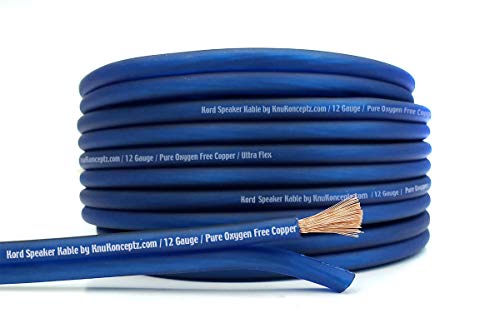
The KnuKonceptz Kord leans hard into a serious-audio mindset. This 50 ft run uses OFC (oxygen-free copper, meaning the conductor is at least 99.99% pure copper) at 12 AWG with 294 strands per conductor, which is a noticeably denser bundle than most competitors in this price neighborhood.
For a tight two-channel rig or a compact home theater, the half-length spool keeps waste down. The jacket stays flexible even after uncoiling, so routing behind a media console or under a baseboard stays manageable without fight.
What Makes Sense
- High strand count per conductor for cleaner signal transfer
- Pure OFC conductor, an upgrade over CCA (copper-clad aluminum) alternatives like the GEARit 100 ft below
- Soft PVC jacket lays flat with minimal memory
- Specs printed along the jacket for quick visual confirmation
Points To Note
- Only 50 ft on the spool, so larger rooms may need a second run or a longer alternative
- Not rated for in-wall or direct-burial use, so it belongs in exposed setups
Whose Setup It Belongs On
Music-first listeners building a two-channel system who care about conductor purity over raw length.
Where Another Pick Suits Better
Anyone planning a concealed in-wall run will get more mileage from the GEARit CL2-rated cable further down.
This GEARit spool earns its spot purely on volume. 500 ft of 16 AWG (the lower the gauge number, the thicker the wire) gives anyone wiring a whole house or a long detached space enough to feed several zones from a single pull.
The tradeoff worth flagging is the gauge step: 16 AWG is thinner than the 12 gauge options elsewhere on this list, so very long distances or low-impedance speakers may see more resistance than they would on a thicker run.
A Few Strong Suits
- Generous 500 ft length suits whole-home and multi-room projects
- 16/2 conductor layout (two conductors inside one jacket) is a clean, recognizable standard
- Soft PVC jacket strips easily at the end for terminations
- Cost-per-foot stays low for budget-conscious installations
Worth Noting
- 16 gauge is thinner than the rest of this list, so high-power or long-throw setups lose some signal
- Not rated for in-wall or burial runs, which limits permanent installs
- 500 ft is overkill for a small stereo, leaving spooled leftovers to store
Right Fit For
Contractors and DIYers running ceiling speakers across multiple rooms on shorter cable paths.
Skip It When
Audiophiles running long, high-current paths should reach for the KnuKonceptz Kord or InstallGear 12 gauge options instead.
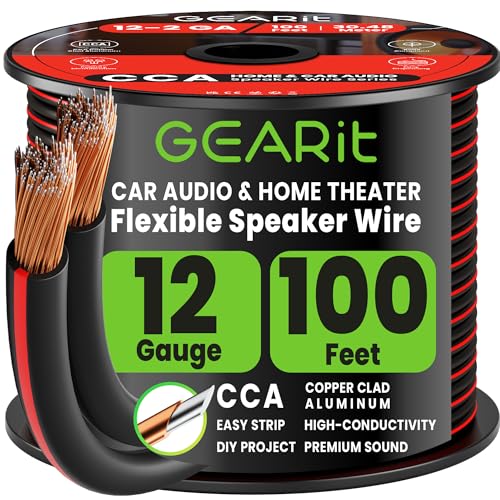
For someone who simply needs 12 gauge wire without the audiophile tax, this 100 ft GEARit roll is the easiest on-ramp. It uses CCA (copper-clad aluminum, meaning an aluminum core coated in copper for conductivity at a lower cost), so it stays light and easy to pull through a single room or a small home theater.
The honest read is that CCA trades some of the long-run efficiency that pure copper delivers, but for sub-50 ft runs in a living room, most listeners never notice.
Practical Advantages
- Entry-level pricing for anyone staying within a tight budget
- Lightweight CCA construction is easy to route through tight spaces
- 100 ft length handles a single-room home theater with cable to spare
- Soft jacket resists kinking when bent around a corner
Honest Caveats
- CCA is less efficient than OFC over very long runs, so distance-hungry installs lose signal faster
- Lacks any in-wall or burial rating
- Stripping requires a steady hand since CCA can fray if cut poorly
Feature Snapshot
Made For
First-time DIYers wiring a modest home theater on a sensible budget.
A Better Fit Elsewhere
Anyone needing in-wall compliance will find the GEARit CL2 OFC cable a safer match for their local code.
InstallGear earns its spot through thoughtful touches more than flashy specs. The brown soft-touch jacket stays pliable in cold basements, and the printed polarity stripe along the length keeps positive and negative consistent across long pulls.
The deoxidized copper conductor (a refined OFC variant processed to remove surface oxygen) delivers stronger long-run performance than the GEARit CCA option above, which matters once your speaker sits 30 ft from the amp.
Features That Help
- Soft-touch jacket makes routing behind entertainment centers painless
- Printed polarity line eliminates guesswork when wiring in dim spaces
- Deoxidized copper handles longer runs more efficiently than CCA
- 100 ft length suits a full media room plus a second zone
Small Caveats
- Not rated for in-wall or outdoor burial, so exposed runs only
- The brown color blends well with wood trim but can disappear against carpet
Best Suited To
DIY home theater builders who want clear polarity marking without paying a premium for in-wall certification.
Swap It Out When
Anyone routing inside walls should grab the GEARit CL2 OFC cable reviewed next, since it carries the proper safety rating.
Once speaker wire disappears behind drywall, code matters. This GEARit roll carries a CL2 rating (a classification that certifies the jacket is flame-retardant and safe for concealed residential in-wall use), which is the same baseline most inspectors expect for low-voltage speaker runs inside a home.
The white jacket pulls smoothly around studs, and the OFC conductor upgrades signal quality over the CCA option above. For a single-room in-wall project, 100 ft is the sweet spot.
Useful Highlights
- CL2 rating satisfies most residential building codes for concealed speaker runs
- OFC conductor supports cleaner signal over long wall pulls
- Flame-retardant white jacket lays flat inside wall cavities
- 100 ft length covers a standard media room with slack for service loops
Things To Consider
- Only 100 ft, so multi-room installs will require an additional spool
- CL2 is fine for residential, though commercial projects may want CL3
Who Should Grab It
Homeowners running speaker wire behind fresh drywall who need their install to pass a basic inspection.
Consider Something Else When
The KeyLine cable below makes more sense for outdoor or direct-burial runs, where CL3 and wet-rated jackets take over.
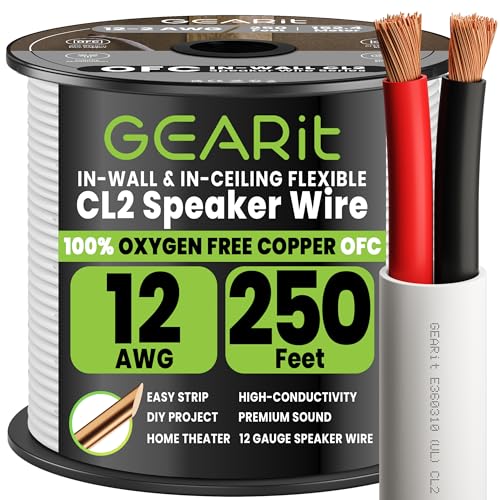
This is the same CL2-rated, OFC-conductor GEARit cable as the 100 ft version, just stretched onto a 250 ft spool for larger projects. For whole-home audio or a basement media buildout, having all that length in one pull avoids splices and inconsistent runs.
The foot markers printed along the jacket remove the need for a tape measure at every termination, and the red/black inner conductors keep polarity visible even through the white outer sheath.
Strong Points
- 250 ft spool handles a full home audio expansion without mid-run splices
- Sequential foot markers take the guesswork out of measuring each run
- Red and black inner conductors speed up consistent terminations
- CL2 rating keeps the install compliant for residential concealed wiring
A Few Limitations
- 250 ft is more than needed for a single room, so smaller projects leave surplus cable
- Spooled cable can develop slight coil memory if stored for long stretches before use
Feature Rundown
Perfect Match For
Installers and homeowners wiring an entire home audio system from a single purchase.
Reach For A Different Pick When
The KnuKonceptz Kord is the cleaner audiophile choice for a single dedicated listening room.
The KeyLine cable steps outside the living room. Its CL3 rating (a step above CL2, certifying the jacket for higher-voltage concealed and direct-burial runs) and direct-burial jacket let it sit in soil, run through conduit, or feed outdoor patio speakers without a second thought.
Inside the jacket, 180 strands of OFC keep conductivity efficient whether the run ends at a marine speaker, a backyard subwoofer, or an indoor theater.
Everyday Advantages
- CL3 and CL2 dual rating covers in-wall, in-ceiling, and direct-burial use
- Marine and outdoor-rated jacket handles moisture and UV better than standard PVC
- 180-strand OFC conductor keeps signal stable across longer outdoor pulls
- Black jacket blends into landscape settings and disappears against dark conduit
Potential Drawbacks
- 100 ft may fall short for larger yards or long driveway runs
- Burial-rated jackets are stiffer than indoor-only cables, so tight indoor bends can be challenging
Built With In Mind
Outdoor audio hobbyists, marine installers, and homeowners running patio or pool speakers.
Not Your Match When
Anyone strictly working indoors will find the GEARit 250 ft CL2 cable more flexible for everyday wall runs.
What To Weigh Before Choosing 12 Gauge Speaker Wires
Gauge, Distance, And Real Listening Rooms
For runs under 50 ft, 16 gauge often gets the job done, but stepping up to 12 gauge drops resistance and gives bass more authority, especially on long paths or with low-impedance speakers. I lean 12 gauge for any run over 25 ft, and for high-power floor-standing speakers regardless of distance. For short desktop or bookshelf runs, a 16 gauge like the GEARit 500 ft spool saves money without giving up much.
Conductor Material: OFC Versus CCA
OFC, or oxygen-free copper, is at least 99.99% pure copper and resists signal loss better than CCA (copper-clad aluminum), which wraps an aluminum core in a copper shell. CCA weighs less and costs less, but the resistance climbs faster over distance, so it suits short, budget projects more than whole-home audio.
Jacket Ratings And Where The Wire Will Live
Any cable disappearing behind drywall should carry a CL2 or CL3 rating, which means a flame-retardant jacket certified for concealed residential use. Direct burial or outdoor runs need a wet-rated jacket rated for ground contact. Skipping that step risks jacket breakdown, moisture intrusion, and a failed inspection down the road.
Length, Spool Size, And Waste
Buying exactly what you need keeps leftover cable out of storage bins. For one-room projects, 100 ft is plenty. For whole-home runs, a 250 ft or 500 ft spool like the GEARit 250 ft cuts down on splices and keeps conductor quality consistent from start to finish.
Key Considerations Across These Picks
Pitfalls Worth Dodging
The most common slip-up is treating any speaker wire as universal, since outdoor and in-wall use really do call for jackets rated CL2 or CL3. Another trap is choosing CCA for a long run when the resistance creeps in and thins the bass. Pulling more cable than you need, or mixing gauges mid-run, also creates uneven performance that is hard to diagnose later.
Where The Extra Money Goes
Stepping up to OFC and CL-rated jackets pays for purer copper, denser strand counts, and jackets that survive inspection, moisture, and time. For a single short stereo run the difference is barely audible, while whole-home and outdoor installs lean heavily on that upgraded build to hold up year after year.
Frequently Asked Questions
Is 12 gauge speaker wire overkill for a small room?
For runs under 25 ft with bookshelf speakers, 16 gauge often works fine. Stepping up to 12 gauge keeps bass tighter and gives you headroom for longer runs or more demanding floor-standing speakers later on.
Can I run 12 gauge speaker wire inside walls?
Only if the cable carries a CL2 or CL3 rating, which certifies the jacket as flame-retardant for concealed residential use. Cables without that rating should stay exposed or run through conduit where local code allows.
How far can 12 gauge speaker wire run without signal loss?
For most home audio systems, 12 gauge stays clean out to roughly 50 ft on typical 8-ohm speakers. Beyond that, low-impedance loads (4 ohms or lower) start showing noticeable resistance, and a thicker gauge or a different amplifier setup helps.
What is the difference between OFC and CCA speaker wire?
OFC (oxygen-free copper) is at least 99.99% pure copper, while CCA (copper-clad aluminum) uses an aluminum core coated in copper for a lighter, lower-cost conductor. OFC carries signal more efficiently over distance, and CCA fits short, budget-friendly runs.
Does polarity matter when connecting speaker wire?
Yes, matching positive to positive and negative to negative across every speaker keeps the stereo image intact. Reversing polarity on a single speaker cancels bass and pushes the soundstage off-center, so cables with printed polarity stripes like the InstallGear make the job easier.
Closing Remarks
The right 12 gauge speaker wire comes down to where it runs, how far it travels, and how much signal quality matters to you. For a quick indoor stereo on a budget, the GEARit 100 ft CCA cable gets the job done. For a serious listening room or a full in-wall project, the KnuKonceptz or GEARit CL2 OFC options step up to the task. Outdoor and burial work calls for the KeyLine CL3 cable. Match the cable to the room, and your speakers will thank you.
