

A single electrical hiccup can turn a perfect camping weekend into a repair bill. I dug into seven solid options that handle the unique demands RV owners face, from shore power adapters to DC battery protection. The right breaker stops a small overload from becoming a fried wire harness or a damaged appliance, which matters whether you’re parked at a full hookup site or running lights off a battery bank in a remote spot.
The Choices Worth Comparing
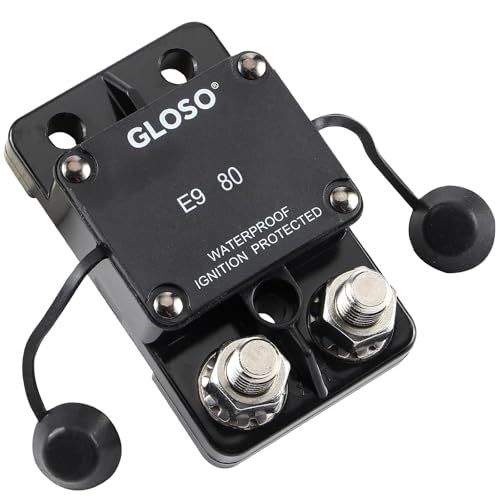
GLOSO E9A Waterproof Breaker Auto Reset 80A

Kooprimit 30A to 110 Adapter with Breaker
ABB THQL32030 Q-Line 30A 3-Pole Breaker

RED WOLF 30A Manual Reset DC Breaker

RED WOLF 30A Mini Fuse Breaker IP67

RED WOLF 30A Inline Breaker with Lugs

KIRFEIHT 30A RV Surge Protector 18000J
What Each Pick Brings To The Table
The GLOSO E9A sits in a category of its own, carrying an 80 amp rating that handles the heavier DC branch circuits found in larger RVs and off-grid solar setups. Its IP67 rating means the sealed housing shrugs off rain, road spray, and the dusty trails that come with boondocking, which is where many basic breakers start to fail. I see this as the kind of unit a serious DIYer reaches for when a standard 30A inline breaker feels underbuilt.
Side-by-side stud terminals make wiring straightforward, and the auto-reset function removes the need to physically pop the hood after a trip. For owners running inverter chargers or accessory banks, that convenience adds up across a season.
What Works In Its Favor
- 80A rating covers heavier loads than typical 30A breakers, future-proofing for inverter or accessory expansion.
- IP67 sealed housing resists moisture and dust exposure during long outdoor trips.
- Auto-reset clears nuisance trips without opening the compartment or hunting for a manual switch.
- Side-by-side stud terminals accept common battery cable lugs cleanly, simplifying installation.
Trade Offs
- Overkill for small trailers running only a handful of 12V accessories, which adds cost without benefit.
- Larger footprint than the RED WOLF mini units, so tight battery boxes may struggle for space.
Built With In Mind
Owners upgrading an older RV’s DC distribution panel who need higher amperage headroom and sealed marine-grade construction.
Swap It Out When
The RED WOLF 30A Manual Reset DC Breaker fits tighter compartments where the GLOSO’s size becomes a constraint.
This Kooprimit adapter solves a specific problem that catches new RV owners off guard. Plugging a 30 amp rig into a standard household 15 amp outlet can pop breakers on the house side or damage the RV’s wiring if loads climb too high. The built-in 15A breaker inside this adapter sits between those two systems and trips before anything downstream gets stressed.
Pressing the reset button restores power after the issue is resolved, no tools required. For someone borrowing a relative’s driveway outlet or staying at a friend’s house for a weekend, this is the simplest layer of protection I can recommend.
Real Benefits
- Built-in 15A breaker prevents overload when adapting to a household outlet, protecting the RV and the home circuit.
- Push-button reset is intuitive for first-time owners who may not understand electrical troubleshooting.
- Compact adapter format stores easily in an RV’s exterior compartment.
Less Ideal Details
- Limits available power to 15 amps, so running an AC unit and microwave simultaneously will trip it.
- Not a substitute for a proper surge protector at campground pedestals with known wiring issues.
Who Should Grab It
New RV owners who occasionally plug into a house outlet and want a simple, tool-free safety layer.
Look Elsewhere When
The KIRFEIHT 30A RV Surge Protector is a smarter choice for regular campground stays where surge and pedestal miswiring matter more.
The ABB Q-Line THQL32030 is a different animal than the inline breakers elsewhere on this list. It’s a residential-style plug-in breaker designed for AC load centers at 120/240 VAC, which makes it the right answer for someone wiring a hardwired sub-panel inside an RV or a small outbuilding. The thermal-magnetic trip mechanism combines two protection styles: thermal handles sustained overloads while magnetic reacts instantly to short circuits.
The 10 kAIC rating indicates the breaker can safely interrupt up to 10,000 amps of fault current, a specification that matters in residential panel contexts. For an RV owner building a serious AC distribution system, this is the professional-grade path.
Useful Touches
- Three-pole configuration handles split-phase 120/240V AC distribution common in residential panels.
- Quick-make/quick-break mechanism ensures fast, decisive interruption during fault events.
- Plug-in mount format fits standard Q-Line load centers without adapter plates.
Things To Consider
- Wrong tool for DC battery protection; this is strictly an AC panel breaker, not an inline automotive unit.
- Requires a compatible load center enclosure to mount, adding project scope and cost for casual owners.
At A Glance
Right Fit For
DIYers building a hardwired AC sub-panel in a larger RV or a powered outbuilding who need residential-spec protection.
A Better Fit Elsewhere
The Kooprimit 30A to 110 Adapter covers owners who need simple shore-power adaptation without a full panel install.
RED WOLF has carved out a niche in the DC protection space, and this 30A manual reset breaker is one of their workhorses. Operating from 12V to 48V DC covers nearly every RV battery scenario, from a single house battery to a 48V lithium bank. The visible reset lever is the standout feature; one glance tells me whether the breaker is open or closed, which matters when troubleshooting a dead circuit at a campsite.
The push-button reset doubles as a kill switch, so owners can manually disconnect a trolling motor or audio system during service. For anyone running a car audio build, a trolling motor circuit, or a solar charge controller feed, this is the kind of component that earns its spot in the toolbox.
A Few Highlights
- Wide 12V to 48V DC operating range covers most RV and marine battery configurations.
- Visible reset lever shows open condition at a glance, simplifying troubleshooting in low light.
- Doubles as a manual kill switch for service work on motors or audio systems.
Room For Improvement
- Manual reset means someone must physically press the button after a trip, which can strand owners away from the breaker location.
- Stud terminals require proper ring lugs; owners without crimping tools may need extra hardware.
Who It Suits Best
RV owners running 12V-48V accessory circuits who want visible status and a manual disconnect option for service work.
Consider Something Else When
The GLOSO E9A’s auto-reset function is more convenient for circuits where the breaker sits in a hard-to-reach compartment.
The “mini” in this RED WOLF breaker refers to its physical footprint, and that small size matters more than owners might expect. Battery compartments in modern RVs are crowded with inverters, shunts, and bus bars, leaving little room for chunky protection devices. The IP67 rating and 6 AWG wire lug compatibility make installation clean and weather-resistant in one step.
Operating from 12V to 32V DC covers the typical RV house battery range without overspec. I’ve seen this style work well as a secondary breaker for solar charge controller outputs or as primary protection on a trolling motor circuit where space is at a premium.
The Upside
- Compact footprint fits in crowded battery compartments where larger breakers won’t fit.
- IP67 waterproof rating handles marine and outdoor installations without additional enclosure cost.
- Included 6 AWG wire lugs and mounting hardware reduce the parts list for installation.
Softer Spots
- 32V upper limit rules out 48V lithium battery banks where the RED WOLF manual reset unit performs better.
- Smaller body can be harder to grip when wearing work gloves during troubleshooting.
Quick Facts
Made For
Owners with tight battery compartments running 12V or 24V systems who need sealed, compact protection.
Not Your Match When
The RED WOLF 30A Inline Breaker suits owners who need higher voltage tolerance up to 48V DC.
This RED WOLF inline breaker earns its place for owners building or modifying DC electrical systems rather than simply plugging in. The inline fuse holder format means the breaker sits directly in the cable run between the battery and the load, which is the textbook location for protecting solar feeds, inverter inputs, and accessory circuits. The included copper washer screws and wire lugs show that RED WOLF thought through the install experience.
The 12V to 48V DC range stretches further than the mini fuse version, so this unit handles 48V lithium battery banks without complaint. The visible reset lever and manual push-button design match the broader RED WOLF lineup, keeping the user experience consistent across multiple installations.
Practical Advantages
- Inline format places protection directly in the cable run, the ideal location for solar and inverter feeds.
- 48V DC ceiling accommodates modern lithium battery banks where many competitors stop at 32V.
- Included copper washers and lug hardware simplify the parts list for a clean install.
Honest Caveats
- Inline design adds cable length and connection points, which can clutter tight wiring runs if not planned.
- No sealed rating, so this unit belongs inside a protected enclosure rather than exposed to the elements.
Best Suited To
Workshop builders and solar installers wiring 48V systems who want flexible inline protection with included hardware.
Reach For A Different Pick When
The RED WOLF 30A Mini Fuse Breaker IP67 is the smarter call for exposed outdoor mounting where sealing matters.
The KIRFEIHT surge protector closes the list because it addresses a problem the other breakers don’t touch. Campground pedestal wiring is notoriously inconsistent, and a single voltage spike or miswired outlet can fry an RV’s converter, microwave, or entertainment system in seconds. The 18,000 joule rating indicates how much transient energy the unit can absorb before failing, and that figure sits at the higher end for the category.
The built-in circuit analyzer with LED display tells the owner whether the pedestal is wired correctly before plugging in the main RV cord. That diagnostic step alone prevents countless service calls from owners who would otherwise energize a coach with reversed polarity or an open ground.
Features That Help
- 18,000J surge capacity handles large transient spikes from lightning strikes and utility switching events.
- LED circuit analyzer flags pedestal wiring faults before the RV cord is energized.
- IP68 waterproof cover protects the unit when not in use, extending service life at outdoor sites.
Factors To Consider
- Bulkier than a simple plug adapter, so storage in small exterior compartments takes planning.
- After a major surge event, the unit may need replacement even if it absorbed the spike, adding long-term cost.
Feature Snapshot
Who Will Love This
Frequent travelers and full-timers who plug into unfamiliar campground pedestals weekly and need diagnostic feedback.
Where Another Pick Suits Better
The Kooprimit adapter is enough for occasional driveway stays where full surge protection is overkill.
Reading The Specs Before You Buy
Match The Breaker To The Circuit Type
The first decision is AC versus DC. RVs run both, and the breakers protecting them look different and carry different certifications. AC breakers like the ABB THQL32030 protect shore power distribution panels at 120 or 240 volts. DC breakers like the RED WOLF lineup protect battery circuits at 12, 24, or 48 volts. Mixing them is a safety hazard, since DC arcs behave differently than AC arcs and require specific internal construction to interrupt safely.
Watch The Voltage Range
A 30 amp rating means little without the right voltage ceiling. Standard RV house banks operate at 12V, but lithium upgrades push systems to 24V or 48V. The RED WOLF mini fuse unit tops out at 32V, which rules out 48V lithium banks. The RED WOLF inline version extends to 48V, covering the full range of modern battery chemistries without needing an upgrade.
Consider Reset Style And Location
Manual reset breakers require physical access after a trip, which is fine if the breaker sits in an easy-to-reach compartment. Auto-reset breakers clear themselves once the fault cools down, but that convenience can mask intermittent problems. For circuits powering expensive electronics, a manual reset forces the owner to investigate before re-energizing.
Think About Environmental Sealing
Battery compartments in marine and off-road applications see moisture, dust, and vibration. IP67 ratings handle temporary submersion and dust ingress, while IP68 adds longer-duration water resistance. A breaker mounted inside an enclosed compartment needs less sealing than one exposed to road spray under the chassis.
Key Considerations Across These Picks
Pitfalls Shoppers Hit
The most common mistake is buying an AC breaker for a DC circuit or vice versa. They look similar in photos but interrupt faults differently, and using the wrong type can fail to clear a DC arc, leading to a fire hazard. Another trap is underestimating the voltage ceiling, especially as RV owners upgrade to lithium batteries and discover their existing breakers cannot handle the higher nominal voltage.
Where The Extra Money Goes
Premium surge protectors like the KIRFEIHT command a higher price because of the joule rating, diagnostic circuitry, and weatherproof enclosure. That upgrade pays off for frequent travelers who plug into unpredictable campground wiring. For owners who rarely leave paved RV parks with managed electrical systems, a simpler adapter with a basic breaker covers the same core protection at lower cost.
Frequently Asked Questions
What is the difference between an AC and DC breaker in an RV?
AC breakers protect shore power circuits at 120 or 240 volts from the campground pedestal, while DC breakers protect battery circuits at 12, 24, or 48 volts. They use different internal mechanisms because DC current is harder to interrupt than AC, and substituting one for the other creates a serious safety risk.
Do I need a surge protector if I already have circuit breakers?
Circuit breakers protect against overloads and short circuits but do not absorb voltage spikes from lightning or unstable campground wiring. A surge protector handles those transient events before they reach sensitive electronics like refrigerators, microwaves, and entertainment systems.
Can a 30 amp breaker handle a 50 amp RV pedestal?
No. A 50 amp RV pedestal provides more power than a 30 amp breaker is rated to carry, and attempting to draw full 50 amp service through a 30 amp breaker creates a constant overload condition. The breaker will trip immediately or, worse, fail to trip at all if it’s undersized.
What does IP67 mean for an RV breaker?
IP67 means the breaker is fully sealed against dust and can survive temporary submersion in water up to one meter deep. That rating suits battery compartments exposed to rain, road spray, and the occasional puddle splash during off-grid camping.
How do I know if my breaker is tripped or just turned off?
A tripped breaker usually sits in a middle position between fully on and fully off, while a manually switched-off breaker sits firmly in the off position. Many modern breakers also display a colored flag or indicator window showing red for tripped and green or black for normal operation.
The Takeaway
The right breaker depends entirely on which circuit you’re protecting and how often you travel. I find that owners running serious battery banks benefit from the RED WOLF inline or GLOSO options, while casual weekenders get plenty of protection from the Kooprimit adapter. Frequent travelers who plug into unfamiliar campground wiring should treat the KIRFEIHT surge protector as essential insurance. Match the breaker to the circuit, respect the voltage rating, and the rest of the decision becomes a lot easier.
