

A dead battery rarely picks a convenient moment. It shows up on a frosty Monday, in a marina slip before sundown, halfway through a weekend camp setup with no shore power in sight. That’s where a solid 12v lead earns its place, whether that means a maintainer for a motorcycle that sits all winter, heavy-gauge clamps for a stubborn truck, or a fused cable that keeps a portable power station topped off between trips.
Below are seven options I keep coming back to, each shaped for a different real-world use case. Some live in a garage. Some ride in a tow truck. A few live in a camping drawer. The honest read on who each one actually suits sits right after each entry.
The Main Contenders
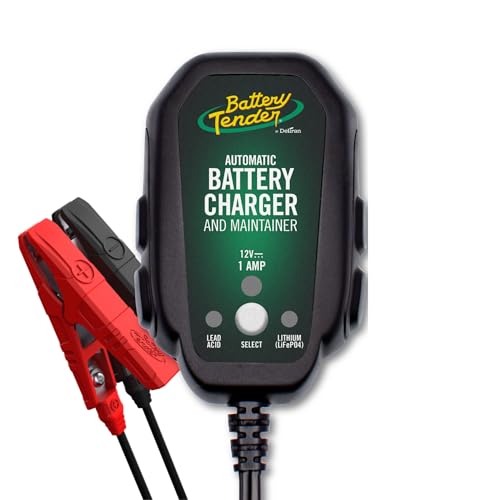
Battery Tender Junior 12V 800mA Charger and Maintainer

Energizer 30 ft 1-Gauge 800A Jumper Cables

Tonton 12V/24V 2M 14AWG Car Charger Cable

Tonton XT60 14AWG 2M Car Charger Extension Cable

NOCO GENPRO10X1 12V 10A OnBoard Marine Charger
Tonton 12V 6.6FT 14AWG Charging Cable with Fuse

TOPDON BC100 12V 100-2000 CCA Battery Tester
A Deeper Look At The Lineup
I think of the Battery Tender Junior as a “set it and forget it” tool for anything with two wheels or a small engine bay. The 800mA output is gentle, which matters because trickle-style charging (a slow, continuous top-up that prevents discharge without overcooking the battery) is what a stored motorcycle or lawn tractor actually needs. You push one button to switch between lead-acid and lithium chemistries, and an ISM microcontroller (a tiny on-board chip that monitors voltage and adjusts the charge curve automatically) handles the rest.
Where it fits best is the garage corner where a battery tender earns its keep. Owners commonly report leaving it connected for months on ATVs, jet skis, and classic cars without walking out to a dead cell. Compared with the bigger NOCO onboard charger that appears later in this list, this one is meant to live on the workbench rather than inside the boat hull.
Positive Takeaways
- Switchable chemistry covers flooded, AGM (absorbent glass mat, a sealed lead-acid design), gel, and LiFePO4 (lithium iron phosphate) batteries with the same unit.
- Smart charging logic helps prevent the overcharging that quietly kills stored batteries.
- Lightweight enough to clip on, leave for a season, and forget about.
- Works well for powersports riders whose bikes sit through winter in an unheated shed.
Worth Noting
- The 800mA rate is slow for a truly depleted battery, so this is a maintainer first and a recovery charger second.
- You’ll need a nearby outlet or extension cord, since there’s no solar or alternator input.
Made For
Powersports owners and weekend tinkerers storing a motorcycle, ATV, or classic car through long stretches between rides.
Skip It When
You need a hard-mounted charger that lives inside a saltwater boat hull, where the NOCO GENPRO10X1 is a better fit.
The first thing that struck me about the Energizer set is the 30-foot run. Most clamp cables top out at 20 feet, which is fine for a compact parking lot but tight for a tow operator working between vehicles nose-to-tail. The 1-gauge wire (the thickness of the conductor, where lower numbers mean heavier wire and less voltage drop over distance) keeps current delivery strong across that span, and the permanent-installation kit plus quick-connect plug means a service truck can hardwire a rear plug and stay out of the engine bay.
The thick vinyl coating is the kind of detail that matters in real winter conditions. Vinyl-coated clamps resist corrosion and stay flexible in cold weather, which is when most dead-battery calls happen anyway. Compare that with the lightweight maintainer from the previous pick, this set is built for hard commercial use rather than shelf storage.
The Case For It
- Long 30-foot reach gives working space between donor and disabled vehicles.
- 1-gauge copper handles engines up to 8L gasoline and 6L diesel without sagging voltage.
- Quick-connect plug suits permanent mount behind a bumper or in a service body.
- Coated clamps and cables stay manageable in cold weather.
Room For Improvement
- At 30 feet, the cable bundle is heavier than a typical consumer set and takes up real cargo space.
- The permanent-install kit is overkill for someone who just wants a trunk-cable.
Best Suited To
Roadside assistance crews, tow operators, and rural drivers helping out trucks and SUVs parked at awkward angles.
Look Elsewhere When
You’re a casual commuter who only needs a compact set for a sedan, where a 16-foot consumer-grade cable is easier to stash.
Portable power stations changed camping, and Tonton’s 2-meter cable is what closes the loop between a 12V outlet and brands like Jackery, BLUETTI, and Goal Zero Yeti. The 14AWG wire (American Wire Gauge, where a lower number means thicker wire) is heavier than the thin cords some makers bundle, and the dual 12V/24V compatibility is what makes it cross-shop useful across a household that owns different stations.
The DC7909 and 8020 plug tips cover the most common input ports you’ll find on mid-size power stations. For road-trippers running a fridge and a few lights off a Jackery, this is the cable that quietly tops the unit back up while driving. It’s not a charger in the traditional sense, more a bridge between alternator power and a battery bank.
Features That Help
- Dual 12V and 24V support broadens compatibility across station brands.
- 14AWG thickness resists voltage sag over the 2-meter run.
- Includes both DC7909 and 8020 adapter tips in one kit.
- Lets a road-tripper recharge a power station while driving, no shore power needed.
Small Caveats
- The 15A rating means you can’t push it past moderate loads, so fast DC charging isn’t the goal here.
- You’ll want to unplug and let connectors cool before disconnecting after a long drive, since heat builds at the plug.
Who It Suits Best
Overlanders and RV owners who run a portable station as a buffer between the alternator and their 12V accessories.
Consider Something Else When
Your portable station uses an XT60 input rather than the round barrel-style ports, where the Tonton XT60 cable in the next entry is the better match.
Newer portable stations like the Anker SOLIX C300 and several Bluetti and EcoFlow models have moved to XT60 input ports (a yellow cylindrical DC connector common in the RC and solar world), and that’s a connector most car chargers simply don’t ship with. This Tonton cable fills that gap with a 14AWG pure-copper core, a weatherproof double PVC jacket, and 6.6 feet of reach, which is enough slack to route from a tailgate power outlet to a station tucked on the cargo floor.
I like it for field use where the cable might rest on damp ground or brush against a hot exhaust. The double-jacket build is what separates it from generic XT60 pigtails. Compared with the previous Tonton cable, this one is built for the station crowd that already owns an XT60-input unit and just needs a rugged lead to pair with it.
What It Does Well
- Pure copper 14AWG conductor holds voltage well across the 6.6-foot length.
- Double PVC jacket stands up to moisture and abrasion outdoors.
- Compatible with a long list of Anker, Bluetti, and EcoFlow stations.
- Lets a solar generator recharge off the vehicle alternator on long drives.
Honest Caveats
- The XT60 end is keyed, so it only fits stations with that exact port, which is great for matching, limiting for mixed fleets.
- Like any high-current DC cable, repeated tight bends near the connector can fatigue the wire over time.
Feature Snapshot
The Right Fit
Campers and overlanders running an XT60-input solar generator who want alternator top-ups on the road.
Reach For A Different Pick When
Your station uses a barrel-style port instead of XT60, where the Tonton 12V/24V cable covered above is the simpler match.
The GENPRO10X1 is the kind of charger you bolt into a boat and stop thinking about. It is fully sealed, rated for marine environments, and built to handle the humidity, salt spray, and vibration that would rust a garage charger inside a season. NOCO rebuilt this generation smaller and more powerful than its predecessor, and 10 amps on a single 12V bank is enough to actively recover a deeply discharged house battery, not just maintain one.
Where it earns its keep is on a center-console fishing boat or a sailboat with a single house bank. Owners commonly mount it permanently near the battery compartment, wire it to shore power, and rely on it through long dock periods. Compared with the Battery Tender Junior from earlier, this is a fixed-installation tool rather than a portable one, which is why the price conversation lands where it does.
Strong Points
- Fully sealed, waterproof construction handles bilge and splash conditions.
- 10A output actively recharges a deeply depleted 12V bank, not just floats it.
- Compatible with flooded, AGM, gel, and LiFePO4 chemistries.
- Permanent-mount design frees up the cabin floor compared with a portable unit.
Practical Considerations
- Installation requires basic wiring comfort or a marine electrician, which is an added step beyond plug-and-play maintainers.
- Single-bank output means owners with two batteries will need a multi-bank model or two units.
Feature Card
Who Should Grab It
Boat owners and saltwater anglers who want a permanent charging solution tied into shore power.
Not Your Match When
You only need a garage maintainer for occasional powersports use, where the Battery Tender Junior is the friendlier pick.
What I appreciate about this Tonton lead is the alligator-to-cigarette-lighter combination. One end clips onto a lead-acid battery or a portable jump box, the other end plugs into the cigarette socket of a Jackery or similar station, and the built-in 15A fuse sits right where a fault would happen if anything ever went wrong. The 14AWG pure copper and 6.6-foot length land in the same family as the two Tonton cables above, just with a different connector story.
This is the cable for emergency top-ups. A station can sit at half charge, you clip on, fire up the car, and within an hour or so the bank is back to a useful level. For backup-power households and people running RV fridges off a portable station, that flexibility is the whole point.
Strengths Worth Knowing
- Inline 15A fuse adds a layer of protection against wiring faults.
- Cigarette-lighter adapter works with the widest range of portable stations.
- Alligator-clip end reaches a starter battery or a loose lead-acid in a pinch.
- Useful for emergency top-ups during power outages or camp setups.
Where It May Fall Short
- Alligator clips require a target battery to clip onto, which rules out vehicles with sealed battery compartments.
- The 15A ceiling means it tops up rather than fast-charges a hungry station.
Whose Shelf It Belongs On
RV owners and home backup planners who want a fused, grab-and-go lead between a car battery and a portable station.
Where Another Pick Suits Better
You want a clean permanent install behind a panel rather than alligator clips, where the NOCO GENPRO10X1 handles that scenario.
The TOPDON BC100 isn’t a lead in the wire-and-clamp sense, but it earns its place in any 12v toolkit because it tells you whether the rest of the gear actually has a battery worth charging. CCA stands for Cold Cranking Amps, the rating that measures how much current a battery can deliver at 0°F for 30 seconds while staying above a minimum voltage. A 100 to 2000 CCA testing range covers everything from a small lawn-mower cell up through heavy-duty truck banks.
What it does in practice is take the guesswork out of “is this battery toast?” You clamp on, enter the rated CCA, and the unit reports health, charge state, and a clear verdict on whether to recharge or replace. For someone juggling multiple vehicles, a tester like this pays for itself the first time it saves a tow or an unnecessary battery purchase.
Where It Helps
- Wide 100 to 2000 CCA range spans compact cars through heavy trucks.
- Works across flooded, AGM flat plate, AGM spiral, gel, and EFB (enhanced flooded battery, common in start-stop vehicles) chemistries.
- Replaces the need for multiple dedicated testers in one tool.
- Helps spot a weak battery before it strands someone on a cold morning.
Factors To Consider
- You need to know the battery’s rated CCA going in, which means reading the label first.
- Like any clamp-on tester, clean terminal contact is required for an accurate reading.
Feature Rundown
Who Will Love This
DIYers and small-shop owners who maintain a fleet of vehicles and want a single tool to diagnose weak batteries.
A Better Fit Elsewhere
You only own one car and rarely touch the battery, where a routine charger like the Battery Tender Junior covers the basics without a tester.
Picking The Right Lead For Your Setup
The right 12v lead depends less on specs and more on where the battery actually lives. Powersports riders storing bikes through winter get the most from a gentle maintainer. Tow operators and rural drivers want length and gauge first. Campers with portable stations care about connector type and weatherproofing more than peak amps.
Boaters should think permanent-mount and waterproof. Anyone juggling a mixed garage of cars, trucks, and small engines benefits from a tester that flags weak batteries before they fail. Matching the lead to the environment is what turns a drawer full of cables into gear that actually gets used.
What To Weigh Before You Buy
Current Capacity And Wire Gauge
Wire gauge is one of those numbers that matters more than it seems. A 14AWG cable is plenty for topping up a portable station from a cigarette outlet, while a 1-gauge clamp cable is what gets a dead V8 turned over. Lower AWG numbers mean thicker copper, which keeps voltage from sagging over distance. Mismatched gauge and load is the most common cause of “the charger feels weak” complaints in user reports.
Connector Type And Compatibility
Portable power stations do not all share the same input port. XT60, DC7909, DC8020, and Anderson Powerpole are common, and the wrong plug means a paperweight. Before picking a lead, check what your station actually accepts and whether the cable ships with the right tip. The two Tonton entries above show how the same brand splits into multiple SKUs by connector.
Durability And Environment
Where the lead lives changes what “durable” means. A garage maintainer needs basic insulation. A marine unit needs sealed construction and corrosion resistance. A camping cable needs a jacket that handles damp grass and hot cargo areas. Double PVC jackets and weatherproof ratings are worth the small upcharge for outdoor use.
Safety Features
Fuses, spark-resistant clamps, and chemistry-specific charging modes all exist because batteries fail in dramatic ways. An inline 15A fuse costs almost nothing and prevents a fault from becoming a fire. Smart chargers with automatic shutoff prevent the slow damage that ruins batteries over time.
Common Slip-Ups And Smart Upgrades
Pitfalls Shoppers Hit
The most common mistake is buying a charger that is too small for the job. A 0.75A phone-charger-style brick on a 100Ah marine battery will technically charge, eventually, while sulfating the plates along the way. The opposite mistake is grabbing a high-amp charger for a small battery, which cooks it. Match output to battery size and chemistry from the start.
Another trap is overlooking connector fit. Plenty of cables look right in the photo and arrive without the tip your station actually needs. Verify the plug on your device before checking out, and buy an adapter kit alongside the cable if the brand does not bundle one.
Where The Extra Money Goes
Higher-tier models earn their cost in three places: build quality, smart charging logic, and weatherproofing. A sealed marine charger commands more than a garage maintainer because it has to survive salt and vibration. A smart multi-chemistry unit costs more because the on-board processor actively manages charge curves for different battery types.
The honest case for paying up comes down to how often and how hard the lead gets used. A weekend garage hobbyist does not need marine-grade sealing. A full-time boater or tow operator does, and skipping it usually ends in a corroded unit within a season.
Frequently Asked Questions
What gauge wire do I need for a 12v lead? For portable-station top-ups, 14AWG copper handles the 10 to 15A range comfortably. For jump-starting larger engines, 1- to 4-gauge wire is standard, with lower numbers giving stronger current delivery over distance.
Can I use the same charger for lead-acid and lithium batteries? Only if the charger has a switch or automatic detection for both chemistries. A lead-acid-only charger will overcharge a LiFePO4 battery and shorten its life. Units like the Battery Tender Junior cover both with a button press.
How long should a 12v jumper cable be? Most passenger cars work fine with 16 to 20 feet. SUVs, trucks, and tow operators benefit from 25 to 30 feet, especially when vehicles cannot park nose-to-nose. Longer cables add weight, so go long only when reach matters.
Do marine battery chargers work on cars? Yes, electrically they charge the same 12V lead-acid and lithium chemistries. The difference is sealing, mounting hardware, and corrosion resistance, which is overkill for a garage but essential on a boat.
How do I know when a battery needs replacing versus charging? A load tester or modern diagnostic tool like the TOPDON BC100 reads the battery’s actual health versus its rated CCA. Anything reading below roughly 60 to 70 percent of rated capacity usually means replacement is closer than charging will fix.
Bottom Line
The best 12v lead is the one you actually reach for when a battery misbehaves. Match the lead to where the battery lives, double-check the connector, and resist the urge to overspec a garage tool for outdoor duty. Done right, this is a category where a small, well-chosen kit outperforms a drawer full of close-enough cables.
