

A blown fuse mid-trip can ruin a weekend on the water, leave an RV stranded, or knock out a solar array at dusk. Picking the right 12v circuit breaker keeps the current flowing safely through trolling motors, trailer wiring, off-grid solar banks, and accessory circuits. I put together this shortlist of six IP67-rated manual-reset breakers covering common amperage tiers, so you can match the rating to your load without second-guessing the spec sheet.
The Choices Worth Comparing

200 Amp Marine Circuit Breaker DC 12V-48V

Automotive Circuit Breaker 200amp Trolling Motor
150 Amp Marine Circuit Breaker DC 12V-48V
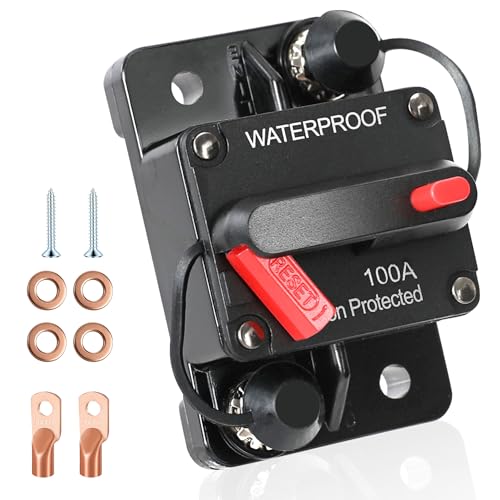
100 Amp Marine Circuit Breaker DC 12V-48V

60 Amp Marine Circuit Breaker DC 12V-48V

40 Amp Marine Circuit Breaker DC 12V-48V
The Strengths Of Each Pick
Big trolling motor arrays and house battery banks pull serious current, and that’s exactly where the 200 Amp Marine Circuit Breaker earns its keep. The IP67-rated sealed housing keeps spray and dust out, while the manual reset switch lets you clear a fault without hunting for spare fuses in a dark bilge.
Across the rest of this list you’ll find lower amperage tiers, but this one sits at the top for users running heavy 12V to 48V DC loads in real-world marine or off-grid setups. Owners commonly mount it close to the battery so the protection sits right where the cable gauge is thickest.
Useful Highlights
- 200A rating covers the largest trolling motor and inverter feeds in this roundup
- IP67 sealing handles rain, splash, and dusty engine bays
- Manual reset switch is faster than swapping a fuse mid-trip
- Works across 12V, 24V, and 48V DC systems for flexible installs
Points To Note
- Overkill for small accessory loads where a 40A or 60A unit would fit better
- Larger studs require thicker gauge lugs that add to install cost
Key Specs
Whose Shelf It Belongs On
Skippers running multi-battery trolling setups and off-grid solar owners with high-amperage inverter feeds.
Look Elsewhere When
Drivers with smaller trailer lighting or accessory circuits will find the Sezbaifles 100A breaker a more proportionate match.
The Automotive Circuit Breaker 200amp targets a specific niche: high-current trolling motors in engine compartments where fuel vapors are a concern. The listed ignition protection standards make it a sensible pick for inboard and outboard setups where a plain breaker wouldn’t pass muster.
Compared to the 200A Marine Circuit Breaker above, this model leans harder into marine-grade ignition safety while keeping the same operating voltage range. For shop owners and weekend anglers who want a documented safety pedigree, the listing reads as the more purpose-built option.
Strong Points
- 200A capacity matches the demands of 36V and 48V trolling motor rigs
- Listed ignition protection supports safer engine-bay mounting
- Wide operating temperature range handles cold morning launches and summer heat
- IP67 sealed body shrugs off spray during trailering or rough water
Some Limits To Know
- The ignition-protection focus matters most on fuel-heavy boats, less so on a clean RV install
- Documentation around the reset mechanism is light, so first-time installers may need a quick lookup
Made For
Boat owners who run large trolling motors from inboard or outboard setups and need ignition-rated protection close to the battery.
Swap It Out When
Off-grid solar installers on a budget will likely get more value from the Sezbaifles 150A unit at a lower amperage tier.
The 150 Amp Marine Circuit Breaker fills the middle ground that a lot of DIY installers actually need. It covers mid-sized trolling motors, modest inverter feeds, and RV house banks without stepping up to the heavier 200A tier. That makes it the friendliest match for solar arrays and travel trailers where 150A is genuinely the right ceiling.
Looked at alongside the earlier Sezbaifles entries, this one keeps the same sealed housing and manual reset layout, just dialed down. For shop owners outfitting a fleet of RVs or a solar shed, it hits a useful sweet spot in cost and capacity.
Reasons It Performs
- 150A rating fits common RV, trailer, and solar charge controller loads
- IP67 rating tolerates outdoor mounting under a battery box lid
- Manual reset avoids fuse inventory for service crews in the field
- Same wide voltage range as the higher-amperage siblings
Practical Considerations
- Not the right ceiling for very large inverters that exceed 150A draw
- Mounting hardware may need separate purchase depending on install surface
Quick Facts
The Right Fit
Solar hobbyists, RV renovators, and trailer owners running mid-range DC accessories and battery banks.
Consider Something Else When
Operators pushing heavy trolling motor banks above 150A should step up to the Sezbaifles 200A Marine Circuit Breaker instead.
The 100 Amp Marine Circuit Breaker lands right in the most common DC protection tier, which is why it shows up in so many trailer and accessory builds. It protects the kind of circuits that actually trip in the real world: lighting runs, water pumps, bilge pumps, and smaller inverter feeds.
Walking down the lineup from the 200A and 150A options, this unit keeps the same IP67 housing and manual reset feel in a more accessible package. It’s the one I tend to recommend for first-time installers who want one breaker that handles most DC sub-circuits without over-sizing.
Useful Touches
- 100A tier matches common DC sub-panel feeds in trailers and small boats
- Manual reset switch simplifies field service compared to blade fuses
- IP67 housing tolerates under-hood or bilge mounting
- Works across 12V, 24V, and 48V DC systems
Trade Offs
- Not sized for large inverter feeds above 100A continuous draw
- Stud terminals require proper torque to avoid hot connections during long runs
Who It Suits Best
Trailer converters, small-boat owners, and DIYers adding protected DC sub-panels to existing rigs.
Reach For A Different Pick When
Anyone running solar arrays with charge controller outputs above 100A should look at the Sezbaifles 150A breaker instead.
The 60 Amp Marine Circuit Breaker steps into the smaller-load category where most accessory sub-circuits actually live. Think LED light banks, freshwater pumps, and small inverter feeds: the kind of loads that would waste a 100A breaker and never actually trip one.
Against the rest of this Sezbaifles family, this is the unit that fits between the heavy main-feed breakers and the small appliance protectors. For shop owners retrofitting older trailers, the 60A rating is often the most proportionate choice for branch-circuit protection.
Noteworthy Benefits
- 60A rating suits mid-sized accessory loads without over-sizing
- IP67 sealing supports exterior or bilge mounting
- Manual reset means no spare fuse inventory for routine trips
- Compatible with the same voltage range as larger siblings
A Few Limitations
- Too small to act as a main battery disconnect for high-amperage banks
- Branch-circuit installers may need additional fusing for downstream protection
Best Suited To
Workshop builders, van-lifers, and marine retrofitters adding protected branch circuits for pumps, lights, and small inverters.
A Better Fit Elsewhere
Anyone needing main-battery protection for a large house bank should grab the Sezbaifles 100A or 150A unit instead.
The 40 Amp Marine Circuit Breaker covers the smallest tier in this shortlist, and that’s a good thing. Lighting runs, small pumps, and accessory feeds under 40A simply don’t need a bigger breaker, and oversizing them leaves wiring unprotected in a real fault.
Closing out the Sezbaifles lineup, this entry mirrors the same IP67 housing and reset switch as the larger units, just trimmed for low-current circuits. It’s the right call for compact electrical panels where space is tight and the loads are modest.
Strengths Worth Knowing
- 40A rating matches lighting, pump, and small accessory sub-circuits
- Compact form factor fits crowded DC panels
- IP67 sealing supports under-deck or exterior accessory boxes
- Manual reset keeps field service quick and tool-light
Where It May Fall Short
- Far too small to serve as a main battery disconnect on any sizable bank
- Some installers prefer in-line fuse holders for the very smallest loads
Who Should Grab It
Van builders, kayak anglers with powered accessories, and trailer owners running modest lighting and pump loads.
Where Another Pick Suits Better
Operators building a full DC sub-panel will likely want the Sezbaifles 100A or 150A breaker as the upstream protector.
What To Weigh Before Choosing 12v Circuit Breakers
Match The Amperage To The Load, Not The Other Way Around
The single biggest call when shopping for 12v circuit breakers is sizing the rating to the actual load. A breaker that’s too large won’t trip before the wiring overheats, which is the opposite of what you want. Measure the continuous draw of the device you’re protecting and pick a breaker rated at or slightly above that figure, accounting for inrush on motors.
Voltage Range And System Compatibility
Most modern marine and RV breakers handle DC 12V, 24V, and 48V systems in a single unit. Verify the breaker you choose supports your battery bank configuration. Running a 48V solar array through a 12V-only breaker is a fast way to find yourself replacing components and possibly troubleshooting damaged wiring.
Ingress Protection And Mounting Location
An IP67 rating, like the units in this roundup, means the breaker can handle temporary immersion and dust ingress. That matters when mounting under a boat deck, inside an engine bay, or in an outdoor battery box. Dry interior panels don’t need the same sealing, but the extra protection rarely hurts and adds flexibility if you relocate the breaker later.
Reset Type And Service Workflow
Manual reset switches trade the cheap disposability of blade fuses for a simple push-to-restore action. For service techs and weekend DIYers, that means no fuse inventory and faster recovery after a fault. The trade-off is a slightly higher upfront cost per circuit.
Key Considerations Across These Picks
Pitfalls Shoppers Hit
Over-sizing the breaker to “be safe” is the most common error I see. A 200A breaker on a 30A lighting circuit never trips in time to protect the wire, which defeats the entire point. Always match the breaker to the wire gauge and load, not to the battery’s total capacity.
Where The Extra Money Goes
Higher-tier breakers in this category typically cost more because of better sealing, ignition-protection ratings, and sturdier stud terminals. For a fuel-bay marine install, those upgrades matter. For a sealed RV battery box, a mid-tier IP67 unit delivers the same real-world protection at a friendlier price.
Frequently Asked Questions
What Does IP67 Mean On A 12v Circuit Breaker?
IP67 means the breaker is fully sealed against dust and can handle temporary immersion in water. For marine and outdoor use, that level of sealing protects the internal mechanism from corrosion and electrical faults.
Can I Use One Breaker For The Whole Battery Bank?
Yes, but size it to the bank’s continuous draw and the main cable gauge. Many installers use a large main breaker (100A to 200A) for the bank and smaller branch breakers (40A to 60A) for individual sub-circuits.
Is A Manual Reset Better Than A Fuse?
Manual reset breakers save you from carrying spares and speed up recovery after a fault. Fuses are cheaper per circuit and sometimes preferred for very small accessory loads where a tiny fuse holder fits more easily.
How Do I Know What Amperage Breaker I Need?
Calculate the continuous current draw of the device or circuit, then add a safety margin for inrush on motors. Pick the next standard breaker rating above that figure, and verify the wire gauge can handle the sustained load.
Will These Breakers Work On A Solar Power System?
Yes, most IP67 marine breakers handle DC 12V to 48V solar setups. Just confirm the breaker’s voltage rating covers your array’s maximum open-circuit voltage, especially for higher-voltage solar banks.
Closing Remarks
Pick the breaker that matches your load, not the one with the biggest number on the box. A properly sized 60A or 100A unit will protect your wiring far better than an oversized 200A model that never trips. Walk through your real circuit list, match each one to a breaker tier, and you’ll end up with a system that’s safer and easier to service for years to come.
