

Anyone building a solar setup, wiring up an RV, or just tired of hauling lead-acid batteries around the yard knows the same frustration: the old chemistry is heavy, dies early, and barely holds a charge past the second year. A modern 12V lithium iron phosphate (LiFePO4) battery solves almost all of that, with a much longer cycle life and roughly a third of the weight. The catch is sorting through capacity ratings, BMS limits, and group sizes to find one that actually fits how you’ll use it.
A Snapshot Of The Selections

VATRER POWER 12.8V 300Ah Self-Heating LiFePO4 Battery

ECO-WORTHY 12V 314AH LiFePO4 Battery with Bluetooth
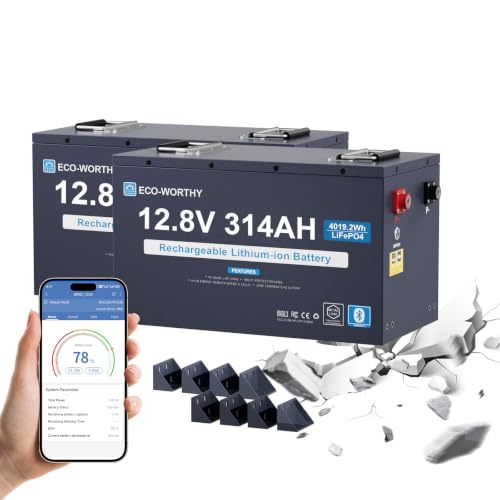
ECO-WORTHY EnergyRock 12V 280Ah 2-Pack Metal Case

MARSENERGY 12V 100Ah LiFePO4 Battery Group 24
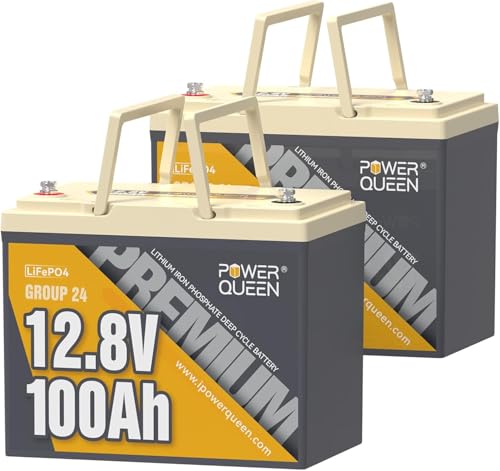
Power Queen 2PACK 12V 100Ah LiFePO4 Battery Group 24
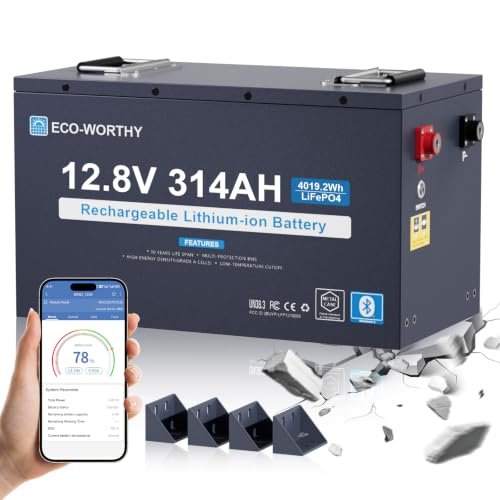
ECO-WORTHY 12V 280Ah Metal Case LiFePO4 Battery

Redodo 12V 165Ah LiFePO4 Battery Group 31
The Strengths Of Each Pick
For anyone building a serious off-grid setup, the VATRER POWER 12.8V 300Ah self-heating battery covers the bases that smaller packs can’t. The 300Ah capacity means roughly 3.8 kilowatt-hours of usable energy, which in real terms runs a chest freezer, lighting, and a phone-charging station through a long cloudy stretch without dipping below 50% state of charge.
Where this model pulls ahead of the rest of the field is the integrated self-heating element. Cold-climate owners will appreciate that the battery warms its own cells when charging below freezing, so a winter cabin or a northern RV doesn’t have to live with reduced capacity from November through March. The companion app gives a real-time read on state of charge, voltage, and temperature, which is genuinely useful when the battery is tucked behind a compartment panel.
Useful Touches
- Self-heating function activates automatically in sub-freezing charging conditions, protecting cell longevity.
- 300Ah capacity delivers around 3.8 kWh of usable energy, enough to keep a small cabin’s essentials running.
- APP monitoring surfaces state of charge and cell temperature without opening the battery box.
- LiFePO4 chemistry supports deep discharge cycles far beyond lead-acid ratings, making long-term ownership practical.
Points To Keep In Mind
- The 300Ah size means a heavier pack than the 100Ah options further down this list, so plan a mounting spot carefully.
- APP-dependent diagnostics require a phone and basic Bluetooth pairing during setup.
Built With In Mind
Off-grid cabin owners, full-time RVers in northern climates, and anyone who needs one large battery rather than a multi-pack array will get the most from this model.
Consider Something Else When
Shoppers who only need a single Group 24 replacement for a small trailer will likely find the MARSENERGY 12V 100Ah LiFePO4 Battery Group 24 a more manageable size and easier swap-in.
Compare this ECO-WORTHY 314Ah pack against the VATRER POWER 300Ah above and the difference comes down to monitoring convenience. The upgraded 314Ah capacity gives roughly 4 kWh of usable energy, and the LED SOC display reads like a fuel gauge on the front of the battery. For an installer running wire in a battery box at dusk, a glanceable percentage readout is more useful than a Bluetooth app.
The 200A BMS (battery management system, the electronic safety board inside every lithium pack) comfortably handles inverter loads up to a mid-size microwave or coffee maker. Low-temperature charge protection stops the cells from being damaged when a cold snap rolls through, which matters in unheated sheds or seasonal campers.
Features That Help
- LED SOC display gives an at-a-glance percentage without opening an app.
- 314Ah capacity translates to about 4 kWh of usable storage for off-grid circuits.
- 200A BMS supports sustained loads that would trip smaller 100A boards.
- Low-temperature charge cutoff protects cells in unheated installations.
- LiFePO4 cycle life suits daily solar cycling across many seasons.
Trade Offs
- Single 4 kWh block is overkill for someone only running lights and a phone charger.
- LED readout is helpful but less granular than the VATRER POWER app-level detail.
The Right Fit
Home-backup shoppers and mid-size solar arrays where one large block beats a stack of smaller batteries will find this ECO-WORTHY pack fits the bill.
Look Elsewhere When
Boaters and RV owners working within a Group 31 footprint will prefer the Redodo 12V 165Ah LiFePO4 Battery Group 31 for a tighter physical fit.
Where the previous ECO-WORTHY pick is a single 4 kWh block, the EnergyRock 2-Pack splits that storage across two matched 280Ah units in metal enclosures. Two batteries wired in parallel give roughly 7.1 kWh of usable capacity, which in a travel trailer translates into several days of lights, water pump, and a residential fridge without shore power.
The metal case is the structural story here. Owners commonly report that the upgraded housing runs cooler than plastic alternatives during heavy inverter draws and adds confidence in enclosed compartments where ventilation is limited.
Bright Spots
- Matched 2-pack design simplifies parallel wiring and balanced charging.
- Metal enclosure improves heat dissipation under high continuous loads.
- 280Ah per unit delivers about 3.5 kWh per battery, totaling over 7 kWh combined.
- Built-in 200A BMS handles common inverter surges from microwaves and induction cooktops.
Worth Noting
- Two-pack shipping weight is substantial and needs a planned storage layout.
- Bluetooth monitoring works per unit, so checking two batteries takes an extra step.
Made For
Mid-size solar banks powering travel trailers, off-grid cabins, and whole-van builds that benefit from a pair of batteries over a single oversized unit.
A Better Fit Elsewhere
Anyone running a single-battery setup in a small boat or compact RV will find the Power Queen 2PACK 12V 100Ah LiFePO4 Battery Group 24 a more proportional starting point.
Most compact RVs and many sailboats are wired around a Group 24 battery box, and the MARSENERGY 12V 100Ah drops right into that footprint. Around 1.2 kWh of usable energy is more than enough for weekend trips running LED lights, a water pump, and a phone or two, while staying light enough to install without a second pair of hands.
The built-in 100A BMS is the right match for typical Group 24 loads like small inverters running a laptop charger or a fan. Compared to the ECO-WORTHY 314Ah above, this is a much smaller commitment and a friendlier upgrade path for someone stepping up from lead-acid for the first time.
What Stands Out
- Group 24 case fits existing battery boxes in most compact trailers and marine applications.
- 100Ah delivers about 1.2 kWh of usable lithium capacity, roughly double the practical output of a similar-sized lead-acid.
- Integrated 100A BMS handles common camping loads without tripping.
Small Caveats
- 100A continuous limit rules out running larger kitchen appliances or induction cooking from a single unit.
- Single 12V block is a starting point, not a whole-home solution.
Whose Shelf It Belongs On
Weekend campers, compact RV owners, and first-time lithium upgraders moving from a heavy lead-acid Group 24 will find this size and shape straightforward.
Skip It When
Full-time RVers running residential fridges and inverters should step up to the ECO-WORTHY 12V 314Ah pack for the extra capacity headroom.
Power Queen targets the drop-in replacement crowd, and the 2PACK version doubles down by shipping two matched Group 24 batteries together. In a towable RV this roughly doubles the storage of the single MARSENERGY above to about 2.5 kWh, while still fitting standard Group 24 boxes and tray layouts.
The honest read is that this pack shines in trailers where owners want to keep the original battery footprint but want to add capacity. Weight is around a third of equivalent AGM, which is a real relief when loading batteries into a front compartment.
Real Benefits
- Two batteries arrive matched from the factory, simplifying parallel installation.
- Group 24 footprint keeps existing trays, hold-downs, and covers usable.
- Approximately 1/3 the weight of equivalent AGM batteries, easing install handling.
- 1280Wh per battery of usable energy exceeds typical lead-acid usable output at half-depth.
Points To Weigh
- Each battery is rated for moderate continuous draws, so big inverter loads still need careful planning.
- Two-pack weight, while lighter than AGM, still adds up during shipping and handling.
Who It Suits Best
RV trailer owners upgrading from two Group 24 lead-acid batteries and wanting a straightforward swap to lithium without changing the box layout.
Reach For A Different Pick When
Anyone needing a single large battery for a stationary solar shed will get more value from the VATRER POWER 12.8V 300Ah unit instead.
Where the ECO-WORTHY EnergyRock 2-Pack above splits capacity across two enclosures, this single 280Ah metal-case battery condenses the same general capacity into one box with extra structural confidence. For stationary installs in a battery shed or a garage cabinet, that single-block layout simplifies wiring and reduces the number of connections to monitor.
The metal housing also includes a low-voltage cutoff switch, a small physical button that lets installers fully disconnect the battery with one touch. For anyone servicing solar gear or storing the system seasonally, that one-touch cutoff is genuinely useful rather than marketing fluff.
The Value In It
- Single 280Ah block holds about 3.5 kWh of usable energy for mid-sized solar systems.
- Metal enclosure adds heat resistance and physical durability over plastic alternatives.
- Built-in 200A BMS handles common inverter surges from kitchen appliances.
- Low-voltage cutoff switch allows manual disconnection without unplugging terminals.
A Few Limitations
- Single-block design means higher point-installation weight than spreading storage across smaller units.
- Battery labeling ships in two randomly selected styles, which is cosmetic but worth knowing in advance.
Best Suited To
Stationary off-grid installers who prefer a single metal-clad battery and want the option of a physical disconnect switch for maintenance work.
Another Choice May Suit
RV owners prioritizing lighter, smaller batteries will find the MARSENERGY 12V 100Ah LiFePO4 Battery Group 24 an easier physical fit.
The Redodo 165Ah lands in the Group 31 size class, which is the format most marine battery boxes and many larger RV compartments expect. Around 2.1 kWh of usable energy in that footprint makes it a sweet spot for anglers running trolling motors and RV owners who want more than a Group 24 but don’t have room for a 300Ah brick.
What sets it apart from the smaller Group 24 picks above is the higher 165A BMS, which translates to roughly 2.1 kW of continuous output. That’s enough headroom for short bursts of microwave or coffee maker duty at a campsite without tripping protection.
Reasons It Performs
- 165Ah delivers about 2.1 kWh usable in a compact Group 31 footprint.
- Higher-output BMS supports short-duration heavy appliance use.
- Bluetooth monitoring tracks state of charge from a phone.
- Group 31 case fits marine battery trays common in mid-size boats.
Honest Caveats
- Capacity sits between the smaller 100Ah and larger 280Ah+ models, so very high-demand systems may still want a bigger pack.
- Group 31 dimensions are slightly larger than Group 24, so check tray clearance before swapping.
Perfect Match For
Boaters running trolling motors and RV owners who want more capacity than a Group 24 but a smaller footprint than a 280Ah brick.
Swap It Out When
Full-time off-grid households running whole-cabin loads will be better served by the ECO-WORTHY 12V 314Ah LiFePO4 Battery and its larger single-block capacity.
Matching Capacity To The Way You Actually Use Power
Start with the honest question of how many kilowatt-hours you actually need per day. A weekend camper running lights and a phone gets by on roughly 1 to 1.5 kWh, which a single 100Ah battery covers comfortably. A full-time RV running a residential fridge and occasional inverter cooking needs closer to 3 to 5 kWh, pointing toward 280Ah or larger options.
Form factor matters more than most spec sheets suggest. Group 24, Group 31, and standalone bricks each fit different trays and compartments, and retrofitting a too-large battery into a tight box is one of the most common install frustrations. Measure the battery box first, then pick the matching group size before comparing capacity.
The BMS rating (the amp limit of the battery’s internal safety board) decides what loads the battery can handle. A 100A BMS is fine for small inverters and DC loads, while 200A boards handle microwaves and induction cooking. Low-temperature charge protection is essential for cold-weather owners, since lithium cells can be permanently damaged when charged below freezing.
Bluetooth and SOC displays are nice but not essential. Phone-based monitoring is convenient for setup and troubleshooting, while a glanceable SOC LED is more practical for daily at-a-glance checks. Either feature beats having to physically measure voltage at the terminals every time.
Key Considerations Across These Picks
Common Shopping Slip Ups
The most frequent mistake is sizing a battery by the inverter’s maximum rating instead of average daily draw. A 2000W inverter can pull far more than any of these batteries can deliver continuously, and matching the BMS limit to the realistic load profile avoids tripped protection in the middle of dinner prep.
Another trap is overlooking low-temperature charge protection. Lithium cells damaged by sub-freezing charging lose capacity permanently and don’t recover, so any battery stored or used outdoors in cold climates needs that cutoff feature built into the BMS.
What The Higher Tier Buys
Spending up to a 280Ah or 314Ah battery typically buys a metal enclosure, a 200A BMS, and SOC monitoring on the unit itself. For stationary installs where the battery lives in one place for years, that upgrade is worth the premium because it cuts down on heat stress and simplifies service.
For RV and marine use, the higher tier often pays back through usable energy density rather than features. A single 280Ah battery can replace two 100Ah packs in the same physical space, which matters when tray real estate is tight and weight adds up over every mile driven.
Frequently Asked Questions
How long do 12V lithium batteries typically last? LiFePO4 chemistry commonly rates for several thousand deep cycles at proper depth of discharge, often translating to a decade of daily use in solar applications.
Can I replace a lead-acid battery with lithium without changing other components? Most modern alternators and chargers work with lithium drop-ins, but older voltage-sensitive equipment may need a DC-DC charger or upgraded converter to reach full charge.
Are lithium batteries safe inside an RV or boat? Yes, when equipped with a quality BMS that includes low-temperature cutoff and over-current protection, which all the picks in this roundup include.
Do lithium batteries work with solar charge controllers? Most MPPT and PWM controllers support lithium profiles, though the charge voltage setpoints should be confirmed and adjusted if the controller offers custom settings.
What’s the difference between Group 24 and Group 31 batteries? Group 31 cases are physically larger than Group 24, allowing higher capacity in a single box, while Group 24 fits more compact trays common in smaller trailers and older boats.
Closing Remarks
The right 12V lithium battery depends less on chasing the biggest amp-hour number and more on matching capacity, BMS rating, and physical size to the install. For most compact trailers and weekend campers, a Group 24 or Group 31 100 to 165Ah pack hits the sweet spot. For stationary solar banks and full-time RVs, a single 280Ah or 314Ah block simplifies wiring and extends runtime. Whichever path fits the project, picking a battery with low-temperature protection and a properly rated BMS is the detail that pays off across years of use.
