

Anyone setting up a van, cabin, boat, or backup power system eventually lands on the same question: which panel actually delivers the watts it claims, day after day, without drama. The 12-volt category covers a wide spread, from compact single panels for trickle-charging a battery bank to multi-panel kits built for serious off-grid energy. I put together this list to help you match the right configuration to the right project, so you spend your money once and skip the trial-and-error.
The Picks In Brief

Renogy Bifacial Solar Panel 2PCS 590 Watt N-Type 16BB

Renogy 320 Watt Solar Panels 4PCS N-Type 18BB
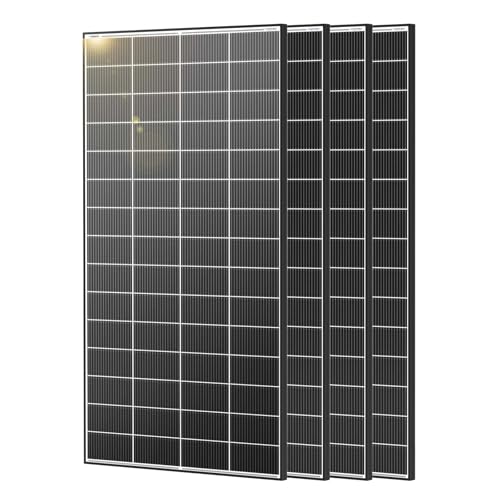
Renogy Solar Panels 1280 Watt N-Type 18BB

Renogy Bifacial Solar Panel 4PCS 590 Watt N-Type 16BB

Renogy Solar Panels 640 Watt N-Type 18BB

Renogy Bifacial Solar Panel 640 Watt Monocrystalline

Renogy Bifacial Solar Panel 2360W N-Type 16BB
Meet The Standout Selections
Two-panel kits hit a sweet spot for anyone stepping beyond a single panel but not ready to roof-mount a full array. This Renogy pair ships with N-Type cells, a cell architecture (a way of doping the silicon wafer) that holds efficiency better under heat than older P-Type designs, and a stated 25% conversion rating, which is genuinely high for the category.
The bifacial back sheet is the real story. Unlike the one-sided panels most folks picture, these harvest reflected light off the rear surface, so mounting them a few feet above a light-colored surface or even pale grass adds measurable output. For a mid-sized cabin or a serious van build, two of these in series feed a charge controller cleanly and leave headroom for battery expansion later.
Useful Touches
- Bifacial rear-side gain means more watts per square foot of roof or rack space
- N-Type cells resist light-induced degradation better than older P-Type designs, so year-two output should stay close to year-one
- 25% conversion efficiency translates to shorter generator run-time on cloudy days
- Two-panel count keeps the wiring simple for charge controllers with limited input ports
Things To Consider
- Bifacial benefit depends on a reflective surface below, so ground-mount or rack-mount setups gain more than flush roof installs
- Two panels may feel underpowered for a full household; planning for expansion means matching the same model later
Right Fit For
DIYers building a starter off-grid system for a small cabin or van who want headroom to scale up without switching brands.
Look Elsewhere When
The Renogy 320 Watt Solar Panels 4PCS kit suits you better when you want a turnkey four-panel starter array and do not need the bifacial back-side gain.
First-time builders tend to overthink the wattage and underthink the wiring. This four-pack solves both problems in one box. Each panel lands at 320 watts with 18 busbars (the thin metal fingers on the cell that carry current), which gives you more pathways for electrons to travel, less resistance, and better performance when a panel is partially shaded.
Compared to the two-panel bifacial kit above, this set trades the rear-side harvesting trick for raw panel count. You get a more traditional single-sided monocrystalline layout (panels made from a single silicon crystal, which typically yields higher efficiency), which is easier to mount on a standard RV roof or a backyard frame. For someone wiring a charge controller for the first time, four matched panels simplify series-parallel math considerably.
The Upside
- Four panels in one kit means matched specs and a single purchase decision
- 18-busbar cell layout keeps output steadier when shade hits one corner
- Higher panel count handles heavier daily loads like a fridge plus lights plus a laptop
Worth Noting
- Single-sided construction gives up the rear-harvest bonus that the Renogy Bifacial 2PCS panel offers
- Four panels need more roof or rack space, which can be a constraint on smaller vans
- Mounting hardware is usually sold separately for kits this size
Made For
First-time off-grid builders who want a complete, matched four-panel kit and a straightforward path to powering a small appliance setup.
Consider Something Else When
The Renogy Solar Panels 640 Watt 2-pack is a smarter fit for tighter roof space where two compact panels beat four mid-size ones.
Once daily loads climb past the basics, panels multiply fast. This 1280-watt bundle is built for the workshop-and-cabin tier, where a fridge, a few lights, charging stations, and maybe a small inverter-driven tool all want juice at the same time.
The N-Type cell design with 18 busbars keeps the conversion efficiency high even when temperatures climb, which matters because panels lose output as they heat up in direct sun. EL-certified cells (each cell has been electroluminescence-tested for hidden defects) reduce the chance of a slow-output panel dragging the whole array down. For someone mounting on a south-facing roof or a fixed ground rack, this scale makes sense; for a small RV roof, it does not.
Points In Its Favor
- 1280 watts of total capacity covers whole-cabin daily loads without daily generator backup
- EL-tested cells help ensure each panel performs close to its rated output
- Stronger heat tolerance means summer output stays closer to spring output
- Multi-layer lamination protects cells from moisture intrusion over years of weather exposure
Room For Improvement
- This is a lot of panel for a small roof; realistic only for ground-mount or large flat-roof installs
- Charge controller and inverter sizing become a serious decision at this wattage class
- Wiring four panels in series-parallel requires basic electrical comfort, or a hired installer
Best Suited To
Workshop owners and cabin dwellers running real appliances who want a serious array and have the roof or ground space to mount it.
A Better Fit Elsewhere
The Renogy Bifacial Solar Panel 4PCS 590 Watt kit suits you better when ground space is plentiful and bifacial rear-side gain matters more than compact footprint.
Bumping up to four bifacial panels changes the math considerably. Where the two-panel kit adds a modest bump, this four-pack turns rear-side harvesting into a meaningful percentage of total daily yield, especially on a ground array with light-colored gravel or pale concrete underneath.
The 16-busbar layout runs slightly fewer conductive fingers than the 18-busbar panels elsewhere on this list, but the bifacial gain more than compensates on clear days. For property owners with acreage to spare, this is the configuration that starts approaching whole-home backup territory without dropping into the 2360-watt tier.
A Few Highlights
- Four bifacial panels double the rear-harvest advantage of the two-pack above
- N-Type cells hold efficiency steady through long summer afternoons
- Ground-mount friendly, since reflected light from below is what unlocks the bifacial bonus
Minor Gripes
- Flush roof mounting kills most of the rear-side benefit, so this kit really wants a rack or ground frame
- Footprint grows quickly with four full-size panels, plan real estate before ordering
Who It Suits Best
Property owners with ground-mount space who want a high-output array and care about long-term panel durability.
Swap It Out When
The Renogy 320 Watt Solar Panels 4PCS kit makes more sense when you want a simpler four-panel setup and do not need bifacial gain.
Two compact panels at 320 watts each hits the right note for vans, small RV roofs, and weekend cabins where space is the binding constraint. You give up the rear-side harvesting that bifacial panels offer, but you gain a layout that mounts cleanly on a standard 100-watt-class footprint, twice over.
This pair shares the same 18-busbar cell architecture as the four-pack earlier in this list, so partial-shade performance stays consistent across the family. For anyone stepping up from a single panel to their first two-panel system, this feels like the natural middle step before committing to four or more.
Positive Takeaways
- Two-panel layout fits where four panels would not, common in van and small RV roofs
- 18-busbar design holds output when branches or vent pipes cast partial shade
- Multi-layer encapsulation helps cells survive road vibration on mobile installs
Some Limits To Know
- Single-sided panels miss the bifacial rear-harvest opportunity
- 640 watts handles basics comfortably but stretches thin with a residential fridge plus induction cooking
- Mounting brackets typically sold separately
Who Should Grab It
Van lifers and small-cabin owners who want a matched two-panel upgrade from a single-panel starter setup.
Reach For A Different Pick When
The Renogy Bifacial Solar Panel 640 Watt Monocrystalline kit makes more sense if you want bifacial harvesting on a similar two-panel scale.
This is the panel for the “I might grid-tie later” crowd. The on/off-grid framing means the cells are designed to feed either a standard charge controller for battery banks or a grid-tie inverter setup down the road. That kind of flexibility matters when you are not sure whether your off-grid experiment will stay off-grid forever.
At 640 watts across the bifacial layout, the rear-side bonus lifts real-world output above what a standard single-sided 640-watt panel delivers. Mounting on a rack above pale terrain, or even over light snow, makes a noticeable difference in shoulder seasons when every watt counts.
The Practical Payoff
- On-grid and off-grid compatibility keeps future expansion options open
- Bifacial design with 10 busbars still outperforms many older single-sided panels
- Monocrystalline construction suits hot, sunny climates with strong direct light
Softer Spots
- 10-busbar layout offers slightly less shade tolerance than the 16- and 18-busbar panels elsewhere on this list
- Bifacial gain drops sharply if panels end up flush-mounted with no reflective surface below
Perfect Match For
Shoppers who want to keep the door open to grid-tie expansion without committing to a battery-only setup from day one.
Not Your Match When
The Renogy Solar Panels 1280 Watt kit is the right call if you have already committed to off-grid and need serious daily output from the start.
When the goal is whole-home backup or a serious off-grid residence, the wattage math changes completely. This 2360-watt bundle is the heavyweight in the lineup, and it earns that label honestly. Four high-output bifacial panels with N-Type cells and a stated 25% efficiency deliver real, sustained daily harvest in regions with strong sun exposure.
The bifacial back sheet means the rear surface contributes meaningful energy whenever the panel sits above a reflective ground layer, which is how most permanent ground arrays are mounted anyway. Compared to the 1280-watt kit earlier, this nearly doubles daily production while keeping the same N-Type cell durability story. For someone planning a permanent install, the upgrade math usually works in favor of going big once rather than expanding twice.
Strengths Worth Knowing
- 2360 watts handles whole-home essentials, not just cabin basics
- Bifacial design compounds the output in rack-mounted or ground-array setups
- N-Type cells with 16 busbars hold conversion efficiency through temperature swings
- Multi-layer encapsulation suits permanent outdoor exposure
Practical Considerations
- Installation typically needs a licensed electrician or experienced DIYer, the wiring is not trivial
- Roof or ground footprint is substantial; smaller properties may struggle for space
- Charge controller, inverter, and battery bank sizing become a project of their own at this scale
Built With In Mind
Full-time off-grid homeowners and serious backup-power planners with the roof or land space for a permanent array.
Another Choice May Suit
The Renogy Solar Panels 1280 Watt kit is a more realistic starting point for someone planning to scale up gradually rather than commit on day one.
Picking Solar Panels That Actually Fit Your Build
Wattage is the loudest spec, but it is rarely the one that decides whether a system works day to day. Three quieter details matter more than most shoppers expect.
Match the panel count to your real daily load. Add up the watt-hours your appliances pull in a typical day, divide by your peak sun hours (roughly 4 to 5 in most of the U.S.), and that gives you a rough target. A 640-watt kit covers phones, lights, and a laptop. A 1280-watt kit adds a fridge. A 2360-watt kit pushes toward whole-home backup. Oversizing costs money; undersizing forces generator dependence.
Mind the cell architecture. N-Type cells, common across this list, hold efficiency better than older P-Type designs under heat and over years. The number of busbars (the metal fingers on each cell) matters for partial-shade performance. More busbars means more pathways around a shaded cell, which keeps output from collapsing when a branch or vent pipe casts a shadow.
Plan for mounting, not just panels. Bifacial panels reward rack or ground mounts where reflected light reaches the back. Single-sided panels work fine flush on a roof. Charge controllers, inverters, and battery banks all scale with array size, so factor those costs before committing to the largest kit.
How Much Roof Space Do You Actually Have?
Measure twice, order once. A 590-watt bifacial panel is roughly the size of a standard door laid flat. Four of them need a real expanse, and tilt mounting costs more than flush. For vans, two panels is usually the ceiling before roof weight and wind drag become real concerns. Shoppers with limited space often get more from one well-placed 640-watt kit than from a cramped four-panel install that fights for every square inch.
Why Voltage And Amperage Ratings Matter
Every panel has an open-circuit voltage (Voc, the voltage when no load is connected) and a short-circuit current (Isc, the current when the output is shorted). Your charge controller has input limits for both. Panels in series add voltage; panels in parallel add current. Getting either wrong can fry a controller, so the wiring plan matters as much as the panel choice.
Key Considerations Across These Picks
Mistakes Worth Dodging
Buying panels before checking charge controller compatibility is the single most common stumble. A mismatched Voc rating can damage equipment on the first sunny day. Another frequent slip is underestimating partial shade, even a thin tree branch across one cell can drop output across an entire panel if the wiring does not account for it. Run your proposed mounting location through a shade calculator before committing to a kit size.
The Case For Spending Up
Higher-tier kits earn their keep through three quiet upgrades. N-Type cells last longer before degrading. Bifacial designs harvest more energy per square foot. And matching cells from the same production batch means fewer weak-link panels dragging down the array. For a permanent install that will sit in the sun for 15-plus years, those upgrades usually pay for themselves in added lifetime yield, not just higher peak output.
Frequently Asked Questions
How many 12-volt solar panels do I need to run a fridge? A standard 12-volt fridge draws roughly 50 to 80 watt-hours per day, depending on ambient temperature and door-opening frequency. A single 320-watt panel usually covers it with room to spare, but adding a second panel keeps the battery topped up during cloudy stretches.
Do I need a charge controller? Yes. Every kit on this list feeds through a charge controller before reaching the battery bank. The controller regulates voltage and current, prevents overcharging, and protects the batteries from reverse-current drain at night.
What does bifacial actually mean? A bifacial panel harvests sunlight from both the front and the rear face. The front does the heavy lifting, but the back captures reflected light off the surface below the panel. The bonus is most noticeable on ground mounts or rack mounts with light-colored surfaces underneath.
Can I mix and match panels from different kits? It works in a pinch but is not ideal. Panels from different production runs have slightly different voltage and current characteristics, which can cause one panel to drag down the others. Matching panels from the same kit, or at least the same model and production batch, keeps the array balanced.
How long do these panels typically last? Most modern panels carry a 25-year power-output warranty, meaning they should still produce at least 80% of their rated output after that many years. Real-world lifespan often stretches beyond three decades when the panels are mounted cleanly and the wiring is kept in good shape.
Wrap Up
The right 12-volt solar panel kit comes down to honest math about your daily loads, the mounting spot you actually have, and how much room you want to grow into. Match the kit to the project, not the other way around, and the system will quietly do its job for years. Start with a clear wiring plan and the rest falls into place.
