

A 12 volt linear actuator is one of those unsung components that turns a hobby project, an RV hatch, or a custom desk into something that actually moves on demand. I put this roundup together for tinkerers, automation enthusiasts, and small-shop builders who want dependable push-pull motion without overcomplicating the wiring.
A short clarification before we dive in: a linear actuator is a motorized rod that extends and retracts along a straight path, converting electrical input into linear mechanical force. Most 12 V (volt) models wire straight to a battery or DC (direct current) power supply, and that portability is exactly what makes the category so flexible across vehicles, workshops, and home builds.
A Closer Look At The Lineup
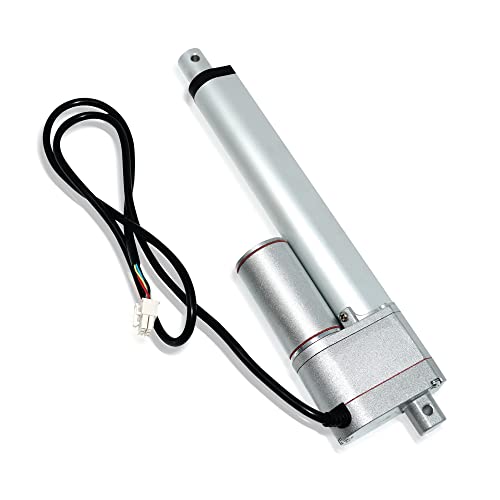
Progressive Automations 12V Potentiometer Feedback Mini Linear Actuator

Justech 330 LBS/1500N-6inch/150mm 12V Linear Actuator

USLICCX 12V Mini Electric Linear Actuator 2″ Stroke, Waterproof

FUYU FSK30J Mini Linear Rail Linear Guide Ladder Type Screw Actuator

Progressive Automations 12V Electric Linear Actuator 20″ Stroke 400lb Force

PROGRESSIVE AUTOMATIONS Linear Electric Actuator 12V (1 in. 11 lbs.) High Speed

RVMARINEPAT 12V Linear Actuator High Speed 14mm/s 220lb 6″
Meet The Standout Selections
The PA-14P mini actuator is the one I keep recommending when someone wants positional feedback, meaning a built-in potentiometer (a small variable resistor) that reports the rod’s exact position back to a controller, in a body small enough to hide inside a cabinet or a small robot arm. It runs on standard 12 VDC (volts of direct current), pushes up to 35 lbs of force, and offers a 2-inch stroke that fits tight builds where every millimeter counts.
What sets it apart from the bulkier options later in this list is that feedback signal. You can wire it to a microcontroller and ask, “where exactly is the rod right now?” rather than guessing from runtime. For desktop automation, hidden camera rigs, or maker projects that need repeatable positioning, that feature alone can save hours of trial and error.
Where It Delivers
- Potentiometer feedback lets a controller track exact rod position in real time.
- Compact housing fits inside cabinets, 3D-printed enclosures, and small robot joints.
- 12 VDC operation matches common battery and bench-supply setups, simplifying wiring.
- 35 lbs of force handles vents, shutters, and light lifting without straining the motor.
Soft Spots
- The 2-inch stroke is short, so longer-reach projects will need a different model.
- Feedback wiring adds a step that beginners sometimes find fiddly during first setup.
- Force ceiling of 35 lbs means heavy lifting tasks fall outside its comfort zone.
Feature Snapshot
Made For
Makers and home-automation hobbyists who need precise position tracking in a compact package, especially for short-throw vents, shutters, or robotic linkages.
Swap It Out When
Reach longer than 2 inches is required, in which case the Progressive Automations 20″ Stroke 400lb Force actuator is the better sibling with far greater travel.
The Justech 6-inch actuator is a torque monster for its size. With up to 330 lbs of push or pull force and a 150 mm (6-inch) stroke, it covers the sweet spot where many truck-bed projects, ATV lifts, and cabinet automation live. The retracted length of about 11 inches and extended length near 17 inches tell me this is meant for installations with reasonable space behind and in front of the rod.
Where the earlier PA-14P handles delicate positioning, this one steps up to honest heavy lifting. Think pop-up camper lifts, hidden TV lifts, or shop-door automation. Confirming both stroke length and retracted length before mounting matters here, because the 11-inch retracted dimension can surprise people who eyeball the spec.
Bright Spots
- 330 lbs push-pull force handles truck tailgates, hatches, and pop-up roofs.
- 6-inch stroke covers most mid-range lifting and positioning tasks.
- Standard 12 V wiring pairs with automotive batteries for vehicle installations.
- Solid mounting points simplify integration with brackets and hinge hardware.
Things To Weigh
- Retracted length near 11 inches demands careful clearance planning in tight bays.
- Heavier construction can strain lighter mounting surfaces during full-load cycles.
- Force rating assumes ideal alignment; side loads can shorten service life.
Right Fit For
DIYers and small-shop fabricators who need serious push or pull force for vehicle hatches, hidden lifts, or medium-duty automation without stepping up to industrial pricing.
Look Elsewhere When
Reach longer than 6 inches is mandatory, in which case the Progressive Automations 20″ Stroke 400lb Force actuator is the obvious swap with four times the travel.
The USLICCX mini actuator is the one I would quietly slot into any project where noise matters. It runs at under 55 dB (decibels, a unit of sound loudness), reaches 0.6 inches per second, and carries an IP54 rating, meaning it is protected against limited dust and splashing water. The aluminum and ABS plastic housing keeps weight low while sealing the internals from kitchen moisture or outdoor mist.
The trade-off is honest: at 14.4 lbs of maximum load, this is a finesse tool, not a brute. Owners commonly use it for camera sliders, hidden dispensers, and small ventilation louvres. Compared to the Justech model above, the difference is night and day in noise and weight, but the force ceiling is far lower.
Advantages To Know
- Sub-55 dB operation suits bedrooms, studios, and other noise-sensitive rooms.
- IP54 sealing stands up to kitchen steam, light rain, and dusty workshops.
- Aluminum and ABS construction keeps total weight light for portable rigs.
- Built-in end limit switch automatically stops motion at full extension or retraction.
Honest Caveats
- 14.4 lb maximum load rules out any serious lifting or pushing duty.
- 2-inch stroke is short, matching the PA-14P in travel but with less feedback flexibility.
- IP54 resists splashes but is not rated for full submersion in wet environments.
Quick Facts
Best Suited To
Quiet-environment builders working on camera rigs, hidden dispensers, or low-load automation where whisper-quiet motion and modest water resistance matter more than raw force.
Reach For A Different Pick When
Anything heavier than a small camera needs moving, in which case the Justech 330 LBS actuator steps in with the muscle the USLICCX simply does not have.
This FUYU stage is a different breed from the rod-style actuators earlier in this list. It is a sliding table driven by a Nema 11 stepper motor (a standard small stepper motor frame size), with a 350 mm (about 13.78-inch) work stroke and aluminum-alloy construction. Position accuracy reaches ±0.02 mm (a measure of how precisely the slide can land on a target, where smaller is better), which puts it squarely in camera-slider, microscope-stage, and small-CNC territory.
The honest read is that this is a builder’s kit, not a plug-and-play unit. Pairing it with a stepper driver and a controller is part of the deal, and that learning curve pays off if you want repeatable, programmable travel rather than just open-and-close motion. Compared to the rod actuators above, the trade is force for precision.
Everyday Perks
- ±0.02 mm positioning accuracy suits camera sliders, microscopes, and small CNC jobs.
- Aluminum-alloy body stays light while resisting rust during long-term use.
- Nema 11 stepper compatibility opens access to a huge ecosystem of drivers.
- Low operating noise below 60 dB keeps it usable in quiet studios.
Worth Bearing In Mind
- Requires a separate stepper driver and controller, which adds wiring complexity.
- Load capacity is limited compared to rod actuators built for pushing and lifting.
- No integrated limit switches, so end-of-travel programming falls on the controller.
Whose Shelf It Belongs On
Hobby machinists, photographers, and lab tinkerers who want precise programmable slide motion and are comfortable wiring a stepper driver and controller.
Where A Sibling Pick Shines
Simple open-and-close motion is the only goal, in which case the Progressive Automations 12V Potentiometer Feedback Mini Linear Electric Actuator is a friendlier first step.
The PA-04 20-inch model is the long-reach workhorse of this lineup. It runs on 12 VDC, carries an IP66 rating (protection against powerful water jets and complete dust exclusion), and offers up to 400 lbs of force across a 20-inch stroke. That combination of reach, power, and weather sealing is what sets it apart from every other pick here.
For outdoor gate openers, trailer ramps, attic ladder lifts, and farm equipment, this is the kind of actuator I would spec without much hesitation. It is bigger, heavier, and more expensive than the mini options, but it absorbs the punishment that kills the smaller units. You may find the retracted length demanding, so build dimensions into the plan before ordering.
A Few Strong Suits
- 20-inch stroke covers full-size hatches, ramps, and gate openings.
- 400 lb force handles agricultural and outdoor lifting duties.
- IP66 sealing shrugs off rain, dust, and pressure-washer spray.
- 12 VDC operation runs on solar-charged battery banks for off-grid sites.
Trade-Offs To Consider
- Retracted length is long, so compact installations need careful clearance planning.
- Heavier body demands sturdy mounting brackets and reinforced anchor points.
- Higher current draw under load may require a beefier power supply than a small wall adapter.
Feature Card
Who Should Grab It
Outdoor builders and farm or workshop project planners who need serious reach, weather sealing, and force for gates, ramps, or large hatch systems.
Consider Something Else When
The installation is indoors and compact, in which case the RVMARINEPAT 12V Linear Actuator High Speed 14mm/s 220lb 6″ gives similar force in a much shorter frame.
The PA-15 is the sprinter of the family. With reported speeds up to 9.05 inches per second, an IP54 dust and splash rating, and an operating temperature range from -26°C to +65°C (-14.8°F to 149°F), this is the actuator I would choose when fast, repeatable extension matters more than raw force. At 11 lbs of push-pull capacity, it stays in the lightweight category.
Realistic fits include sliding-roof mechanisms on campers and vans, escape-room trapdoors, and emergency vents that need to open quickly on command. The optional BRK-15 bracket set, sold separately, is worth budgeting for if the install calls for clean mounting points.
Where It Helps
- Up to 9.05 in/sec extension speed suits quick-opening hatches and vents.
- Wide -26°C to +65°C operating range handles cold garages and hot engine bays.
- IP54 rating keeps dust and splashes out during outdoor or shop use.
- Compact body simplifies fitment inside RV ceilings and slim enclosures.
Less Ideal Details
- 11 lbs force ceiling rules out heavy lifting or pushing duty.
- Mounting brackets are sold separately, which adds to total project cost.
- Brushed DC motor (a motor with internal carbon brushes that contacts the spinning commutator) may need brush inspection after heavy duty cycles.
Who Will Love This
Camper, RV, and van builders who want a fast-opening sliding roof or vent, plus escape-room or stage-prop designers who need snappy trapdoor motion.
Where Another Pick Suits Better
Heavy loads and long travel are the priority, in which case the Progressive Automations 12V Electric Linear Actuator 20″ Stroke 400lb Force is the clearly heavier sibling.
The RVMARINEPAT sits in a comfortable middle ground: 6-inch stroke, 220 lb (1000 N) push-pull force, 14 mm per second travel speed, IP54 sealing, and under-50 dB noise. The upgraded motor design also gives it self-locking behavior, meaning the rod stays put when power is cut, which is reassuring for hatches left open or closed for long stretches.
For a marine hatch, an RV roof vent, or a workshop dust cover, this is the kind of workhorse that does not call attention to itself. It is quieter than the Justech and stronger than the USLICCX, which makes it an easy recommendation when someone wants one actuator that covers most light-to-medium tasks without specialization.
Useful Highlights
- Self-locking motor holds position when power is removed, no sag or drift.
- 220 lbs push-pull force handles hatches, vents, and lift gates.
- 14 mm/s speed moves loads faster than many comparably priced models.
- IP54 sealing stands up to splashes in marine and outdoor environments.
Practical Considerations
- Retracted length still requires careful clearance planning in tight bays.
- Higher current draw under load demands a power supply rated for the duty cycle.
Specs At A Glance
Built With In Mind
Boat owners, RV builders, and shop fabricators who want a balanced mid-force actuator with self-locking behavior for hatches, vents, and cabinet automation.
A Better Fit Elsewhere
Reach longer than 6 inches is required, in which case the Progressive Automations 12V Electric Linear Actuator 20″ Stroke 400lb Force is the clear longer-travel upgrade.
Picking The Right Actuator For The Job
Stroke length and force rating are the two specs that decide 80% of actuator choices. Stroke is how far the rod extends, and force is how hard it can push or pull while doing so. Match the stroke to the geometry of the moving part first, then make sure the force rating comfortably exceeds the load, with a safety margin built in for friction and side-loading.
Speed matters when motion needs to feel responsive, like an emergency vent or a sliding roof, but speed and force often trade against each other. Faster actuators usually deliver less push, while heavy-duty units tend to creep. Mounting style and bracket compatibility are the next gate: confirm the bracket pattern before assuming an actuator drops into your existing frame.
Power and control complete the picture. Most 12 V units run on anything from a small sealed lead-acid battery to a bench DC supply. Add a relay, an H-bridge motor driver (a small circuit that lets a controller reverse current direction to extend or retract the rod), or a dedicated controller depending on whether you need simple on-off, reversing, or positional feedback. For indoor projects, IP54 sealing covers splashes and dust, but for sustained outdoor exposure, an IP66-rated unit like the 20-inch Progressive Automations model is the safer pick.
Practical Slip-Ups And When To Spend Up
Traps First Timers Fall Into
Spec’ing stroke length without checking retracted length is the classic mistake. An actuator that fits the open distance may collide with surrounding hardware when fully retracted, and that ruins the install. Measuring both ends of the motion path before ordering saves the headache.
Underestimating force is the other common trap. Force ratings assume straight-line load with no side pressure, and binding linkages or off-axis mounting can double the apparent resistance. Aim for at least 50% headroom above your calculated load to keep the motor cool and the lifespan reasonable.
When Paying More Pays Off
Higher-tier actuators earn their premium in three places: weather sealing, longer duty cycles, and feedback electronics. IP66 units handle real outdoor punishment where IP54 units eventually corrode, and built-in potentiometers or Hall-sensor feedback (a contactless sensor that reports rod position) take the guesswork out of mid-stroke positioning. If the project runs daily, in the weather, or needs precise positions, the upgrade almost always pays for itself in fewer replacements and quieter operation.
Frequently Asked Questions
What does a 12 volt linear actuator actually do?
It converts 12 VDC electrical input into straight push or pull motion, extending or retracting a rod to open, close, lift, or position a connected mechanism.
How do I size the stroke length I need?
Measure the full travel distance between the closed and open positions of the moving part, then add a small buffer so the actuator never hits its mechanical end stops under load.
Can I run a 12V actuator from a car battery?
Yes, most 12V actuators wire directly to automotive or marine batteries, which makes them popular for vehicles, boats, and off-grid solar builds.
What is the difference between IP54 and IP66 ratings?
IP54 resists dust and water splashes, while IP66 resists powerful water jets and complete dust exclusion, making it suitable for harsher outdoor environments.
Do I need a controller to use a linear actuator?
Simple on-off motion works with a switch or relay, but reversing, speed control, or positional feedback requires an H-bridge driver or a dedicated controller.
