

A dead battery rarely gives a warning. One morning the engine cranks slower than usual, the headlights dim at idle, or a stored RV won’t wake up at all, and suddenly I’m wishing I’d checked the charge weeks earlier. That’s the gap a good 12 volt battery checker fills: a quick, honest read on whether the battery is still healthy or quietly giving up. I put together this roundup for DIYers, weekend mechanics, marine owners, and anyone tired of guessing whether the battery is the problem or the alternator is. Each pick below was chosen for a specific kind of user, so match the tool to the battery in front of you, not the other way around.
Your Options, Compared

Klein Tools NCVT2PKIT Non-Contact Voltage Tester with Outlet Tester
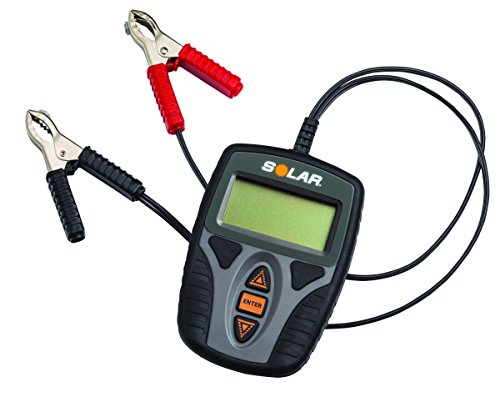
Clore Automotive SOLAR Digital 12V Battery and System Tester

ANCEL BA101 Plus Car Battery Tester, 6V/12V, 20-2000 CCA

ANCEL BA101PRO Battery Tester for 12V/24V Lead-Acid Batteries

Nilight 90015A Battery Switch 12-48V Waterproof Disconnect

ANCEL BA101 Car Battery Tester, 12V, 100-2000 CCA

TOPDON BC100 Car Battery Tester 12V, 100-2000 CCA
More Details On Our Top Picks
The Klein Tools NCVT2PKIT earns its spot by stretching well beyond a single battery. The non-contact pen detects voltage from 12V AC up to 1000V AC, which means it covers doorbell transformers, low-voltage landscape lighting, irrigation valves, and standard household wiring with the same tool. A green LED means no voltage detected and red means live, so the reading is immediate without needing to strip insulation or touch a conductor.
It pairs with a basic GFCI (Ground Fault Circuit Interrupter) receptacle tester that confirms correct outlet wiring at a glance, useful before plugging in a charger or compressor. The trade-off is that this isn’t a CCA-reading battery tester, so it won’t tell me state of health the way the ANCEL picks do. For homeowners and techs who want one tool that handles both the 12V landscape system and the 120V garage outlet, it’s a smart companion piece to any of the dedicated battery testers below.
Practical Advantages
- Dual-range detection from 12V AC through 1000V AC handles both low-voltage and standard line-voltage work
- Non-contact design keeps fingers away from exposed conductors, which matters when probing unfamiliar wiring
- Bundled receptacle tester confirms correct hot/neutral/ground wiring at any standard outlet
- Audible and visual cues make the reading obvious without memorizing color codes
Things To Consider
- Detects voltage presence rather than measuring CCA (Cold Cranking Amps, a battery’s starting power rating) or state of health
- Pen-style form factor is easy to misplace in a deep toolbox
Who It Suits Best
Homeowners and HVAC or irrigation techs who probe both low-voltage circuits and standard outlets and want a quick yes/no on whether a wire is live.
A Better Fit Elsewhere
Anyone diagnosing a weak car battery should reach for the ANCEL BA101 instead, since it delivers actual CCA and state-of-health numbers rather than just voltage presence.
The SOLAR BA9 from Clore Automotive is the kind of tool that lives on a rolling cart and gets grabbed ten times a day. It covers 40 to 1200 CCA across flooded, AGM (Absorbent Glass Mat), spiral-wound, and gel cell batteries, which is basically every chemistry you’ll meet on a shop floor. Operating range of 7 to 15V means it tolerates deeply discharged batteries better than narrower tools, so a tow-in vehicle doesn’t always trigger a low-voltage error.
The LCD screen holds up under hood glare and shop fluorescents, and the clamps feel substantial enough to seat on a side-terminal post without slipping. Owners commonly report the unit surviving years of daily use, though the cable insulation can stiffen in cold garages. Compared to the Klein NCVT2PKIT, this is a true diagnostic tool with concrete numbers, not just a presence detector.
What Works In Its Favor
- Wide 40 to 1200 CCA range covers everything from a lawn tractor battery to a heavy truck
- 7 to 15V operating range reads deeply discharged batteries that narrower tools refuse to
- Supports flooded, AGM flat plate, AGM spiral, and gel cell chemistries without separate modes
- LCD remains readable in low shop lighting and direct sunlight
Worth Noting
- Heavier and bulkier than pocket-style testers, less convenient for glove-box storage
- Cable insulation may stiffen after long exposure to cold shop floors
Built With In Mind
Working technicians and serious DIYers who test multiple batteries a week and want a single tool that handles every 12V chemistry reliably.
Reach For A Different Pick When
Casual hobbyists who only check one or two batteries a year may find the TOPDON BC100 easier to live with, since it offers similar 12V coverage in a lighter, more beginner-friendly package.
The ANCEL BA101 Plus stands out by accepting both 6V and 12V lead-acid batteries, which most tools in this price bracket don’t. That makes it a strong match for older British roadsters, vintage tractors, motorcycles, and golf carts that still run on 6V systems, alongside the usual cars and trucks. The 20 to 2000 CCA range is unusually broad on the low end, so even a small scooter battery produces a meaningful reading.
It tests flooded, AGM flat plate, AGM spiral, gel, and EFB (Enhanced Flooded Battery) chemistries, plus cranking and charging system performance, so a single session covers battery health, starter draw, and alternator output. For someone restoring a classic who also drives a daily, this single unit replaces several specialized tools. The trade-off is that the menu navigation takes a moment to learn, and first-timers may need the manual nearby.
The Upside
- Reads 6V and 12V batteries, rare at this price point
- 20 to 2000 CCA range handles small powersports batteries up to large diesel truck banks
- Tests battery, cranking, and charging systems in one workflow
- Compatible with EFB, which matters for modern start-stop vehicles
Points To Note
- Multi-language menu can feel busy until the user learns the navigation pattern
- Printed manual is small and easy to misplace during initial setup
Right Fit For
Garage hobbyists who own a mix of vintage and modern vehicles, especially anyone still maintaining a 6V classic on the side.
Skip It When
Owners running 24V heavy-duty trucks should choose the ANCEL BA101PRO instead, which is built specifically for those higher-voltage systems.
The BA101PRO moves up from the BA101 Plus by stepping into 24V territory, which opens the door to diesel trucks, RVs with dual-battery banks, marine trolling setups, and heavy equipment. The 2.8-inch color display is a meaningful upgrade over the monochrome screens on cheaper testers, since the test results and battery health bars read clearly even in low light or with greasy fingers.
It tests flooded, AGM flat plate, AGM spiral, gel, and EFB batteries from 100 to 2000 CCA, plus cranking and charging performance, so the same unit that diagnoses a Class A motorhome also confirms whether the alternator is replenishing the bank on a long drive. Compared to the Clore SOLAR, the BA101PRO trades some shop-tough heft for a more colorful, consumer-friendly interface. Owners commonly report the clamps gripping well on top-post batteries but recommend a shim for smaller motorcycle terminals.
Notable Gains
- Handles 12V and 24V systems, covering everything from a daily driver to a Class 8 truck
- 2.8-inch color screen makes readings readable in mixed lighting
- Covers flooded, AGM flat plate, AGM spiral, gel, and EFB chemistries
- Cranking and charging tests reveal whether a weak battery or a weak alternator is the actual culprit
Trade Offs
- Lower CCA floor of 100 means very small powersports batteries may read outside its range
- Clamps fit top-post batteries best, so small motorcycle terminals may need an adapter shim
Best Suited To
RV owners, diesel truck drivers, and marine users who routinely need to test 24V banks without buying two separate tools.
Consider Something Else When
Owners of small engines and lawn equipment will get more value from the ANCEL BA101 Plus, which reads down to 20 CCA and covers 6V systems that the BA101PRO doesn’t.
The Nilight 90015A isn’t a tester at all, but it pairs with one in a meaningful way: a true mechanical cutoff that stops parasitic drain on stored vehicles. Rated for DC 12V to 48V systems with 275A continuous, 455A intermittent, and 1250A momentary handling, it can sit between the battery and the rest of the electrical system on a car, RV, marine boat, or off-road rig.
The ABS plastic housing insulates the terminals against accidental shorts, and the rear cover keeps debris off the copper studs. For someone whose classic Mustang drains a battery in three weeks of sitting, flipping this switch when parking preserves the battery the tester later confirms is healthy. The trade-off is installation: mounting requires drilling or attaching to a panel near the battery, and the switch is on-off rather than offering any diagnostic readout.
Positive Points
- Eliminates parasitic drain during long storage, extending battery life between drives
- 275A continuous and 1250A momentary ratings suit starters and high-draw accessories
- ABS housing with rear cover reduces short-circuit risk in engine bays
- Works on 12V to 48V DC systems across automotive, marine, and off-road uses
A Few Limitations
- Requires a small installation project: mounting holes, terminal crimping, and routing
- Provides no diagnostic information; pairs with a separate tester for actual battery health
Whose Shelf It Belongs On
Owners of vehicles that sit for weeks or months at a time, from classic car collectors to snowmobile and boat owners with off-season storage.
Swap It Out When
Daily drivers that never sit idle don’t need a hard cutoff, so a dedicated tester like the ANCEL BA101 will serve that garage better than a switch.
The original ANCEL BA101 is the unit the Plus and Pro models were built from, and it’s still around for good reason. It covers 100 to 2000 CCA across flooded, AGM, gel, and EFB batteries, and reports state of health, state of charge, voltage, internal resistance, plus cranking and charging system performance. For most daily-driver garages, that covers everything the average owner actually needs.
The four-button interface is straightforward, and the menu gives plain-English verdicts like “Good Battery” or “Replace” alongside the numbers. Compare that to the BA101 Plus’s 6V support and the BA101PRO’s 24V support, and the plain BA101 is the sensible middle path for someone who owns one or two 12V vehicles. Owners commonly report it surviving glove-box life and the occasional drop, though the cable strain relief is worth inspecting after a few years of hard use.
Where It Delivers
- 100 to 2000 CCA range covers cars, trucks, boats, and most RVs in a single unit
- Reports state of health, state of charge, voltage, and internal resistance in one workflow
- Cranking and charging tests point to alternator problems, not just battery wear
- Plain-language verdicts help less experienced owners interpret the numbers
Points To Keep In Mind
- Limited to 12V systems, so vintage 6V owners should look at the BA101 Plus instead
- Cable strain relief is worth checking after years of repeated clamping
Who Should Grab It
Daily-driver owners with a standard 12V car or light truck who want one reliable tester without paying for 24V capability they won’t use.
Look Elsewhere When
Anyone maintaining a fleet of mixed 12V and 24V vehicles will be better served by the BA101PRO, which covers both system voltages without juggling two tools.
The TOPDON BC100 lands as a 3-in-1 diagnostic tool covering battery, cranking, and charging tests at a price that undercuts much of the ANCEL lineup. It works on all 12V lead-acid chemistries: regular flooded, AGM flat plate, AGM spiral, gel, and EFB, with a 100 to 2000 CCA range that fits cars, trucks, boats, and lawn tractors alike. For someone who needs one tool across several different vehicles, that breadth is the headline feature.
The unit is lighter and more compact than the Clore SOLAR, which matters for a glove box or door pocket. It skips the 24V capability of the BA101PRO and the 6V coverage of the BA101 Plus, so it’s a 12V specialist first. Owners commonly find the menu intuitive after one read-through, though the printed manual is sparse and the online version is worth downloading before the first test.
Key Advantages
- 3-in-1 testing covers battery, cranking, and charging performance in a single workflow
- Supports regular flooded, AGM flat plate, AGM spiral, gel, and EFB chemistries
- Compact body fits a glove box or door pocket for on-the-road checks
- Lower entry price than most 12V testers with comparable CCA range
Where It Is Less Suited
- Limited to 12V, so diesel trucks and 24V banks need the BA101PRO instead
- Printed manual is brief; the online PDF is worth reading before first use
Made For
Budget-conscious DIYers who want credible battery, cranking, and charging diagnostics for one 12V car without overspending on features they won’t use.
Where Another Pick Suits Better
Owners who want one tester to cover both an old 6V classic and a modern daily should choose the ANCEL BA101 Plus, which adds 6V support the BC100 doesn’t offer.
What To Weigh Before Picking a 12 Volt Battery Tester
A 12 volt battery checker pays for itself the first time it points to a failing battery before a road trip, so the right choice depends on what batteries you actually own. Start with the system voltage: most cars, motorcycles, and lawn tractors run on 12V, while diesel trucks, RVs, and many marine banks use 24V, and pre-1960s classics sometimes still rely on 6V. Matching the tester to your battery’s voltage is non-negotiable; a 12V-only tester will simply refuse to read a 24V bank, and vice versa.
CCA range matters next. CCA stands for Cold Cranking Amps, a battery’s starting power at 0°F, and a tester needs to span the rating printed on your battery’s label. A small motorcycle battery might rate 200 CCA, while a heavy truck battery can rate 1000 or more. Pick a tester whose range brackets your largest battery, otherwise the result loses accuracy at the extremes.
Chemistry compatibility is the third filter. Flooded, AGM, gel, and EFB batteries each behave differently under load, and a tester that doesn’t recognize your chemistry can give a misleading verdict. Finally, think about extras like cranking and charging tests, which tell you whether the alternator is replenishing the battery on a drive. For shop use, wider chemistry support and color screens pay off; for occasional garage checks, a basic 12V unit covers the real need.
Key Considerations Across These Picks
Common Shopping Slip Ups
The most common mistake is grabbing a tester based on price alone and discovering it doesn’t cover the battery you actually own. A 12V-only unit fails silently on a 24V marine bank, and a tester without EFB support can misread start-stop vehicles. Battery chemistry compatibility is the second trap: flooded and AGM batteries need different load profiles, and the tester has to know which one it’s probing. Always cross-check the chemistry list against what’s printed on your battery’s label before buying.
What The Higher Tier Buys
Stepping up to a Pro or Plus tier tester usually buys three things: broader voltage coverage, a color display, and 24V system support. For someone with a single 12V daily driver, those upgrades are excess. For someone maintaining a fleet with mixed voltages or running a diesel truck, the upgrade pays back fast by replacing two separate tools. Color screens and faster processors show up on premium tiers too, which matter in cold shops where monochrome displays wash out under fluorescent light.
Frequently Asked Questions
Do 12 volt battery checkers work on completely dead batteries?
Most testers need a minimum surface voltage to function, often around 7 to 8V. A battery reading zero volts is usually beyond recovery anyway, and a charger is the first step before any tester can produce a meaningful result.
How often should I test a 12V battery?
Twice a year is a reasonable rhythm, with extra checks before winter and after long storage. Batteries tend to fail gradually, and seasonal tests catch the slow decline before the first cold morning leaves you stranded.
Can a battery tester damage my vehicle’s electrical system?
Quality testers draw very little current and clamp directly to the battery posts, so they don’t interfere with onboard computers. Always connect to the battery terminals rather than remote jump posts to avoid tripping sensor diagnostics.
Is CCA or voltage more important for a battery health reading?
Voltage tells you the current charge state, while CCA estimates the battery’s actual starting capacity under load. A battery can show 12.4V at rest and still fail a CCA test if the plates are sulfated, so a tester that reads both gives a much clearer picture.
Will a 12V battery tester work on AGM and gel batteries?
Yes, as long as the tester specifically lists AGM or gel compatibility. Lead-acid chemistries respond differently to load testing, so a tester limited to flooded batteries will understate or misread an AGM or gel cell’s true health.
Final Verdict
The right 12 volt battery checker comes down to the batteries in your driveway. Daily-driver owners get the best fit from the ANCEL BA101, RV and diesel truck owners need the BA101PRO’s 24V reach, classic-car collectors want the BA101 Plus for 6V support, and seasonal vehicles pair well with the Nilight cutoff switch. Pick the tool that matches your actual battery, test it twice a year, and the next dead-battery surprise becomes far less likely.
