

I’ve watched too many friends get stranded in parking lots because a battery quietly faded out, and the only thing that would have caught it early was a decent tester. The category splits into two camps: old-school carbon-pile load testers that really stress the battery, and modern digital analyzers that read internal resistance and State of Health without putting a heavy load on at all. Both work, but for different users.
Below is a focused look at seven testers that cover everything from a quick garage check on a Civic to heavy-duty commercial trucks running 24-volt systems.
An Overview Of The Picks


ANCEL BA101 Plus Car Battery Tester

ANCEL BA101PRO Battery Tester 12V/24V


ANCEL BA101 12V Digital Battery Tester
Launch BST360 Bluetooth Battery Tester
What Each Pick Brings To The Table
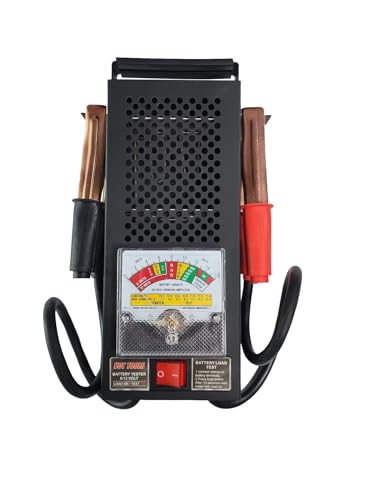
NEIKO’s 40510A is the kind of tool that lives on a pegboard in a real garage, not in a glovebox. It uses a fixed carbon-pile load (a resistive coil that draws current like a hard starter pull) at 100 amps for 12-volt batteries and 50 amps for 6-volt batteries, which is the same approach mechanics have trusted for decades. You press the load, hold for ten seconds, and read the voltage sag on the analog gauge to judge the battery’s strength.
It works on batteries up to 1,000 CCA, or Cold Cranking Amps, the rating that shows how much current a battery can deliver at 0°F for 30 seconds. CCA covers most cars and light trucks without complaint. CCA also covers classic 6-volt setups in older vehicles, which gives it broader use than many digital units.
The Helpful Details
- Carbon-pile load gives a true stress test that digital conductance meters only approximate
- Handles both 6V and 12V batteries up to 1,000 CCA, including vintage cars and modern sedans
- No batteries or app pairing required, just clamp and go
- Durable all-metal construction tends to outlast cheaper plastic-housed units in busy shops
Worth Noting
- Generates heat during testing, so the 1-minute cooldown between cycles is a real constraint for high-volume shops
- No internal resistance reading or State of Health percentage, which limits diagnostic depth
- Heavier than handheld digital testers, so it’s not ideal for carrying to a tow-out in the rain
Who It Suits Best
Home mechanics and small-shop techs who already think in terms of voltage under load and want a tool that just answers “good or bad” without menus.
Look Elsewhere When
You want printed health percentages or AGM-specific guidance, where the ANCEL BA101 Plus covers the same garage tasks with more chemistry awareness.
The BA101 Plus is the digital answer to most weekend-battery questions, and unlike the NEIKO above, it works through conductance, sending a small signal through the battery and measuring how it responds. That means no heavy load, no cooldown, and a printout-style screen full of data. It reads CCA from 20 all the way up to 2000, supports both 6V and 12V systems, and recognizes flooded, AGM flat plate, AGM spiral, gel, and EFB batteries.
EFB stands for Enhanced Flooded Battery, common in start-stop vehicles. For someone running a Civic with a standard flooded battery alongside a BMW with AGM, having one tester that handles both removes a real layer of guesswork. It also reports State of Health (SOH, an estimate of remaining capacity versus a new battery), State of Charge (SOC, the current charge level), voltage, and internal resistance, then runs crank and charging system checks.
Positive Takeaways
- Six supported battery chemistries cover everything from a lawn tractor gel cell to a start-stop EFB
- No cooldown between tests makes it practical for quick checks across a driveway of vehicles
- Reports SOH and SOC percentages that help decide between charging and replacing
Honest Caveats
- Screen brightness and menu flow can feel cramped in direct sunlight
- Owner manuals tend to assume familiarity with battery codes, so first-timers may need to look up their battery’s CCA rating separately
Built With In Mind
Multi-vehicle households where one garage sees a mix of older and newer cars with different battery types, especially start-stop vehicles with EFB or AGM under the hood.
Consider Something Else When
You service heavy trucks with 24V systems, since the ANCEL BA101PRO covers 24V fleets where this Plus model stops at 12V.
The BA101PRO steps up where the BA101 Plus leaves off: 24-volt support for heavy-duty trucks, RVs, and commercial equipment. Inside, it runs on the same conductance-based logic as the Plus, so the readout still includes CCA, voltage, internal resistance, SOH, and SOC across the same six battery chemistries. What changes is the chassis and the voltage window, with CCA support from 100 to 2000, plus a 2.8-inch color display that’s much easier on aging eyes than the older BA101’s monochrome screen.
For someone running a diesel pickup or a coach with house batteries, that 24V capability is the difference between owning one tool and owning two. Cranking and charging system tests still come standard, and the larger display makes readings easier to share over a shoulder with a customer or a co-driver.
Standout Benefits
- 24V system coverage unlocks commercial trucks, RVs, and marine banks
- 2.8-inch color display improves readability in low light or awkward angles under a hood
- Wide chemistry support carries over from the Plus for full garage coverage
Practical Considerations
- Larger body and longer clamps make it less convenient for tight motorcycle battery compartments
- Higher price tier reflects the heavy-duty focus, so casual sedan owners may be paying for capability they rarely use
The Right Fit
Truck owners, RV travelers, marine users, and anyone maintaining a fleet with mixed 12V and 24V equipment.
Where A Sibling Pick Shines
You mostly work on compact cars and motorcycles, where the smaller ANCEL BA101 Plus handles the same job without the 24V overhead.
The KAIHENG tester lands in the budget corner without skipping the basics. It carries a fixed 100-amp load on 12V batteries and 50 amps on 6V units, much like the NEIKO above, but with copper clip connectors and a built-in voltmeter for charging system spot-checks. Voltage accuracy is rated at plus or minus 0.2V, which is fine for a pass/fail decision at the battery terminals.
The honest read is that it doesn’t pretend to be something it’s not: there’s no digital readout, no internal resistance calculation, and no menu. You clamp, you push, you read. For a single car and a once-a-year check, that simplicity is the whole point.
Real-World Strengths
- Low entry price makes it a sensible first tester for casual owners
- Copper clamps with rubber grips tend to seat well on a range of terminal sizes
- Combined voltmeter function lets you spot charging system drift without a second tool
Less Ideal Details
- Analog gauge is harder to log over time, since there’s no internal memory or printout
- Lacks dedicated AGM or gel modes, so results on those chemistries are less reliable
Whose Shelf It Belongs On
Owners on a strict budget who need to answer a basic “is the battery toast?” question for one standard flooded-battery car.
A Better Fit Elsewhere
You run a modern start-stop vehicle with AGM or EFB batteries, where the VCT tester or an ANCEL digital unit gives more accurate readings.
VCT’s tester takes the same load-test approach as the NEIKO and KAIHENG models, but the color-coded red and black rubber-grip clamps make polarity mistakes harder to commit, which is genuinely useful for first-timers. It runs a 100-amp load on 12V batteries and 50 amps on 6V units, with coverage up to 1,000 CCA across cars, light trucks, motorcycles, ATVs, boats, and lawn tractors.
That vehicle spread is broader than the spec sheet suggests, since it covers almost every lead-acid battery a homeowner might meet outside of a commercial truck. The trade-off shows up when you want anything beyond a load-test verdict: charging system output checks are basic, and there’s no internal resistance read.
Everyday Wins
- Color-coded clamps reduce the chance of reversed polarity during a stressful first hookup
- Works on everything from a Civic to a riding mower with the same load profile
- Wide 6V/12V support covers classic cars alongside daily drivers
Points To Keep In Mind
- No digital readout means comparing two batteries side by side takes notes, not numbers
- Heat buildup still limits back-to-back testing, similar to other carbon-pile designs
Made For
First-time owners and weekend tinkerers who want a forgiving, analog tester with clear visual cues and broad vehicle compatibility.
Not Your Match When
You want on-screen diagnostics or chemistry-specific readings, where the ANCEL BA101 Plus is the more informative pick.
The original ANCEL BA101 has been on shelves long enough to feel like a familiar face, and its spec sheet still holds up well. It runs on 12V systems from 100 to 2000 CCA, supports flooded, AGM, and gel chemistries, and reports voltage, current, CCA, plus cranking and charging system tests. The monochrome display is smaller and dimmer than the newer BA101PRO’s color screen, but the underlying test logic is the same family.
For someone who wants ANCEL’s diagnostic approach without paying for the 24V upgrade or the color display, this older BA101 still earns its place. It’s also a useful comparison point against the NEIKO above: both are simple garage tools, but this one leans on data instead of load stress.
Everyday Advantages
- Long-running model with broad accessory and clamp compatibility
- Reads charging system output alongside battery health in one session
- Lower price than newer ANCEL units while keeping the same core test logic
Trade-Offs To Consider
- Limited to 12V systems, so it leaves truck and RV owners wanting the BA101PRO
- Smaller monochrome display is harder to read in bright daylight than newer color screens
Best Suited To
Casual weekend mechanics running standard 12V cars and trucks who want a familiar, well-documented digital tester.
Reach For A Different Pick When
You also need 24V support, since the ANCEL BA101PRO covers both systems with the same chemistry awareness.
The Launch BST360 takes a different angle entirely: there’s no screen on the tester itself. Instead, it pairs over Bluetooth to a phone or tablet running the Launch app, and the screen becomes your phone. For someone already carrying an iPhone or Android device in the garage, that means a big, colorful, easy-to-read display without paying for one built into the tester.
It’s designed for 12V cars and ties into the broader Launch X431 ecosystem, which matters for anyone who already owns other Launch scan tools. The catch is the dependency on the app and the phone itself, so a dead phone battery means a dead tester until you charge it back up.
Features That Help
- Phone-based display is easier to read in bright sun than any built-in screen in this list
- Bluetooth pairing cuts down on cable clutter at the battery terminals
- Integrates with Launch X431 ecosystem for users already invested in the brand
Some Limits To Know
- Requires a charged phone and the Launch app for every test, which adds a step compared to standalone units
- App updates occasionally change interface elements, so muscle memory resets every few months
Perfect Match For
Tech-forward hobbyists who already keep a phone nearby for OBD-II work and want battery diagnostics on the same screen.
Swap It Out When
You’d rather keep the diagnostic tool self-contained, where the ANCEL BA101 Plus does the same conductance test without a phone in the loop.
Factors To Consider When Choosing 12 Volt Battery Testers
The first fork in the road is between load testers and digital analyzers. Load testers (think NEIKO, KAIHENG, VCT) actually pull current from the battery, which simulates the stress of starting a cold engine. They’re honest and simple, but they generate heat and need cool-down time between tests. Digital analyzers like the ANCEL BA101 line read internal resistance through conductance, which is faster and safer on modern AGM and gel batteries.
Chemistry support matters more than it used to. Older flooded batteries forgive almost any tester, but start-stop vehicles and many newer trucks ship with AGM or EFB batteries that read differently. A tester that explicitly lists those chemistries is worth the small premium.
Voltage range is the next filter. Most cars and light trucks are 12V, but commercial trucks, RVs, and many marine setups use 24V systems. The BA101PRO is the only unit in this list that handles both, so fleet owners and RV travelers should weight that heavily. For casual car owners, sticking with 12V keeps the price reasonable.
CCA range shapes how well the tester matches your battery. Small motorcycle batteries may sit at 100 to 300 CCA, while heavy diesel batteries push past 1000. Pick a tester whose CCA window comfortably covers the vehicles in your garage, with a little headroom on the high end.
Finally, think about where the readings live. Analog gauges and standalone screens work fine, but phone-paired testers like the Launch BST360 turn the battery diagnostic into a logged, shareable record. For someone tracking battery health over years, that paper trail is genuinely useful.
Key Considerations Across These Picks
Where Shoppers Go Wrong
Plenty of buyers grab the cheapest analog tester they see and assume any 12V reading means the battery is healthy, but a load test only catches batteries that are already failing. It misses slow sulfation and partial state-of-charge issues that digital conductance testers can flag early.
Another trap is picking a 12V-only tester for a truck or RV without checking the system voltage. For vehicles running two 12V batteries in series, a 24V-capable unit like the BA101PRO is the right match, and using a 12V tester on a 24V bank gives nonsense readings.
The Upgrade Payoff
Higher-tier digital testers earn their cost through chemistry awareness, broader CCA coverage, and the ability to log State of Health over time. For someone who maintains a fleet or wants warning signs weeks before a battery fails, that extra data is the difference between catching it early and getting stranded in a parking lot. For occasional single-car use, the budget end still gets the job done, just without the diagnostic depth.
Frequently Asked Questions
What’s the difference between a load tester and a digital battery analyzer?
A load tester pulls a heavy current from the battery for a few seconds to simulate a cold start, then you read how much the voltage drops. A digital analyzer sends a small signal through the battery and measures internal resistance, which estimates health without stressing the battery at all.
Can one tester work on both cars and motorcycles?
Yes, as long as the CCA range covers both. Cars usually sit between 400 and 800 CCA, while many motorcycles are closer to 100 to 300 CCA, so a tester rated from 100 to 2000 CCA like the ANCEL BA101PRO covers both ends.
How often should I test my car battery?
For most daily drivers, twice a year (once before summer heat, once before winter cold) catches problems before they strand you. Batteries older than three years benefit from more frequent checks, since degradation accelerates late in life.
Do I need a 24V tester for a regular truck?
Most personal pickup trucks run 12V systems even with diesel engines. 24V testers are mainly for commercial trucks, RVs with series battery banks, and some heavy marine setups.
Are Bluetooth battery testers reliable?
They rely on the same conductance-based test logic as standalone digital units, so accuracy is comparable. The main reliability factor is making sure your phone is charged and the app is updated before heading to the garage.
Closing Thoughts
The right tester depends less on raw specs and more on the vehicles you actually own. For a single commuter car, a budget analog unit or the original ANCEL BA101 covers the basics. For mixed fleets, start-stop vehicles, or heavy-duty trucks, the BA101 Plus and BA101PRO earn their place with deeper diagnostic data. And if your phone is already your diagnostic hub, the Launch BST360 fits naturally into that workflow. Pick the one that matches your garage, and the next battery warning will arrive days early instead of in a parking lot.
