

A microwave gets yanked, pushed back, and forgotten behind a tower of tupperware for years at a time, which is exactly why it rarely has a surge protector in the first place. One bad grid event or nearby lightning strike, and the magnetron, control board, or display can fry in a fraction of a second. A purpose-built surge protector between the wall outlet and the microwave fixes that quietly, and the right pick depends on how your kitchen is wired, where the outlet sits, and whether you also want to back up the coffee maker, toaster, and other small appliances on the same counter.
A Closer Look At The Lineup

BSEED Electronic Surge Protector for Home Appliance

BSEED Surge Protector Power Strip for Home Appliance

NANOLAKE Surge Protector Power Strip 4800J 18 Outlet

KeBen Heavy Duty Surge Protector 6 Outlets Individual Switches

TESSAN Surge Protector Power Strip 5Ft Flat Plug

TROND Power Strip Surge Protector Wall Mount 5ft

BSEED Surge Protector Single Outlet Voltage Protector
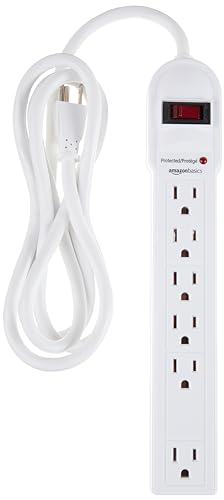
Amazon Basics Surge Protector 6-Outlet 790 Joules
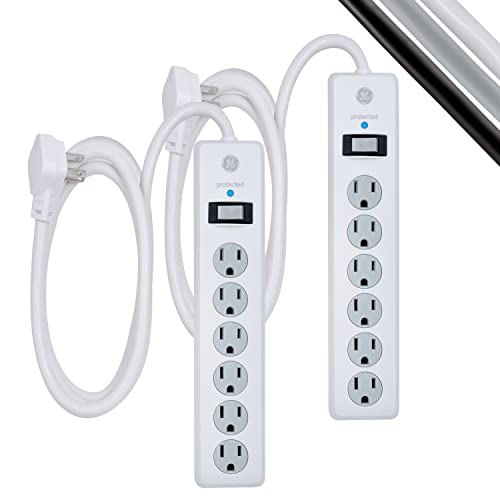
GE Surge Protector Power Strip 2 Pack 6 Ft
Taking A Closer Look At The Options
Countertop microwaves tend to share an outlet with a fridge, toaster, or coffee maker, and shared circuits are exactly where voltage dips show up first. The BSEED Electronic Surge Protector watches the line for those dips and outright spikes, then cuts power before damage reaches the appliance.
Rated for 120V, 15A, and 1800W, it sits in the same safety range as a typical microwave circuit, so nothing throttles your cooking power. For households on older wiring where lights flicker when the AC kicks on, this kind of brownout watchdog tends to earn its keep quickly.
Points In Its Favor
- Brownout detection, not just surge clamping, so low-voltage events trigger protection too.
- 1800W rating covers full-size countertop microwaves without strain.
- Single-outlet design plugs straight into the wall, no extra cord clutter.
- ETL listing supports reliable third-party safety testing.
Things To Consider
- The printed text and instructions ship in Spanish, which may frustrate English-first owners.
- One outlet means it cannot back up the toaster and microwave at the same time.
Quick Facts
Who It Suits Best
Homeowners with a dedicated microwave outlet on a shared kitchen circuit who want brownout coverage along with surge clamping.
Where Another Pick Suits Better
Shoppers who need to protect a cluster of small appliances on one strip will get more flexibility from the BSEED Surge Protector Power Strip for Home Appliance.
When the microwave, coffee maker, and toaster all share one counter outlet, a single-outlet protector leaves two of them exposed. BSEED’s three-outlet strip moves that same brownout and surge logic onto a strip, watching the line while powering multiple appliances at once.
At 1875W and 15A on a 120V circuit, the strip tolerates the simultaneous draw of a microwave warming leftovers while a kettle boils. LED indicators telegraph normal, high, low, and delay states at a glance, which helps when the power blip just happened and you want to know what the strip is doing about it.
Everyday Perks
- Three protected outlets let a microwave share space with smaller appliances safely.
- LED indicators report normal, overvoltage, undervoltage, and delay status visibly.
- Brownout protection stops low-voltage events that plain surge strips ignore.
- 1875W capacity covers combined kitchen loads within reason.
Worth Noting
- Three outlets fill up quickly in busy kitchens, and there are no wider transformer slots.
- The corded design adds another cable to route behind the microwave.
Made For
Small kitchens where the microwave shares a wall outlet with two other low-draw countertop appliances.
Consider Something Else When
Anyone wanting USB charging on the same strip should look at the TESSAN Surge Protector Power Strip, which adds USB-A and USB-C ports alongside its AC outlets.
Most kitchen surge protectors work in joules so small that owners never think about them. The NANOLAKE strip pushes that number to 4800 joules, which is the kind of headroom you see on workstation or shop setups rather than a coffee counter.
The 18 widely spaced AC outlets plus a 10-foot cord make this strip more at home behind a desk, a workbench, or a home-office tower than tucked behind a microwave. Still, in a kitchen that doubles as a charging hub or has a microwave sharing an island with a blender, toaster oven, and phone chargers, the extra capacity prevents nuisance trips during a stacked draw.
The Case For It
- 4800-joule rating absorbs larger spikes than typical kitchen strips.
- 18 AC outlets plus USB-A and USB-C PD20W ports cover mixed device loads.
- Mountable housing with a 10-foot cord reaches distant outlets cleanly.
- Real-time grounded and protected LED indicators confirm shielding at a glance.
Honest Caveats
- Its size and outlet count overshoot what a single microwave needs.
- The flat plug helps, but the long cord still demands cable management behind the counter.
Key Specs
Best Suited To
Hybrid kitchen-office or workshop spaces where the microwave shares a strip with computers, monitors, and power tools on the same outlet.
A Better Fit Elsewhere
Pure kitchen-only owners will find the KeBen Heavy Duty Surge Protector easier to live with day to day, given its smaller footprint.
The KeBen strip brings something rare to a kitchen strip: a physical switch for every single outlet. That means the microwave, kettle, and toaster can each be powered down individually without yanking cords behind the cabinet.
With 1200 joules of surge protection and a 1875W maximum load on a 6-foot cord, it reads more like a controlled power station than a basic power strip. Widely spaced outlets leave room for chunky plugs, which matters once a microwave adapter and a smart plug both want a seat at the same strip.
Good Reasons To Consider
- Individual switches cut standby draw on idle appliances.
- 1200-joule surge rating handles typical residential spikes comfortably.
- Six outlets spaced wide enough for bulky adapters.
- 1875W capacity suits combined countertop loads.
Some Limits To Know
- 1200 joules is solid but lower than the NANOLAKE strip’s 4800-joule rating.
- Six-foot reach may fall short when the kitchen outlet sits across the room.
Perfect Match For
Kitchen counters where owners want granular control over which small appliances stay powered through the day.
Look Elsewhere When
Shoppers needing USB-C charging without separate bricks should consider the TROND Power Strip Surge Protector, which bundles USB ports into the wall-mount form factor.
Microwaves tend to live in the tightest outlet on the counter, the one tucked behind a cabinet, a fridge, or a baseboard. TESSAN’s flat plug solves that geometry problem by sitting almost flush against the wall, which leaves the strip itself free to live where the cord naturally wants to go.
Six AC outlets, two USB-A ports, and two USB-C ports on a 5-foot cord deliver a 10-device charging hub without dominating the backsplash. The USB-C PD 20W port in particular handles phone fast-charging while the microwave heats lunch.
Well-Handled Touches
- Flat plug slides behind tight furniture without bending the cord.
- USB-C PD 20W supports fast charging for phones and tablets.
- Six AC outlets fit standard plugs comfortably in most layouts.
- Black housing blends into kitchen appliances without drawing attention.
Where It May Fall Short
- 5-foot cord can feel short when the nearest outlet is across a galley kitchen.
- No brownout protection, so dips still reach connected appliances.
Whose Shelf It Belongs On
Renters and apartment dwellers who fight for every centimeter behind the microwave and want USB charging on the same strip.
Skip It When
Anyone with a known brownout problem on their kitchen circuit should reach for the BSEED Electronic Surge Protector instead, which is built specifically for low-voltage events.
Counters get crowded fast, so a strip that hangs on the wall or hides behind a cabinet changes the whole equation. TROND’s wall-mount strip mounts flat against a surface and stays out of the way while still serving a microwave, phone, and tablet at once.
Five AC outlets join two USB-A and two USB-C ports to deliver nine charging points from a single wall plate. The 1875W maximum on a 15A circuit lines up with typical kitchen electrical limits, and the ETL listing adds a third-party safety check behind the spec sheet.
Notable Upsides
- Wall-mount design frees counter space behind the microwave.
- USB-A and USB-C ports remove the need for separate charging bricks.
- 1875W capacity on a 15A circuit aligns with standard kitchen wiring.
- ETL listing supports third-party safety verification.
Potential Drawbacks
- Mounting requires drilling or adhesive, which renters may not want to commit to.
- Five AC outlets fill quickly when a microwave and four other plugs want in.
Feature Snapshot
Who Should Grab It
Apartment dwellers and small-kitchen owners who prefer their surge protection mounted to the wall rather than draped across the counter.
Reach For A Different Pick When
Owners who want a freestanding design with per-outlet switches will appreciate the KeBen Heavy Duty Surge Protector instead.
Built-in microwaves and over-the-range units pull their plug directly from a wall box, often the only outlet behind the trim. BSEED’s single-outlet protector drops in line between that outlet and the microwave cord with no extra footprint and no strip to hide.
It carries the same brownout-plus-surge logic as the brand’s larger units, rated for 1875W with 15A handling at 125V. The 1440W figure refers to its recommended appliance load, which still covers most residential microwaves including mid-size over-the-range models.
The Practical Payoff
- Single-outlet form factor fits tight built-in microwave cavities.
- Brownout detection guards against low-voltage events on shared circuits.
- 1875W total capacity handles typical microwave startup surges.
- Compact shell keeps installation behind trim simple.
Small Caveats
- Only protects one appliance, so the fridge on the same circuit stays exposed.
- Owners may want to confirm local code allows in-line protectors behind built-in units.
Built With In Mind
Owners of built-in or over-the-range microwaves with a single accessible outlet and no room for a strip.
Swap It Out When
Anyone wanting to protect both the microwave and a nearby small appliance should consider the BSEED Surge Protector Power Strip for Home Appliance instead.
Not every kitchen needs a brownout watchdog or a 4800-joule workhorse. Amazon Basics ships a straightforward six-outlet strip with 790 joules of surge absorption, a 15A circuit breaker, and an LED indicator that confirms shielding at a glance.
The white housing and 6-foot cord blend into most kitchen backsplashes, and the single transformer outlet accommodates one bulky plug without blocking the rest. For homes where the grid stays steady and the microwave just needs basic spike protection, this is the kind of no-drama option that quietly does its job.
Benefits That Matter
- Six outlets cover a microwave plus phones, lamps, or a small appliance.
- 790-joule rating suits homes with stable utility power.
- Red LED confirms active surge protection visibly.
- 15A circuit breaker adds a hard cutoff on overload.
Points To Keep In Mind
- 790 joules runs lighter than the NANOLAKE or KeBen options on this list.
- No brownout detection, so voltage dips still reach connected appliances.
Technical Highlights
The Right Fit
Everyday kitchens on stable utility power where the microwave simply needs basic spike protection without the brownout complexity.
Where Another Pick Suits Better
Anyone who lives in a region with frequent voltage dips should upgrade to the BSEED Electronic Surge Protector for more thorough protection.
Kitchens with the microwave on one counter and a coffee station on the other tend to need protection in two places, not one. GE’s two-pack turns that into a single decision rather than two separate purchases.
Each strip carries six grounded outlets on a 6-foot cord, which works for most kitchen layouts out of the box. The two-pack format suits anyone outfitting a garage workshop, a home office, or a kitchen-plus-pantry combination in one trip.
What Makes Sense
- Two strips let owners protect the microwave and a second zone together.
- Six grounded outlets per strip handle typical mixed appliance loads.
- 6-foot cords reach most standard outlets without extra extension chains.
- GE branding brings a recognizable, broadly distributed safety track record.
Factors To Consider
- Buying two strips when one suffices can leave the second one unused in a small kitchen.
- No listed joule rating in the available data, so headroom for severe events is harder to gauge.
Who Will Love This
Multi-zone kitchens, garage workshops, and home offices that want consistent surge protection in two locations at once.
Consider Something Else When
Single-room owners will find the Amazon Basics Surge Protector 6-Outlet a tighter fit, since they only need one strip.
What To Weigh Before Picking A Surge Protector For Your Microwave
A surge protector’s joule rating measures how much energy it can absorb before it fails. Higher numbers mean longer service life under repeated small spikes, and better tolerance for rare big ones. For a microwave that draws 600 to 1200 watts at peak, a 790-joule strip handles routine events, while 1200 joules or more gives meaningful headroom in storm-prone regions.
Brownout protection is a separate feature from surge clamping. Surge protectors react to sudden overvoltage, while brownout protectors disconnect the appliance when voltage drops below safe levels. Both phenomena damage microwave control boards, so a unit that handles both gives a more complete defense on shared kitchen circuits.
Form factor matters more than it sounds. A single-outlet plug-in unit disappears behind the microwave, while a wall-mount strip changes how the counter looks entirely. Flat plugs solve tight-furniture clearance problems that standard plugs cannot. Choose the physical shape first, then match the joule and brownout features to your local grid behavior.
UL and ETL listings mean a third-party lab tested the unit against a published safety standard. Either listing is widely accepted in residential electrical work. Unlisted units may save a little upfront but leave the homeowner with no independent verification that the protection circuitry actually performs as claimed.
Key Considerations Across These Picks
Where Shoppers Go Wrong
Many households buy the cheapest strip on the shelf and call it done, only to discover it offers no brownout protection at all. A microwave on a shared circuit can experience voltage dips that surge-only strips ignore entirely. Confirm the unit handles both spike and dip conditions before committing.
When Paying More Pays Off
Higher joule ratings and individual outlet switches both add real cost but extend the practical life of the protector. In regions with frequent summer storms or older neighborhood grids, a 1200-joule or higher strip absorbs more events before it wears out, which means fewer replacements over the lifetime of the microwave itself.
Frequently Asked Questions
Do microwaves really need surge protection?
Microwaves contain sensitive control boards and a magnetron that a single voltage spike can damage permanently. Most owners only learn this after the display goes dark or the unit stops heating. A surge protector in line costs far less than a replacement microwave.
Can a power strip handle a microwave’s startup draw?
A microwave typically draws 600 to 1200 watts at peak, well within the 1800 to 1875 watt rating of standard kitchen surge strips. As long as the strip is rated for 15 amps at 120 volts, startup surge is comfortably covered.
What is the difference between joules and watts?
Joules measure how much surge energy the protector can absorb over its lifetime, while watts measure how much continuous power the strip can pass to connected appliances. A strip needs both a high-enough joule rating and a high-enough watt rating to handle a microwave safely.
Where should the surge protector be placed?
Place it directly between the wall outlet and the microwave cord. For built-in or over-the-range units, a single-outlet protector sits behind the trim. For countertop models, a strip with the microwave on its own outlet keeps the cord path clean.
How long do surge protectors actually last?
Most protectors silently wear out after absorbing their rated joules. Owners commonly replace them every three to five years in storm-prone areas, or sooner after a known major electrical event. Indicators on premium models signal when replacement is due.
Closing Thoughts
The right surge protector for a microwave depends less on brand and more on the kitchen’s outlet layout and the local grid’s behavior. Match the form factor to the space behind the counter, pick a joule rating that suits regional storm activity, and choose brownout coverage if the microwave shares a circuit with a fridge or air conditioner. Done thoughtfully, the protector becomes a small piece of insurance that quietly outlasts the appliance it guards.
