

Ice dams, frozen gutters, and split pipes are the kind of winter damage nobody wants to talk about until February hits. A good roof heat cable setup stops meltwater from pooling behind ice and refreezing along the eaves, which protects shingles, fascia, and the plumbing that runs through exterior walls. I put together this roundup to help homeowners, RV owners, and weekend DIYers find a cable that matches their climate, roof shape, and skill level, without overspending on features they will never use.
The Lineup, Simplified
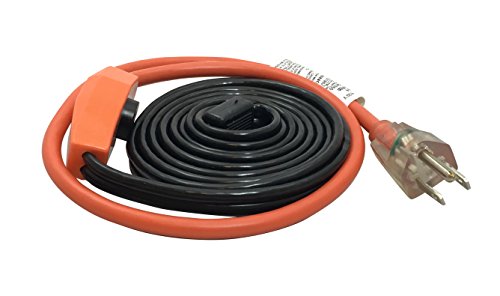
Frost King HC6A Automatic Electric Heat Kit Heating Cables 6 Feet

SZFY 15FT Heated Water Hose for RV
SZFY 75FT Heated Water Hose for RV

Eastrexon 152FT Heat Tape for Roof and Gutters
SZFY 25FT Heated Water Hose for RV

Eastrexon 50FT Roof Snow De-Icing Kit

Eastrexon 100FT Heat Tape for Roof and Gutters

YeloDeer 25 FT Self Regulating Roof Gutter Heating Cable

Radiant Solutions Intelligent Heat Tape with GlowCap 30 Ft
SZFY 50FT Heated Water Hose for RV
What Each Pick Brings To The Table
Short pipe runs under sinks, along exterior hose bibs, and inside unheated crawlspaces are where a compact 6-foot cable earns its keep. The Frost King HC6A uses a built-in thermostat that kicks on automatically when temperatures approach freezing, so you do not have to remember to plug and unplug it through shoulder season. It is rated for both metal and plastic water lines, which makes it a flexible option for older homes that may mix copper, PVC, or PEX in the same wall cavity.
Most owners run a single HC6A along a 3 to 5-foot stretch of pipe and tape it down with the included adhesive or foil tape. You get automatic on-off behavior at freezing temps, broad compatibility with metal and plastic lines, and a compact 6-foot reach that fits tight spots. For most homeowners this is enough to protect the one or two vulnerable pipe segments that caused last winter’s headache.
The Good Stuff
- Built-in thermostat cycles the cable on and off automatically near freezing
- Works with copper, steel, PVC, ABS, and PEX pipe
- Six-foot length slips into cabinets and crawlspaces without excess slack
- 120V operation plugs into a standard GFCI outlet
Things To Consider
- Six feet only covers a single short pipe segment, so larger runs need multiple cables
- Not designed for outdoor roof or gutter mounting
Who It Suits Best
Homeowners with one or two vulnerable exposed pipes in a basement, crawlspace, or exterior wall who want a plug-and-forget fix.
Where Another Pick Suits Better
Anyone needing to protect an entire gutter line should look at the YeloDeer 25 FT Self Regulating Roof Gutter Heating Cable Kit instead.
For RVers who only need a short hose between the campground spigot and the camper inlet, the 15-foot SZFY heated hose is the lightest, most packable option on this list. The inner drinking-water line uses food-grade contact material, which matters when you are filling a kettle or brushing teeth on the road. The heating element runs the full length and is designed to keep water flowing in deep cold, which makes winter camping and shoulder-season travel a lot less stressful.
At 15 feet, this hose is best for tight campsites where the water hookup sits just a few feet from the RV inlet. You get a food-grade drinking-water liner safe for kitchen use, a self-regulating heating element, and a compact 15-foot length ideal for short RV hookups. Depending on your campsite layout, this may be all the hose you need to stay thawed from October through March.
Well-Handled Touches
- Food-grade inner liner keeps tap water safe for drinking and cooking
- Rated to keep water flowing in extreme cold conditions
- Self-regulating heating adjusts output based on surrounding temperature
- Short 15-foot length coils small for under-bed storage
Trade Offs
- Too short for larger motorhomes or pull-through sites with distant spigots
- Heavier than a standard garden hose, so lifting into a storage bay takes effort
Right Fit For
Small camper owners and van lifers with short hose runs who want safe drinking water on cold nights.
Consider Something Else When
Full-size motorhome owners needing more reach should consider the SZFY 50FT Heated Water Hose for RV instead.
A 75-foot heated hose is overkill for some RVers and exactly right for others. Big Class A motorhomes, fifth wheels parked at the back of long driveways, and remote cabin setups where the spigot sits well away from the structure all benefit from serious reach. The SZFY 75FT uses the same food-grade inner liner as the shorter models, so drinking water stays safe even on multi-week winter trips.
For most large RVs, the 75-foot length removes the headache of splicing two shorter hoses together, which can introduce leak points and uneven heating. You get a generous 75-foot reach for distant hookups, food-grade drinking-water contact material, and a self-regulating heating element that keeps water flow consistent in deep cold. Heavy-duty does come with weight, so plan for a sturdy storage reel.
Useful Highlights
- Seventy-five feet reaches distant spigots without splicing
- Food-grade contact liner keeps potable water safe
- Built for cold-weather RV and cabin use
- Self-regulating cable reduces energy waste during milder spells
Minor Gripes
- Weight and stiffness make handling and storage a two-person job
- Overkill for short or standard campsites where the 25-foot model would do
Built With In Mind
Full-time RVers, big rig owners, and remote cabin dwellers who need maximum reach and safe drinking water.
Not Your Match When
Anyone camping close to the spigot should consider the lighter SZFY 25FT Heated Water Hose for RV instead.
Long rooflines with multiple downspouts are where most standard kits come up short, which is why a 152-foot cable earns the top slot for serious ice dam country. The Eastrexon 152FT is built around a self-regulating heating matrix that adjusts output based on ambient temperature, so it ramps up during a cold snap and idles down on a sunny January afternoon. Overlap-safe construction matters more than people realize, because the zigzag pattern most installers use along a gutter inevitably creates crossover points.
Compared to the YeloDeer 25 FT Self Regulating Roof Gutter Heating Cable Kit I cover later, this one trades short-run simplicity for whole-roof coverage in a single pull. You get a 152-foot self-regulating cable that handles overlap safely, a 9.8-foot power cord for flexible outlet placement, and broad compatibility with noncombustible shingles plus metal or plastic gutters. In deep-freeze climates, that extra length is often the difference between a clear gutter and a January ice dam.
A Few Strong Suits
- Self-regulating design cuts energy use during milder weather
- Overlap-safe construction lets installers zigzag without burnout risk
- Works with noncombustible shingles, metal, and plastic gutter systems
- Long 9.8-foot power cord reaches distant outdoor outlets
Honest Caveats
- Requires careful planning to route 152 feet cleanly along complex rooflines
- Total wattage draw at full output is significant, so a dedicated circuit is wise
Feature Snapshot
Made For
Homeowners in heavy snow regions with long rooflines and multiple downspouts who want a single-pull installation.
Look Elsewhere When
Those with a small roof section may prefer the YeloDeer 25 FT Self Regulating Roof Gutter Heating Cable Kit.
The 25-foot SZFY heated hose hits the sweet spot for the majority of RVers. Most campsites place the water spigot somewhere between 15 and 30 feet from the camper inlet, and a 25-foot hose covers that range without excess coil weight. The food-grade inner liner is identical to the longer SZFY options, so cold-weather campers can still drink, cook, and clean with confidence even when overnight temperatures plunge well below zero.
This hose makes more sense than the 75-foot heavy duty pick for travelers who bounce between sites. You get a 25-foot length suited to most campsites, food-grade drinking-water contact material, and a cold-rated heating element. For most RV owners this is the right balance of reach, weight, and storage space.
Positive Takeaways
- 25-foot length fits the majority of standard campsites
- Food-grade liner keeps drinking water safe for everyday use
- Self-regulating element reduces unnecessary power draw
- Lighter than the 50-foot or 75-foot SZFY options
Points To Note
- May fall short on pull-through sites where the spigot sits unusually far away
- Like most heated hoses, it is bulkier than a standard garden hose when coiled
Best Suited To
Average RV owners who want a single heated hose for most campsites without hauling extra length.
A Better Fit Elsewhere
Anyone who camps far from the spigot will find the SZFY 75FT Heated Water Hose for RV more practical.
Mid-size rooflines with a single problematic stretch of gutter or one trouble spot above a north-facing eave are exactly where a 50-foot kit hits the mark. The Eastrexon 50FT Roof Snow De-Icing Kit ships with 20 mounting clips that hold the cable in a serpentine pattern along shingles and inside the gutter trough. The LED plug is a small but useful touch that confirms at a glance the cable is still drawing power through a cold snap.
Compared to the 100-foot Eastrexon covered next, this kit trades raw reach for a tighter footprint and a smaller amp draw. You get a 50-foot self-regulating cable, an LED plug for status confirmation, and 20 included clips for shingle and gutter mounting. For most mid-size homes, this is enough cable to handle the most ice-prone section without excess energy use.
Points In Its Favor
- LED plug gives instant visual confirmation that the cable is energized
- Self-regulating design adjusts output based on temperature swings
- Twenty included clips simplify the shingle and gutter install
- Compatible with metal, plastic, and shingle roof systems
Room For Improvement
- 50 feet only covers one section, so larger perimeters need the 100-foot or 152-foot versions
- Routing around corners and downspouts takes planning to avoid cold spots
Quick Facts
Whose Shelf It Belongs On
Homeowners with one trouble spot on a mid-size roofline who want a clip-and-go install with status feedback.
Swap It Out When
Anyone protecting a full perimeter should look at the Eastrexon 100FT Heat Tape for Roof and Gutters instead.
Whole-perimeter homes with two or three downspouts and a long front eave need a serious cable, and the 100-foot Eastrexon is the practical middle ground. The kit ships with 45 clips and spacers, which is enough hardware to handle the zigzag pattern installers typically run along a shingle edge and into each gutter trough. The self-regulating element cuts energy waste during warmer spells, so you can leave the cable plugged in across the entire winter without watching the meter spin.
For homes where 50 feet feels tight and 152 feels like overkill, the 100-foot option lands in a useful sweet spot. You get a self-regulating cable, 45 clips and spacers for a tidy install, and an LED plug for quick status checks. The catch is the higher amp draw on a standard 15-amp circuit, which matters in older homes with shared outdoor outlets.
Key Advantages
- 100-foot length handles most full-perimeter residential installs
- Self-regulating element moderates output as temperatures shift
- 45 included clips and spacers support a clean serpentine pattern
- LED plug offers at-a-glance operating status
Points To Keep In Mind
- Higher total wattage may need a dedicated GFCI circuit in older homes
- Larger box and more clips mean more time on the ladder during install
The Numbers That Matter
Perfect Match For
Owners of mid-to-large homes with multiple downspouts who want a single-kit install with plenty of mounting hardware.
Reach For A Different Pick When
Those with very long or unusually complex roof edges should consider the Eastrexon 152FT Heat Tape for Roof and Gutters.
Small roof sections, single downspouts, and targeted trouble spots are where a 25-foot self-regulating cable makes the most sense. The YeloDeer 25 FT kit is designed to prevent ice dams from forming along a short stretch of eave or inside one stubborn gutter run, which is often all a smaller home actually needs. The self-regulating matrix is the headline feature, because it ramps output up during deep cold and dials back when temperatures recover, all without a separate thermostat.
For homeowners who only need to protect one specific zone, this kit is a more focused alternative to the longer Eastrexon options covered earlier. You get a 25-foot self-regulating cable tuned for ice dam prevention, broad compatibility with shingle and metal roofs, and an install that most DIYers finish in under an hour. You may find the 25-foot length limiting on larger homes, but for a single trouble spot it is genuinely enough.
Useful Touches
- Self-regulating design requires no external thermostat
- Targets ice dam formation along vulnerable eaves
- Compatible with shingle, metal, and standard gutter systems
- Compact 25-foot length suits single-zone protection
Softer Spots
- Twenty-five feet covers only one stretch, so larger perimeters need additional cable
- Mounting hardware is often sold separately for a fully finished install
Who Should Grab It
DIYers with one specific ice-prone eave or downspout who want a focused, no-thermostat install.
Where A Sibling Pick Shines
Homeowners protecting an entire roof perimeter should consider the Eastrexon 100FT Heat Tape for Roof and Gutters.
For homeowners who want pipe protection that runs only when conditions actually require it, the Radiant Solutions Intelligent Heat Tape with GlowCap is the smartest option on this list. The integrated GlowCap thermostat sits exposed to ambient air and only energizes the cable when temperatures drop below 37 degrees F, so you are not paying to heat pipes during a mild week. The 30-foot length suits a longer exposed run under a manufactured home, inside a basement chase, or along an unheated garage.
Where this cable pulls ahead of the Frost King HC6A is in the GlowCap indicator and the broader pipe compatibility. You get a 30-foot self-regulating cable, a built-in GlowCap thermostat that activates only below 37 degrees F, and compatibility with copper, steel, PVC, ABS, and PEX pipe. The catch, which matters in some climates, is that the cable will not work at all unless the integrated thermostat is exposed to genuinely cold ambient air.
Notable Gains
- Built-in GlowCap thermostat saves energy by activating only below 37 degrees F
- Self-regulating element adjusts output based on local conditions
- Works with copper, steel, PVC, ABS, and PEX pipe
- Thirty-foot length suits longer exposed pipe runs
Areas To Watch
- Designed for indoor pipe runs, not for outdoor roof or gutter installation
- Thermostat must stay exposed to ambient air, which limits install locations
Feature Card
Made For
Tech-comfortable homeowners who want thermostat-controlled pipe protection that pays attention to actual temperature swings.
Skip It When
Anyone needing outdoor roof or gutter protection should consider the Eastrexon 50FT Roof Snow De-Icing Kit instead.
The 50-foot SZFY heated hose fills the gap between the everyday 25-foot model and the heavy duty 75-foot option. For RVers who occasionally end up at longer pull-through sites or camp at private properties with distant spigots, 50 feet is a useful middle length that still coils into a reasonable storage bay. The food-grade inner liner carries over from the rest of the SZFY line, so cold-weather campers do not have to compromise on drinking-water safety.
This hose pairs naturally with mid-size travel trailers and Class C motorhomes that fall between the most common campsite layouts. You get a 50-foot length that handles most non-standard sites, food-grade drinking-water contact material, and a self-regulating element designed for deep-cold operation. Compared to the 25-foot pick, you trade a bit of weight and storage space for meaningful extra reach.
Why It Works Well
- 50-foot length covers most pull-through and private-site hookups
- Food-grade liner keeps drinking water safe in winter
- Self-regulating heating adjusts to actual conditions
- Useful middle step between the 25-foot and 75-foot options
Worth Bearing In Mind
- Heavier than the 25-foot SZFY option when carried by hand
- More bulk to drain and store before travel days
The Right Fit
Travel trailer and Class C owners who want reach without committing to the heaviest 75-foot hose in the line.
Another Choice May Suit
Anyone camping mostly at compact standard sites will find the lighter SZFY 25FT Heated Water Hose for RV easier to handle.
Smart Considerations Before Choosing Roof Heat Cables
Cable Length And Roof Geometry
Measure the roof edge you actually want to protect, then add slack for the zigzag pattern and the downspout drop. Most installers run cable along the first three feet of shingle above the gutter, which is where ice dams form first. Underestimating length forces a mid-project trip back to the store, so a longer cable on hand is rarely wasted.
Self-Regulating Versus Fixed Wattage
Self-regulating cables adjust their heat output based on the temperature around them, which keeps energy use proportional to actual conditions. Fixed-wattage cables run at the same rate whenever they are plugged in, which can mean wasted electricity during a warm spell. For most homeowners, self-regulating is the smarter long-term play, especially on longer roof runs.
Pipe Compatibility And Power Access
Indoor pipe cables need to match the plumbing material, which often means PEX, copper, or PVC all in the same wall. Outdoor roof and gutter cables need a GFCI-protected outdoor outlet within reach of the power cord, and longer runs may require a dedicated circuit to avoid tripping breakers during cold snaps.
Installation And Maintenance Realities
Gutter cables are usually a one-person job with a sturdy ladder, but routing around corners and into downspouts takes patience. Pipe cables need to be wrapped or run straight along the pipe and secured with fiberglass or foil tape. Each fall, a quick visual check for frayed sections, loose clips, and chewed insulation pays for itself before the first hard freeze.
Key Considerations Across These Picks
Common Shopping Slip Ups
The most frequent mistake is underestimating cable length, which leaves a vulnerable stretch of gutter unprotected. Another common trap is buying an outdoor roof cable for indoor pipe work, or vice versa, where the jacket and thermostat ratings do not match the environment. Some shoppers also forget to confirm the presence of a GFCI outlet within reach of the power cord, only to discover the limitation mid-install.
What The Higher Tier Buys
Premium roof heat cables add longer self-regulating runs, broader roof compatibility, and included mounting hardware that cheaper kits often skip. The Radiant Solutions Intelligent Heat Tape with GlowCap earns its tier with a true thermostat that idles the cable above 37 degrees F, which can noticeably lower winter energy use. For larger homes or harsher climates, that extra cost often pays back through fewer service calls and lower monthly draw.
Frequently Asked Questions
How long should a roof heat cable run?
Measure the length of the roof edge you want to protect, add a few extra feet for each downspout drop, and then account for the zigzag pattern along the shingles. Most residential installs use between 50 and 150 feet, depending on the size of the home.
Can I leave roof heat cables plugged in all winter?
Most self-regulating cables are designed for continuous cold-weather operation, but it is still smart to unplug them during extended warm spells to save energy. A quick visual check each fall helps catch any damaged sections before the first freeze.
Will a heat cable prevent ice dams completely?
A properly sized and routed heat cable significantly reduces ice dam formation along the eaves, but it works best alongside good attic insulation and ventilation. Without those, heat escaping from the living space still melts snow on the upper roof, which then refreezes at the colder eave.
Are heated hoses safe for drinking water?
The SZFY heated hoses in this roundup use food-grade contact material inside the water line, which keeps the water safe for drinking, cooking, and brushing teeth. Standard garden hoses, even when heated, are not generally rated for drinking water contact.
Do heat cables use a lot of electricity?
A typical 100-foot self-regulating cable at 8 watts per foot draws around 800 watts at full output, but it rarely runs at full capacity in real conditions. Most homeowners see only modest increases in monthly energy use during active cold stretches, especially compared with the cost of repairing a burst pipe or damaged roof.
Closing Thoughts
Pick the cable that matches the specific zone you need to protect, whether that is a single frozen pipe or a long stretch of gutter. Self-regulating models with included mounting hardware tend to be the easiest installs for first-timers, while longer whole-perimeter kits reward careful planning. Match the right length to your roof, confirm a GFCI outlet is within reach, and a winter-ready setup pays for itself the first time the temperature drops.
