

Living in an RV means your battery quietly runs the show, from morning coffee to late-night lights. Lithium iron phosphate (LiFePO4) has become the go-to chemistry for serious road warriors, replacing heavy lead-acid banks with lighter, longer-lasting power. The ten picks below cover different rigs, climates, and energy appetites, so you can match capacity and form factor to the way you actually travel.
The Shortlist At A Glance

VATRER POWER 12.8V 460Ah Self-Heating LiFePO4 RV Battery

12V 300AH Deep Cycle LiFePO4 Lithium Battery (Self-Heating & APP Monitoring)
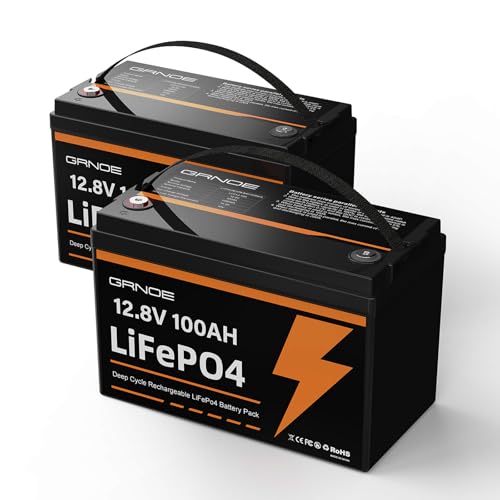
GRNOE 12V 100Ah LiFePO4 Battery Group 31 (2 Pack)

MARSENERGY 12V 100Ah Lifepo4 Battery Group 24
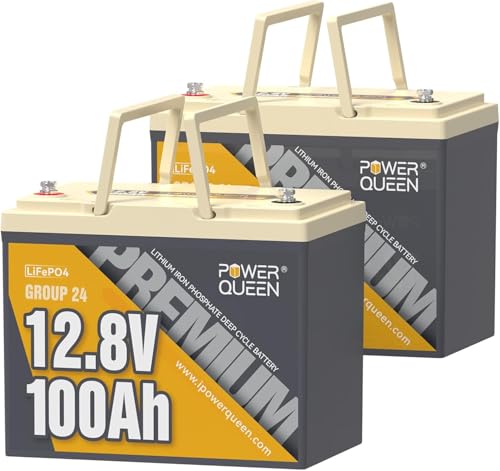
Power Queen 2PACK 12V 100Ah LiFePO4 Battery Group 24

Power Queen 12V 100Ah Trolling Motor LiFePO4 Battery

Power Queen 12V 100Ah LiFePO4 Battery Group 31

Power Queen 12V 100Ah LiFePO4 Battery Group 24
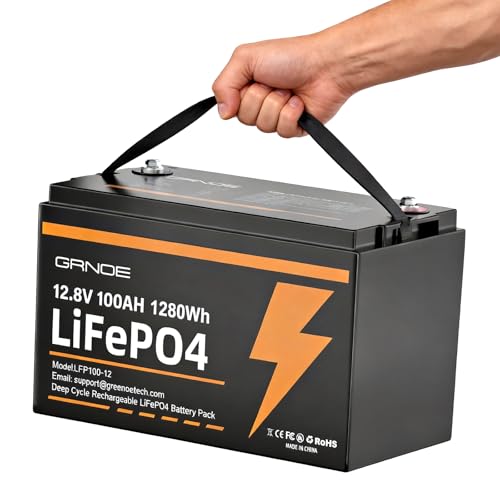
GRNOE 12V 100Ah LiFePO4 Battery Group 31

GRNOE 12V 300Ah LiFePO4 Battery 200A BMS
The Strengths Of Each Pick
For travelers who treat their RV like a small apartment, a 460Ah bank changes the math on what you can run. Compared to the smaller 100Ah options later in this list, this VATRER POWER pack delivers roughly four times the capacity in a single chassis, meaning fewer parallel connections to wire and monitor.
The built-in self-heating layer is the headline feature, since charging LiFePO4 in freezing conditions is the one thing that chemistry refuses to do safely. Full-time off-grid families who camp shoulder-season will care about this most, while weekend fair-weather travelers may never need it.
A Few Strong Suits
- Automatic heating activates around -4°F when a charger is connected, then stops once the cells warm up
- Single-box 460Ah capacity cuts down on cable clutter and parallel-balancing headaches
- App monitoring (Bluetooth) lets you check state of charge without climbing into the compartment
- Designed for serious house loads like induction cooking, residential fridges, and inverter-driven AC
Points To Keep In Mind
- The physical size and weight demand a sturdy battery tray and possibly two people for installation
- Because it ships as a hazardous-materials item, the retailer flags it as non-returnable, so double-check dimensions before buying
Feature Card
Best Suited To
Full-time RVers running inverter loads in cold climates who want one large battery instead of a parallel array.
Consider Something Else When
Weekend campers with small loads will do better with the Power Queen 12V 100Ah LiFePO4 Battery Group 24, which is far easier to lift and install.
Mid-size rigs that want more capacity than a single 100Ah but do not need the 460Ah giant get a useful middle ground here. The Bluetooth app is genuinely handy for diagnosing phantom loads, especially if your fuse box is tucked behind a panel.
Self-heating kicks in once the charger pushes more than 10A and the cells drop below freezing, which matters most for shoulder-season travelers in mountain or northern climates. Mild-weather full-timers may find this feature unused.
A Favorable Mix
- 300Ah hits a sweet balance for couples running a 2000W inverter
- Heating film draws from incoming charging current, so no separate heater power supply is needed
- App-based monitoring helps catch parasitic drains before they ruin a trip
- Lower cost per amp-hour than the larger 460Ah pack
Honest Caveats
- Still a heavy single unit, so plan for a helper during install
- The self-heating only triggers above 10A incoming, which some low-output solar controllers may not provide in weak winter sun
Made For
Tech-curious RV owners in cold regions who want app visibility and a meaningful capacity bump over a 100Ah starter battery.
Skip It When
Compact trailer owners should reach for the MARSENERGY 12V 100Ah Lifepo4 Battery Group 24, which fits tighter battery boxes without the heavy capacity.
The two-pack format is what makes this GRNOE listing interesting. Rather than locking you into one big unit, it lets you start with 200Ah and grow into a 4P4S configuration that scales to 51.2V and a substantial 20.48kWh ceiling, which is essentially a tiny off-grid power station.
Group 31 footprint is the most common RV battery box size in towable rigs, so drop-in installation is usually painless. For van builders, the lighter pair versus a single 460Ah slab is a real back-saver during layout work.
Useful Highlights
- Scales from a basic 2-pack up to a 16-battery 4P4S array for serious solar homes
- Each battery includes a 100A BMS for thermal and over-current protection
- Group 31 form factor fits the majority of standard RV battery trays
- Lithium weight stays manageable compared to equivalent lead-acid banks
Small Caveats
- Multi-pack shipments arrive in separate boxes on different trucks, so build time into your install schedule
- Series connections demand matched batteries and careful voltage balancing, which is fiddly for first-time installers
Quick Facts
Who Will Love This
DIY solar enthusiasts who plan to grow their bank over time and want a clean upgrade path without buying a whole new system later.
Where Another Pick Suits Better
Anyone replacing a single dead battery today should grab the Power Queen 12V 100Ah LiFePO4 Battery Group 24 instead, since a 1-for-1 swap is faster than wiring two units.
Older RVs and many travel trailers were designed around Group 24 batteries, which is exactly what this MARSENERGY pack mimics. If your existing hold-downs and trays are sized for Group 24, the swap should feel like a bolt-in upgrade rather than a fabrication project.
The 100A BMS handles most RV inverter loads up to moderate microwave use, though heavier induction cooking will push it closer to its ceiling. Most weekenders will never get near that limit.
What Earns Its Place
- Direct Group 24 form factor for simple swap-in replacement
- 100A BMS protects against common installation mistakes
- Weighs roughly a third of an equivalent lead-acid battery, which helps with tongue weight on trailers
- Lower price point than larger-capacity lithium options
Some Limits To Know
- Single 100Ah limits runtime for high-draw appliances unless paired with another battery
- No Bluetooth monitoring, so voltage checks require a multimeter or shunt
Perfect Match For
Travel trailer owners with a single Group 24 box who want an easy lithium swap without rewiring the compartment.
Look Elsewhere When
If you want matched batteries in one purchase, the Power Queen 2PACK 12V 100Ah LiFePO4 Battery Group 24 is a smarter starting point for parallel setups.
A matched pair of Group 24 batteries takes the guesswork out of pairing. Power Queen builds both units to the same spec so you do not end up with one strong cell and one weaker one dragging down the bank, which is a common rookie mistake with mismatched packs.
At 100Ah each, you get 200Ah total, which comfortably covers a couple’s weekend lights, water pump, fridge, and modest electronics without solar. Bigger families with residential refrigerators will want more.
What Works In Its Favor
- Factory-matched batteries eliminate the voltage-drift headache of random pairings
- Drop-in Group 24 footprint suits the most common RV battery trays
- Lighter than two equivalent AGM batteries, easing tongue weight on trailers
- 1280Wh usable energy per battery at full depth of discharge
Worth Noting
- Two-box shipment can arrive on different days depending on warehouse routing
- No low-temperature charging protection listed, so cold-weather users should verify climate needs
Right Fit For
Couples in trailers and motorhomes who want a clean, matched 200Ah lithium bank without piecing batteries together.
Not Your Match When
Full-time RVers running an induction cooktop should consider the GRNOE 12V 300Ah LiFePO4 Battery 200A BMS, which has the headroom for sustained heavy loads.
Boat-and-RV households that share equipment will appreciate a battery engineered for both worlds. The integrated TVS surge protector helps block voltage spikes from 12V-36V trolling motors, which are notoriously rough on sensitive electronics.
Low-temperature charging protection cuts charging below 32°F, which prevents the kind of damage that ruins lithium cells in unheated boat sheds. For pure RV use, that protection is a nice extra, not a must-have.
Where It Excels
- Surge protection tuned for electric trolling motor spike patterns
- Low-temperature charge cutoff preserves cell health in cold storage
- ABYC E-13 compliance supports marine installation standards
- Same Group 24 footprint works in many RV trays
Factors To Consider
- Discharge cutoff at -4°F means winter RV use in unheated compartments requires a heated box
- Built-in marine focus adds cost if your rig never sees water
Feature Snapshot
Built With In Mind
Split boat-and-RV owners who want one battery that handles both an electric fishing motor and an RV house bank.
A Better Fit Elsewhere
Land-only RVers will do well with the Power Queen 12V 100Ah LiFePO4 Battery Group 24, which skips the marine-rated extras at a friendlier price.
Group 31 sizing matches many larger motorhomes and fifth wheels, so this Power Queen is a drop-in upgrade for stock battery trays that need a little more height room than Group 24 allows. Solar-friendly charging parameters make it a natural partner for rooftop panels.
The 100A BMS handles typical RV inverter loads, though running an air conditioner through a large inverter will need a parallel setup. For most lighting, fridge, and electronics duty, a single unit is plenty.
Practical Advantages
- Group 31 form factor suits larger motorhome trays without modification
- Compatible with solar charge controllers set for LiFePO4 chemistry
- Expandable up to 4P4S configurations for growing solar systems
- Long cycle life under proper depth-of-discharge habits
Room For Improvement
- Single 100Ah is limiting for heavy AC or induction loads
- Group 31 footprint will not fit smaller Group 24 battery boxes
Whose Shelf It Belongs On
Motorhome and fifth-wheel owners running solar who need a slightly larger physical battery than Group 24.
Reach For A Different Pick When
Owners wanting a built-in Bluetooth check should look at the 12V 300AH Deep Cycle LiFePO4 Lithium Battery, which pairs the Group 31 size with app monitoring.
If your existing Group 24 lead-acid battery finally gave up and you want a no-fuss lithium replacement, this single-pack option is the path of least resistance. The footprint matches standard trays, the posts line up with existing cables, and the BMS handles the rest.
At one-third the weight of a comparable AGM battery, you may notice your trailer tongue weight shift on the first drive, which is generally a positive change for stability. Solo installers can usually handle the lift without help.
Where It Delivers
- Direct Group 24 replacement for tired lead-acid batteries
- Solo-friendly weight for one-person swaps
- 1280Wh usable energy at full depth of discharge
- Lower cost entry point for trying lithium for the first time
Trade Offs
- Single battery may leave heavy inverter users wanting a second unit
Who Should Grab It
First-time lithium converters replacing a single dead lead-acid battery in a weekend-travel trailer.
Swap It Out When
Anyone planning to run an inverter-driven AC or large residential fridge should pair this with the Power Queen 2PACK 12V 100Ah LiFePO4 Battery Group 24 instead.
Few batteries on this list pull double duty as comfortably as this GRNOE. The Group 31 size and 22.48 lb weight make it friendly enough for RV use, while the cycle depth tolerance suits home backup or off-grid cabin roles too.
GRNOE’s recommended charging voltage of 14.6V is worth noting, since a generic 12V lead-acid charger will not fully top off these cells. Buyers upgrading from lead-acid should plan to verify their charger compatibility before install.
Strengths Worth Knowing
- Group 31 dimensions fit common RV battery boxes
- 33% of the weight of a comparable lead-acid battery
- Manufacturer-reported 15000-cycle lifespan under proper use
- Versatile enough for marine, RV, or home storage applications
Small Caveats
- Requires a LiFePO4-compatible charger rated for 14.6V output
- Long-term storage needs a top-up every two to three months to stay healthy
The Right Fit
Hybrid-use households that want the same battery to move between an RV, a boat, or a weekend cabin without drama.
Another Choice May Suit
RVers sticking strictly to deep-cycle trailer use will find the MARSENERGY 12V 100Ah Lifepo4 Battery Group 24 just as capable in a smaller box.
The 200A BMS is the headline feature here, since most 100Ah lithium batteries cap out at half that current. That headroom matters if you run an induction cooktop, a microwave, and a coffee maker within the same hour, which is a realistic morning in a full-time rig.
Weighing 56 lb, the unit is lighter than three lead-acid batteries of equivalent output, which simplifies both install and weight distribution. You still want a second person on hand for positioning, though.
Useful Strengths
- 200A continuous discharge supports high-draw inverter loads
- 3840Wh capacity in a single chassis reduces parallel wiring
- Expandable up to 4P4S for larger off-grid solar homes
- Compatible with LiFePO4-specific AC-to-DC chargers and solar controllers
Possible Compromises
- Needs a LiFePO4-rated charger; standard SLA chargers can damage the cells
- Bigger physical footprint than a 100Ah pack, so measure the battery bay first
Who It Suits Best
Power-hungry full-timers running large inverters and induction cooking who want one battery to handle peak surges.
Look Elsewhere When
Light-duty weekend travelers will find the VATRER POWER 12.8V 460Ah Self-Heating LiFePO4 RV Battery oversized, and a smaller 100Ah pack is plenty.
What To Weigh Before Buying An RV Battery
The first decision is battery group size, which is the physical footprint defined by the Battery Council International standards. Group 24, Group 27, and Group 31 are the three most common sizes in RV compartments, and matching your existing tray makes installation dramatically easier.
Capacity in amp-hours tells you how much usable energy is on tap. A 100Ah LiFePO4 battery gives you roughly 1280Wh at full discharge, enough for a weekend of lights and fridge for two people. Full-time RVers running induction cooking or residential fridges usually want 200Ah to 300Ah minimum.
The BMS, or battery management system, is the small circuit board inside the battery that prevents over-charge, over-discharge, and thermal runaway. Look for at least 100A continuous on a 100Ah battery, and 200A if you plan to run a large inverter. Some BMS units also include low-temperature charge cutoff, which is critical if you camp below freezing.
Weight and footprint matter more than most shoppers realize. Lithium cuts lead-acid weight by roughly two-thirds, which improves trailer tongue balance and gas mileage. Self-heating variants add a small premium but pay off for shoulder-season travelers who camp in mountain or northern climates.
Finally, check your charger’s chemistry compatibility. Lead-acid chargers can undercharge LiFePO4 cells, leaving you with reduced capacity and long-term cell damage. A charger rated at 14.6V output for LiFePO4 chemistry keeps the battery topped off and the cells balanced over years of use.
Key Considerations Across These Picks
Where Shoppers Go Wrong
The most common mistake is treating amp-hours as the only number that matters. A battery with a weak BMS can struggle under the surge loads of a microwave or coffee maker, even if the capacity looks generous on paper. Always match the BMS continuous rating to your inverter’s draw.
Another trap is using a leftover lead-acid charger on a new lithium battery. Lead-acid chargers taper voltage differently and can leave LiFePO4 cells sitting at 80% charge, which causes long-term imbalance. A proper LiFePO4-rated charger at 14.6V output is worth the small extra spend.
What Separates Premium From Basic
Higher-tier batteries earn their premium through better BMS components, self-heating films for cold climates, and Bluetooth monitoring that lets you check state of charge from your phone. The heated models like the VATRER POWER 460Ah pay off most for full-time RVers in cold regions, while weekend travelers rarely need that feature.
Longer cycle ratings also matter, though they only pay off after years of regular use. A 5000-cycle battery versus a 1500-cycle battery delivers the same daily experience but costs less to own over a decade of full-timing, assuming deep discharges are common.
Frequently Asked Questions
How long does an RV house battery typically last?
A quality LiFePO4 battery rated for 4000 to 15000 cycles can last 10 years or more under typical RV use. The exact lifespan depends on depth of discharge habits and whether the cells are regularly topped off with a compatible charger.
Can I replace my lead-acid battery with lithium without changing anything else?
In many cases, yes, especially for the physical swap. You will likely need a lithium-compatible charger or converter, and you should verify your solar controller supports LiFePO4 chemistry. Some alternator charging systems also need a DC-DC charger to play nicely with lithium voltage curves.
Do lithium RV batteries work in cold weather?
Most LiFePO4 batteries can discharge in cold temperatures but cannot safely charge below freezing without protection. Self-heating models or low-temperature charge cutoff features solve this. Without those features, charging below 32°F can permanently damage the cells.
What size battery bank do I need for boondocking?
A weekend setup for two people typically runs on 100Ah to 200Ah. Full-time couples running induction cooking, residential fridges, and inverter AC usually want 300Ah to 600Ah. Solar panel wattage scales with battery size, and most off-grid builders pair 300Ah with 400W to 800W of rooftop panels.
Is it safe to mount lithium batteries inside an RV living space?
Yes, LiFePO4 chemistry is far more thermally stable than other lithium types and is widely used inside RVs. The sealed cells do not off-gas like lead-acid batteries, which means no venting requirements for most interior installations.
Bottom Line
Your rig’s battery box size, your climate, and your daily energy appetite should drive the choice more than any single spec sheet. Group 24 drop-ins make the cleanest first lithium upgrade, while self-heating 300Ah and 460Ah packs pay off for full-timers in cold regions. Match the battery to the way you actually travel, and the rest tends to fall into place.
