

Anyone who has wrestled a 250-foot coil of NM-B across a subfloor knows the moment of reckoning: a snag, a tumble, and suddenly you’re rewinding wire in the dark. I picked these because each one solves a different pain, from studs that refuse to hold a flimsy hanger to heavy reels that need to roll with you between rooms.
The Choices Worth Comparing

FQXESMHG 2 Pack Heavy Duty Stud Mounted Wire Dispenser

EIP Wire Spool Caddy with Wheels, Portable Cable Caddy
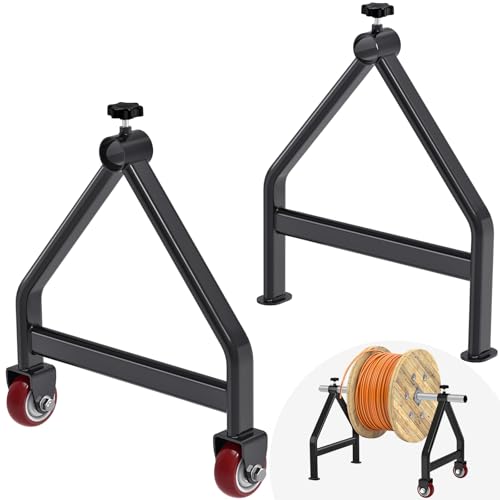
Lifeswell Wire Spool Rack for up to 28″ Spools (Black)

FQXESMHG Rock Crusher Glass Crusher Machine Manual Hand Gold
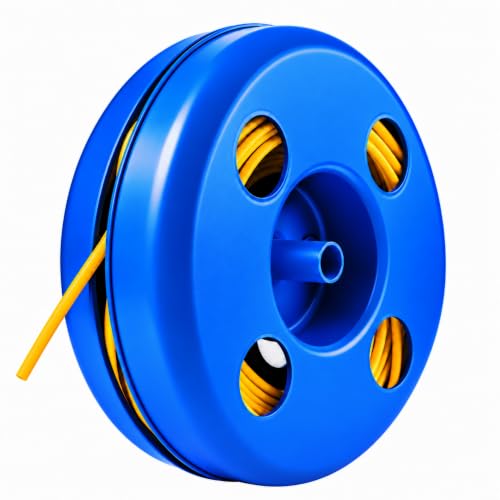
Wire Reel NM-B Blue Wire Dispenser for 125-250 FT Coils

Wire Reel PortaSpool Portable Wire Spool Caddy, 100 lb Capacity
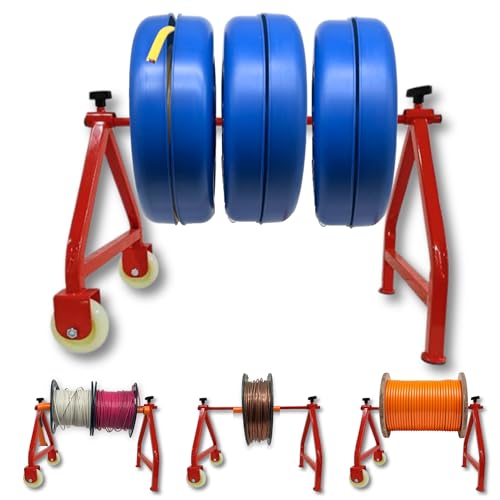
Wire Reel 3 Blue Wire Reel Dispensers with Wheeled Caddy

Rack-A-Tiers Thomas Wheeler Hanging Wire Dispenser (19455)

FQXESMHG 4FT Two Man Crosscut Saw

Kregoem 415D Wire Dispenser Wheel, 2-Reel Cable Kit
The Details Behind The Selections
A stud-mounted bracket earns its keep on rough framing days when the floor is cluttered with boots, scrap, and bundles of insulation. This two-pack mounts to standard 2×4 or 2×6 wall studs and takes the reel off the ground so your pull stays smooth. The steel body with anti-rust coating aims to shrug off jobsite moisture, which matters in basements or partly built additions.
I like this as the wall-mounted counterpart to the rolling caddies lower on this list, since it leaves the floor clear for movement. The 300 lb rated capacity is generous for the largest NM-B coils most residential electricians handle. For crews roughing in multi-room additions, having two dispensers on hand means hot and neutral can run side by side without fighting for space.
Strengths Worth Knowing
- Two-pack configuration lets you stage reels at separate rooms for faster wire pulls.
- Stud-mounting clears floor clutter and reduces tangles on crowded jobsites.
- Anti-rust coating supports long-term durability in damp basements or garages.
- 300 lb capacity handles heavy NM-B coils without flexing or tipping concerns.
Trade-Offs To Consider
- Requires a stud to mount, so portable use across rooms is limited.
- You supply your own reel bar, which adds a small extra step on day one.
Who It Suits Best
Framing crews and remodel electricians working long horizontal runs who want reels anchored above the work zone.
Consider Something Else When
You need to move between rooms quickly, in which case the EIP Wire Spool Caddy with Wheels is a more mobile option.
Some shops want one big reel that travels from the truck bay to the bench and back. The EIP caddy handles that brief with a steel frame rated for 250 lb and wheels that roll under load. The adjustable loading width from 5.5 to 22 inches means it can take smaller THHN spools or the wide 28 inch NM-B coils that other stands leave wobbling.
Compared to the stud-mounted option above, this trades fixed anchoring for genuine mobility, which matters when one person is pulling wire and another is laying out boxes. For a shop that dispatches reels across multiple bays, the heavy steel frame earns its footprint. The trade-off is that the wider footprint demands clear floor space, so small residential garages may feel crowded.
Practical Pluses
- 250 lb capacity comfortably handles the largest residential wire spools.
- Adjustable width accepts spools from 5.5 to 22 inches across.
- Wheeled base moves under load, saving trips back to the truck.
- Steel construction targets the daily punishment of a working shop.
Some Limits To Know
- Larger footprint may overwhelm tight residential garages.
- You supply your own axle bar, which is standard for this category.
Made For
Commercial shops and contractors running big spools through multiple bays each day.
A Better Fit Elsewhere
Homeowners doing occasional pulls should look at the Lifeswell Wire Spool Rack, which costs less and fits a single-car garage.
Garage work calls for something simple that rolls when you want it and stays put when you don’t. The Lifeswell rack combines casters with thickened non-slip pads on the bottom feet, so it can hold a position during a long pull without skating across concrete. The wheels make repositioning easy without lifting a fully loaded 28 inch spool.
For a homeowner wiring a detached workshop, this rack takes the backache out of pulling wire off the floor. Match the spool bar to the reel you’re running and the rack holds it cleanly. Note that the spool bar itself is not included, so plan to pick one up alongside this stand.
A Few Strong Suits
- Non-slip pads keep the rack stationary during long pulls.
- Wheels reposition the loaded stand without lifting the spool.
- Compact footprint fits single-car garages and basement workshops.
Possible Compromises
- Spool bar must be purchased separately to use the rack.
- Weight capacity isn’t advertised, so users commonly keep it under mid-size NM-B reels.
Right Fit For
Homeowners and hobbyists running the occasional 250-foot NM-B coil in a garage or basement.
Skip It When
You’re moving between job sites daily, where the Wire Reel PortaSpool is lighter to carry to the van.
I want to flag this honestly: this is a manual rock and glass crusher, not a wire dispenser. It uses circular-arc geometry to reduce slippage during hand operation, aimed at small-scale ore and glass processing. It earns inclusion in the source list but does not solve the wire-dispensing problem this guide addresses.
If you landed here expecting a Romex solution, scroll past this entry. The remaining nine picks all relate to wire storage and payout. Picking this for wire would leave you with a tool that does the wrong job.
The Helpful Details
- Circular-arc structure aims to reduce accidents during manual use.
- Useful for low-volume ore samples and glass crushing.
Points To Keep In Mind
- Not designed for wire storage or payout in any form.
Whose Shelf It Belongs On
Prospectors and hobbyists crushing ore samples, not anyone shopping for wire management.
Look Elsewhere When
You need to pull Romex cleanly, in which case the Wire Reel NM-B Blue Wire Dispenser is the dedicated tool.
NM-B wire is the standard jacket around Romex, and this dispenser is built around that specific use case. The polypropylene body holds the 125, 200, and 250 foot coil sizes that residential rough-in calls for. The 16 inch OD and 15 inch ID dimensions match the inner core of standard NM-B reels so the coil sits centered during payout.
Galvanized steel fasteners hold up to the bend and snap of frequent reloading. For electricians who run a lot of residential branch circuits, this reel keeps wire from twisting or folding back on itself. Made in the USA, which matters for some shops sourcing domestic materials.
Real Benefits
- Sized exactly for 125 to 250 foot NM-B coils, the most common residential reels.
- Polypropylene body keeps weight low while resisting jobsite scuffs.
- Galvanized steel fasteners stand up to repeated loading and unloading.
Things To Weigh
- Not designed for larger 28 inch industrial spools.
- No integrated wheels, so moving across rooms requires carrying the loaded reel.
Best Suited To
Residential electricians running standard NM-B branch circuits in new construction and remodels.
Swap It Out When
You need to roll the reel between locations, where the Wire Reel 3 Blue Wire Reel Dispensers and Wheeled Caddy adds mobility.
Pulling wire up a ladder or through an attic hatch is a one-person job, and a rolling cart becomes a liability. The PortaSpool uses a rotating carry handle so the spool itself stays put while you walk, which keeps the payout tension steady. The 100 lb tested capacity suits single 16 inch spools, the common size for branch-circuit work.
Made in the USA and aimed at electricians who carry their gear from the truck to the work area. The rotating handle is the thoughtful detail here: the spool doesn’t whip around as you shift the load between hands. For attic and crawlspace runs, it’s a quieter alternative to dragging a heavy cart.
Notable Upsides
- Rotating handle keeps the spool stable as you move and re-grip.
- 100 lb tested load handles standard residential branch-circuit spools.
- Compact form climbs ladders and fits through attic hatches.
- USA construction appeals to shops prioritizing domestic sourcing.
Room For Improvement
- Capacity tops out at 100 lb, limiting use to lighter spools.
- No wheels, so moving a fully loaded unit requires carrying it.
Who Will Love This
Service electricians and remodelers climbing into attics, crawlspaces, and tight ceiling cavities.
Reach For A Different Pick When
You need higher capacity and rolling mobility, in which case the EIP Wire Spool Caddy with Wheels carries more weight.
When a job calls for NM-B, THHN, Romex, BX, and flex on the same site, juggling reels gets messy fast. This kit ships with three polypropylene reels and a welded steel caddy, plus a 24 inch spool rod, so you can stage multiple wire types on one rolling frame. The caddy supports up to 250 lb and accepts axle rods from 0.25 to 1 inch in diameter.
For contractors running multi-gauge services, the combination keeps different cables separated and labeled by reel. The polypropylene reels resist the bending and kinking that ruins payout smoothness. Storage is straightforward in a work van or tool shed once the job wraps.
Noteworthy Benefits
- Three reels let you stage NM-B, THHN, and Romex on the same frame.
- Welded steel caddy rolls 250 lb of cable between rooms.
- Accepts a wide range of axle rod diameters for different reel cores.
- Polypropylene reels reduce wire twisting during payout.
Factors To Consider
- Bigger footprint than single-reel stands.
- Higher upfront cost than buying one reel at a time.
Feature Snapshot
Perfect Match For
Electrical contractors running multi-gauge wire across larger residential or light commercial jobs.
Not Your Match When
You only need a single 14/2 run, where the Kregoem 415D two-reel kit is more focused.
The Thomas Wheeler is the answer to a specific headache: no floor space, no surface to set a reel, just exposed trusses overhead. It hangs on a 2×4, in open trusses, above tee bars, or on a ladder, so the reel floats above the work. It knocks down and sets up in seconds, which matters when the job changes rooms hourly.
The 150 lb weight capacity handles typical branch-circuit coils without complaint. For commercial ceiling work where the floor is occupied by other trades, this hanger stays out of the way. The trade-off is that you need overhead structure to hang it from, so it’s less useful on slab-on-grade residential jobs.
Positive Points
- Hangs in trusses, on ladders, or on tee bars for overhead work.
- Knocks down fast and stores flat in a service van.
- 150 lb capacity suits standard residential and light commercial coils.
- Keeps the floor clear for other trades during ceiling pulls.
Where It Is Less Suited
- Requires overhead structure to mount, limiting ground-floor use.
Built With In Mind
Commercial electricians pulling wire above drop ceilings in tenant fit-outs.
Another Choice May Suit
Slab-on-grade residential work calls for the Wire Reel NM-B Blue Wire Dispenser, which sits on the floor.
I want to be straight with you: this entry is a 4-foot two-person crosscut saw for felling and bucking timber, not a wire dispenser. It uses precision-ground teeth and coordinated push-pull operation for cutting wet or dry wood. It appears in the source feed but does not solve wire payout.
If you’re stocking a wire-working setup, skip this pick. The remaining options above and below are all purpose-built for cable and Romex management.
Good Reasons To Consider
- Two-person design doubles cutting power for larger logs.
- Ground teeth handle wet or dry wood efficiently.
Less Ideal Details
- Not a wire dispenser, so it solves a completely different problem.
Who Should Grab It
Off-grid woodcutters and trail crews, not anyone wiring a building.
Where Another Pick Suits Better
For Romex storage, the Kregoem 415D two-reel dispenser is the comparable kit choice.
Two reels, common gauges, and a rust-proof build: that’s the Kregoem 415D in one sentence. The ABS plastic shell wraps a stainless steel bracket, which targets the corrosion that wrecks cheaper stands in damp crawlspaces. It handles 250-foot rolls of 14/2, 14/3, 14/4, 12/2, 12/3, and 10/2, covering most residential branch-circuit gauges.
Compared to the larger 28 inch caddies above, this kit is sized for the gauges electricians run most often rather than the largest reels. Loading takes seconds, which matters on tight service calls. For solo operators, the dual-reel setup lets you stage hot and neutral without swapping cores.
Advantages To Know
- ABS shell plus stainless bracket resists rust in damp environments.
- Covers the six most common residential wire gauges.
- Two-reel layout speeds up staged hot-and-neutral pulls.
- Fast loading saves time on tight service calls.
Points To Note
- Limited to 250-foot rolls rather than larger 500-foot industrial spools.
Quick Facts
The Right Fit
Solo electricians running residential branch circuits and service calls across varied environments.
Wrong Turns To Avoid
You need 500-foot industrial spools, in which case the EIP Wire Spool Caddy is built for that size.
Picking The Right Romex Wire Dispenser For Your Work
Capacity comes first, because an overloaded reel sags and tangles. Match the rated weight to the heaviest coil you actually pull, and pad up by 25 percent for occasional surges. Most residential NM-B runs fit comfortably in 100 to 250 lb stands, while contractors running 500-foot spools need the heavy-duty bracket frames.
Mounting style shapes the workday more than people expect. Stud-mounted options keep the floor clear but commit you to a wall bay. Rolling caddies move between rooms but need floor space. Hanging dispensers like the Rack-A-Tiers Thomas Wheeler solve overhead pulls when no floor or wall surface is available, but only if exposed structure exists.
Spool compatibility matters more than the marketing suggests. Verify the inner diameter and axle rod diameter before ordering, since a reel that doesn’t fit the core spins unevenly. Polypropylene reels resist bending and kinking better than thin plastic in cold weather, which matters for winter rough-ins.
Smart Considerations Across These Picks
Mistakes Worth Dodging
The most common buying slip is sizing the dispenser to today’s coil and forgetting tomorrow’s spool. Electricians often upgrade gauge or length over a career, so picking a stand that handles the next size up saves a second purchase. Another trap is ignoring the spool bar: many racks ship without one, and a mismatched bar lets the reel wobble during payout.
Where The Extra Money Goes
Higher-tier dispensers add steel where budget versions use plastic, which translates into years rather than months of service life. Welded frames, stainless brackets, and wider axles all target the failure points that scrap cheaper stands. For a daily-use contractor, that upgrade pays back through fewer replacements and smoother payouts that protect the wire jacket itself.
Frequently Asked Questions
What size Romex wire dispenser do I need for a 250-foot coil?
Most 250-foot NM-B coils fit a dispenser rated for 100 lb or more with a 16 inch outer diameter. Anything larger and you should look at the 250 lb caddies with adjustable width.
Can one dispenser handle both Romex and THHN?
It depends on the reel design. Kits like the Wire Reel 3-Reel bundle stage multiple wire types on one frame, while single-reel polypropylene stands are typically sized for one wire family.
Do these dispensers work in cold weather?
Polypropylene reels hold up better than thin plastic in cold conditions, though wire jacket stiffness increases either way. Storing the dispenser indoors overnight helps on freezing job sites.
Are wall-mounted dispensers stable enough for heavy reels?
Stud-mounted steel brackets rated for 300 lb handle large coils without flex when properly anchored into the stud. Hanging into drywall alone is not enough for heavy reels.
How do I keep wire from tangling during payout?
Center the coil on the spool bar and let the reel spin freely. Avoid pulling at sharp angles, and stage the dispenser close to the first box so the wire travels in a long, gentle arc.
The Takeaway
The right Romex wire dispenser comes down to where you work and how much wire you pull at once. Solo residential electricians get the most from the Kregoem 415D and the Wire Reel NM-B Blue Dispenser. Crews running multiple gauges benefit from the Wire Reel 3-Reel bundle or the EIP rolling caddy. Pick the mount that fits your jobsite, and your pulls stay clean from coil to box.
