

The AA drawer used to be a graveyard of half-used alkalines and mystery chargers. Rechargeable AA USB-C batteries flip that script, because each one tops up directly from the same cable that charges everything else. I put this list together for anyone trying to escape a tangle of wall adapters, dock-only chargers, and one-off battery types. Some picks here are traditional NiMH (nickel-metal hydride) cells that still need a separate charger, others are modern lithium cells with a USB-C jack built right into the body. Both have their place, and the right choice depends on your devices and your tolerance for extra gear.
The Choices Worth Comparing

Eneloop Panasonic BK-3MCCA8BA AA 2100 Cycle Ni-MH Rechargeable Batteries (8-Pack)

Eneloop Panasonic BK-3MCCA4BA AA 2100 Cycle Ni-MH Rechargeable Batteries (4-Pack)

Eneloop 4th Gen AA NiMH Pre-Charged Rechargeable Batteries with Holder (Pack of 4)

Energizer Recharge Universal Rechargeable AA Batteries (16-Pack)
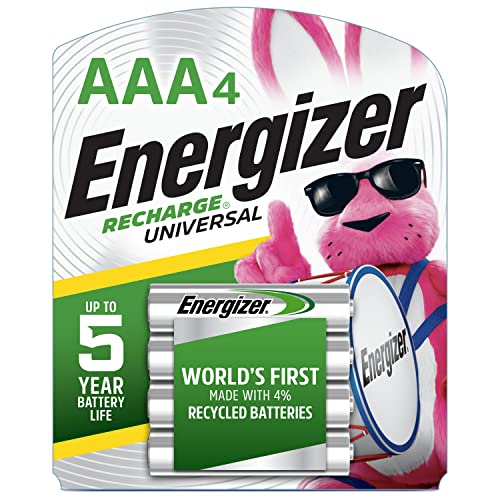
Energizer Recharge Universal AA Pre-Charged Rechargeable Batteries (4-Pack)
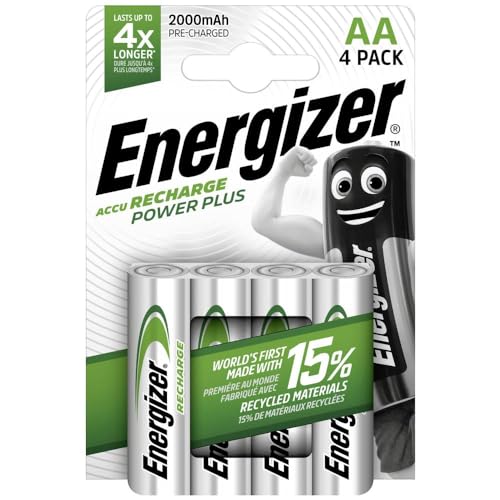
Energizer Power+ 2000 mAh NiMH Rechargeable AA Batteries (4-Pack)

Duracell Rechargeable AA Batteries 4 Count, Long-Lasting NiMH Power

AKTTKA 4070mWh AA + 1100mWh AAA USB-C Rechargeable Lithium Batteries (8-Pack)

AKTTKA 4070mWh AA Lithium Rechargeable Batteries 8-Pack, USB-C

AKTTKA 1100mWh AAA Lithium Rechargeable Batteries 8-Pack, USB-C
Why These Options Stand Out
The 8-pack version of the Eneloop line is the kind of battery you forget you own, in a good way. Drop a set into a game controller, a digital thermometer, or a TV remote, and they just keep working. Unlike the lithium USB-C options I cover later, these use NiMH chemistry (a rechargeable technology that swaps ions between nickel and a hydride compound), which means they still need a dedicated charger.
Where they shine is longevity. The manufacturer rates them for up to 2100 recharge cycles, and they hold a strong percentage of their charge even after long stretches on the shelf. For a household where batteries sit forgotten in a drawer for months, that matters.
A Few Strong Suits
- Up to 2100 recharge cycles per cell, which for a busy household can stretch years of service before any noticeable capacity drop.
- Holds a useful charge over long storage, so the set in your emergency flashlight is still good next spring.
- Pre-charged at the factory, so the first use feels like an alkaline swap, not a waiting game.
- An 8-pack lets you rotate four in use and four on standby, which is how I like to run a controller setup.
Things To Consider
- You still need a separate NiMH charger, which adds a piece of gear the USB-C picks below avoid.
- NiMH cells self-discharge faster than lithium, so very rarely used devices may need a top-off before long trips.
Quick Facts
Who It Suits Best
This 8-pack is the right pick for households that already own a NiMH charger and burn through several devices a month.
Where Another Pick Suits Better
Anyone who wants to skip the dedicated charger entirely should look at the AKTTKA 4070mWh AA Lithium 8-Pack further down, which charges over USB-C directly.
The 4-pack version of the Eneloop line is the smaller sibling of item one, identical chemistry, just fewer cells. For a single TV remote, a wireless mouse, or a kitchen thermometer, four cells is often the right amount. Same trick, smaller commitment.
Owners commonly report that these keep running through hundreds of cycles without a noticeable dip. For an apartment dweller who owns a couple of AA devices, the 4-pack keeps clutter down and still benefits from the same recharge-friendly NiMH platform.
What It Does Well
- Same long-life Eneloop chemistry as the 8-pack, just delivered in a more modest count.
- Pre-charged from the factory, so swapping out alkalines is a one-step upgrade.
- Strong shelf life means occasional-use devices stay ready between events.
Trade Offs
- Only four cells, so heavy-use households will run out fast and likely need a second pack.
- Same charger requirement as item one, no USB-C port on the cell itself.
Best Suited To
Light-use households that only need AA cells for a remote and a clock will find this a tidy starter set.
Skip It When
Gamers or families running multiple controllers should grab the 8-pack in item one, or the AKTTKA 4070mWh AA Lithium 8-Pack for USB-C charging.
Item three is the 4th-generation Eneloop cell, and the headline upgrade over earlier generations is a wider operating temperature window. Standard NiMH cells struggle in freezing conditions, but this generation is rated to handle colder environments than its predecessors.
The package also includes a plastic holder, which sounds minor until you stop digging through a junk drawer for loose cells. For someone whose AA devices live in a garage, an unheated workshop, or a winter cabin, this generation is the one to keep in mind.
Well-Handled Touches
- Improved cold tolerance compared with older Eneloop generations, useful for outdoor sensors.
- Includes a storage holder, which protects terminals in transit and in the drawer.
- Pre-charged at the factory so the first use is immediate.
Worth Noting
- Still NiMH, still needs a separate charger, so it does not solve the dock problem on its own.
- The 4-pack count limits use across many devices at once.
Feature Snapshot
Whose Shelf It Belongs On
Cold-climate households, garage tinkerers, and anyone running outdoor wireless sensors in winter will appreciate the wider temperature rating.
Not Your Match When
People who simply want to charge batteries from a phone charger should look at the AKTTKA USB-C lithium picks, which skip the wall dock entirely.
If your household has more AA devices than you can count, this 16-pack from Energizer is built to cover the lot. The Recharge Universal line is the brand’s mid-tier NiMH offering, and the appeal here is mostly volume.
Stack a few in the kitchen drawer for the kids’ toys, a few more in the office for the wireless keyboard, and you have already eaten through half the pack. Energizer designed these for moderate to heavy drain devices, so they hold up well in game controllers and handheld electronics.
Strong Points
- 16 cells cover a multi-room household without anyone scrounging for spares.
- Pre-charged from the factory, so the first rotation works right out of the box.
- Compatible with most NiMH chargers, including any existing Energizer Recharge dock.
Minor Gripes
- NiMH chemistry again, so a separate charger is required, no USB-C port on the cell.
- The bulk count may be overkill for a single-person apartment.
Right Fit For
Families with multiple AA-powered devices, from game controllers to remote-control toys, will appreciate the deep reserve.
Consider Something Else When
Someone living light, with only one or two AA devices, is better served by the 4-pack in item five or the AKTTKA 8-pack in item nine.
This is the smaller Energizer option, the same chemistry as item four in a 4-count wrapper. For a single remote or a clock that keeps eating cells, four is often plenty, and the lower count keeps the drawer from overflowing.
The Recharge Universal line has been around long enough to earn a reputation for dependable mid-range performance. It is not the most exciting pick on this list, but for someone looking to dip a toe into rechargeables, it is a low-risk starting point.
The Value In It
- Trusted brand name, which matters for first-time rechargeable shoppers.
- Pre-charged out of the box for immediate use.
- Plays well with any standard NiMH charger you already own.
Points To Note
- Four cells run out fast across multiple devices, so expect a second purchase eventually.
- No USB-C port built in, which is the trade-off at this price tier.
Built With In Mind
Someone transitioning their household from disposable alkalines to rechargeables, with a NiMH charger already on hand, will find this a sensible entry point.
Look Elsewhere When
Anyone who has never owned a battery charger and wants to keep things minimal should jump to the AKTTKA USB-C 8-pack in item nine.
The Power+ line is Energizer’s higher-capacity NiMH offering, with 2000 mAh (milliamp-hours, a measure of how long a battery can deliver current) packed into each cell. For cameras, flash units, and other gear that pulls real current, that extra capacity shows up as more shots between swaps.
Think of it as the working cell of the Energizer family. The Recharge Universal picks above are fine for remotes, but if your gear actually drains batteries, this is the model that earns its keep.
Real-World Strengths
- 2000 mAh capacity per cell, which is a meaningful bump for cameras and flash units.
- Stands up to repeated recharge cycles without obvious capacity fade.
- Standard NiMH voltage, so it works in any device that accepts AA rechargeables.
Room For Improvement
- Requires a dedicated NiMH charger; no USB-C input.
- Only four cells, so a photo-heavy session can drain the pack quickly.
Key Product Details
Who Should Grab It
Casual photographers and anyone running flash units, portable game pads, or other higher-drain gear will get the most out of this 2000 mAh offering.
Where Another Pick Suits Better
For everyday household devices where 2000 mAh is overkill, the cheaper Recharge Universal 4-pack in item five is a more relaxed fit.
Duracell’s rechargeable AA is the familiar copper-and-black brand wrapped around a pre-charged NiMH cell. The pitch is the same as the other NiMH options here: recharge them, keep using them, skip the alkalines. The honest read is that this is a workhorse pack, not a specialty cell.
Game controllers are a popular use case, where a rechargeable set means nobody is running to the store mid-session. Baby monitors and other always-on wireless electronics also do well with this kind of cell.
Points In Its Favor
- Recognizable brand, which simplifies the transition for shoppers used to disposable Duracells.
- Pre-charged at the factory, so the first swap is immediate.
- Holds up well under the constant drain of game controllers and similar gear.
Softer Spots
- NiMH chemistry means a separate charger is still required.
- Four-cell pack runs out quickly across a household full of devices.
Perfect Match For
Gamers and parents who want a rechargeable set that handles controllers, baby monitors, and similar gear without much fuss.
Reach For A Different Pick When
Anyone chasing the cable-free experience should step up to the AKTTKA 4070mWh AA USB-C 8-Pack in item nine.
Now we cross into USB-C territory. This AKTTKA pack is a hybrid, it includes both AA and AAA lithium cells in the same box, each one with its own built-in charging port. For a household juggling both sizes, that mix is a real convenience.
The 4070 mWh AA rating is well above what standard NiMH cells offer, and the lithium chemistry holds its charge longer on the shelf. For remotes, smart locks, game controllers, and flashlights, this is the start of a much simpler charging routine.
Real Benefits
- Mixed AA and AAA pack, so one purchase covers both sizes your household uses.
- Built-in USB-C port on each cell removes the need for a separate charger dock.
- Higher capacity than typical NiMH, which means fewer recharges over time.
A Few Limitations
- Lithium chemistry can sit at a slightly different voltage than alkalines, and some very sensitive devices may misread the level.
- You still need enough free USB ports, or a hub, to charge all eight at once.
Who Will Love This
Anyone whose devices span AA and AAA sizes, and who wants to ditch the wall charger entirely, will appreciate the bundled value here.
A Better Fit Elsewhere
For households that only use AA, the AKTTKA 8-Pack in item nine is the cleaner, all-AA version of the same idea.
This is the all-AA version of AKTTKA’s USB-C line, and for many households it is the cleaner choice. Eight cells, all the same size, each with its own USB-C port tucked into the top. Plug a cable in, charge from any 5V source (a laptop, a power bank, a car USB port), done.
For travelers especially, this setup is liberating. No separate charger brick, no voltage adapters, just a USB-C cable. The 4070 mWh rating means each cell carries more energy than a typical NiMH, which translates into longer runtime between charges.
Everyday Advantages
- Direct USB-C charging, which removes the need for a wall dock entirely.
- Higher capacity than NiMH, which stretches the time between top-offs.
- Long shelf life with low self-discharge, so stored cells stay usable for months.
Honest Caveats
- Lithium AA cells cost more up front than NiMH, so the initial spend is steeper.
- Devices designed around 1.5V alkaline readings may show a low-battery warning earlier than expected.
At A Glance
Made For
Travelers, minimalists, and anyone who wants to consolidate chargers around a single USB-C cable ecosystem.
Swap It Out When
If your devices mix AA and AAA, the bundled AKTTKA pack in item eight covers both sizes in one buy.
The AAA version of AKTTKA’s USB-C line rounds out the list, and for smart locks, slim remote controls, and small electronics, it fills a real gap. AAA cells are easy to overlook, and the disposable versions add up fast when a smart lock chews through them every few months.
The included 1-to-4 cable charges four cells at once from any 5V source, and an LED indicator flashes during charging, then stays on when full. For someone with limited drawer space, that built-in simplicity is the entire appeal.
What Works In Its Favor
- Built-in USB-C charging on each AAA cell, so no dock is needed.
- 1-to-4 cable lets you charge a rotation of cells in roughly two hours.
- LED charging indicators take the guesswork out of when each cell is ready.
Points To Keep In Mind
- AAA cells are smaller and easier to misplace, so a storage case helps.
- Some very low-drain devices prefer the slightly lower voltage of NiMH, though most modern gear accepts either.
Feature Card
Right Fit For
Smart lock owners, TV remote users, and anyone tired of buying packs of disposable AAA cells will find this an easy switch.
A Better Fit Elsewhere
For households that lean heavily on AA, the AKTTKA 8-Pack in item nine is the more useful size to stock first.
Picking Rechargeable AA USB-C Batteries That Actually Fit Your Routine
Chemistry drives the experience more than brand does. NiMH cells, like the Eneloop and Energizer options earlier, need a separate charger but offer long cycle life and a familiar 1.2V output. Lithium cells with built-in USB-C ports, like the AKTTKA picks, charge directly from any USB-C cable and pack more energy per cell, but cost more and can read as slightly different voltage to sensitive devices. Match the chemistry to the device, not the other way around.
Capacity tells you how long the cell actually runs, and mWh (milliwatt-hours, total energy stored) is the more honest number than mAh because it accounts for voltage. A 2000 mAh NiMH at 1.2V stores less energy than a 4070 mWh lithium cell, which is why runtime can feel different even when the headline numbers seem comparable. For high-drain devices like cameras and flash units, higher capacity matters more. For remotes, it almost does not.
Self-discharge is the hidden cost of NiMH. Standard NiMH cells lose charge sitting unused, which is why “pre-charged” low-self-discharge versions like Eneloop exist. Lithium USB-C cells hold their charge much longer on the shelf, which is a quiet win for emergency flashlights and rarely used devices.
Cycle life matters less for light users and more for heavy rotation. A cell rated for 2100 cycles will outlive most casual shoppers, but a household rotating four cells a week across controllers benefits from higher ratings. The Eneloop 8-pack in item one is built around exactly that pattern.
Capacity vs. Cycle Life
Capacity tells you how long a single charge lasts. Cycle life tells you how many times you can recharge the cell before it loses noticeable capacity. Most people over-index on capacity and under-index on cycle life. A 1500 mAh cell that lasts 3000 cycles beats a 2500 mAh cell that fades after 500, if you rotate cells often enough.
Charging Hardware You Already Own
Before picking USB-C lithium cells, check whether you already own a NiMH charger. If yes, sticking with NiMH saves real money. If you do not, the USB-C lithium route pays for itself by skipping the dock entirely. Count your existing USB-C cables, power banks, and laptop ports before deciding.
Voltage Sensitivity In Devices
Some electronics are picky about voltage. Digital thermometers and certain wireless sensors expect a 1.5V alkaline curve, and lithium rechargeables can register as “low” earlier than expected. For most controllers, remotes, and cameras, this is a non-issue. For sensitive medical-style devices, check the manual before switching.
What to Watch Before You Commit
Mistakes Worth Dodging
Buying a USB-C lithium pack and stuffing it into a device that needs 1.5V alkalines is the most common slip. The cell may still power the device, but the low-battery warning can show up early. A quick scan of the device manual saves the headache.
Skipping a charging rotation is the other trap. A single USB-C pack of eight cells is not a substitute for keeping four on hand. Without a rotation, you end up with empty cells at the worst moment.
When Paying More Pays Off
Lithium USB-C cells cost more up front because they pack more energy and skip the charger dock. The premium pays off for travelers, minimalists, and anyone without a dedicated NiMH charger. For households already invested in NiMH gear, the upgrade is harder to justify.
Frequently Asked Questions
Can I use rechargeable AA USB-C batteries in any AA device?
Most AA-compatible devices accept rechargeables without issue. Sensitive gear like some digital thermometers may show low-battery warnings earlier because lithium cells sit at a slightly different voltage than alkalines. Always check the device manual for restrictions.
How long do lithium USB-C AA cells take to charge?
Most USB-C rechargeable AA cells fill up in roughly 1.5 to 2 hours from a 5V source. The AKTTKA AAA pack in item ten takes about two hours via its included 1-to-4 cable. Charging from a low-power laptop port may run a bit longer.
Do I still need a separate charger for NiMH cells?
Yes. The Eneloop and Energizer NiMH options in this list all require a dedicated NiMH charger, which is a separate piece of gear. The USB-C lithium picks in items eight, nine, and ten remove that requirement by charging directly from any USB-C cable.
How many times can I recharge these cells?
The Eneloop NiMH options are rated for up to 2100 recharge cycles per cell. Energizer and Duracell NiMH cells also support hundreds of cycles. Lithium USB-C cells typically support fewer cycles than NiMH but last for years of typical household use.
Are lithium USB-C batteries safe to fly with?
Most consumer lithium AA and AAA cells are allowed in carry-on luggage within standard airline limits. Rules vary by carrier, so checking the airline’s battery policy before a trip is the safest move. Pack cells in a case to prevent short circuits at the terminals.
Closing Remarks
The honest read on this list is that you have two camps to choose from. NiMH cells like the Eneloop and Energizer picks are tried and tested, easy on the wallet, and pair with whatever charger you already own. Lithium USB-C cells like the AKTTKA trio trade a higher price for the simple pleasure of charging from the same cable you already use for everything else. Pick the camp that matches how you actually charge today, and the rest tends to fall into place.
