

A drawer full of dead AAs is a frustration every household runs into eventually. Game controllers, TV remotes, wall clocks, kitchen scales, kids’ toys, flash units for a camera, even some digital thermometers: the list of devices that still depend on AA cells is long. Swapping to rechargeables cuts waste and saves trips to the store, but only when the charger fits the way a household actually uses cells. Some setups need a quick three-hour turnaround for tomorrow’s remote. Others need eight bays so a stack of batteries can rotate through on a weekend.
I put this list together to match charger styles to real routines: small families, heavy camera and game users, people stocking a home office, even households running Blink outdoor cameras that want lithium chemistry instead of NiMH. Every pick below handles standard NiMH AA cells (and in some cases AAA), while one handles rechargeable lithium AA. Each one earns its slot for a specific reason, and a few stand out as flexible daily drivers for most people.
The Picks In Brief

Eneloop K-KJ55MCA4BA Advanced Individual Battery Quick Charger (White)

Panasonic K-KJ17KHCA4A Advanced Individual Cell Charger with 4 AA eneloop pro

Eneloop K-KJ55MC84CZ Power Pack with 8 AA and 4 AAA Cells
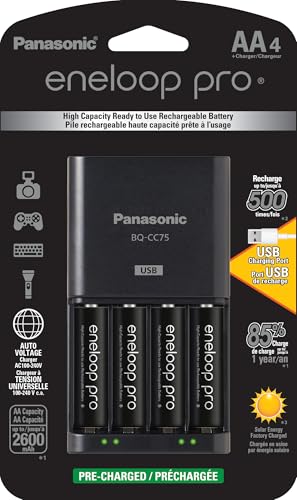
Panasonic K-KJ75KHC4BA Advanced Battery Charger with USB Port and 4 AA eneloop pro
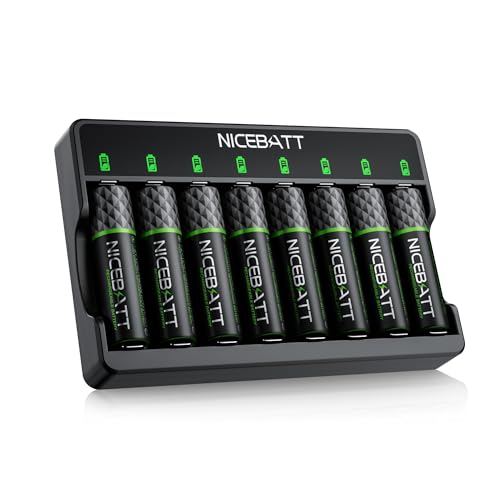
NICEBATT 8-Pack AA 2800mAh Rechargeable Batteries with Charger

NICEBATT 4 AA and 4 AAA Rechargeable Batteries with Charger

NICEBATT Smart 8 Bay AA AAA USB Type-C Charger

Eneloop BQ-CC55KSBHA Advanced pro Charger with 8 AA and 8 AAA Cells

Eneloop BQ-CC55KSBHA Advanced pro Charger with 8 AA and 8 AAA pro Cells

Batechon Rechargeable AA Lithium 8-Pack with Charger
The Picks, Examined More Closely
The K-KJ55MCA4BA is the kind of starter bundle that quietly does its job in a kitchen drawer for years. It comes with four eneloop AA cells, charges them individually rather than in pairs, and tops off a full set in roughly three hours. NiMH cells (nickel-metal hydride, the modern rechargeable chemistry that replaced older NiCd) hold their charge on the shelf far longer than the rechargeables of a decade ago, so you can grab one for a TV remote without pre-planning.
Compared to the eight-bay picks later in this list, this one is compact and unfussy. It handles AA and AAA cells in any combination, and the small white housing fits on a power strip without hogging space. For most households running a handful of remotes, a game controller, and a clock or two, that is genuinely all the charger needed.
Key Advantages
- Individual channel charging means a single dead cell does not block the rest of the bay.
- Bundled cells arrive pre-charged and ready for a remote out of the box.
- Combined AA and AAA compatibility removes the need for a second charger.
- Three-hour full charge is fast enough for an overnight routine to keep up with weekly use.
- Compact shell fits into a drawer between uses rather than living on a counter.
Things To Consider
- Four bays can feel small for households running multiple game controllers at once.
- Standard eneloop cells are optimized for low to medium drain, so flashes and high-drain toys benefit from a higher-capacity option like the Panasonic K-KJ17KHCA4A bundle.
Who It Suits Best
Casual households with a handful of AA devices and no urgent need for a giant eight-bay station.
Skip It When
You rotate through six or eight batteries a week, in which case the NICEBATT Smart 8 Bay will handle the rotation more comfortably.
The K-KJ17KHCA4A bundle steps up to eneloop pro cells, which trade cycle life for raw capacity. Where standard eneloop cells are rated around 2000 mAh, the pro AA cells here run higher and tolerate the kind of constant draw a camera flash or a high-end game controller puts on a battery. The charger still tops off one cell at a time and signals charge status individually.
It earns its slot for households that already know they chew through batteries quickly. Photographers shooting events, families with two or three game controllers in rotation, anyone running motorized toys or audio gear that pulls current in bursts. The trade-off, which the manufacturer data sheet is honest about, is that pro cells are rated for fewer total recharge cycles than standard eneloop, so they wear out sooner in calendar years.
The Good Stuff
- Higher mAh rating translates to longer runtime per charge in demanding devices.
- Individual cell charging plus per-bay indicators keeps you informed cell by cell.
- Cells arrive factory-charged and sealed, ready for immediate use.
- AA and AAA support means one charger covers most household formats.
Worth Noting
- Pro cells are rated for fewer total recharge cycles than standard eneloop, a tradeoff for the extra capacity.
- Four-bay layout feels limiting compared to the eight-bay NICEBATT option for heavy rotation.
Quick Facts
Right Fit For
Photographers, hardcore gamers, and households that routinely run high-drain AA devices and want extra runtime per charge.
Where Another Pick Suits Better
Light-use households get more long-term value from the standard Eneloop K-KJ55MCA4BA bundle, which trades a little capacity for higher cycle counts.
The K-KJ55MC84CZ is essentially pick number one’s charger stacked next to twelve pre-charged cells. Eight AA, four AAA, plus the same three-hour individual charger that handles each bay on its own. It is built for the moment a household finally admits the remotes, the game controllers, the wall thermometer, and the kitchen scale all run on rechargeables and there is no going back.
Compare that to the four-cell starter above: this bundle’s bigger cell count lets you keep a “ready to use” pile while a second batch charges. The cells are standard eneloop chemistry, so they trade capacity for cycle life, which is exactly what you want for a clock that sits in a hallway for five years.
A Favorable Mix
- Eight AA and four AAA cells cover a typical household’s mixed-format needs from day one.
- Individual cell charging keeps partially used cells from slowing the others down.
- Standard eneloop cells are designed for long storage and many cycles, ideal for low-drain devices.
- Three-hour full charge means even the full twelve-cell kit rotates in one overnight session.
Room For Improvement
- Only four charging bays, so cells rotate in smaller batches than the full eight or twelve you receive.
- Standard cells fall short for constant high-drain use cases like camera flashes.
Made For
Families transitioning an entire household from disposables to rechargeables in a single restock.
Consider Something Else When
You need a bigger charging bay to match the larger cell count, in which case the NICEBATT Smart 8 Bay is a smarter workflow.
The K-KJ75KHC4BA brings the pro chemistry of pick 2 and adds something genuinely useful: a USB charging port on the body. That detail matters more than it sounds. The unit pulls power from any standard USB source, including a laptop, a power bank, or the little wall brick you already use for a phone. For anyone with a tighter desk setup, a dorm room, or a travel bag, this saves the bulk of an AC adapter and a dedicated outlet.
It still tops off cells individually and arrives with four pre-charged pro AA cells ready to drop into a device. The trade-off is the same as pick 2: pro cells are higher capacity but rated for fewer recharge cycles. On the road, that is a fair swap.
Notable Upsides
- USB input lets the charger ride along on any USB power source you already carry.
- Individual bay charging prevents weak cells from bottlenecking the batch.
- Pro AA cells handle demanding devices like flashes and VR accessories.
- Slim profile suits a travel pouch or a hotel desk drawer.
Honest Caveats
- USB charging speed depends on the host source, so a weak laptop port charges slower than a dedicated AC adapter.
- Four-bay format is tight for users who rotate through more than a handful of cells weekly.
Best Suited To
Frequent travelers, remote workers, and anyone who already lives a USB-powered life and wants fewer wall bricks.
Not Your Match When
You want a permanent charger living on a kitchen counter with room for a full rotation, which is what the NICEBATT 8 Bay handles better.
The NICEBATT 8-pack leans into a different value calculation than the eneloop line above. You get eight AA cells at a high stated mAh rating plus a charger that handles them all, and the whole bundle sits in a friendlier price bracket. For households that burn through cells in toys and remotes and would rather replace a battery than nurse a dying one, the math works.
Where it differs from the eneloop kits is mostly in expected longevity. Brand-name NiMH cells are typically rated for many hundreds of cycles, but third-party cells vary. For a kids’ toy pile or a string of remote controls, that gap rarely matters, since the cells outlast the device’s interest span anyway.
Everyday Perks
- High stated mAh rating supports longer runtimes in mid-drain devices.
- Eight cells in the kit match a typical eight-bay charger workflow.
- Low self-discharge design means cells hold usable charge while stored.
- Bundled charger keeps the upfront cost contained.
Points To Note
- AAA support is not in this bundle, so AAA devices need a separate kit or charger.
- Long-term cycle life may not match premium brands in heavy daily use.
Feature Snapshot
Perfect Match For
Budget-focused shoppers who want a generous AA starter kit for toys, remotes, and casual use without paying the eneloop premium.
Look Elsewhere When
You also need AAA cells in the same workflow, in which case the NICEBATT 4 AA plus 4 AAA bundle covers both formats.
The 4-and-4 NICEBATT bundle exists for households stuck juggling both AA and AAA cells every month. You get four AA at the higher 2800 mAh rating, four AAA at 1100 mAh, and an eight-bay charger that takes either size. It is the “stop buying two separate chargers” starter.
It also doubles as a backup plan. If you already own pick 5’s 8-pack, this one’s AAA cells slot into your rotation without forcing a second purchase. The combined cell count is smaller than the K-KJ55MC84CZ power pack above, but every cell you get is paired with a charger bay, which is rare in this category.
Noteworthy Benefits
- Eight bays handle AA and AAA cells side by side without adapter sleeves.
- High-capacity AA cells support medium-drain devices like game controllers.
- Compact form factor takes up roughly the same shelf space as a four-bay charger.
- Budget tier pricing keeps a two-format starter kit accessible.
Small Caveats
- Smaller total cell count than the eight-AA bundle above, so heavy users will rotate more frequently.
- Long-term cycle life varies by brand tier and may not match premium eneloop cells.
Who Should Grab It
Shoppers who want one charger that handles both common AA and AAA formats in roughly equal measure.
A Better Fit Elsewhere
If AAA cells are rare in your house and you mostly run AA toys, the Eneloop K-KJ55MCA4BA bundle gives you the same charger with more AA cells.
The 8 Bay smart charger is the workflow upgrade for anyone tired of cycling cells in groups of four. It charges up to eight cells at once, mixed AA and AAA, with a built-in chip that adjusts current and indicates status on a per-bay LED. The USB Type-C input also makes it a clean fit on a modern desk, a workshop bench, or a charging station.
It does not ship with cells, which is fine for households that already own a working pile. The charger is the headline here. Owners commonly appreciate the over-discharge repair feature, which can revive cells that have been sitting too long in a device at zero charge.
Practical Pluses
- Eight independent bays mean no cell is held up by a weaker neighbor in the batch.
- USB Type-C input accepts a wide range of common cables and chargers.
- Built-in cutoff and over-discharge repair extend the working life of older NiMH cells.
- Mixed AA and AAA support removes the need for two separate chargers on a workbench.
Areas To Watch
- No cells are included, so first-time shoppers still need to buy a starter pack separately.
- Eight bays all lit up at once draw meaningful current, so a quality USB power source helps.
Built With In Mind
Hobbyists, makers, and households rotating through enough cells to fill eight slots every weekend.
Reach For A Different Pick When
You also need the first twelve cells to put in those bays, since the Batechon lithium 8-pack or the NICEBATT 4-and-4 bundle covers that need in one box.
The CC55 bundle is the deep-stock version of the eneloop ecosystem. You get sixteen pre-charged cells (eight AA, eight AAA) plus the CC55 charger, which monitors each bay independently and shows charge status on a color-coded LED per slot. Green means mostly full, orange means in progress, red means nearly empty. It is the most informative display in this roundup.
Where it differs from pick 2’s pro bundle: standard eneloop cells here trade the higher mAh of pro chemistry for a longer cycle count, so they hold up better to many years of low-drain use. For a household that wants one charger, lots of cells, and a long service life, this is the bundle that does it all.
The Value In It
- Per-bay color LEDs make at-a-glance status checks easy without an app.
- Eight AA and eight AAA cells cover a full household’s worth of devices out of the box.
- Individual channel charging keeps mixed-strength batches honest.
- Standard eneloop cells rate for high cycle counts, helpful for long-term ownership.
Small Limitations
- Premium price tier reflects the larger cell count and brand reputation.
- Standard cells deliver shorter runtime per charge than pro chemistry under heavy load.
Feature Rundown
Who Will Love This
Long-term planners who want a deep starter stockpile plus a charger that stays accurate through years of mixed-use cycles.
Swap It Out When
You mostly need high capacity under heavy load, in which case the BQ-CC55KSBHA pro bundle higher on this list is the better fit.
The pro version of the CC55 bundle swaps standard eneloop cells for eneloop pro, which carry higher mAh ratings and handle sustained high drain. The CC55 charger is identical: four bays, four color LEDs, individual channel control, AA and AAA support, plus compatibility with both eneloop and eneloop pro chemistries. The sixteen cells in the box are the upgrade.
It earns the premium slot for households that push cells hard: photography gear, VR controllers, high-end flash units, motorized toys. Where the standard CC55 bundle above is the patient long-cycle pick, this one is the long-runtime pick.
Reasons It Performs
- Higher mAh cells give measurable extra runtime in demanding AA devices.
- Same color-coded LED system as the standard bundle keeps the user experience familiar.
- Eight AA and eight AAA pro cells support heavy household rotation out of the box.
- Individual bay charging keeps weak cells from bottlenecking strong ones.
Practical Considerations
- Pro cells rate for fewer total cycles than standard eneloop, a trade for higher capacity.
- Premium price tier compared to other picks in this roundup.
The Right Fit
Frequent-Use Pick territory: households that work AA cells hard and prefer extra runtime over cycle longevity.
Another Choice May Suit
Lower-use households get better long-term value from the standard BQ-CC55KSBHA bundle above, since standard cells last through more charge cycles.
The Batechon pack is the only lithium chemistry entry in this roundup, and that distinction matters for specific scenarios. Rechargeable lithium AA cells handle cold-weather discharge much better than NiMH, which is why they are popular for outdoor security cameras (Blink outdoor cams are explicitly mentioned in the source), trail cameras, and similar gear that sits in an unheated garage or on an exterior wall through winter.
Compare that to the eneloop line: NiMH loses capacity quickly below freezing, while lithium AA holds usable voltage in the cold. The trade-off, and it is a real one, is that these cells only work in devices designed for higher-voltage chemistries, and they need the bundled charger to recharge safely.
Real-World Strengths
- Lithium chemistry performs reliably in cold and outdoor environments.
- Higher voltage profile suits modern security cameras and trail cams.
- Low self-discharge keeps cells ready through long stretches between uses.
- Eight-cell pack matches typical multi-camera household deployments.
Less-Strong Areas
- Lithium chemistry does not work in every AA device, so check device compatibility first.
- Requires the included charger for safe recharging, unlike NiMH cells that work in any NiMH charger.
Key Product Details
Whose Shelf It Belongs On
Households running outdoor security cameras, trail cams, or other gear exposed to cold weather that NiMH cells struggle to handle.
Not Your Match When
You mainly power remotes and game controllers indoors, where standard NiMH cells like the Eneloop K-KJ55MCA4BA are a more economical pick.
Matching a Charger to Your Battery Routine
Choosing among these rechargeable AA battery chargers really comes down to three questions: how many cells do you cycle through a week, which devices you mainly power, and whether you need features like USB power or lithium chemistry.
Bay count is the biggest practical lever. Four-bay chargers handle light households with a remote, a clock, and the occasional game controller. Eight-bay chargers step in once you rotate cells across multiple devices or share with family members. If you have a workshop, hobby station, or photo kit, the extra slots pay off almost immediately.
Cell chemistry matters more than most people expect. Standard NiMH (the chemistry used in eneloop and most third-party cells) is the safe default for indoor devices. Rechargeable lithium AA holds voltage better in cold weather, which is the reason the Batechon pack stands out for outdoor cameras and trail cams. Capacity, measured in mAh (milliamp-hours, a rough indicator of how long a cell can power a device), is the third axis. Higher numbers mean longer runtime per charge, though the trade is usually fewer total recharge cycles over the cell’s life.
Charging style rounds out the decision. Individual bay charging with per-cell indicators is the feature that quietly makes daily ownership easier, since you can see exactly which cell is full and pull it out without waiting on the rest. USB power input matters for travelers and minimalist desks. A bundled cell pack matters if you are starting from scratch. None of these features matter equally for everyone, so it helps to know your own pattern before browsing listings.
Key Considerations Across These Picks
Where Shoppers Go Wrong
A common slip is assuming any AA charger works with any AA cell. NiMH chargers cannot recharge lithium AA cells, and lithium-specific chargers cannot safely charge NiMH. The Batechon pack above, for instance, ships with its own charger for exactly this reason. Picking the wrong chemistry pairing can damage cells or fail to charge them at all.
Another mistake is buying by capacity alone. A cell with a very high mAh rating on paper may not match a well-known brand in real-world cycle life. Cheaper third-party cells sometimes lose capacity faster as the months go by, so the “great deal” turns into a regular replacement cycle. Match the chemistry to the device first, then choose capacity, then worry about price.
Where The Extra Money Goes
Paying more for an eneloop bundle buys three things that budget bundles do not always deliver: known cycle life, factory pre-charged cells that hold their charge on the shelf, and a charger with reliable individual bay control. For households that want to set up a system once and forget it, those three details justify the premium.
Higher-tier picks also tend to ship with more cells per bundle, which spreads the cost across a larger starter stockpile. If you are starting from zero and need eight AA cells anyway, the math often favors buying one premium bundle over two budget bundles. The extra up-front cost typically fades in the second year of ownership, once you stop thinking about them.
