

A garage or workshop really comes alive when the air system finally stops fighting you. I walk through what actually matters when choosing pipes for compressed air, from tubing diameter and material to fittings that hold up to seasonal temperature swings. The list below leans on spec-level details and real shop scenarios so you can match the right pipe or fitting to the layout you’re building.
The Main Contenders

Maxline M8067 Elbow Fitting for 3/4-Inch Tubing

M6030 RapidAir MaxLine 3/4″ Compressed Air Tubing 50 ft.

DEWALT 3/8 in. x 25 ft. Premium Hybrid Air Hose
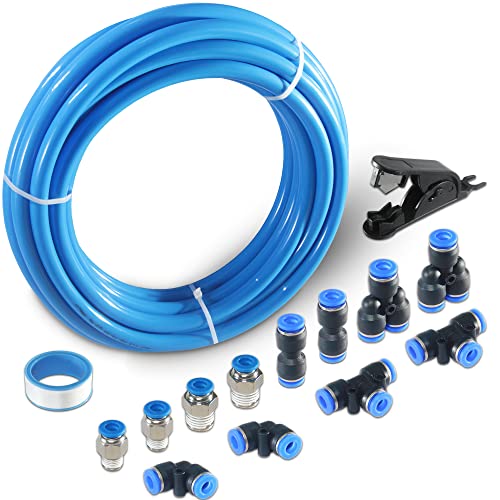
Blue PU Pneumatic Tubing Air Hose, 6mm OD x 4mm ID

ANCIMOON 3/4″ x 1/2″ Male NPT Straight Adapter Fittings

Boeray 3/4″ x 200FT Shop Air Line Kit

ANCIMOON 3/4″ Elbow Air Piping Fittings (2-Pack)

Boeray 3/4″ x 100FT Shop Air Line Kit

Boeray 3/4″ x 50FT Shop Air Line Kit

RapidAir MAXLINE 3/4″ Tubing Clips (10-Pack)
Meet The Standout Selections
If you’re already running Maxline tubing through your shop, you know the elbows matter most where the layout actually turns a corner. This five-pack of M8067 90-degree fittings is built specifically for 3/4-inch Maxline, so there’s no guessing whether a generic plumbing elbow will seat properly on the aluminum-lined tubing.
The nickel-plated brass body resists corrosion in damp garage environments, and the double O-ring seal is what keeps the joint quiet at working pressure. Compared with the straighter runs you’d build from the M6030 tubing roll alone, these elbows let you route around beams and door frames without kinking the line.
Positive Points
- Five-pack keeps a working inventory of corners on hand for future layout tweaks.
- Nickel-plated brass resists rust in unheated shops that swing through humidity swings.
- Double O-ring design delivers a sealed joint without thread tape or pipe dope.
- Compression-style connection means no soldering or crimping when you rework the run.
Honest Caveats
- Only fits Maxline 3/4-inch tubing, so it doesn’t cross over to generic pipe systems.
- Five pieces is more than a single small repair needs, leaving extras on the shelf.
Right Fit For
Shop owners building or extending a Maxline compressed air layout who need sealed corner turns without specialized tools.
Swap It Out When
Shoppers wanting a complete kit with tubing included should consider the Boeray 3/4″ x 100FT Shop Air Line Kit instead.
Fifty feet of tubing sounds modest until you start tracing the path from compressor to the far wall of a two-car garage. The M6030 from Maxline gives you that real working length in 3/4-inch diameter, which is the sweet spot for most home-shop air tools. Inside, an aluminum liner keeps the tube round and crush-resistant, with a polymer outer jacket that bends without kinking.
I appreciate how it holds a hand-bent shape once you set it, which matters when you’re routing around ceiling joists and don’t want to fight a springy hose every time you add a drop. For those planning a more flexible point-to-point hose setup, the DEWALT hybrid hose covered below handles a different role.
Notable Gains
- Aluminum liner resists crushing if a ladder leans against the run.
- Hand-bendable for tight ceiling corners without special tools.
- 50-foot roll covers most single-bay and small two-bay shop runs.
- Pairs with Maxline compression fittings for a sealed, reusable system.
Points To Note
- Fittings and clips are sold separately, so the initial build needs a few extra SKUs.
- 50 feet may run short for larger workshops with multiple drops.
Feature Snapshot
Made For
Shops running a single compressor that need a permanent, leak-resistant overhead distribution line.
Where Another Pick Suits Better
The Boeray 3/4″ x 200FT Shop Air Line Kit fits owners planning a multi-drop system from the start, since it ships with the fittings and valves in one box.
This is the hose you reach for when the fixed piping ends and you need to bring air to the actual workpiece. The DEWALT hybrid hose is built around a 3/8-inch interior with a rubber-and-PVC blend cover that stays pliable when temperatures drop. That flexibility is what separates it from rigid PVC hoses that turn into pretzels the moment your garage drops below freezing.
The 25-foot length hits a useful middle ground for an impact wrench, a framing nailer, or a spray gun without dragging extra hose across the floor. The solid brass 1/4-inch NPT end fittings give it a reassuring heft at the coupling, which matters if you’ve ever stripped a cheap aluminum fitting.
What Helps Most
- Stays flexible in deep cold, useful for unheated winter shops.
- Resists kinking under pressure, so airflow stays consistent mid-task.
- Solid brass end fittings thread on firmly to common air tool couplers.
Less-Strong Areas
- 25 feet limits reach in larger shops without a quick-connect extension.
- 3/8-inch bore is fine for most tools but reduces pressure for very high-demand air tools over long runs.
Who It Suits Best
DIYers and pros working in cold or unconditioned spaces who need a flexible hose that won’t fight back at low temperatures.
Look Elsewhere When
The Maxline M6030 tubing roll suits those who want a fixed overhead distribution system rather than a portable hose.
Small-scale air work asks for small-scale tubing, which is where the 6mm OD polyurethane line earns its place. At 4mm internal diameter, this blue PU tubing is right-sized for airbrushes, low-demand pneumatic actuators, and laboratory automation rigs where 3/4-inch shop piping would be massive overkill.
The polyurethane construction bends tightly around instrument panels without collapsing, and the material is rated for a wide temperature window. It comes with a handful of push-in fittings and a small pipe cutter, which saves a trip to the hardware store for the first hookup.
Strong Points
- Compact 6mm size fits precision tools and tight control panels.
- Polyurethane resists kinking on tight bends, unlike stiffer nylon alternatives.
- Bundled fittings and cutter simplify first-time hookup.
Small Caveats
- Not suited for high-demand pneumatic tools that need larger bore lines.
- 32.8-foot length caps use to single-station setups.
Best Suited To
Hobbyists running airbrush stations, model train pneumatics, or small automation projects that need clean, low-volume airflow.
Reach For A Different Pick When
Shop owners building a vehicle lift or impact-wrench line should pick the ANCIMOON 3/4″ elbow fittings instead.
The unsung heroes of any compressed air system are the adapters that bridge your main line to whatever the tool wants. These ANCIMOON straight fittings take a 3/4-inch Maxline-style compression side and step it into a 1/2-inch male NPT thread, which is the standard you’ll find on regulators, manifolds, and drop hoses.
The nickel-plated brass construction matches the other Maxline-compatible pieces above, so corrosion behavior stays consistent across the system. Double O-ring compression seals the tubing side, while the threaded side accepts standard sealant tape for a leak-free transition.
The Good Stuff
- Bridges 3/4-inch tubing to 1/2-inch NPT without a custom fab part.
- Nickel-plated brass matches the corrosion resistance of the rest of a Maxline run.
- Reusable compression end makes future reconfiguration painless.
Possible Compromises
- Only two pieces per pack, so larger installs need to order multiple sets.
- Threaded side requires sealant tape applied correctly to avoid slow leaks.
Who Should Grab It
Shops mixing Maxline distribution with traditional NPT-threaded regulators, filters, or drop fittings.
Consider Something Else When
The Boeray 50FT kit fits owners who want adapters included in a single all-in-one purchase.
When you’re building a compressed air system from a blank ceiling, chasing parts across three or four orders is the part that drains enthusiasm. The Boeray 200-foot kit lands as a single delivery with 186 pieces: tubing, aluminum outlet blocks with brass valves, tees, elbows, hose fittings, plus the cutters, clips, and tape you’d otherwise source separately.
The 200-foot length suits a four-bay shop or a longer barn-style build with multiple drops. Each outlet block lets you shut off a single drop for tool changes without depressurizing the whole line, which is the kind of feature you appreciate the first time you swap an impact for a sander.
What Works In Its Favor
- One box replaces four or five separate orders for a complete system.
- Aluminum outlet blocks with brass valves allow isolated drop shutoff.
- 200-foot run handles larger shops and barns with multiple bays.
- Included tubing cutter and bevel tool simplify the install timeline.
Practical Considerations
- 186 pieces can feel like overkill for a one-bay garage.
- Plan layout before opening boxes; surplus fittings still need a place to live.
Key Specs
Perfect Match For
Owners outfitting a multi-bay garage or workshop from scratch who want one coordinated kit instead of piecing parts together.
A Better Fit Elsewhere
The Boeray 50FT kit suits smaller single-bay shops that don’t need 200 feet of overhead line.
Not every repair needs a five-pack of corners. ANCIMOON’s two-piece elbow kit gives you a single sealed joint for a quick reroute, whether you’re patching an existing run or finishing off the last turn in a small shop layout. The 3/4-inch ends match the Maxline and Boeray tubing diameters above.
The nickel-plated brass body holds up to condensation and the occasional oil mist, and the 200 PSI rating covers most home-shop compressor outputs. The compression ends reuse without special tools, so re-routing later doesn’t burn through parts.
Standout Benefits
- Two-piece count matches a single reroute or repair without surplus waste.
- 200 PSI rating handles typical home-shop compressor pressures.
- Reusable compression ends support future layout changes.
Things To Weigh
- Two-piece count means larger installs require multiple orders.
- Only fits 3/4-inch tubing, not smaller drops.
Who Will Love This
Shop owners who need one or two sealed corner fittings to finish off an existing overhead run without buying a bulk pack.
Where A Sibling Pick Shines
The Maxline M8067 five-pack suits users planning multiple future reroutes and wanting spares on the shelf.
Right in the middle of Boeray’s lineup sits this 100-foot kit with 99 pieces, which lands as the practical sweet spot for a two-bay garage or a moderately sized workshop. You still get the aluminum outlet blocks with brass valves, the tee and elbow fittings, and the install accessories, just sized down from the 200-foot flagship.
The 99-piece count keeps the parts list manageable, which helps first-time installers track what goes where. It’s the option I’d recommend for someone moving into a new garage with plans for two to four drops but not needing to pipe a barn.
Noteworthy Benefits
- Right-sized for two-bay garages without overspending on unused tubing.
- Includes outlet blocks with valves for per-drop shutoff.
- Full accessory pack means no last-minute hardware runs.
Trade-Offs To Consider
- 100 feet may fall short for wraparound shop layouts.
- Some users may not need the included fittings count for a small drop.
The Right Fit
Two-bay garage owners and small-shop operators who want a coordinated kit without the surplus of a 200-foot build.
Skip It When
Larger multi-room workshops should step up to the Boeray 200FT kit to avoid running short mid-install.
For a single-bay garage or a hobby workshop, a full 200-foot kit is overkill. Boeray’s 50-foot version with 59 pieces covers one compressor, two to three drops, and the basic install hardware without flooding your shop with parts you’ll never use.
The HDPE-aluminum-HDPE tubing construction combines a smooth aluminum core with tough polymer outer layers, balancing crush resistance with the bendability you’d expect from a quality shop line. The four-way aluminum blocks let you tee off drops without ordering extra manifolds separately.
Everyday Advantages
- Compact kit matches single-bay and hobby-shop needs.
- Four-way aluminum blocks simplify multi-drop layouts.
- HDPE-aluminum-HDPE tubing balances strength and flexibility.
Smaller Limitations
- 50 feet is too short for larger shops with wraparound runs.
- 59 pieces may not include enough tees for heavily branched layouts.
Spec Overview
Whose Shelf It Belongs On
Hobbyists and single-bay garage owners outfitting a workshop for the first time.
A Better Fit Elsewhere
The Boeray 100FT kit fits owners with a two-bay garage who need more reach and a few extra drops.
The last detail that separates a tidy install from a sagging mess is how the line is mounted. These RapidAir Maxline M8065 clips hold 3/4-inch tubing flat against a wall or ceiling, and the 10-pack covers the typical spacing for a small shop run.
The clips are reusable, which matters when you decide to reroute a drop six months in. They match the Maxline tubing and elbow fittings reviewed earlier, so the whole system shares a consistent mounting and sealing approach.
Where It Helps
- Keeps 3/4-inch tubing securely routed along walls and overhead.
- Reusable design supports layout changes without buying new clips.
- Matches Maxline tubing for a coordinated install look.
Worth Bearing In Mind
- Only fits 3/4-inch Maxline tubing, not generic pipe.
- 10 clips may run short for longer 100- or 200-foot installations.
Built With In Mind
Shops finishing a Maxline install and wanting consistent clip spacing along the run.
Not Your Match When
The Boeray 200FT kit includes tubing clips in its accessory pack for owners who want everything in one delivery.
Choosing The Right Diameter And Material For Your Air Line
Most home shops run on 3/4-inch main lines stepping down to 3/8-inch drops at the tool, which is the rough size that balances airflow with install simplicity. The diameter you pick determines how much pressure drop you see at the outlet, especially when two tools run at once. Aluminum-lined tubing like the Maxline M6030 stays round under clamp pressure, while HDPE-aluminum composites like the Boeray kits trade a touch of stiffness for corrosion resistance.
Material matters in unheated garages. PVC becomes brittle in deep cold, so hybrid rubber hoses or polyurethane lines handle temperature swings better. Fittings are the other half of the equation: nickel-plated brass resists corrosion, and double O-ring compression joints give you a reusable seal without thread tape. Plan your drops around outlet blocks so you can isolate one tool without depressurizing the rest of the system.
If your shop sits below freezing for stretches, lean toward hybrid hoses at the drop and rigid aluminum-core lines for the main run. In mild climates, PVC and polymer tubing handles the workload without complaint. Match the tubing diameter to the highest-demand tool you’ll run, and step down with reducers only after the main loop is in place.
Smart Picks For Common Shop Layouts
Pitfalls Shoppers Hit
Undersizing the main line is the classic mistake, since most people plan for one tool running at a time and forget about the sander and the inflator firing together. A second common slip is mixing fitting brands that look compatible but use slightly different compression profiles, which leaves slow leaks at every transition. Plan the route on paper first, count your drops, and buy a kit that includes ten to twenty percent extra fittings for layout changes.
Where The Extra Money Goes
Higher-tier kits like the Boeray 200-foot version ship with aluminum outlet blocks and brass valves, where you can shut off individual drops without draining the whole loop. The premium also covers thicker wall construction and better sealing hardware, both of which pay off over years of use. For smaller shops, the price difference between a bare tubing roll and a complete kit is often less than the cost of the missing fittings bought one at a time.
Frequently Asked Questions
What diameter pipe do I need for a home shop compressor?
A 3/4-inch main line covers most home-shop compressors feeding two to four drops at once. Step down to 3/8-inch for the final run to the tool, since larger drops waste pressure at low-demand tools. Bigger tools or multi-tool use may justify staying at 3/4-inch all the way to the regulator.
Can I use PVC pipe for compressed air?
Schedule 40 PVC is sometimes used for cold lines, but it becomes brittle in freezing temperatures and can shatter under impact. Aluminum-lined tubing, HDPE composites, and hybrid rubber hoses handle shop conditions more reliably. PVC also risks static buildup in some configurations, which is a concern in dry environments.
How long do Maxline fittings last?
Nickel-plated brass fittings with double O-ring seals typically last for many years of shop service when properly seated. O-rings can dry out over time and may need replacement after long idle periods. Keeping the system pressurized and free of contamination extends the seal life.
Do I need a regulator on my compressed air line?
Most pneumatic tools run at 90 PSI or below, while compressors often deliver higher tank pressure. A regulator steps the pressure down to match the tool and protects seals from overpressure. Inlet regulators also help when paired with outlet blocks for per-drop shutoff.
How do I route compressed air pipes around obstacles?
Use elbow fittings at corner turns and tee fittings where a drop branches off the main loop. Aluminum-lined tubing bends by hand for gentle curves, while sharper turns need a fitting. Plan the path along ceiling joists or wall studs for the cleanest install and easiest access later.## The TakeawayA compressed air system pays you back every time you grab an impact wrench instead of a ratchet. Match your main line diameter to the highest-demand tool you’ll run, pick fittings from a single system family for clean seals, and budget a few extra clips and tees for the inevitable layout tweaks. The right pipe setup is the one that disappears into the shop and just keeps delivering air when you need it.
