

Curved roofs, van tops, and boat decks need solar that bends a little without turning installation into a headache. That’s where semi-flexible panels make sense, especially for you’re matching uneven surfaces or tight spaces with a cleaner roof line. The picks below focus on shape-friendly panels, practical wattage, and the kinds of details that matter after the box is open, like mounting fit, cell layout, and how much space each option actually needs. You’ll also see where a rigid-style upgrade starts to make more sense.
The Shortlist At A Glance

Renogy Flexible Solar Panel 100 Watt, 240° Ultra Flex Bendable

Topsolar 2PCS 180W Semi-Flexible Solar Panel

Topsolar 1PCS 180W Semi-Flexible Solar Panel

100W 12V Flexible Solar Panel 9BB Monocrystalline Cell
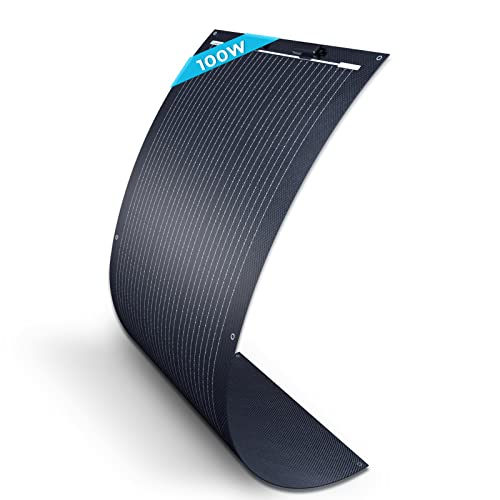
Renogy Flexible Solar Panel 100 Watt, 240° Ultra Flex Bendable

2PCS 100W 12V Flexible Solar Panel 9BB Monocrystalline Cell
BougeRV 200 Watt Solar Panel Bifacial 12V N-Type 16BB

BougeRV Arch Pro 200W Anti-Shading N-Type Fiberglass Flexible Solar Panel
More Details On Our Top Picks
Renogy’s 100W panel makes sense for curved van roofs and marine layouts where a stiff module would fight the surface. The 0.1-inch profile keeps it low to the roof, and the 240° bend rating gives you a clear clue about the kind of contour it’s built around. That mix helps in cramped installs, though the trade-off is the usual one with flexible panels, less panel body and more care needed during mounting.
You’ll likely appreciate the IP68 rating more than the marketing gloss. That protection level points to strong dust and water resistance for exposed cabins, boats, and road-worn rigs, which is handy when the panel lives outdoors full time. It’s a practical pick for daily travel use, especially for you who want one panel to sit close and stay out of the way.
Strong Points
- 240° bend rating suits curved mounting surfaces.
- Very slim profile keeps roof bulk down.
- IP68 protection fits exposed outdoor setups.
- Good match for marine, RV, and van use.
Things To Consider
- Flexible panels usually need careful mounting prep.
- Low-profile builds can be less rigid underfoot.
Core Details
Who It Suits Best
You’ll get the most from this panel on a curved RV roof, boat deck, or van build that needs a low, tidy fit.
A Better Fit Elsewhere
BougeRV Arch Pro 200W Flexible Solar Panel suits you better when your roof has more shade variation and you want a higher-output flexible layout.
Two panels in the box change the math for roof layouts that need spread-out coverage. That helps on larger RV tops, cabin setups, or boat surfaces where one panel leaves awkward empty space, and it also gives you more placement flexibility around vents and hardware. The catch is simple, you’ll be managing two pieces instead of one.
Topsolar’s 180W format gives this set a broader working footprint than the single-panel option from the same brand. That makes it better for setups that want coverage across uneven surfaces without jumping all the way to a rigid high-output panel. It feels like the sensible middle path for travel rigs that need more area, not more drama.
Highlights
- Two panels allow flexible roof placement.
- 180W format suits medium off-grid needs.
- Useful for spaced-out mounting around roof gear.
- Good fit for RV and boat layouts.
Minor Gripes
- Two panels mean more wiring and planning.
- Larger coverage can take more roof real estate.
Feature Snapshot
Who Should Grab It
You’ll like this set most for a larger RV, boat, or cabin roof that benefits from divided placement.
Swap It Out When
Topsolar 1PCS 180W Semi-Flexible Solar Panel suits you better when you want the same power level in a simpler single-piece setup.
This version keeps the same 180W output as the two-panel set, but in a single module that’s easier to place and route. For smaller rooftops, that cleaner footprint can matter more than split coverage, especially on van conversions where every corner has a job to do. You still need to plan mounting carefully, yet there’s less juggling than with a pair of panels.
It fits naturally into an off-grid cabin, a trailer, or a boat setup that wants one panel and one wiring path. The honest read is that you give up the flexibility of divided placement, but you gain a simpler install story. For many weekend rigs, that trade feels fair.
Best Bits
- Single-panel layout simplifies installation.
- 180W suits moderate charging needs.
- Cleaner fit for smaller roof spaces.
- Easy to plan around obstructions.
Areas To Watch
- Less flexible than a two-panel layout.
- Single large piece can be harder to position alone.
Details At A Glance
Built With In Mind
You’ll get the best fit from this one on a smaller RV, trailer, or cabin roof where simplicity matters.
Another Choice May Suit
Topsolar 2PCS 180W Semi-Flexible Solar Panel suits you better when you need to spread coverage around vents, rails, or skylights.
Topunive keeps this one straightforward: 100W, 12V, and a 9BB monocrystalline cell layout. Monocrystalline means the panel uses a single-crystal silicon structure, which is common in solar gear because it fits compact builds well and keeps the language of the install simple. That makes it a sensible match for you who just want a basic 12V charging panel without extra complexity.
The 12V focus matters on marine and RV systems that already run around a 12-volt battery bank. Compared with the 180W Topsolar picks, this panel trades output for a smaller step into flexible solar ownership, which is helpful on modest cabin systems or trailer add-ons. It’s not flashy, and that’s part of the appeal.
Upsides
- 12V format fits common off-grid systems.
- 100W output suits starter solar setups.
- Monocrystalline cell type is widely used in solar gear.
- Works well on marine and RV surfaces.
Worth Noting
- Single-panel output stays modest for larger power plans.
- Flexible builds still need careful surface prep.
Quick Facts
Right Fit For
You’ll do well with this panel on a basic 12V RV, trailer, or cabin setup that needs a modest solar start.
Look Elsewhere When
Renogy Flexible Solar Panel 100 Watt, 240° Ultra Flex Bendable is the better match for a more aggressive curved-surface install.
This Renogy version keeps the same flexible shape story as the earlier model, but the black finish gives it a more discreet roof presence. That matters on camper vans and boats where visible hardware can stand out fast, and a darker surface usually blends better with trim and roof gear. Compared with the first Renogy pick, this one leans more toward appearance than technical difference.
At 0.1 inch thick, it stays slim enough for low-clearance installations where every bit of height counts. The trade-off is familiar, a sleek profile often asks for more thoughtful mounting and cleaner preparation underneath. You’ll like it most where the roof look matters almost as much as the charging plan.
Reasons To Buy
- Black finish blends well on darker roofs.
- 240° bend rating supports curved installs.
- Thin build helps preserve clearance.
- Good option for tidy-looking RV or marine setups.
Small Caveats
- Appearance-focused choice still needs careful mounting.
- Low-profile solar panels can feel less substantial in hand.
Feature Rundown
Whose Shelf It Belongs On
You’ll like this version most on a clean-looking van, cabin, or boat roof where a darker panel blends in better.
Where A Sibling Pick Shines
Renogy Flexible Solar Panel 100 Watt, 240° Ultra Flex Bendable is the stronger fit for you if IP68 protection matters more than color.
Two 100W panels give you the same total power idea as a single larger setup, but with more freedom about where each piece lands. That can help on roofs with vents, rails, or uneven zones, since the split format lets you tuck a panel into each workable space. It also makes handling a little easier than wrestling one big sheet across the roof.
The 12V and 24V battery-charge wording points to a broader use range than the single 12V-only style in the earlier Topunive panel. For mixed RV electrical plans, that extra flexibility is useful, though wiring still deserves a careful layout. This is the kind of set that works best for practical tinkerers, not hands-off installs.
Bright Spots
- Two-piece format helps with irregular roof layouts.
- Split handling can be easier during installation.
- Works with both 12V and 24V charging plans.
- Good for RVs, trailers, and cabin roofs.
Points To Note
- Two panels mean more planning for cabling.
- Storage and transport take a bit more room.
Technical Sheet
Made For
You’ll benefit most from this set on a roof with multiple obstacles or on a 12V and 24V battery setup.
Reach For A Different Pick When
Topsolar 1PCS 180W Semi-Flexible Solar Panel suits you better if you want fewer pieces and a simpler mounting job.
BougeRV steps away from the fully flexible lane here and leans into higher-output roof power. Bifacial means the panel can use light from both the front and the back, which can help in reflective spots such as pale roof surfaces or open setups, while N-type and 16BB point to a more modern cell architecture with many narrow busbars for current collection. That kind of build is a stronger fit for you who care more about wattage and efficiency than about bending around a sharp curve.
The 200W output places it above the 100W flexible picks in pure power potential. Compared with the semi-flexible options, it’s less about odd roof shapes and more about feeding a larger off-grid system in a van, home, farm cabin, or boat. The trade-off is obvious, you’re moving toward a more structure-first panel rather than a shape-first one.
Positives
- 200W output supports larger power budgets.
- Bifacial design can use reflected light.
- N-type and 16BB cell design suggest a more advanced layout.
- Well suited to roof-based off-grid systems.
Honest Caveats
- Less flexible than the semi-flexible picks above.
- Best for roofs with enough room and support.
Core Details
The Right Fit
You’ll want this panel for a larger roof system where power output matters more than bend range.
Where Shoppers Go Wrong
Renogy Flexible Solar Panel 100 Watt, 240° Ultra Flex Bendable suits you better if your surface curves enough that a standard roof panel feels awkward.
This Arch Pro model adds anti-shading design and a fiberglass build, which tells you a lot about its intended use. Fiberglass gives the panel a stiffer backing than a soft film-style sheet, while anti-shading design aims to limit how much one shaded section drags down the whole panel’s output. On roofs where vents, racks, or a satellite dome cast uneven light, that can be a meaningful advantage.
It also carries 200W output and 24-volt positioning, so it sits in the more serious end of this list. Compared with the earlier BougeRV bifacial panel, this one is more about handling tricky light and flexible roof contours together. It suits you best when the surface is demanding and the power plan is bigger than a casual weekend setup.
What We Like
- Anti-shading design helps on mixed-light roofs.
- Fiberglass backing adds a sturdier feel.
- 200W output supports stronger charging plans.
- 24-volt positioning broadens system fit.
Softer Spots
- More advanced build likely needs careful install planning.
- Higher-output flexible panels can take more roof room.
Feature Card
Perfect Match For
You’ll like this panel most on a roof with patchy shade and a power setup that calls for more than a basic starter module.
Skip It When
BougeRV 200 Watt Solar Panel Bifacial 12V N-Type 16BB makes more sense when your roof has open exposure and you want bifacial capture instead.
How To Choose The Right Semi-Flexible Solar Panels
Match The Panel To The Surface
The first question is simple: does your roof curve, or is it mostly flat? Semi-flexible panels make the most sense on vans, boats, and trailers where a rigid panel would sit awkwardly or need more hardware to bridge the gap.
Look at bend range, thickness, and how much surface prep the install will need. A slim panel like Renogy’s 0.1-inch model fits low-clearance builds, while a thicker or more structured option may feel better on a roof that sees more foot traffic.
Choose Output For Real Use, Not Just The Label
Wattage tells you how much power the panel can produce under ideal conditions, so it should line up with the gear you actually run. A 100W panel works well for lighter loads, while 180W or 200W options make more sense for longer trips, larger battery banks, or more demanding cabin setups.
Battery voltage matters too. A 12V panel is a natural fit for common RV and marine systems, while 24V support can suit larger layouts that need a different charging path.
Think About Wiring And Placement
Single-panel choices are usually easier to plan and mount, especially on smaller roofs. Two-panel sets can fit around vents, skylights, and rails more gracefully, but they add cabling and placement decisions.
That trade-off matters in daily ownership. A cleaner install often means fewer headaches later, yet a split layout can solve the awkward spaces that make one large sheet difficult to place.
Match The Build To Your Travel Pattern
For road rigs and boats, the details that matter most are exposure and movement. IP68 protection, fiberglass backing, and shaded-area design all speak to how a panel handles outdoor life, not just how it looks in a listing.
Budget for your real environment. A weekend cabin setup can live with a simpler panel, while a full-time travel rig benefits from tougher materials, smarter cell layouts, and a shape that suits the roof instead of fighting it.
Things Worth Knowing First
Common Shopping Slip Ups
Many people focus on wattage and miss the fit side of the equation. A panel that looks strong on paper can become awkward on a curved roof or crowded van top.
Another common miss is treating flexible panels like rigid panels, then expecting the same mounting routine. Surface prep and placement matter more here than many first-time installations expect.
The Upgrade Payoff
Higher-tier panels usually cost more because they use more advanced cell layouts, stronger backing materials, or better shading control. Bifacial designs, N-type cells, and fiberglass construction all add complexity, and that complexity usually shows up in the price structure.
That upgrade makes the most sense for full-time travel, shaded roofs, or power-hungry systems. For a weekend RV or a small cabin battery bank, a simpler 100W panel can still be the more sensible path.
Frequently Asked Questions
What makes a solar panel semi-flexible?
A semi-flexible panel can bend along a curved surface more than a rigid glass panel can. It still needs careful mounting, so the flexibility helps with fit rather than replacing good installation work.
Are semi-flexible panels good for vans and boats?
Yes, they suit curved roofs, rounded decks, and uneven surfaces very well. That shape-friendly layout makes them easier to place than many rigid panels.
Is a 100W panel enough for travel use?
It can be enough for lighter charging needs, basic battery support, or smaller systems. Larger loads usually call for 180W or 200W panels, or a multi-panel setup.
What does IP68 matter for?
IP68 signals strong resistance to dust and water exposure. That matters on outdoor installs where the panel sits exposed to weather and road spray.
Do split-panel sets have an advantage?
They help you work around vents, rails, and other roof obstacles. The trade-off is more wiring and a little more planning.
Closing Thoughts
Semi-flexible solar panels make the most sense when your roof shape matters as much as your wattage target. For a curved van top, a marine deck, or a roof crowded with gear, the right panel saves space and makes the install feel less forced. The simpler 100W choices suit lighter use, while the 180W and 200W options give you more breathing room for real travel power. Pick the one that matches your surface first, then match the output to your daily load.
