

Choosing Performing Solar Panels gets easier once the use case is clear. A backyard shed, a roof array, a van, and a pocket-size USB setup all ask for different things, even when they sit in the same category. The right panel saves you from mismatched connectors, awkward mounting, and disappointing output on ordinary days.
This roundup focuses on five very different options, from fixed residential-style panels to portable kits and low-power chargers. You’ll see where each one fits, what kind of space it needs, and where the trade-offs show up in daily use.
Quick Look At Our Shortlist
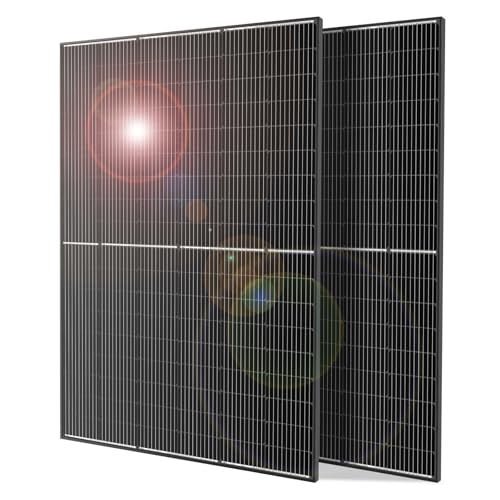
DOKIO 800W Solar Panel Set, Two 400W Panels for 24V Off-Grid Systems

JJN Bifacial 425 Watt Solar Panel, N-Type UL 61730 16BB Solar Panels
DOKIO 100W Foldable Solar Panel Suitcase with 10A Controller, Gray

Soshine USB Solar Panel 2Pack with DC Male to Male Cable, Solar USB Charger 5v 6w

200 Watt TÜV Certification N-Type Solar Panel, 25.8% Efficiency
More Details On Our Top Picks
Large fixed panels make the most sense once your setup stops moving around. This DOKIO pair suits a shed, yard structure, or a 24V off-grid system that needs real surface area rather than a travel-friendly fold-up format.
The aluminum frame and pre-drilled holes point to straightforward mounting, while the 9.84-foot cables give you a bit of breathing room during placement. Compared with the DOKIO suitcase below, this one is built for permanence, not quick storage, so it suits hands-on owners with a set location.
Strong Points
- Two 400W panels give you a substantial fixed-array starting point.
- Pre-drilled holes make mounting easier on sheds or similar structures.
- The aluminum frame should hold up well in a stationary setup.
- Longer cables help with flexible panel placement around a yard or outbuilding.
Things To Consider
- This is a large-format set, so storage and handling take planning.
- It fits a 24V off-grid setup, which narrows the use case.
- Installation usually asks for more effort than a portable suitcase panel.
Feature Snapshot
Who It Suits Best
You’ll get the most from this panel set in a fixed off-grid build where size and output matter more than portability.
A Better Fit Elsewhere
DOKIO 100W Foldable Solar Panel Suitcase with 10A Controller, Gray suits campers and mobile setups much better, since it stores easily and packs a controller into a carry-friendly format.
The JJN panel feels aimed at more serious power planning, especially where roof space or mounting area is tight. Bifacial means both sides can contribute output, so it fits locations with reflective surroundings better than a plain front-facing module, at least in practical terms.
Its N-type cell design and 16BB layout point to a more advanced panel structure, and the compatibility range from 12V through 48V opens up a wider set of systems. That makes it a sensible upgrade for home arrays, RV rooftops, or farm buildings that need flexibility without jumping to a giant multi-panel build.
Upsides
- Bifacial design can make better use of bright surfaces behind the panel.
- Wide system compatibility gives you more wiring and setup options.
- The 425W rating suits larger power needs without going into a multi-panel cluster.
- N-type construction and 16BB cell layout signal a more modern module design.
Points To Note
- Bifacial performance depends on where and how the panel is mounted.
- It makes more sense for planned installations than casual, temporary use.
- Roof or rack placement usually matters more here than with the foldable DOKIO kit.
Core Details
Who Should Grab It
Home rooftops, RV owners, and off-grid properties with planned mounting space get the most value here.
Swap It Out When
DOKIO 800W Solar Panel Set, Two 400W Panels for 24V Off-Grid Systems is the better fit for a fixed 24V build that wants more total array size than a single module can provide.
Portable panels earn their place the moment your power source has to move with you. This DOKIO suitcase folds down to 19.3 by 23.8 inches and weighs 10.1 pounds, so it lands in the useful middle ground between compact storage and practical output.
The included waterproof 10A controller adds a little more control than a bare panel, and the USB ports make small-device charging easier at camp or during a backup power situation. Compared with the heavier DOKIO 800W set, this one is the friendlier carry option for weekend trips and small systems.
Highlights
- Folds into a travel-friendly size for storage in a van, trunk, or closet.
- The controller is included, which saves you from sourcing a separate piece right away.
- USB ports make light charging tasks more convenient around camp or during outages.
- The 9.85-foot cable gives you some room to place the panel where light is better.
Areas To Watch
- At 100W, this suits smaller loads rather than heavy household demand.
- Foldable gear needs a little more handling care than fixed panels during transport.
- The suitcase shape works best for mobile use, not permanent roof mounting.
Details At A Glance
Made For
Campers, weekend travelers, and anyone who wants a portable charging setup with simple storage should feel right at home here.
Look Elsewhere When
JJN Bifacial 425 Watt Solar Panel, N-Type UL 61730 16BB Solar Panels suits a more permanent roof or rack project that needs higher output and a broader system range.
Small solar panels fill a different role from the bigger DOKIO and JJN options. This Soshine 2-pack is built around USB charging, so it makes more sense for lanterns, power banks, and mini fans than for anything resembling a full power setup.
The monocrystalline build and protective film are aimed at getting usable output from ordinary daylight, and the package includes a DC male-to-male cable. The honest read is that this is a light-duty tool, but that’s exactly why it can feel useful in a camping bin or emergency drawer.
Best Bits
- Two-panel pack gives you more setup flexibility for small gear.
- USB charging suits everyday camp accessories and backup gadgets.
- The included DC cable helps simplify first-time setup.
- Monocrystalline construction is a sensible match for compact solar charging.
Small Caveats
- This is for low-power devices, not larger appliances or house loads.
- USB-focused output means you’ll want gear that already fits that path.
- Small panels can be more placement-sensitive in partial shade.
Quick Facts
The Right Fit
You should look here for light camping use, backup charging, or a compact power setup for small accessories.
Where A Sibling Pick Shines
DOKIO 100W Foldable Solar Panel Suitcase with 10A Controller, Gray suits you better once your charging needs expand beyond USB-powered gear.
This ECOBOSS panel sits in the useful middle of the pack, larger than the Soshine USB pair and easier to integrate than the full DOKIO 800W set. The 200W rating and 25.8% efficiency point to a strong fit for vans, marine installs, and compact off-grid systems that need a single dependable module.
IP68 waterproofing gives you better confidence in wet or dusty environments, and the 16BB cell layout suggests a more advanced module structure. In plain terms, it suits owners who want a durable-looking panel for a vehicle roof, a boat, or backup power use without jumping to a bulkier array.
Reasons To Buy
- 200W output fits practical mid-size charging and backup setups.
- High efficiency helps make better use of limited mounting area.
- IP68 waterproofing is a strong fit for marine or exposed locations.
- The N-type build and 16BB layout point to a more advanced module design.
Honest Caveats
- It still needs proper mounting, so it’s not a grab-and-go choice.
- The single-panel format may feel small for larger off-grid plans.
- Installation planning matters more here than with a portable suitcase setup.
Core Details
Built With In Mind
Van owners, marine setups, and off-grid users who want a single mid-size panel will get the best match here.
Reach For A Different Pick When
JJN Bifacial 425 Watt Solar Panel, N-Type UL 61730 16BB Solar Panels makes more sense for larger fixed arrays that need broader system compatibility and higher output.
How To Choose The Right Performing Solar Panels
Match Output To The Job
Panel wattage tells you the rough size of the energy contribution, not just the label on the box. A 100W suitcase works for smaller devices and light backup use, while 425W or an 800W set belongs in setups that need more serious generation.
Think about the load first, then the panel. A camping lantern and a rooftop system sit in different worlds, so the right number depends on what you plan to run and how often you’ll run it.
Check Mounting And Portability
Fixed panels suit roofs, sheds, and yards because they stay in place and can use larger frames. Foldable panels and small USB models trade raw output for easier storage, easier transport, and less permanent installation work.
That trade-off matters most in vehicles and travel gear. A suitcase-style panel can live behind a seat until needed, while a rigid module rewards a committed install and a bit more planning.
Look Beyond The Cell Count
Details like N-type cells, monocrystalline construction, bifacial design, and 16BB layouts point to how the panel is built. Bifacial means the rear side can also pick up reflected light, which helps in the right setting, while monocrystalline usually fits compact layouts well.
Those terms matter because they shape fit, not just marketing language. A more advanced cell structure often belongs on a roof or rack where it can earn its keep, while a simple USB charger only needs to do one smaller job well.
Plan For The Surroundings
Environment changes the result as much as the panel itself. Marine use asks for stronger exposure resistance, off-grid sheds need sturdy mounting, and camping setups benefit from a panel that folds neatly and carries easily.
The best choice usually looks a little different once you picture the real location. A panel that suits a sunlit roof may be awkward in a narrow storage bay, and that’s where the format matters as much as the wattage.
Things Worth Knowing First
Wrong Turns To Avoid
One common misstep is buying more output than your setup can actually use. Another is overlooking connector type, controller needs, or mounting hardware, which can turn a promising panel into a frustrating project.
Storage also deserves attention. Foldable panels need a safe place to travel, while rigid modules need room to sit, ship, and mount without damage.
The Upgrade Payoff
Higher-tier panels usually cost more because you’re paying for more sophisticated cell design, stronger weather resistance, or a more practical installation format. That shows up in modules like the ECOBOSS 200W panel with IP68 protection and the JJN bifacial option with a more advanced layout.
The upgrade makes sense when the panel will live outdoors, handle regular use, or feed a system you rely on often. For lighter, occasional use, the simpler DOKIO suitcase or Soshine USB pair can make more sense than spending extra on capacity you won’t tap.
Frequently Asked Questions
What makes bifacial panels different?
Bifacial panels can take in light from both sides, not just the front. That matters most on reflective surfaces or bright, open mounting spots.
Can a foldable solar panel stay mounted full-time?
A foldable panel is usually better as a mobile or temporary setup. The suitcase format is designed more for storage and transport than permanent roof work.
Do small USB solar panels have a real use?
Yes, they fit light charging jobs for gear like lanterns and power banks. They are not meant for larger appliances or whole-home needs.
Why does waterproofing matter on a solar panel?
Water resistance helps in exposed, damp, or marine settings. It adds peace of mind when the panel sits outdoors for long stretches.
How do you choose between 100W and 400W panels?
Pick the wattage that matches the load and the size of the space you can mount. Smaller travel setups usually lean toward 100W, while fixed off-grid builds tend to need much more.
Final Thoughts
The right panel depends on where you want power to live, on a roof, in a shed, beside a van, or in a camping kit. DOKIO, JJN, Soshine, and ECOBOSS each solve a different version of that problem, so the smartest choice is the one that fits your space and your routine. A clean match here saves more trouble later than chasing the biggest number on the page. Choose the setup that suits how you actually use energy, and the rest gets much easier.
