

Sorting through inexpensive solar panels gets easier once you separate true value from thin marketing. Some options are built for full off-grid setups, others are better for security cameras, small electronics, or DIY projects. The right choice depends on where you plan to mount it, how much power you need, and how much space you have to work with.
This roundup keeps the focus on real use, not flashy claims. You’ll see larger panels for cabins, RVs, and sheds, plus smaller kits for cameras and craft-style builds. That mix helps you match the panel to the job instead of forcing one product to do everything.
Quick Look At The Shortlist

ECO-WORTHY 400W Solar Panels N-Type 4pcs 100 Watt 18V Monocrystalline
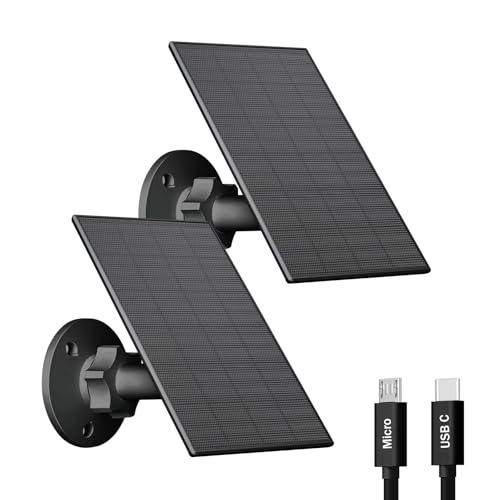
VUEBEE 2W Solar Panel for Security Cameras, 2 Pack Black

SOLUPUP Solar Panels 30W Portable Foldable Solar Charger

FellDen Micro Solar Panels with Wire, 5PCS 5V 200mA

SUNYIMA 10Pcs 5V 60mA Mini Polycrystalline Solar Panels Cells

Rvpozwer 100W Solar Panel, 25% High Efficiency 18BB 100 Watt

Callsun 50 Watt Solar Panel 12V, N-Type 16BB 50W Solar Panel
MHPOWOS 60W Portable Solar Panels Charger with USB-C, USB-A and DC Outputs

FSV GYY 8W Solar Panel for Security Cameras, Waterproof Outdoor Solar Charger
More Details On Our Top Picks
This 4-panel kit makes sense for larger off-grid jobs, especially on a shed roof, RV rack, or cabin setup where you want more total output from one purchase. The 18BB layout means 18 busbars, the thin metal traces that move current across the cells, and that usually helps with current flow across the panel surface. You still need enough mounting space, though, and this size is more than a casual weekend gadget.
Compared with the smaller camera panels later in the list, this ECO-WORTHY set is built for real system planning, not just keeping one device alive. The IP68 rating points to strong dust and water resistance, which matters on boats, farms, and outdoor structures that see rough weather. It suits you best when you want panel output that can grow into a proper battery-backed setup.
Strong Points
- Four 100-watt panels give you a serious starting point for a compact off-grid array.
- N-type cell construction is a useful sign for efficiency-minded installs.
- IP68 sealing helps the panels fit exposed spots better than lighter-duty gear.
- Works across 12V and 24V battery setups, which adds planning flexibility.
- Good match for long-term use on sheds, boats, and RV roofs.
Things To Consider
- The footprint is substantial, so tight mounts and small trailers can feel cramped.
- Installation usually asks for more hardware, space, and patience than a portable panel.
- Cleaning and maintenance matter, because any roof-mounted system gathers dust and pollen over time.
Feature Snapshot
Who It Suits Best
You get the most from this pick when you’re building a compact off-grid power setup for an RV, shed, farm outbuilding, or boat.
A Better Fit Elsewhere
Callsun B0DNJK223C fits you better for a smaller van or trailer where 50 watts is easier to place and manage.
Camera owners usually want the least complicated power fix, and this two-pack stays focused on that job. The 7.2-foot cable gives you room to position the panel where sunlight is better than the camera mount, and the 360-degree adjustable bracket helps with awkward walls, soffits, and fences. The trade-off is obvious, though, since 2 watts is meant for camera upkeep rather than broader power use.
Unlike the ECO-WORTHY set, this model is about keeping a single device topped up without making the install bulky. USB-C and Micro USB support covers a wide spread of camera styles, and the IP65 rating suggests it’s built for outdoor exposure rather than sheltered placement. For most yards, that’s a sensible middle ground between convenience and simplicity.
Positives
- Two panels in the pack help you cover multiple camera positions.
- USB-C and Micro USB support broadens compatibility with common camera power ports.
- The long cable gives you better placement choices around porches and eaves.
- Adjustable mounting makes it easier to line up sun exposure.
Small Caveats
- 2 watts is narrow in scope, so it fits camera duty better than anything larger.
- Outdoor brackets may need periodic tightening in windy spots.
- Mounting under deep shade can limit usefulness fast, so placement still matters.
Details At A Glance
Who Should Grab It
You’ll appreciate this most for a security setup with one or two compatible cameras and limited wall space.
Swap It Out When
FSV GYY B0GS158CGK fits better for a single-camera setup where an 8W panel brings more charging headroom.
Foldable panels are a different kind of convenience, and this 30W unit is built for people who move between campsites, trails, and picnic spots. The USB-A and USB-C outputs make it easier to charge phones, tablets, and power banks without carrying a separate inverter, which keeps the setup lighter in a backpack or car trunk. The honest read is that it’s still a travel charger, not a whole-cabin energy source.
Compared with the camera-focused VUEBEE panel, this one serves a much broader mix of small electronics. The built-in smart chip helps the charger recognize connected devices and manage charge speed, while the auto-reconnect feature resumes work after sunlight returns. That’s helpful on partly shaded campsites, although foldable gear usually asks for a little more care in packing and handling.
What We Like
- Foldable design makes it easier to stash in a vehicle or pack.
- USB-A and USB-C output support common portable electronics.
- The smart chip adds device matching and current control for everyday charging.
- Auto-reconnect behavior is useful when clouds or tree cover interrupt sunlight.
- IPX5 water resistance gives you a bit more confidence outdoors.
Room For Improvement
- 30 watts works well for portable gear, but not for larger power demands.
- Foldable seams deserve careful storage so the panel stays tidy over time.
- Charging speed still depends heavily on daylight and panel angle.
Core Details
Built With In Mind
You’re the best match for this panel when camping, hiking, or driving between outdoor stops with phones and power banks to keep alive.
Where A Sibling Pick Shines
MHPOWOS B0FF9VHZS9 suits you better for a campsite with a small power station, since its DC output broadens the use case.
Small solar cells like these make sense when your project is more about learning and tinkering than running real household loads. The five-piece pack gives you a neat supply for prototypes, classroom builds, or hobby circuits, and the wired format saves some soldering work right out of the gate. That makes it friendlier for first-time project builders than loose cells in bulk.
Compared with the SOLUPUP portable charger, this set is much more of a parts kit than a finished product. Each cell is listed at 5 volts and 200mA, so the output is modest and best suited to light-duty experimentation or small devices. For anyone assembling toys or simple solar demos, that simplicity is the point.
Highlights
- Five wired cells give you useful material for small builds and experiments.
- The preattached wire reduces setup friction for hobby work.
- Compact cells are easy to store in a parts drawer or project box.
- 5V output keeps the kit aligned with small electronics and teaching projects.
Worth Noting
- The power output is light, so this is not meant for larger charging jobs.
- Small cells can be easy to misplace, so organized storage helps.
Feature Rundown
Right Fit For
You’ll get the most from this kit if your project bench is full of toy builds, science-fair ideas, or beginner solar experiments.
A Better Fit Elsewhere
SUNYIMA B089793L93 suits a larger batch project better, since the 10-piece pack gives you more cells to work with.
This 10-piece mini set is aimed squarely at craft work, model projects, and small classroom builds. The listed size, 68mm by 37mm, keeps each cell easy to fit into compact toy housings or handmade frames, and the measured-power note matters because it tells you the output is meant for realistic small-scale use rather than hopeful guessing. In full sun, the voltage can run above 5V, which is useful to know during design.
Compared with the five-cell FellDen kit, this SUNYIMA pack gives you more pieces and a little more flexibility for experimenting with layouts. The honest trade-off is that the 60mA rating keeps expectations modest, so this is about tiny solar concepts, not practical home charging. That’s still a solid fit for hobbyists who want parts with known dimensions and clear behavior.
Bright Spots
- Ten cells give you more room to experiment with layouts and prototypes.
- The compact footprint works well for toys, models, and classroom projects.
- Measured-power note helps you plan around realistic output expectations.
- Small cells store easily, which helps in a crowded project bin.
Areas To Watch
- 60mA is very light output, so it fits tiny jobs only.
- Mini panels can crack or bend more easily if handled roughly.
- Strong sunlight matters, so indoor or shaded use won’t tell you much.
Technical Sheet
Whose Shelf It Belongs On
You’re the right match for this pack when you spend more time building solar toys and small demos than charging everyday electronics.
Another Choice May Suit
FellDen B0BML3PR4Z works better for you if prewired cells and a smaller five-piece kit fit your current project better.
Among the single-panel options here, this one is aimed at people who want stronger output without stepping up to a much larger array. The 25% efficiency claim matters because efficiency is the share of sunlight turned into electricity, and a higher figure usually helps when roof or rack space is tight. You still need a good mounting plan, but the 100W format stays manageable for vans, trailers, and smaller home systems.
It sits close to the ECO-WORTHY kit in use case, yet it’s simpler because you’re dealing with one panel instead of a four-panel set. The 18BB cell layout can support steadier current flow across the surface, which is useful in a setup that sees frequent travel or repositioning. For off-grid users who want less clutter and more punch per panel, that balance makes sense.
Upsides
- 100 watts gives you meaningful output for a single-panel setup.
- High efficiency wording suggests strong use of limited roof space.
- 18BB layout can help with current movement across the cells.
- Fits a broad spread of RV, marine, and trailer installs.
Points To Note
- One panel can be easier to place, but it also gives you less expansion right away.
- Roof or rack installs still need careful sealing and regular checks.
- Greater output often means you’ll think harder about battery match and charge control.
Quick Facts
The Right Fit
You’ll appreciate this most for a van, camper, trailer, or home off-grid system that needs one concentrated 100W panel.
Look Elsewhere When
ECO-WORTHY B0CYH13JJK suits you better when you want a four-panel set that can anchor a larger build from day one.
For vans, campers, and smaller roof spaces, a 50W panel can hit a comfortable middle point between portability and useful output. The 12V label makes it easier to understand the system fit, especially for setups already built around small batteries or compact charging gear. The trade-off is straightforward, since you’re choosing a lighter power ceiling in exchange for easier placement.
Compared with the Rvpozwer 100W panel, this Callsun pick asks for less room and usually feels less demanding to mount. The 16BB cell design points to a denser current path than basic mini cells, which is why it belongs in a more serious portable setup than the tiny hobby kits. For most van builds, that’s the sweet spot between output and simplicity.
Standout Traits
- 50 watts is a practical middle ground for compact off-grid use.
- 12V labeling makes system matching easier for many small builds.
- 16BB construction suggests a more capable panel layout.
- Works well where roof area is limited but basic charging still matters.
Minor Gripes
- It won’t cover bigger loads, so expectations should stay realistic.
- Mounting hardware and cable planning still matter on moving vehicles.
At A Glance
Perfect Match For
You’re the best fit for this panel when your RV, van, or camper needs a compact charging source without a large rooftop footprint.
Reach For A Different Pick When
Rvpozwer B0DSHPR3KH suits you better if your system has room for a full 100W panel and you want more headroom.
Portable charging panels live or die by convenience, and this 60W foldable model covers a lot of practical ground. USB-C, USB-A, and DC outputs give you room to charge phones, power banks, and a small power station from one panel, which is helpful on camping weekends or during a brief outage. The foldable build still needs careful packing, but it’s easier to stash than a rigid roof panel.
Unlike the SOLUPUP charger, this MHPOWOS unit adds DC output, so it suits more power-station-style use. The IP67 rating points to a stronger seal against dust and water than lighter outdoor panels, which is comforting when weather changes fast at a campsite. For you, that mix of flexibility and protection is the main draw.
Reasons To Buy
- Three output types make it useful across more portable devices.
- Foldable form keeps transport simple for road trips and camps.
- DC output adds real value for small power stations.
- IP67 sealing gives the panel stronger outdoor confidence.
- 60W output leaves a little more breathing room than tiny chargers.
Softer Spots
- Foldable gear benefits from careful storage so hinges and seams stay tidy.
- Panel output still depends heavily on angle and weather.
- It suits portable gear better than larger household power needs.
Feature Card
Made For
You’ll get the most from this panel if you camp often and want one charger that can handle both personal electronics and a small station.
Swap It Out When
SOLUPUP B0D6VRQ4VQ suits you better if USB charging alone covers your trips and you want a simpler travel panel.
Security camera panels don’t need drama, they need to stay pointed, stay dry, and keep doing the small job well. This 8W option is built around a single-camera setup, and the adjustable mount makes placement easier on walls, posts, and siding. Compared with the smaller 2W VUEBEE pair, this one offers more output headroom while keeping the design simple.
The practical upside is that you get a dedicated outdoor charger without dragging in extra complexity. Since the listing highlights waterproof construction and an adjustable mount, it fits garages, sheds, and porch cameras where sunlight is decent but not perfect. The honest caveat is that it still belongs in the light-duty category, so large battery demands are outside its lane.
Best Bits
- 8 watts gives you more charging room than smaller camera panels.
- Adjustable mount helps you dial in sunny placement.
- Simple outdoor design keeps camera upkeep straightforward.
- Waterproof construction suits exposed exterior mounts.
Honest Caveats
- It still targets a narrow use case, so broad power needs belong elsewhere.
- Camera placement and sun angle can affect results more than the panel itself.
Core Details
Who Will Love This
You’re the right fit for this panel if you want a straightforward charger for a single outdoor camera and prefer a clean mount.
A Better Fit Elsewhere
VUEBEE B0F2H7L5HJ fits better for a two-camera household that needs a pair of low-power chargers with longer cable reach.
How To Choose The Right Inexpensive Solar Panels
Match Output To The Job
Start with the load, not the panel. A 2W camera panel, a 30W foldable charger, and a 100W roof panel serve very different jobs, even though they all sit under the same solar umbrella.
For phones and power banks, USB output matters more than raw panel size. For RVs, sheds, and battery banks, voltage, mounting space, and total wattage matter more than a neat fold.
Think About Mounting And Portability
Rigid panels suit fixed installs, while foldable designs work better for travel and temporary setups. That sounds obvious, but the mistake shows up fast when a panel is too bulky for a van roof or too fragile for a backpack.
Look at cable length, bracket movement, and where the panel will sit during normal use. A long cable and adjustable mount can solve placement problems that wattage alone will not.
Check Compatibility Before You Commit
Security camera panels need the right connector style, while portable chargers need the right output mix. USB-C, Micro USB, USB-A, and DC each cover different devices, so the connection side is just as important as the panel itself.
Battery systems add another layer. A 12V panel, an N-type module, or a multi-panel kit should line up with the rest of your setup so you do not end up with an awkward mismatch.
Spend For The Build, Not The Label
Higher-tier panels often cost more because of cell design, efficiency, weather sealing, and sturdier mounting parts. In plain terms, that money usually buys better space use and a setup that feels less delicate outdoors.
The upgrade makes sense when you depend on the panel daily, especially for an RV, cabin, or camera system that sits outside through changing weather. For occasional hobby use, a simple mini cell pack can be enough.
Things Worth Knowing First
Common Shopping Slip Ups
Shoppers often focus on wattage and ignore fit. That leads to panels that are too large for the roof, too weak for the device, or missing the right connector.
Another common miss is forgetting about placement. Shade, angle, and cable reach can matter just as much as the panel itself.
The Upgrade Payoff
More expensive panels usually bring better efficiency and tougher build details. You may also see stronger sealing, denser cell layouts, and mounting systems that feel steadier outdoors.
That upgrade is worth it when the panel is part of a daily routine. For light DIY work or a backup camera, basic gear often does the job well enough.
Frequently Asked Questions
What size solar panel works for a security camera?
Most camera setups do well with a low-watt panel made for that exact purpose. Connector type and mounting position matter just as much as output.
Can a foldable solar panel charge a phone?
Yes, a foldable charger with USB output can handle phones and power banks. Sunlight and angle still control how quickly it charges.
Do I need a waterproof panel for outdoor use?
Outdoor exposure makes water resistance important, especially on fences, walls, and roofs. A weather-rated panel gives you a safer fit for open-air mounting.
Is a 100W panel too much for a small setup?
Not always, but it can be more panel than you need for a tiny load. It works best when you have a battery system or a clear plan for the power.
What matters more, wattage or connector type?
Both matter, but the connector has to match your device first. Wattage decides how much power you can gather, while the connector decides whether the panel can actually plug in.
Closing Thoughts
You’ve got a wide spread of inexpensive solar panels here, from tiny DIY cells to fuller off-grid kits. The best match depends on the space you have, the device you want to power, and how permanent the setup needs to be. A camera panel should stay simple, a travel charger should pack easily, and a roof panel should feel ready for the long haul. Choose the panel that fits your routine, and the rest of the setup gets a lot easier.
