

Commercial solar setups ask for more than wattage on a page. You need panels that fit the space you have, handle partial shade, and match the rest of your system without turning installation into a headache.
These seven picks cover rooftop installs, RV arrays, farm outbuildings, and off-grid property use. You’ll see different strengths, from bifacial designs that can pick up light from the back side to frame-less panels that simplify upkeep.
Quick Look At Our Top Picks

JJN 550 Watt Bifacial Solar Panels 2PCS

860 Watt Bifacial Solar Panels, UL61730 Certified 2PCS 430W
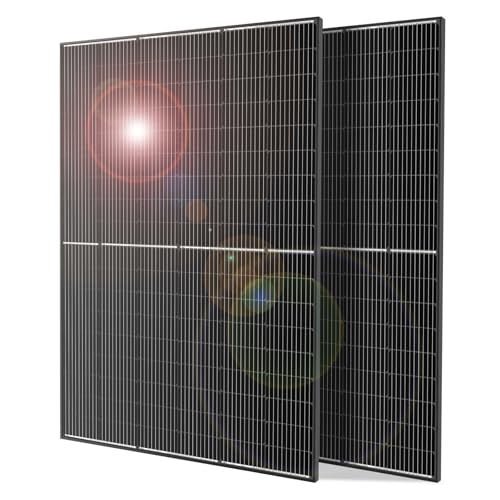
DOKIO 800W Solar Panel Set, Two 400W 31V Panels

JJN Bifacial 425 Watt Solar Panel, N-Type UL 61730 16BB

Renogy ShadowFlux Solar Panel 400 Watt, N-Type 2PCS 200W

N-Type 16BB 400W Bifacial Solar Panel, 2Pcs 200 Watt

STAR 990 Watt Solar Panel, 2PCS 495W 48V/24V
More Details On Our Top Picks
These panels make sense for wide-open roof space, farm outbuildings, or an off-grid setup that wants a higher-output pair without getting fussy about system matching. The 12/24/48-volt compatibility gives you room to plan around different battery banks, which matters more than it sounds once the array grows.
Bifacial means the panel can use light on both sides, so ground reflection and layout can help the setup a bit in bright, open areas. The trade-off is simple, you’ll get the most from a site that leaves room behind the panel rather than a cramped, shaded mount.
Strong Points
- Higher 550-watt output per panel suits larger arrays.
- Bifacial design can add useful output in reflective spaces.
- Works across 12V, 24V, and 48V system plans.
- Monocrystalline cells suit you when roof area is limited.
- Good fit for properties that need serious daytime generation.
Things To Consider
- Large panels take more room, so measuring first matters.
- Back-side gain depends on mounting height and surface below.
- Heavy-duty builds can be less forgiving during installation.
Feature Snapshot
Who It Suits Best
You’ll get the most value here if your setup has room for a larger, higher-output panel and you want flexible system pairing.
A Better Fit Elsewhere
Renogy ShadowFlux Solar Panel 400 Watt, N-Type 2PCS 200W suits you better when partial shade is part of daily life and you want a more targeted roof-friendly layout.
The STAR pair leans toward straightforward high-output use, especially for homes, garden buildings, or mixed residential setups that want broad compatibility. A+ grade cells point to a cleaner build path on paper, and the UL61730 reference helps you narrow in on a panel set that speaks the language of formal safety and performance expectations.
Compared with JJN’s larger 550-watt option, this one splits power into a slightly smaller format, which can make layout planning easier on awkward roof sections. The practical trade-off is that you’re working with two panels rather than a single bigger unit, so your mounting plan needs a little more care.
What We Like
- 430-watt panels give you strong output without going oversized.
- 24V and 48V fit common storage-system layouts.
- Bifacial design adds flexibility in bright, open mounting spots.
- A+ grade cell rating signals a more refined panel build.
Worth Noting
- Two-panel setups need consistent spacing and wiring planning.
- Bifacial gains depend on site reflection and clearance.
- Large residential roofs may still need multiple sets.
Details At A Glance
Who Will Love This
You’ll appreciate this set if you want a serious output level for a home, farm, or garden system without stepping into very bulky panels.
Where A Sibling Pick Shines
JJN Bifacial 425 Watt Solar Panel, N-Type UL 61730 16BB is the smarter fit when you want a more compact per-panel approach and a lighter footprint on the roof.
DOKIO’s layout looks built for straightforward installs on sheds, yards, and other off-grid structures where you want the hardware to cooperate. The 9.84-foot cable length gives you breathing room during placement, and the aluminum frame plus pre-drilled holes should make mounting less of a puzzle.
That makes this set appealing for property owners who need a cleaner setup path rather than the highest single-panel output in the group. Compared with STAR’s higher-power bifacial options, this one feels more installation-minded than output-focused, and that’s not a bad trade in the right space.
Highlights
- Two 400-watt panels deliver a clear 800-watt total.
- 31V output suits 24V off-grid planning.
- Long cables help in larger or awkward layouts.
- Pre-drilled holes reduce mounting guesswork.
- Aluminum frame supports a familiar, durable structure.
Areas To Watch
- 31V output is best matched to 24V systems, not every build.
- Longer cable runs still need tidy routing and protection.
- Frame-based panels can collect dust on edges more easily.
Core Details
Built With In Mind
You should look here first for sheds, auxiliary buildings, or property corners where installation simplicity matters as much as output.
Look Elsewhere When
STAR 990 Watt Solar Panel, 2PCS 495W 48V/24V works better for you when raw output and a more premium rooftop profile matter more than cable length and easy mounting.
This JJN panel is for setups that care about output density and a more technical spec sheet. N-type cells are a newer cell architecture that helps panels hold up well in demanding array plans, while the 16BB layout refers to 16 busbars, the conductive lines that move current across the module.
Against the larger JJN 550-watt option, this one gives you a more manageable 425-watt class panel with the same broad voltage compatibility. That makes it a smart fit for tighter roofs or arrays where you want a careful balance between size and generation.
Upsides
- 425-watt rating keeps the panel substantial but not unwieldy.
- N-type construction suits a more modern system plan.
- 16 busbars support stable current transfer across the module.
- 12V, 24V, and 48V compatibility gives you flexibility.
- Bifacial design helps in open, bright placements.
Softer Spots
- High-output panels still need careful roof or rack spacing.
- Bifacial gains vary with the surface below the array.
- Weight and size can matter on older structures.
Feature Card
Right Fit For
You’ll like this pick most when your roof space is limited but you still want a panel with higher-end construction cues.
Swap It Out When
Renogy ShadowFlux Solar Panel 400 Watt, N-Type 2PCS 200W is a better match if your roof gets patchy shade and you want a pair tuned more tightly to that issue.
Renogy’s ShadowFlux line stands out because it aims at the practical problem that frustrates a lot of rooftop owners, uneven light from trees, buildings, or seasonal debris. The partial-shading focus matters on real roofs and marine setups, where one awkward shadow can drag down a string of panels more than you’d like.
Because this set uses two 200-watt panels, it gives you a more modular footprint than the larger single-panel options above. That can make planning easier on RV roofs or smaller home arrays, though you’ll still want a clean mounting layout so the pair can work together well.
Reasons To Buy
- Partial-shading optimization suits uneven light conditions.
- Two 200-watt panels make layout planning easier.
- N-type build fits a more current panel design approach.
- Useful for RV, marine, and rooftop installations.
- Works well where trees or nearby structures interrupt sunlight.
Minor Gripes
- Shade handling helps, but heavy shade still lowers output.
- Two-panel systems need tidy wiring and stable spacing.
- Smaller panels may need more total units for larger loads.
At A Glance
The Right Fit
You should look here if your roofline is interrupted by trees, vents, or nearby structures and you want a layout built for that reality.
Another Choice May Suit
JJN 550 Watt Bifacial Solar Panels 2PCS is the better call when you have broad open space and want a larger panel format with stronger total output per unit.
Callsun gives you a fairly dense feature mix here, starting with the N-type cell architecture and 16 busbar layout. The dual-module parallel anti-shade design is the real talking point, because it helps the panel set stay more forgiving in mixed-light conditions on vans, marine setups, and rooftop builds.
Compared with the Renogy ShadowFlux pair, this one feels more centered on general anti-shade behavior than one named shading strategy. That makes it attractive for owners who want versatility across RV, home, and off-grid use without locking into a single narrow scenario.
Best Bits
- Dual-module parallel design helps reduce shade sensitivity.
- 2 x 200-watt format supports flexible placement.
- 12V and 24V compatibility broadens system matching.
- N-type and 16BB details point to a more advanced build.
- Well suited to mixed-use mobile or fixed installs.
Points To Note
- Anti-shade design is helpful, not magic in deep shade.
- More technical layout may mean more planning during install.
- Two modules still need enough clean mounting space.
Technical Sheet
Whose Shelf It Belongs On
This is a good match for you if you split your time between an RV, van, boat, or small rooftop system and want one panel set that can adapt.
Reach For A Different Pick When
DOKIO 800W Solar Panel Set, Two 400W 31V Panels is easier to place when your priority is cable reach and a more mounting-friendly frame setup.
This STAR set is the cleanest-looking option in the group, and the frame-less construction gives it a very different feel from the framed DOKIO and JJN panels. Frame-less solar panels can be easier to keep tidy because there’s less hardware to trap dust and grime, which helps in marine settings or on rooftops that collect a lot of debris.
The 990-watt total and 25.6% efficiency rating make it a serious option for people who want strong generation in a more streamlined package. The trade-off is that frame-less panels can call for more careful mounting and handling, so they suit experienced installers or well-planned rooftop projects best.
What We Like
- 990-watt total suits larger power plans.
- Frame-less design keeps the build visually clean.
- Maintenance-friendly form can simplify routine wiping.
- 48V and 24V compatibility gives good system range.
- Monocrystalline cells pair well with space-conscious layouts.
Honest Caveats
- Frame-less panels need careful mounting and edge handling.
- Cleaning access still depends on where you mount them.
- Large total output makes system planning more important.
Quick Facts
Made For
You’ll appreciate this one if you want a streamlined, high-output setup for a roof, marine deck, or off-grid property.
Where Shoppers Go Wrong
People sometimes choose frame-less panels without planning the mount carefully, and that’s where the STAR’s style can turn into extra installation attention.
How To Choose The Right Commercial Solar Panels
Match Output To Real Load
Panel wattage tells you how much energy a module can produce under standard conditions, but your real need starts with appliances, storage, and daily usage patterns. A small office roof, a pump shed, and an RV roof all ask for different totals, so a higher number only helps when the rest of the system can use it.
That’s why the 990-watt STAR set makes sense for larger roof plans, while the DOKIO 800W pair is easier to scale into a simpler off-grid system. The right match keeps wiring, charge controller sizing, and mounting layout from becoming the weak link.
Check Voltage And System Fit
Voltage is the electrical pressure moving power through the system, and it needs to align with your battery bank or controller. Panels in the 12V, 24V, and 48V range can serve very different builds, even when output numbers look close.
For property owners building around 24V off-grid gear, DOKIO’s 31V panels feel more direct, while the JJN and STAR options give more flexibility across broader system plans. You save headaches later by matching panel voltage to the rest of the setup instead of forcing an awkward fit.
Think About Shade And Mounting Angle
Shade handling matters on real roofs more than in clean spec sheets. Trees, vents, ridge lines, and nearby buildings can cut output fast, so bifacial panels, anti-shade layouts, and smarter placement all help in different ways.
Renogy ShadowFlux is the clearest fit for patchy light, while Callsun leans on a dual-module parallel design to stay more forgiving in mixed conditions. A better mounting angle can act like a quiet helper, especially on roofs that never see perfectly even sunlight.
Choose The Build Style You Can Live With
Frame-less panels, framed panels, and bifacial modules all change maintenance, handling, and visual impact. Frame-less options like STAR look cleaner and can be easier to wipe down, but they need more careful mounting than framed panels.
Framed panels such as DOKIO and the JJN options usually feel more familiar during installation and storage. For a busy property where access is awkward, the more conventional frame can be the calmer choice.
Things Worth Knowing First
Mistakes Worth Dodging
A common misstep is chasing wattage without checking roof size, cable routing, or controller limits. Another is ignoring shade, then wondering why a powerful-looking panel underperforms on an actually busy roof.
Reading the panel style matters too. Bifacial, frame-less, and anti-shade designs each solve a different problem, so the label should match the site rather than the wish list.
The Upgrade Payoff
Higher-tier panels usually cost more because of cell architecture, glass and frame design, and better output density. N-type cells, bifacial construction, and cleaner module finishes tend to add refinement, especially in space-tight or harder-to-power installs.
That extra spending makes sense when roof space is tight, shade is a regular issue, or you want a system that feels less cramped to expand later. For a simple shed roof with plenty of open area, a more basic panel can still make plenty of sense.
Frequently Asked Questions
What makes bifacial panels useful?
Bifacial panels can use light on both sides, so reflected light from a bright roof or pale ground can add to output. They work best in open installs with room behind the panel.
Are 48V panels always better than 24V panels?
No, the better fit depends on your battery bank, charge controller, and system design. A good voltage match matters more than chasing the highest number.
Do frame-less panels need special care?
They usually need more careful handling during mounting because the edge structure is different from framed panels. Once installed well, their cleaner surface can be easier to wipe down.
How does shade affect solar panels?
Shade can reduce output from the covered sections and drag down the rest of the string. Panels built for partial shade or split layouts handle that situation better than standard designs.
What should you check before mounting panels?
Measure the roof or rack space, confirm voltage fit, and map the cable path before you start. A little planning up front keeps the install cleaner and the finished array easier to service.
Closing Thoughts
The right commercial solar panel is the one that fits your roof, your wiring plan, and the way your property actually gets sun. JJN and STAR cover the heavier output end, DOKIO keeps installation simple, and Renogy or Callsun make more sense where shade is part of daily life. If you match panel style to the site instead of just chasing the biggest wattage number, your setup is far easier to live with.
