

Cellular trail cameras with solar panel make sense when you want fewer battery swaps and less guesswork in the field. They’re built for people watching a food plot, a back fence, a hunting lane, or a jobsite edge where regular access is annoying. The right setup depends on signal, image detail, power handling, and how much phone-side control you want. The picks below lean toward those real-world trade-offs, not just flashy spec sheets.
Quick Look At The Shortlist

TACTACAM Reveal X 3.0 Cellular Trail Camera

MAXDONE Solar Trail Camera 2 Pack
MAXDONE Solar Trail Camera

Tactacam Reveal Solar Panel

SEHMUA 4G LTE Cellular Trail/Game Camera
Oculview 4G LTE Cellular Trail Camera
SPYPOINT Flex-M Solar Bundle

SPYPOINT Flex-S-Dark Solar Cellular Trail Camera
Signal behavior is the reason this pick stands out, because the built-in SIM can switch between AT&T and Verizon without you juggling cards in the truck. That matters on mixed-coverage land, where one network can fade behind timber while another holds steady. The 4K photo and 1080p video spec gives you plenty of detail for identifying movement, and the IP66 housing is meant for harsh outdoor exposure.
For most backcountry setups, the no-SD-card design keeps the routine simple, since image access stays tied to the cellular workflow. The trade-off is that you’re leaning into a phone-connected system, so plan for a little account setup and signal checking before you mount it high on a tree. Compared with the MAXDONE options later in the list, this one is more about reliable remote coverage than bundle extras.
Strong Points
- Automatic carrier switching helps the camera adapt to uneven signal zones.
- 4K stills and 1080p video give you useful detail for trail monitoring.
- No SD card keeps on-site handling lighter.
- IP66-rated housing suits wet woods and exposed fence lines.
- Long battery claim helps reduce trips to service a remote mount.
Things To Consider
- Cellular setup can take a little more patience than a basic trail camera.
- No SD card means you’re more tied to the cloud or app workflow.
- Long battery life still depends on how often the unit wakes and sends media.
Feature Snapshot
Who It Suits Best
Landowners and hunters who need dependable remote coverage across variable signal pockets will get the most out of this one.
A Better Fit Elsewhere
SPYPOINT Flex-M Solar Bundle suits you better when you want dual-SIM coverage paired with a bundled solar setup.
Two cameras in one bundle changes the math for a large yard, split pasture, or driveway-plus-backfence setup. You get WiFi and Bluetooth for nearby phone access, plus 4K and 64MP capture, which gives you plenty of still-image room for identifying movement around a feeder or shed. The included 6000mAh battery and 32GB card make it feel more complete out of the box than the more stripped-down TACTACAM model above.
That convenience comes with a practical trade-off, since a paired bundle is easiest to appreciate when you really need coverage in two places. For most homes on the edge of woods, that’s a real plus, but a single choke point may not justify the extra camera. Compared with the MAXDONE single unit, this one makes more sense when you want immediate coverage in more than one zone.
What We Like
- Two-camera package helps you cover more than one approach or corner.
- 64MP still capture gives you plenty of image detail for remote checks.
- WiFi and Bluetooth support local setup from nearby.
- Included battery and memory card reduce the number of add-ons you need.
Room For Improvement
- Two units make sense only when you truly need split coverage.
- Local wireless tools still depend on staying within usable range.
- Bundle ownership usually means more mounting and maintenance work.
Core Details
Made For
Homeowners and property managers who need two monitored spots without piecing together a full kit will appreciate this bundle.
Another Choice May Suit
TACTACAM Reveal X 3.0 Cellular Trail Camera fits better for you when carrier switching matters more than getting two units in the box.
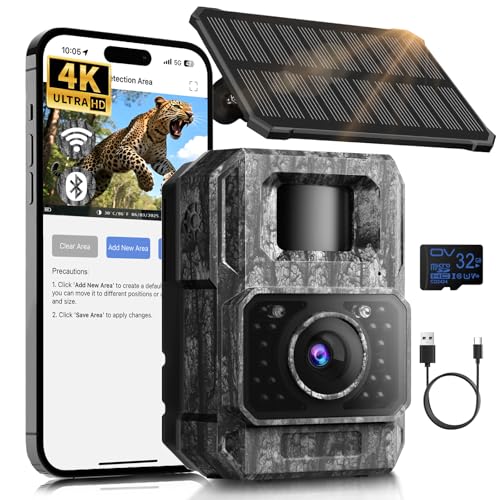
This single-camera version keeps the same core MAXDONE formula, but it’s easier to place when you only need one watch point. The 4K and 64MP pairing is useful for identifying activity around a trail pinch point, and WiFi plus Bluetooth gives you nearby control without needing a separate cellular account. For a small property or backyard edge, that mix feels practical rather than overbuilt.
The built-in 6000mAh battery and included 32GB card make setup feel straightforward, though the camera still needs thoughtful placement to stay out of direct glare and heavy brush. Compared with the 2-pack above, this one is simpler to own and usually less cluttered to manage. It also pairs well with a solar panel setup in a spot that gets steady sun, which helps stretch service intervals.
Highlights
- Single-unit format is easier to mount and manage.
- 64MP photos and 4K video support closer inspection of activity.
- WiFi and Bluetooth make nearby setup more convenient.
- Included battery and card lower the amount of extra gear you need.
Points To Note
- One camera limits coverage to a single zone at a time.
- Nearby wireless features still work best within practical range.
- Battery upkeep depends on how often the unit sends media.
Details At A Glance
Best Suited To
You’ll like this most for a backyard, feeder, or trail crossing where one well-placed camera handles the job.
Look Elsewhere When
MAXDONE Solar Trail Camera 2 Pack suits you better when you need two coverage points instead of one.
Unlike the cameras around it, this is the power accessory that keeps a Reveal setup from becoming battery-bound. The 12V solar charging and built-in rechargeable lithium battery are the point here, and that matters most when the camera sits far from easy service access. For long-term placement, the weatherproof housing and included mount hardware are the kind of details that save you a second trip.
Compatibility is the real filter, though, since this panel is meant for Reveal X 2.0, X 3.0, X Pro 3.0, SK, XB, and several related models. That makes it a strong match for someone already using the TACTACAM ecosystem, but not a universal solar add-on. Compared with the camera-first picks above, this is the most sensible upgrade when your current unit is already in the field.
Bright Spots
- Solar charging plus an internal battery support longer field placement.
- Designed for several Reveal models, which helps keep the fit focused.
- Mount bracket and strap simplify installation in a tree or post.
- Weather-hardy construction suits rough outdoor conditions.
Soft Spots
- Only useful for supported Reveal cameras, so compatibility matters up front.
- Panel placement still depends on good sunlight and a clear mounting angle.
- It is an add-on, so you still need a compatible camera body.
Quick Facts
The Right Fit
Current Reveal owners who want to reduce battery checks on a remote mount will get the clearest benefit here.
Swap It Out When
TACTACAM Reveal X 3.0 Cellular Trail Camera makes more sense when you still need the camera body itself, not only the solar accessory.
Live streaming and 360-degree viewing push this pick into a different lane from the camera-and-alert models above. A panoramic view helps you watch a wider area without constantly guessing what just moved off-frame, and the built-in SIM means you skip home WiFi entirely. For a driveway, gate, or open clearing, that broader visual control can be more useful than chasing a higher still-photo count.
The trade-off is that this style of camera asks for more data awareness and a little more setup attention. For a busy property, that’s manageable, but you’ll want a stable mounting point and a clear idea of how often you plan to stream. Compared with Oculview, this one leans harder into the full-view monitoring side of the category.
Reasons To Buy
- 360-degree coverage helps reduce blind spots around an open area.
- Live streaming gives you a near-real-time look at movement.
- Built-in SIM removes the need for local WiFi.
- Motion alerts make it easier to check activity without watching constantly.
Small Caveats
- Streaming features ask more from your data plan than still-image cameras.
- A wide-view camera usually needs careful placement to avoid wasted angles.
- Feature-rich units can take more time to set up cleanly.
Feature Rundown
Who Should Grab It
Property owners who want wide-area remote visibility more than basic trail snapshots will feel at home with this one.
Where A Sibling Pick Shines
TACTACAM Reveal X 3.0 Cellular Trail Camera is the better fit for you when multi-carrier reliability matters more than live streaming.
This one sits close to the SEHMUA in spirit, but the emphasis feels more centered on phone control and cloud-backed monitoring. The included SIM and clear night vision make it a sensible remote-check option for a driveway, gate, or hunting edge where you want visibility after dark. In a long-term setup, that kind of control can save you a lot of guessing.
You may find the live-view and cloud features more appealing than simple motion snapshots, especially on property you can’t visit often. The trade-off is the same one common to this style of camera, since remote visibility works best when you stay attentive to mounting position and app setup. Compared with the SPYPOINT Flex-S-Dark, this model leans more toward live control than quiet, low-profile capture.
Upsides
- Live streaming gives you direct remote visibility.
- Remote phone control keeps adjustments close at hand.
- Cloud storage is useful when you want off-camera access to captures.
- SIM inclusion helps simplify early setup.
Areas To Watch
- Cloud and streaming features usually ask for thoughtful account setup.
- Wide-use monitoring works best when the camera is mounted carefully.
- More connected features can mean more upkeep in the app side of ownership.
Technical Sheet
Built With In Mind
You’ll get the most from this on remote property where phone-based control matters more than simple on-camera recording.
Reach For A Different Pick When
SPYPOINT Flex-S-Dark Solar Cellular Trail Camera fits better for you when a quieter no-glow camera matters more than live streaming.
Dual-SIM LTE is the headline here, and that matters on larger properties where one network may fade before another does. Add GPS, night vision, motion activation, and a solar panel, and you get a bundle aimed at set-it-once monitoring rather than constant service trips. For a fence line or distant trail cut, that mix feels sturdy and practical.
The water-resistant IP65 shell adds another layer of confidence in exposed spots, though the real-world payoff still depends on smart mounting and clean solar exposure. Compared with TACTACAM Reveal X 3.0, this one leans more into bundled outdoor endurance and location tracking. It’s a solid fit for someone who wants a tougher all-in-one package with fewer separate parts to source.
Standout Traits
- Dual-SIM support can help the camera stay connected across changing coverage.
- Solar panel bundle reduces dependence on frequent battery swaps.
- GPS adds location awareness for remote field placement.
- IP65 resistance suits damp or dusty outdoor conditions.
- Motion activation keeps recording tied to actual activity.
Honest Caveats
- The bundle is strongest when you have a good spot for both camera and panel.
- GPS and cellular features bring more setup steps than a basic unit.
- Solar performance still benefits from open sky and regular cleaning of the panel face.
Core Details
Whose Shelf It Belongs On
Landowners with wide, exposed ground who want one field-ready package will get the best use from this bundle.
Where A Sibling Pick Shines
Tactacam Reveal Solar Panel is the better fit for you when you already own a supported Reveal camera and only need power support.
No-glow capture gives this model a quieter presence than cameras that lean into obvious nighttime lighting. That matters around wary game, a side yard, or a place where you’d rather keep the unit unobtrusive. With 40MP stills, 1080p video with sound, and a built-in solar panel, it strikes a tidy balance between image detail and lower-visibility monitoring.
You’ll likely appreciate the built-in panel most on a mount that gets a fair bit of sun, because that’s where the solar format earns its keep. Compared with the SEHMUA and Oculview picks, this one is less about live-stream drama and more about discreet recording with cellular convenience. For many trail setups, that’s the cleaner fit.
Best Bits
- No-glow design keeps nighttime use less noticeable.
- 40MP photos give you plenty of still-image detail.
- 1080p video with sound adds context to movement clips.
- Built-in solar panel reduces routine battery handling.
Worth Noting
- No-glow cameras usually trade visual discreteness for a more restrained nighttime look.
- Solar charging still depends on placement with steady daylight.
- Video and cellular use can raise the importance of careful power management.
Feature Card
The Right Fit
You should reach for this if you want discreet cellular monitoring with a solar panel already built in.
Not Your Match When
SEHMUA 4G LTE Cellular Trail/Game Camera fits better for you when live streaming and a panoramic view matter more than quiet capture.
How To Choose The Right Cellular Trail Cameras With Solar Panel
Signal And Coverage Come First
Cellular trail cameras live or die by connection quality, so carrier support matters as much as image resolution. A multi-carrier unit like TACTACAM Reveal X 3.0 helps in patchy rural zones, while single-network or SIM-based models work best where service is steadier. You’re looking for the camera that can actually send images from the place you want to mount it.
Solar power solves a different problem, which is keeping the camera running without constant battery swaps. That helps most on distant fence lines, hunting plots, and vacant lots that you don’t visit every week. A panel with a built-in battery, such as the Tactacam accessory, gives you more tolerance for cloudy stretches than a bare panel alone.
Image Detail Should Match Your Use
Higher megapixels help with still-image detail, but the right number depends on what you’re trying to see. A 40MP or 64MP camera is helpful when you need to identify antler shape, vehicle marks, or movement at distance, while 1080p video is usually enough for motion context. For most trail users, the practical question is whether you need identification, documentation, or both.
Live streaming adds another layer, and it changes how you think about the camera. SEHMUA and Oculview lean toward active remote watching, while TACTACAM and SPYPOINT models are more about efficient motion capture. That matters because streaming and cloud access can ask more of your data plan and setup patience.
Power, Mounting, And Maintenance
Solar panels work best when they get regular light and a clean angle. A shaded mount or a badly tilted panel can cut into the whole point of the setup, so think about tree cover, roof lines, and seasonal sun changes before you drill anything in. The easier the camera is to reach, the less you’ll notice small power losses.
Mounting hardware, housing rating, and battery reserve shape everyday ownership too. IP65 and IP66 housings are useful on exposed property because they better match wet weather and dust, while bundles with included batteries or memory cards reduce the first round of extras. That’s the part many people miss: the cheapest-looking setup can become the most annoying one to maintain.
A Quick Reality Check Before You Decide
Mistakes Worth Dodging
Shoppers often focus on photo resolution and forget coverage quality. A high-resolution camera that can’t hold a signal is just a pretty logbook in the woods. You also want to avoid placing a solar panel under heavy shade, because the panel can’t do its job there.
Another common miss is choosing a feature-heavy camera for a simple job. A live-stream model makes sense on a gate or jobsite, but it can be overkill for a quiet game trail. Match the camera to the task, not to the longest spec list.
The Upgrade Payoff
Higher-tier models usually cost more because they bundle better connectivity, wider coverage, stronger power support, or more refined control. Dual-SIM LTE, cloud access, built-in solar, GPS, and panoramic live view all add hardware and software complexity. That complexity can be worth it on remote property where missed footage is more annoying than a bigger upfront spend.
You’ll feel the upgrade most when access is difficult or signal is unreliable. In those settings, the convenience of fewer service trips matters as much as image quality. On a small backyard setup, a simpler camera may already cover the job nicely.
Frequently Asked Questions
Do solar trail cameras still need batteries?
Yes, many still use internal or backup batteries alongside the panel. The solar part stretches runtime and reduces how often you need to service the unit.
Is cellular coverage more important than photo resolution?
For remote monitoring, yes, because the camera has to send images from the field. Sharp photos help, but a camera with weak signal can leave you waiting for data that never arrives.
What does no-glow mean on a trail camera?
No-glow means the infrared light is designed to stay less visible at night. That helps keep the camera more discreet around game or near property lines.
Do live-streaming cameras use more power?
They usually do, since constant or near-constant data use asks more from the system. That’s why solar support and a strong battery matter more on live-view models.
What’s the main benefit of a multi-carrier camera?
It can switch between networks, which helps in places where one carrier drops out. That’s useful on large rural properties or in areas with uneven service.
Closing Thoughts
The right cellular trail camera with solar panel depends on what you’re actually watching, not just how many features the listing can stack up. For remote land, TACTACAM and SPYPOINT bring stronger field confidence, while MAXDONE is friendlier for simple local coverage. SEHMUA and Oculview lean into live viewing, which suits property that needs more active checking. Pick the setup that matches your signal, sun, and access pattern, and the whole system feels a lot easier to live with.
