

550 Watt Solar Panels make sense for you when roof space, battery goals, and setup simplicity all matter at once. Some of the picks here are aimed at fixed arrays for homes or off-grid sheds, while others lean portable for RV trips, camping, and backup charging. The tricky part is matching panel type, output style, and weather protection to the way you actually use power day to day.
Quick Look At Our Top 7 Picks

JJN 550 Watt Bifacial Solar Panels 2PCS
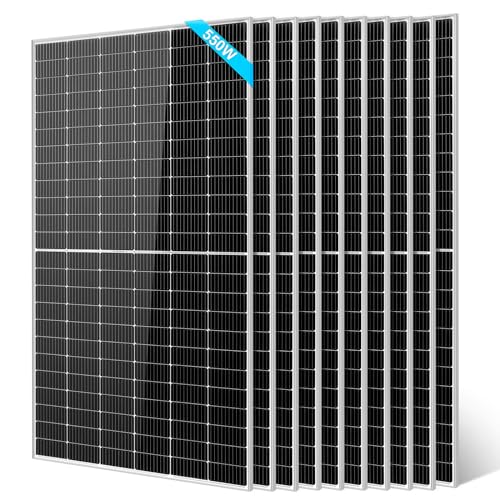
SUNGOLDPOWER UL61730 10PCS 550W Solar Panels

EBL 200W Portable Solar Panel

Renogy ShadowFlux Solar Panel 400 Watt

Westinghouse Portable 60W Solar Panel
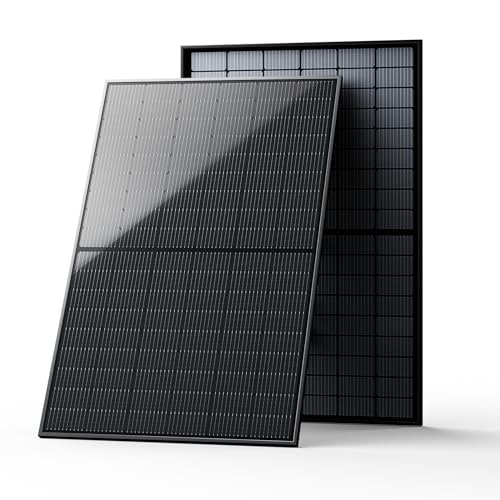
EPOCH 860W Bifacial Solar Panels

Renogy 200W Portable Solar Panel
More Details On Our Top Picks
JJN leans toward fixed installations, so it makes more sense on a rooftop, farm shed, or off-grid cabin than on a travel rig. The bifacial design means the panel can use light from both sides, which can help in open spaces with reflective ground or a well-planned mount.
The 12/24/48 volt compatibility gives you more room to match a battery bank or controller setup, and that matters when your system is not a simple plug-in job. The trade-off is plain: this is a heavier-duty direction, so you want proper mounting space and a plan for wiring before you commit.
Strong Points
- Bifacial layout can make better use of reflected light in open installs.
- Voltage compatibility across 12, 24, and 48 volt systems broadens setup fit.
- Two-panel package suits larger roof or ground arrays.
- Works well for a homeowner building around a battery bank.
Things To Consider
- Fixed installation planning matters, so this is less casual than a foldable panel.
- Mounting hardware and wiring need to be sorted separately.
- The physical scale can feel bulky in tight spaces.
Key Specs
Who It Suits Best
You get the most from this pick in a home, farm, or off-grid setup where panel placement is planned rather than improvised.
A Better Fit Elsewhere
Renogy ShadowFlux Solar Panel 400 Watt suits you better when rooftop shading is part of daily life and you want a more shade-aware layout.
Ten panels in one bundle immediately changes the conversation, because this pick fits larger installs rather than a weekend project. For a charging station, marine setup, or household array, that kind of batch size can simplify planning and keep the electrical design more uniform.
The IP68 rating means the enclosure is built for strong dust and water protection, which is a useful detail in damp, salty, or dusty environments. The trade-off is obvious, though, you need the space and the appetite for a larger system, so this is not the casual route.
Highlights
- Ten-panel package suits bigger system builds.
- IP68 protection gives you strong weather confidence for harsher environments.
- Monocrystalline construction keeps the panel family consistent across the array.
- Good match for a serious household backup plan.
Areas To Watch
- Overkill for small cabins or light RV use.
- Planning the footprint takes time and space.
- More panels also mean more mounting and wiring work.
Feature Snapshot
Built With In Mind
You fit this best when your project is already leaning toward a bigger, fixed solar bank for household or marine use.
Swap It Out When
EBL 200W Portable Solar Panel is the easier route for camping trips and smaller backup needs that call for folding transport.
Portable solar is a different animal from the fixed JJN and SUNGOLDPOWER setups, and EBL keeps the focus on mobility. The foldable build, four kickstands, and waterproof rating make more sense for a campsite, an RV picnic stop, or a backup corner outside the house.
The MC-4 and Anderson output connectors help with common power station connections, so you spend less time guessing about compatibility. The honest read is that 200 watts is a practical travel size, not a whole-home solution, but that’s exactly why many people look at it.
Upsides
- Foldable format stores neatly in travel gear.
- Four kickstands help with angled placement on the ground.
- MC-4 and Anderson outputs cover common power station needs.
- Waterproofing adds peace of mind outdoors.
- Good for topping up devices during outages or trips.
Worth Noting
- The portable format needs more setup each time you use it.
- 200 watts suits smaller power needs, not large household loads.
- Kickstand placement works best on reasonably level ground.
Technical Sheet
Who Will Love This
You fit this well when travel storage matters as much as charging output, especially for RV trips, camping, and outage backup.
Another Choice May Suit
Renogy 200W Portable Solar Panel suits you better if you want a lighter-feeling portable option with USB-style outputs for casual backup use.
ShadowFlux stands out because it is built for imperfect light, not just clear midday sun. That matters on rooftops with tree cover, near buildings, or on RVs that spend part of the day parked in mixed shade.
The N-type cell design is the technical piece worth noticing, since N-type refers to a cell structure that can support stronger output efficiency in a well-matched setup. Compared with the more basic portable options in this list, this one feels more like a serious rooftop or marine build, with less interest in casual carry-around use.
What We Like
- Partial-shade focus gives it a real use-case edge.
- Two 200 watt panels in the package can suit split installs.
- Works for rooftops, RVs, marine setups, and home arrays.
- N-type construction is appealing for efficiency-minded setups.
Room For Improvement
- Shade-friendly design helps, but panel placement still matters.
- Not as portable or grab-and-go as the foldable picks.
- Best value appears in setups that can use the full 400 watt pair.
Core Details
The Right Fit
You suit this best when your rooftop or RV often sees broken sunlight and you want a panel family built around that reality.
Where A Sibling Pick Shines
JJN 550 Watt Bifacial Solar Panels 2PCS makes more sense for you when open mounting space matters more than shade handling.
Westinghouse sits at the light-duty end of this roundup, and that’s useful if your goal is device charging rather than panel-heavy system building. The mix of QC 3.0 USB, USB-C, and DC output gives it a flexible feel for phones, tablets, and small laptops on the move.
For travel bags and RV storage, the lower wattage keeps the package simple and easier to handle. The trade-off is clear, though, because you are choosing convenience over serious energy output, so it fits smaller loads best.
Best Bits
- USB and DC outputs make it easy to charge common devices.
- Portable size suits travel and quick setup.
- Good match for campsite electronics and light backup tasks.
- Simple design lowers the learning curve.
Small Caveats
- 60 watts is modest for anything beyond small electronics.
- Not meant for large battery banks or heavy energy demands.
- Best used as a travel helper, not a main solar source.
Feature Card
Who Should Grab It
You fit this best when your solar plan is mostly about personal electronics, travel convenience, and lightweight packing.
Look Elsewhere When
EBL 200W Portable Solar Panel suits you better if you want a stronger travel panel for power stations and RV backup.
EPOCH pushes hard toward bigger off-grid demand, and that shows up right in the 860 watt total output. For an RV, boat, or cabin with serious electrical use, the bifacial layout and high-output pair make it easier to think in terms of real system coverage rather than token charging.
The 12/24 volt compatibility keeps the setup flexible, while the waterproof build points toward outdoor permanence. The honest trade-off is size and commitment, because a panel set like this needs space, planning, and the rest of the electrical chain to match.
Reasons To Buy
- 860 watt total output suits larger loads.
- Bifacial panel design can help in brighter open installs.
- Works across 12 and 24 volt system setups.
- Good fit for RV, marine, and cabin projects.
- Waterproof build supports outdoor placement.
Points To Note
- Large output brings larger installation demands.
- Not a light travel panel by any stretch.
- System planning matters more here than with smaller portable choices.
- Mounting and wiring need to be handled carefully.
Details At A Glance
Made For
You fit this best when your RV, boat, or off-grid site needs a stronger solar bank instead of a compact helper panel.
Skip It When
Renogy 200W Portable Solar Panel is the easier choice for lighter travel use and simpler storage.
Renogy keeps this one practical, with a foldable shape that works well in RV storage bays and camping gear piles. The kickstand helps with setup, and the USB-A plus Type-C outputs make it feel friendlier for small electronics than a larger fixed panel.
IP65 waterproofing gives it useful outdoor resilience, while the N-type panel design adds a more modern technical note to the package. Compared with Westinghouse’s smaller 60 watt setup, this one feels much better suited to power-station backup without getting overly complicated.
Positives
- Foldable form is easy to pack away.
- Kickstand helps you angle the panel outdoors.
- USB-A and Type-C outputs suit common small devices.
- IP65 rating supports regular outdoor use.
- Good middle ground for camping and RV backup.
Trade Offs
- 200 watts still sits well below larger home-style panel sets.
- Frequent folding and unfolding adds a little setup time.
- Kickstand use is easier on flatter ground.
Core Details
Right Fit For
You fit this best when you want a portable solar panel for camping, RV stops, or power-station backup without a lot of clutter.
A Better Fit Elsewhere
Westinghouse Portable 60W Solar Panel suits you better if your main goal is lightweight device charging and a very compact carry profile.
How To Choose The Right 550 Watt Solar Panels
Match Output To Your Actual Load
550 watt panels are a strong starting point for off-grid sheds, cabin banks, RV systems, and backup arrays, but your battery and controller still need to match the plan. A pair of 550 watt modules can support a much larger setup than a small travel panel, yet that extra capacity only helps when the rest of the system can take it.
Look at your daily power use in plain terms: lights, a fridge, a pump, or charging gear all pull differently. Bigger numbers sound exciting, but the better question is whether your setup can store and use that energy without wasting space or money on unused capacity.
Choose The Right Panel Style
Monocrystalline panels are common in this group because they suit compact, efficient builds. Bifacial panels add a second light-collecting face, which can help in open installations with reflective surfaces, while portable foldable designs trade raw permanence for easier transport.
That trade-off matters more than many shoppers expect. A rooftop array can be a better long-term fit for a home or farm site, while a folding panel makes more sense for travel, backup power, or a rig that changes location often.
Check Weather Protection And Placement
IP ratings tell you how well a panel enclosure handles dust and water. IP65 and IP68 are useful references for outdoor planning, but you still want smart mounting, drainage, and cable routing around the panel itself.
Shading also deserves attention. A panel built for partial shade can be a smart choice near trees or rooftops with chimneys, while a standard panel may be enough in a wide-open field or on a clean RV roof.
Think About Ports, Connectors, And Storage
Portable panels often add USB-A, USB-C, MC-4, Anderson, or DC outputs, and each one points to a different kind of use. USB ports help with small electronics, while MC-4 and Anderson connections are more useful for power stations and broader system work.
Storage is the quiet detail that decides daily satisfaction. Foldable models are easier to stash in a truck or RV bay, while fixed panels reward you with less handling and a cleaner routine once installed.
Things Worth Knowing First
Mistakes Worth Dodging
One common mistake is matching the panel to the wrong job. A compact portable panel can be handy, but it will not replace a larger rooftop array for a home backup plan.
Another slip-up is ignoring mounts, cable runs, and storage space. A good-looking panel still becomes frustrating when it does not fit the roof, the rack, or the storage bay you already have.
The Upgrade Payoff
Higher-tier panels usually cost more because of cell design, weather protection, and larger output capacity. Bifacial layouts, stronger enclosure ratings, and shade-aware designs can justify the step up when your site has real obstacles.
That upgrade makes the most sense for full-time RV use, marine installs, or off-grid properties where reliability matters every season. For lighter travel charging, a simpler panel often keeps the setup cleaner and easier to live with.
Frequently Asked Questions
What does 550 watt mean on a solar panel?
It refers to the panel’s rated output under standard conditions. Real-world output changes with sun angle, heat, shade, and system design.
Are 550 watt panels good for a home setup?
They can be a strong fit for home or cabin arrays with enough roof or ground space. You still need the right controller, wiring, and battery storage to make the most of them.
Do bifacial panels need special placement?
They work best when light can reach both sides, often with a reflective surface or open mount. A flat, dark, tightly boxed setup gives up some of that advantage.
Are portable panels useful for RV travel?
Yes, especially when you want easier storage and a fast setup at camp. They are usually better for charging support than for running an entire coach.
What should you check before choosing a panel?
Check the space you have, the battery voltage you want to support, and the type of outputs or connectors your gear uses. Shade, weather exposure, and storage space matter just as much.
Closing Thoughts
You get the best result from 550 Watt Solar Panels when the panel type matches the way you actually live, not just the wattage on the label. Fixed bifacial options make sense for larger roof or ground installs, while portable foldables fit travel and backup use far better. Shade, connectors, weather protection, and storage space all shape the final choice. Pick the panel that fits your setup cleanly, and the rest of the system becomes much easier to live with.
