

Dual-fuel backup is useful when you want flexibility, not fuss. Gas gives you familiar refueling, propane gives you cleaner storage habits, and the right inverter layout can keep the whole setup easier to live with during outages, RV trips, or jobsite weekends. This roundup focuses on compact portables, mid-size RV-ready units, and heavier home-backup picks, so you can match output to the way you actually use power.
The Shortlist At A Glance

Westinghouse 2550 Peak Watt Portable Inverter Generator

Westinghouse 4000 Peak Watt Dual Fuel Portable Inverter Generator

WEN Quiet and Lightweight 3600-Watt Dual Fuel RV-Ready Portable Inverter Generator (DF360iX)

WEN 6800-Watt Dual Fuel RV-Ready Electric Start Portable Inverter Generator (DF680iX)

Champion Power Equipment 4000-Watt Dual Fuel RV Ready Portable Inverter Generator

DuroStar DS13000MX 13,000-Watt 500cc Dual Fuel Portable Generator
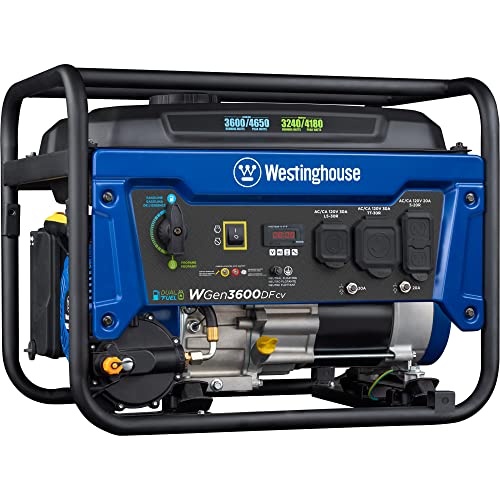
Westinghouse 4650 Peak Watt Dual Fuel Portable Generator

WEN 2800-Watt Dual Fuel Inverter Generator (DF280iX)
More Details On Our Top Picks
For weekend camping, light tailgates, or backup for a few essentials, this Westinghouse feels straightforward in a good way. The 30A RV outlet makes it easier to plug into travel setups, while the dual-fuel layout gives you gas or propane flexibility without turning the unit into a giant home-backup machine.
The lighter build matters most when you need to move it in and out of a truck bed or garage bay, and the parallel-ready design adds room to grow later. The trade-off is obvious, though, because this sits in the smaller-output class, so you should expect a focused role rather than whole-house coverage.
Strong Points
- Gas and propane support lets you choose the fuel that fits your storage habits.
- The RV-ready 30A outlet suits camper hookups without extra guesswork.
- Parallel capability leaves room to pair another compatible unit later.
- Its lighter form helps during trips, garage storage, and seasonal setup.
- CO sensor support adds a useful safety-oriented layer for everyday use.
Things To Consider
- The smaller output range is better for essentials than for heavy home loads.
- Portable inverter units like this usually ask for routine fuel and filter care.
- Parallel use means extra hardware and a bit more setup planning.
Feature Snapshot
Who It Suits Best
You fit this best when you want a compact RV companion or a backup source for lights, a fridge, and a few small appliances.
Another Choice May Suit
Westinghouse 4650 Peak Watt Dual Fuel Portable Generator is a better match for you if your backup plan includes more household circuits and you want more headroom.
The remote electric start makes this model feel a little easier to live with than the smaller Westinghouse above. For homeowners who want a cleaner start routine during outages, that convenience matters just as much as raw wattage, especially when the unit sits outside and you don’t want to fuss with pull-start handling.
Dual-fuel flexibility, RV readiness, CO sensor support, and parallel capability give you a broad middle ground. The honest trade-off is weight and cost of complexity, because extra convenience usually comes with a larger footprint and more parts to keep track of.
What We Like
- Remote electric start reduces the hassle of getting power going quickly.
- Gas and propane operation helps you keep fuel options open.
- The RV-ready outlet makes it useful beyond house backup alone.
- Parallel capability gives you a path to more output later.
- The CO sensor is a practical feature for routine use around home and campsite setups.
Worth Noting
- Remote-start convenience adds another component to keep charged and maintained.
- The broader feature set can feel more involved than a simpler portable unit.
- Storage space matters here more than it does with the 2550-watt Westinghouse.
Core Details
Built With In Mind
You fit this best if you want a dependable home-and-camping hybrid with easier starting and room to scale.
Where A Sibling Pick Shines
WEN 3600-Watt Dual Fuel RV-Ready Portable Inverter Generator is the leaner choice for you if compact size matters more than remote start convenience.
This WEN lands in a sweet middle zone for travel trailers, tailgates, and lighter backup use. The dual-fuel setup is handy, but the bigger practical win is the compact, quieter-friendly inverter format, which tends to suit campsites and close-quarters setups better than open-frame machines.
Fuel shut-off support helps you think ahead about storage and maintenance, and the CO Watchdog name signals an added layer of shutdown awareness. You may still find the output ceiling modest for a busy household, yet it covers a lot of real-world needs without feeling overbuilt.
Highlights
- Compact inverter styling keeps it friendlier for travel and storage.
- Dual-fuel operation gives you useful flexibility during trips or outages.
- RV-ready design suits camper power needs without extra complexity.
- Fuel shut-off support is helpful for long-term storage routines.
- The lightweight frame makes seasonal setup less of a chore.
Minor Gripes
- It sits below the larger Westinghouse and WEN units in raw output.
- Compact generators still need regular upkeep and dry storage habits.
- Heavy appliance loads are outside its natural comfort zone.
Details At A Glance
Whose Shelf It Belongs On
You fit this well if you want a portable RV companion that stays easier to move than larger 4,000-watt class units.
Reach For A Different Pick When
Champion Power Equipment 4000-Watt Dual Fuel RV Ready Portable Inverter Generator suits you better if you want a little more output while keeping a similar camping-friendly shape.
More output changes the conversation quickly, and this WEN is built for that shift. The electric start is useful during storm season or for anyone who wants a smoother start-up routine, while the dual-fuel design keeps propane in play for storage-minded households and RV use.
It also makes sense for backup plans that stretch beyond a couple of lamps and a fridge, especially in homes that want more breathing room for larger appliances. The catch is size, because higher output usually means more weight, more storage planning, and a generator that belongs in a more serious role.
Upsides
- 6800-watt class output gives you more room for bigger backup tasks.
- Electric start helps simplify startup on busy or stressful days.
- Dual-fuel support keeps gas and propane both on the table.
- RV-ready design helps it bridge home and travel use.
- Fuel shut-off support is practical for seasonal storage and maintenance habits.
Room For Improvement
- The larger frame asks for more storage space than the smaller WEN picks.
- Higher output usually brings a more involved ownership routine.
- It makes more sense for substantial loads than for tiny backup jobs.
Feature Rundown
Who Should Grab It
You fit this best if your backup plan includes larger appliances or you want a travel-ready generator with stronger output reserves.
Skip It When
Westinghouse 2550 Peak Watt Portable Inverter Generator is a cleaner fit for you if lightweight handling matters more than power reserve.
Champion’s 4000-watt class setup feels aimed at everyday RV use first, then occasional home backup second. Quiet operation matters here because camping parks, tailgate lots, and close neighbors rarely reward noisy gear, and this style of inverter generator usually fits those spaces better than a louder open-frame unit.
The feature mix stays practical rather than flashy, which is part of the appeal. You get dual-fuel flexibility and RV readiness without sliding into the heavier-duty territory that defines the DuroStar later in the list, so the balance works well for many casual owners.
Best Bits
- Quiet-tech branding points to a friendlier setup for campsites and shared spaces.
- Dual-fuel operation gives you more options during seasonal storage.
- RV-ready design suits camper power connections right away.
- The 4000-watt class is a sensible middle ground for travel and backup use.
- Champion’s lineup often appeals to owners who want simple, usable gear without excess complexity.
Points To Note
- It still sits in the mid-output range, so very large loads need a bigger unit.
- Quiet operation depends on load and placement, which matters at campsites.
- Routine maintenance is still part of owning any dual-fuel generator.
Spec Overview
Perfect Match For
You fit this best if you want a camping-friendly generator that also serves as a sensible backup for smaller home circuits.
Look Elsewhere When
WEN 6800-Watt Dual Fuel RV-Ready Electric Start Portable Inverter Generator suits you better if your backup plan needs more output and easier starting.
This DuroStar sits in a very different lane from the smaller WEN and Westinghouse units. The 500cc engine and 13,000-watt class output point toward whole-home backup, transfer switch ready installation, and the kind of reserve you want during serious outages or larger property support.
Remote electric start makes it easier to bring online, which matters when a generator lives in a garage, shed, or outdoor staging area. The trade-off is size and commitment, because a machine like this takes planning, proper placement, and more attention to upkeep than a compact RV unit.
Reasons To Buy
- High output gives you room for broader whole-home backup planning.
- 500cc displacement signals a heavier-duty engine class.
- Remote electric start adds convenience for larger setups.
- Transfer switch ready support makes installation planning more straightforward.
- RV and emergency readiness broadens how you can put it to use.
Areas To Watch
- The larger footprint asks for serious storage and handling space.
- Transfer switch use usually means more installation planning than smaller portables need.
- Maintenance expectations are higher on a unit built for larger loads.
Core Details
The Right Fit
You fit this best if you want a generator for serious home backup, not just occasional appliance support.
Where Shoppers Go Wrong
WEN 2800-Watt Dual Fuel Inverter Generator is the better fit for you if you only need light portable power and want something easier to store.
This Westinghouse sits nicely between compact RV models and the larger backup units. The 4650-watt class gives you a more comfortable buffer than the 2550-watt version, and the RV-ready 30A outlet makes it useful for trailers, cabins, or a home setup that needs more breathing room.
The CO sensor is a meaningful detail for day-to-day ownership, especially in spaces where you want a little more caution around placement. You may still notice the usual portable-generator compromise, because more output brings more size, but this one keeps the balance pretty sensible.
Bright Spots
- The 4650-watt class gives you more headroom than smaller portable models.
- RV-ready 30A support is handy for camper and trailer use.
- Dual-fuel operation adds flexibility for storage and fuel planning.
- The CO sensor is a useful everyday feature for cautious placement.
- It handles a nice middle zone between light travel use and bigger backup needs.
Softer Spots
- It still asks for more room than the 2800-watt WEN.
- Portable generator upkeep remains part of long-term ownership.
- Those wanting heavy whole-home support will outgrow it quickly.
Quick Facts
Whose Shelf It Belongs On
You fit this best if you want one generator to cover RV trips and moderate household backup with less compromise.
Consider Something Else When
Westinghouse 4000 Peak Watt Dual Fuel Portable Inverter Generator is a better fit for you if remote electric start matters more than a slightly larger output cushion.
The smallest WEN here is the easiest to picture in a hatchback, shed, or tight garage shelf. That matters more than headline wattage for a lot of weekend use, because a lighter inverter generator often gets used more often simply because it’s easier to move.
Fuel shut-off support and the CO Watchdog name both point toward practical ownership habits, not just raw output. The trade-off is the expected one, since compact size is great for portability but less comfortable for larger appliance loads or whole-home ambitions.
Positives
- Compact size makes it easier to store and carry.
- Dual-fuel flexibility helps with both fuel access and long-term storage plans.
- Fuel shut-off support is handy for upkeep between uses.
- CO Watchdog support adds an extra layer of practical awareness.
- Quiet inverter design suits campsites and close quarters.
Small Caveats
- Its output class is better for light loads than for heavy household demands.
- Portable units like this still benefit from regular fuel rotation and basic upkeep.
- Longer power needs are better handled by larger picks earlier in the list.
Feature Card
Made For
You fit this best if your priority is portability for camping, tailgates, or a few outage essentials.
Another Choice May Suit
Westinghouse 2550 Peak Watt Portable Inverter Generator is the better fit for you if you want a compact RV-ready outlet layout with a little more travel framing.
How To Choose The Right Dual Fuel Generators
Match Output To Your Actual Load
Start with the appliances you truly want to run, not the biggest number on the box. A 2800-watt or 3600-watt inverter can keep essentials moving for camping or light outages, while the 4650-watt, 6800-watt, and 13,000-watt units make more sense once you want fridge support, deeper backup, or more circuits.
Output also affects how the machine feels to live with. Smaller units are easier to store and move, while larger ones usually ask for more space, more planning, and more patience during setup.
Choose Fuel Convenience With A Purpose
Gas and propane serve different habits, and that’s the real reason dual-fuel models stay popular. Propane stores neatly for many households, while gas is familiar and often easier to find in day-to-day use.
Think about how often you expect the generator to sit idle. Owners who want cleaner storage routines often lean toward propane, while frequent users may care more about refueling convenience and broad availability.
Look Past Wattage And Check The Connections
An RV-ready 30A outlet matters a lot more than it sounds if you travel with a camper or want a standard trailer hookup. Parallel capability matters too, because it gives you a path to more output without replacing the whole unit.
Electric start and remote electric start are worth paying attention to for storm prep and older hands who want less physical effort. A CO sensor or CO Watchdog feature adds practical awareness, but it does not replace sensible placement and common-sense operation.
Things Worth Knowing First
Mistakes Worth Dodging
One common slip is treating every dual-fuel generator like a house backup solution. A compact RV-ready model can be perfect for travel and still fall short for larger appliances or multiple rooms.
Another is overlooking storage and maintenance. Even portable units need dry storage, fuel care, and basic run-up habits, so a machine that seems simple on paper can feel fussy later without a plan.
The Upgrade Payoff
Higher-tier models usually cost more because they bring more output, more convenience features, or a heavier-duty engine. Remote start, electric start, transfer switch readiness, and larger frames all add to the ownership experience and the hardware behind it.
That extra spend makes sense when the generator will serve as real backup during outages or when you want to power more than a few essentials. For occasional camping, a smaller inverter often gives you a cleaner fit and less bulk to manage.
Frequently Asked Questions
What makes a dual-fuel generator useful?
It lets you run on gas or propane, so you can work around storage habits and fuel access. That flexibility helps during outages, RV trips, and seasonal use.
Do inverter generators make sense for camping?
Yes, especially in campsites or trailer setups where quieter operation and steadier power are useful. Compact inverter models also tend to be easier to carry and store.
Is a 30A RV outlet important?
It matters a lot for camper and trailer hookups because it matches common travel power needs. You avoid extra adapter guessing and keep the setup cleaner.
Is electric start worth paying for?
It helps a lot during outages, especially when you want a quicker startup routine. Remote start adds even more convenience for larger or less accessible units.
What size should you choose for home backup?
Small units are fine for a few essentials, but larger homes usually need a higher-output model. Match the generator to the circuits and appliances you truly plan to run.
Closing Thoughts
The right dual-fuel generator should feel useful before it ever feels impressive. For camping and light backup, the smaller Westinghouse and WEN units keep things manageable, while the Champion and midrange Westinghouse models strike a nicer balance for mixed use. Once you step into WEN’s 6800-watt class or DuroStar’s 13,000-watt frame, you’re buying more breathing room, more setup, and more responsibility. Match the machine to your real power habits, and the choice gets much easier.
