

Power cuts at home are easier to handle when you already know which kind of backup fits your space, your appliances, and your tolerance for noise. Some of these picks are built for whole-home coverage through a transfer switch, while others suit smaller loads, RV use, or a quiet charge-only setup for essentials. You’ll also see a few options that lean on inverter design, which means steadier power for more sensitive electronics. That mix matters more than a glossy spec sheet.
Quick Look At The Shortlist

Jackery Explorer 2000 v2 Portable Power Station 2042Wh

PowerSmart 4400-Watt Dual Fuel Portable Inverter Generator

WEN 6800-Watt Dual Fuel RV-Ready Electric Start Portable Inverter Generator DF680iX

Westinghouse 6600 Watt Dual Fuel Home Backup Portable Generator

Champion Power Equipment 4000-Watt Dual Fuel RV Ready Portable Inverter Generator

Westinghouse 4650 Peak Watt Dual Fuel Portable Generator

DuroStar DS13000MX 13,000-Watt 500cc Dual Fuel Portable Generator
Westinghouse 4650 Peak Watt Dual Fuel Portable Generator
More Details On Our Top Picks
For apartment dwellers, office corners, and homes that need quiet backup for lights, routers, and device charging, this power station takes a very different path from the fuel-burning units below. Its 2042Wh battery capacity gives you a large reserve for small to mid-size essentials, and the 2200W AC output across three outlets keeps it useful for more than just phones. The USB-C PD 100W port is a handy detail because it cuts out extra adapters for newer laptops and tablets.
The LiFePO4 battery chemistry, which uses lithium iron phosphate cells, matters because it’s built for long service life and steady output, not quick novelty. You may find the trade-off in its size and in the fact that it’s a battery system rather than a true fuel generator, so it fits best where indoor use and low noise matter more than whole-house wattage.
Strong Points
- Large battery reserve suits outage kits, weekend cabins, and mobile work setups.
- Quiet operation makes it easier to keep nearby during sleep or work hours.
- USB-C PD 100W charging helps modern laptops and compact devices power up without extra bricks.
- LiFePO4 battery design points to long-term ownership value for frequent use.
- 20ms switching helps keep essential electronics from dropping out during interruptions.
Things To Consider
- It is not a fuel-powered whole-home unit, so large appliances fall outside its sweet spot.
- Solar charging depends on compatible panels, which are listed as optional rather than included.
- At this capacity, storage space and moving it around the house deserve a quick reality check.
Feature Snapshot
Who It Suits Best
This fits households that want quiet backup for electronics, networking gear, and light household tasks rather than fuel-based heavy lifting.
A Better Fit Elsewhere
Westinghouse 6600 Watt Dual Fuel Home Backup Portable Generator suits you better for larger appliances, especially around a transfer switch setup.
Compared with the Jackery, this one brings you back to fuel-based backup while keeping the inverter format, which usually means cleaner power for electronics than a basic open-frame machine. A 4400-watt class unit sits in a useful middle lane for home essentials, sump support, or camping gear, and the CO sensor adds a practical layer of awareness for indoor-adjacent storage or garage use. That balance makes sense for a household that wants something lighter than a full home-backup giant.
The honest read is that its real appeal comes from being straightforward rather than flashy. In most backyards, that kind of middle-ground sizing feels easier to live with than the larger Westinghouse and DuroStar units, though you’ll still need to plan fuel storage and regular upkeep around it.
What We Like
- Inverter design is a strong match for electronics and household devices that prefer steadier output.
- 4400-watt class output gives you a practical step up from compact carry-around units.
- CO sensor is a meaningful feature for day-to-day caution around exhaust exposure.
- Lightweight positioning should make it easier to move than the bigger home-backup picks here.
Worth Noting
- It is still a fuel machine, so storage, ventilation, and routine care remain part of ownership.
- Coverage plan details appear in the listing, but that does not change the need to read the setup instructions closely.
- Households with heavy appliance demand may outgrow this size quickly.
Core Details
Who Should Grab It
This suits homeowners who want a manageable dual-fuel backup unit for lights, small appliances, and emergency charging without jumping to a much larger chassis.
Another Choice May Suit
Champion Power Equipment 4000-Watt Dual Fuel RV Ready Portable Inverter Generator is a better match for someone prioritizing a smaller RV-friendly footprint.
After the mid-range PowerSmart, this WEN model pushes deeper into home-backup territory with a 6800-watt class and RV-ready layout. Electric start is the kind of convenience you notice fast during a storm, especially when you’d rather not fuss with pull-start routines, and the fuel shutoff helps with shutdown habits that owners often appreciate over time. The CO Watchdog name points to built-in carbon monoxide monitoring, which is a useful detail for garage-adjacent or campsite use.
You may find the size more compelling than the compact Champion below if your goal includes larger loads, EV backup, or a broader household role. The trade-off is plain enough, it asks for more room and more storage discipline than a smaller inverter unit.
Reasons To Buy
- 6800-watt class output gives you room for more demanding household tasks.
- Electric start removes some of the friction from emergency use.
- RV-ready design widens its usefulness beyond the house.
- Fuel shutoff is a practical maintenance-minded feature for long-term storage habits.
- CO Watchdog monitoring adds another layer of operational awareness.
Points To Note
- It takes up more space than the 4000-watt Champion and the smaller Westinghouse 4650 models.
- Heavier-duty backing usually means more planning around placement and fuel handling.
- Electric-start convenience still depends on keeping the unit maintained and ready.
Spec Overview
Best Suited To
This suits homeowners who want a stronger backup option for larger essentials, RV trips, or electric-vehicle support without moving all the way up to a giant whole-home unit.
Look Elsewhere When
Champion Power Equipment 4000-Watt Dual Fuel RV Ready Portable Inverter Generator fits better for smaller storage spaces and lighter backup needs.
Right after the WEN, this Westinghouse leans harder into classic home-backup use, and the transfer-switch-ready design is the headline that matters most. A remote electric start makes it easier to wake the unit up without standing beside it, which feels especially convenient during bad weather, while the RV-ready setup keeps travel use in play. For households that want a more permanent-feeling backup plan, that combination lands well.
The CO sensor gives it a practical edge, though the larger frame means you’ll want a real storage spot rather than a corner you keep improvising. Compared with the Jackery power station, this is the louder, fuel-based answer for bigger loads, not the quiet indoor one for charging and light essentials.
Upsides
- Transfer-switch-ready layout suits more serious home-backup planning.
- Remote electric start adds day-to-day convenience.
- RV-ready setup increases flexibility beyond the house.
- 6600-watt class output gives you more headroom than compact dual-fuel options.
Softer Spots
- It needs a dedicated place to sit, which matters during storage and setup.
- Fuel-based upkeep is part of the package, so it’s not a grab-and-forget solution.
- For small apartments or tight patios, the physical scale may feel excessive.
Details At A Glance
Who Will Love This
This suits homeowners who want a practical dual-fuel generator that can anchor a transfer-switch setup and still travel well enough for RV use.
Where A Sibling Pick Shines
Westinghouse 4650 Peak Watt Dual Fuel Portable Generator is the easier carry for smaller backup routines and simpler storage needs.
Coming after the larger Westinghouse backup unit, this Champion makes a much simpler argument, keep the footprint smaller and the job focused. The 4000-watt class puts it in a more approachable lane for campsite power, RV use, and lighter home essentials, while the inverter design is a plus for electronics that prefer steadier power. Quiet technology is a useful phrase here because lower noise is one of those things you appreciate most in a campground or tight neighborhood.
That said, it is not trying to be a whole-house machine, and that honesty is part of its appeal. For most garages, porches, or travel trailers, the size feels easier to store and move than the WEN or DuroStar options.
Positives
- Compact inverter format fits storage-conscious homes and travel setups.
- 4000-watt class output works well for lighter backup routines.
- Quiet technology helps keep noise more manageable during longer runs.
- RV-ready design broadens its usefulness beyond household backup.
Small Caveats
- Smaller output means you’ll need to prioritize what stays on during outages.
- Fuel care still matters, even though the unit feels easier to live with than larger models.
- Families with big appliance loads may want more headroom than this offers.
Feature Card
The Right Fit
This suits campers, RV owners, and homeowners who want a smaller dual-fuel machine for basic backup and portable power.
Swap It Out When
WEN 6800-Watt Dual Fuel RV-Ready Electric Start Portable Inverter Generator makes more sense once your backup list starts including heavier household loads.
This Westinghouse sits in a very practical middle spot, especially after the smaller Champion and before the larger home-backup models. Remote electric start is a welcome convenience, and auto choke helps simplify cold starts, which matters more than people expect on an early outage morning or a cool camping trip. The RV-ready 30A outlet keeps it flexible for trailers without pushing you into a giant frame.
In most households, the 4650 class feels easier to tuck into a garage than a 6600 or 13,000-watt machine, yet it still offers enough substance for useful backup. The trade-off is that you’ll still be prioritizing loads, so it works best as a measured emergency plan rather than a whole-house solution.
Best Bits
- Remote electric start makes emergency use feel more convenient.
- Auto choke helps simplify startup behavior.
- RV-ready 30A outlet supports travel and trailer use.
- Middleweight output suits practical backup without taking over your storage space.
Room For Improvement
- It still needs fuel storage and periodic attention.
- Households with more demanding appliances may outgrow this size.
- The listing focuses on portability, so whole-home ambition belongs to a different tier.
At A Glance
Whose Shelf It Belongs On
This suits homeowners and RV users who want a reliable, easy-start portable generator for moderate backup needs.
Reach For A Different Pick When
Jackery Explorer 2000 v2 Portable Power Station 2042Wh is the cleaner fit for quiet indoor charging and low-noise essentials.
After the more moderate Westinghouse models, this DuroStar steps into serious home-backup territory with a 13,000-watt class and 500cc engine. That much output changes the conversation, because you’re no longer thinking only about lamps and small appliances, you’re thinking about broader household resilience and transfer-switch planning. Remote electric start keeps the large format easier to live with than a pull-only machine of this size.
The price of that capability is plain enough: more bulk, more storage planning, and more respect for the fuel side of ownership. For households that want a generator to shoulder a heavy workload rather than just patch a gap, this is the sort of capacity that makes sense.
Bright Spots
- Very high output suits larger home-backup plans.
- 500cc engine size points to a machine built for serious workload support.
- Remote electric start helps a big generator feel less cumbersome.
- Transfer-switch readiness fits a more fixed home setup.
- RV and emergency readiness broadens where it can earn its keep.
Areas To Watch
- Its size demands a real storage plan and a clear operating area.
- Fuel handling and maintenance matter more here than on smaller backup units.
- Households with modest loads will likely find it more machine than they need.
Technical Sheet
Built With In Mind
This fits households that want a large-capacity backup machine for heavier home loads, emergency readiness, and transfer-switch integration.
Skip It When
Champion Power Equipment 4000-Watt Dual Fuel RV Ready Portable Inverter Generator is the easier choice for smaller spaces and lighter backup lists.
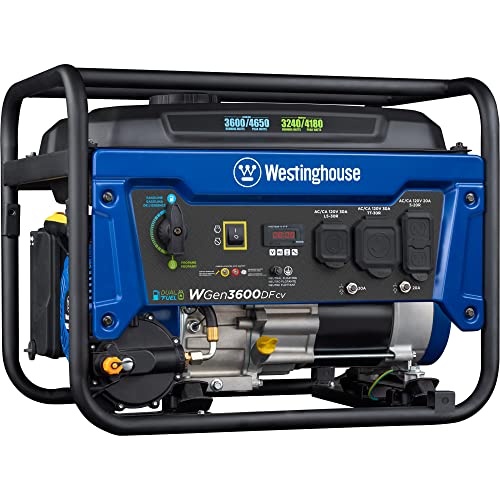
This second Westinghouse 4650 model stays close to the previous unit in size class, but it trims the feature set down to a simpler RV-ready package. That makes it easy to understand and easier to compare against the more accessorized B099KT1HXV version, especially for households that just want a dependable portable backup machine without extra moving parts in the decision. The CO sensor is the detail that stands out most here.
For garages, campsites, and backup routines that lean on basic portability, it feels straightforward in a good way. It is not trying to compete with the big DuroStar or the transfer-switch Westinghouse 6600, and that restraint can be the right fit for a lot of homes.
Highlights
- Simple dual-fuel setup keeps the model easy to understand.
- RV-ready 30A outlet supports travel and trailer power needs.
- CO sensor adds a useful awareness feature.
- Portable form works well for users who want a manageable backup machine.
Honest Caveats
- It is more modest in feature mix than the remote-start Westinghouse 4650 sibling.
- Larger home loads call for a bigger machine.
- Fuel care and storage still remain part of ownership.
Quick Facts
Perfect Match For
This suits campers and homeowners who want a simpler dual-fuel portable generator for routine backup and travel use.
Where Shoppers Go Wrong
Westinghouse 6600 Watt Dual Fuel Home Backup Portable Generator fits better for anyone who needs transfer-switch readiness and more home-backup headroom.
How To Choose The Right Dual Fuel Generators For Home
Start With Your Load List
The first question is not fuel type, it’s what you want to keep running. A refrigerator, a modem, a few lights, and a laptop charge need a very different setup from a well pump or central HVAC, so the wattage class matters more than the marketing language.
Smaller inverter units like the Champion 4000 and PowerSmart 4400 cover lighter backup plans more gracefully, while the DuroStar 13,000-watt class makes sense for broader household coverage. That gap is the whole decision in one sentence.
Choose Between Inverter And Conventional Output
Inverter generators convert power in a way that usually keeps output steadier for electronics, which is why they fit laptops, routers, and modern TVs well. Conventional units are often better suited to bigger loads and transfer-switch roles, where raw output matters more than compact refinement.
The Jackery power station is the quietest path in this list, but it’s a battery system rather than a fuel machine. For home backup, that distinction matters because the right pick depends on whether you want indoor-friendly silence or a broader runtime approach.
Think About Start Style, Noise, And Storage
Remote electric start and electric start reduce friction during outages, especially in bad weather or when you’re already juggling other tasks. Noise matters too, because a quieter unit feels easier to live with around neighbors, patios, and campgrounds.
Storage space is the unglamorous part people forget. The larger Westinghouse and DuroStar units ask for a real spot in the garage, while the smaller Champion and Westinghouse 4650 models are easier to tuck away.
Match Fuel Flexibility To Real Use
Dual fuel gives you propane and gasoline options, which can help when one fuel is easier to store or source than the other. That flexibility is useful during outages, but it does not remove the need for safe fuel handling, periodic maintenance, and a dry place to keep the unit.
For most homes, the smartest move is simple, choose the smallest capacity that still covers your essentials with a little room to spare. That keeps cost, storage, and operating hassle in line with actual household needs.
Things Worth Knowing First
Common Shopping Slip Ups
A common mistake is focusing on peak wattage alone and ignoring the shape of the load. A generator that sounds huge on paper can still feel undersized once refrigerators, pumps, or multiple appliances start cycling together.
Another easy miss is buying a large unit for a small garage. The machine may be strong, but the storage headache sticks around every month you own it.
The Upgrade Payoff
Higher-tier models cost more because they usually bring more output, easier starting, stronger housing, and more flexible connection options. Transfer-switch readiness, remote start, and larger engines all push the price structure upward.
The upgrade makes sense when your home has several critical loads or you want less compromise during outages. For lighter needs, the step-up can be overkill.
Frequently Asked Questions
Are dual fuel generators worth it for home backup?
They are useful when you want fuel flexibility and more options during a long outage. The real value comes from matching the machine to your home’s actual load list.
What size generator do you need for basic home essentials?
Small backup plans often fit the 4000 to 5000-watt class. Larger households or transfer-switch setups usually need more capacity.
Are inverter generators better for electronics?
Inverter designs usually suit electronics better because they provide steadier output. That makes them a strong fit for routers, laptops, and similar gear.
Do dual fuel units need a lot of maintenance?
They need normal fuel care, storage discipline, and periodic checkups. Larger models also need more room and a little more planning.
Can you use a portable generator indoors?
Fuel-powered generators belong outside, away from enclosed spaces. Battery power stations, like the Jackery unit here, are a different category and fit indoor-friendly charging use better.
Final Thoughts
For a home backup plan in 2026, the right choice depends less on brand names and more on how much you actually need to power, how much space you have, and how quiet you want the setup to be. The Jackery stands apart for silent charging support, the Westinghouse and DuroStar units cover stronger home roles, and the Champion and PowerSmart models keep the purchase more manageable. That range gives you real options instead of one oversized answer. Choose the one that fits your home’s rhythm, not just the wattage label.
