

Window units and portable ACs draw more current than most household outlets expect to handle, and a sudden voltage spike can quietly shorten the life of a compressor or scramble the control board. I put together this roundup for anyone running a seasonal cooling setup, a workshop with a ducted mini-split, or a garage converted into a gym where one wall outlet feeds everything. The picks below lean toward heavy-duty 12-gauge construction, individual switching, and surge protection sized for real inductive loads rather than just laptops and lamps.
The Lineup, Simplified

CCCEI 12 Gauge Long Extension Cord 50FT Yellow

CCCEI 12 Gauge Long Extension Cord 100FT Yellow

CCCEI Heavy Duty Surge Protector USB 6FT Black

NANOLAKE 4800J Surge Protector Power Strip 10ft
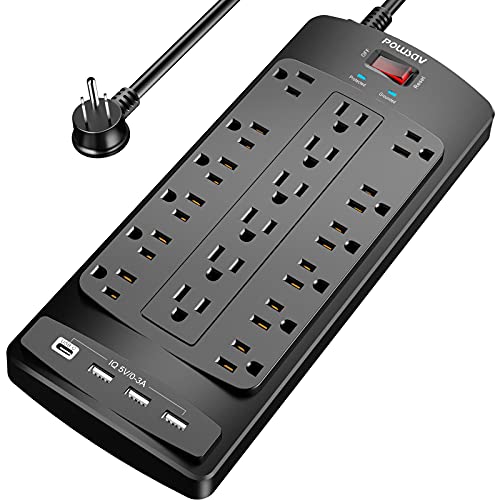
POWSAV 18-Outlet Surge Protector with USB 6FT
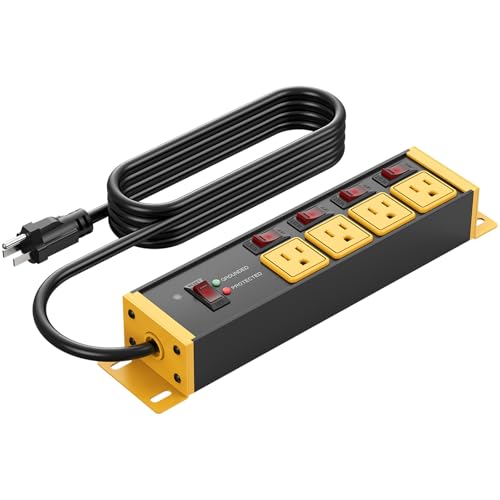
CCCEI 12 Gauge Heavy Duty Surge Protector 6FT

CCCEI Magnetic Heavy Duty Surge Protector 6FT Orange

CCCEI 12 Gauge GFCI Heavy Duty Power Strip 6FT
CCCEI Heavy Duty Surge Protector 20A Switches 6FT

BSEED Electronic Surge Protector 4-Pack Brownout
What Each Pick Brings To The Table
Window ACs are almost never parked right next to a wall outlet, and a flimsy 16-gauge cord is the usual suspect when a compressor trips mid-summer. This CCCEI strip solves that with a 12-gauge conductor (a thicker wire that handles current with less voltage drop) wrapped in a bright yellow jacket that resists scuffs and stays visible on a garage floor.
The eight-outlet block carries a 15A / 125V / 1875W rating, which means it can feed a typical 6,000 to 10,000 BTU window unit without breaking a sweat. For renters who can’t hardwire anything, it’s a clean way to bridge the gap between outlet and appliance.
What Works In Its Favor
- 12-gauge conductor keeps voltage drop low over distance, which matters for motor startup surges.
- Eight grounded outlets mean a fan, dehumidifier, and AC can share one run.
- High-visibility yellow jacket helps prevent tripping accidents in low light.
- Flat 5-15P plug tucks behind furniture where a chunky plug would block a baseboard.
Things To Consider
- No dedicated surge joule rating is listed, so protection is implied rather than quantified.
- Owners commonly report the cord itself is heavy, which is great for durability but awkward to coil.
Right Fit For
Apartment dwellers running a window AC across the room from the nearest outlet.
Consider Something Else When
You need a much longer cable run, in which case the CCCEI 12 Gauge Long Extension Cord 100FT Yellow covers ground the 50-foot version can’t.
Some installs live far from any reasonable outlet. A detached workshop, a pole barn, or a covered patio with a window unit hanging from the rafters all push past the reach of a typical 25-foot cord. CCCEI’s 100-foot version doubles the length of the previous pick while keeping the same heavy 12-gauge construction.
The trade-off at this distance is voltage drop (the gradual loss of electrical pressure as current travels through wire), but 12-gauge minimizes that effect on standard 120V circuits. For most setups pulling under 12 amps, the AC will run just as cool as it would on a six-foot cord.
Points In Its Favor
- 100-foot reach handles detached structures and yard installs without splicing.
- 12-gauge thickness preserves performance at distance, unlike cheaper 14 or 16-gauge cords.
- Same eight-outlet, 15A / 125V / 1875W block as the 50-foot sibling for consistency.
Trade Offs
- Storing 100 feet of heavy cord takes a dedicated hook or bin, not a junk drawer.
- No documented surge joule rating, so it’s better thought of as a heavy extension than a true surge protector.
- The flat plug design is convenient but harder to grip when unplugging.
Best Suited To
Anyone powering an AC unit in a garage, barn, or detached outbuilding far from the main panel.
Look Elsewhere When
The AC is close to the outlet, since the CCCEI 12 Gauge Long Extension Cord 50FT Yellow is easier to store and lighter to coil.
When a window unit sits near a desk or a bedside table, the same outlet often feeds a phone, a lamp, and a fan alongside the AC. CCCEI’s black six-foot strip blends into home interiors better than the industrial yellow models and adds USB-C and USB-A ports for direct device charging.
Four individually switched outlets let you kill the fan overnight without touching the AC compressor, and a master switch shuts everything down in one click. The 12-gauge cord and 15A / 125V / 1875W rating match the heavier yellow siblings.
Reasons It Performs
- Two USB-C and one USB-A port cut down on bulky charging bricks at the wall.
- Individual switches help idle devices sip zero phantom power (the small draw electronics use even when “off”).
- 12-gauge cord stays cool under load, which matters when stuffed behind furniture.
Worth Noting
- Only four AC outlets, so larger plug arrays need the denser models further down the list.
- The black housing shows dust more than the yellow versions in a sunny window.
Perfect Match For
Anyone running a window AC in a home office or bedroom where devices also need charging.
Swap It Out When
You need many more AC plugs in one place, since the POWSAV 18-Outlet Surge Protector with USB 6FT spreads devices across eighteen outlets.
Joules measure how much energy a surge protector can absorb before its components wear out, and a 4800-joule rating is one of the higher figures you’ll see on a residential unit. NANOLAKE pairs that buffer with eighteen widely spaced AC outlets plus four USB ports (two USB-A, two USB-C with PD 20W).
Real-time grounded and protected LED indicators make it easy to confirm at a glance that the strip is still doing its job after a storm. The flat plug and 10-foot cord reach behind entertainment centers and under desks where the wall outlet sits awkwardly.
A Few Strong Suits
- 4800-joule rating offers generous protection for sensitive electronics sharing a circuit.
- Wide outlet spacing stops chunky AC adapters from blocking neighboring sockets.
- USB-C PD 20W ports charge modern phones and tablets quickly without a separate brick.
- Mountable design fits under a shelf or behind a workstation.
Some Limits To Know
- The wide-spaced layout makes the bar physically longer than compact strips.
- LED indicators are small and can be hard to read across a room.
Feature Snapshot
Made For
Homeowners outfitting a media area or home office where an AC unit shares a circuit with computers and TVs.
Another Choice May Suit
Workshop owners running high-amp tools may prefer the CCCEI Heavy Duty Surge Protector 20A Switches 6FT for its individual 20A control.
A gamer’s desk or a hobbyist’s workbench can swallow outlets faster than anyone plans for. POWSAV crams eighteen spaced AC outlets plus four USB ports onto a single rail, plus a 2100-joule surge rating that handles everyday spikes from the grid and from neighboring appliances cycling on and off.
The ETL listing (a safety certification mark from a Nationally Recognized Testing Laboratory) is reassuring for a power strip this dense, and the flat six-foot plug tucks behind desks where bulky plugs would block a baseboard. Overload protection trips the master switch before anything overheats.
What Stands Out
- Eighteen outlets with spacing for wall warts cover almost any desk or entertainment cluster.
- ETL listing offers third-party confirmation of electrical safety.
- Four USB ports reduce the need for additional charging bricks.
Points To Keep In Mind
- 2100 joules is solid but lower than the NANOLAKE’s 4800-joule rating for similar money.
- Eighteen outlets may tempt loading the strip past its 15A capacity, so awareness helps.
Who Will Love This
Anyone with a packed desk, server rack, or media center that needs many plugs in one place.
Skip It When
You need maximum joule protection for storm-prone areas, since the NANOLAKE 4800J Surge Protector Power Strip 10ft offers roughly double the surge capacity.
Garage outlets are rarely where you need them, and the ones that exist often share a 15-amp circuit with the door opener and a work light. CCCEI’s six-foot yellow strip adds four outlets wired for higher-draw appliances, with individual switches so a stationary tool can stay plugged in while the AC runs.
The standard 5-15P plug keeps it compatible with regular household receptacles, while the internal wiring supports 20-amp circuits where available. Wall-mounting slots on the back keep the unit off a wet garage floor.
What Makes Sense
- Individual switches let you isolate the AC from other loads without unplugging.
- Wall-mountable back saves floor space in cramped garages.
- 12-gauge cord rated for 15A / 125V / 1875W handles startup surges gracefully.
Honest Caveats
- Only four outlets, which fills up quickly in a busy shop.
- The yellow housing looks industrial next to finished interior trim.
Whose Shelf It Belongs On
Anyone running a window or portable AC in a garage or workshop where tools share the same outlet.
Where Another Pick Suits Better
Outdoor metal-frame setups may prefer the CCCEI Magnetic Heavy Duty Surge Protector 6FT Orange, which mounts directly to steel surfaces.
Mounting a power strip on the side of a steel cabinet, a tool chest, or the metal housing of an HVAC unit is normally a job for screws and anchors. This orange CCCEI strip sidesteps that with a built-in magnet on the back, which clings firmly to any iron surface and stays put when you yank a plug out.
Four outlets with individual switches and a master switch give the same granular control as the wall-mount yellow sibling. The 12-gauge cord and 15A / 125V / 1875W rating keep performance consistent with the rest of the CCCEI family.
Positive Takeaways
- Magnetic back installs in seconds on any steel surface, no tools required.
- High-visibility orange housing prevents accidental kicks in cluttered shops.
- Individual plus master switches offer flexible control over connected loads.
Practical Considerations
- Magnet only works on ferrous metal, so aluminum framing or plastic enclosures won’t hold it.
- Strong pulls on a connected cord can pry the strip off a vertical surface.
Right Fit For
Anyone running a portable AC near a metal tool chest, steel HVAC housing, or workshop cabinet.
Not Your Match When
The installation surface isn’t magnetic, in which case the CCCEI 12 Gauge Heavy Duty Surge Protector 6FT and its wall-mount slots fit better.
GFCI stands for Ground Fault Circuit Interrupter, a safety feature that cuts power in milliseconds if current flows where it shouldn’t, such as through water or a person. Building codes increasingly require GFCI protection in basements, garages, and outdoor receptacles, and CCCEI builds that protection directly into this grey power strip.
Eight grounded outlets on a 12-gauge cord give you real headroom for an AC plus a dehumidifier plus a light. The 20A switch and overload protection keep the unit from running beyond the rating on a shared circuit.
What It Does Well
- Built-in GFCI protection satisfies code in damp or partially exposed locations.
- Eight outlets handle an AC plus accessories without daisy-chaining strips.
- Cool-running 12-gauge cord under full load improves safety margins.
Things To Weigh
- Owners commonly report the GFCI reset button sits close to other outlets, which can be awkward.
- Grey color may blend into unfinished basement walls, making the unit easy to lose track of.
Best Suited To
Anyone installing an AC in a basement, garage, or semi-outdoor space where GFCI protection is required or wise.
Reach For A Different Pick When
You want individual on/off control per outlet, in which case the CCCEI Heavy Duty Surge Protector 20A Switches 6FT gives more granular switching.
Some shops run welders, air compressors, and heavy AC units that all compete for the same 20-amp branch circuit. This CCCEI strip leans industrial with GFCI protection, four individually switched 20A outlets, and a 12-gauge cord that stays cool even at full draw.
The bright yellow housing doubles as a safety cue in active workspaces. Independent switches mean a stationary tool stays cold while the AC runs, and the standard NEMA 5-15P plug fits ordinary 15A receptacles while the internals handle the heavier loads.
Good Reasons To Consider
- Individual 20A switches allow granular control without unplugging tools.
- GFCI protection adds a safety layer for shop environments with cords and water.
- Cool-running 12-gauge cable reduces trip risk under load.
Less Ideal Details
- Only four outlets, which fills quickly when running multiple tools.
- The yellow jacket looks utilitarian in a finished kitchen.
Technical Sheet
Who Should Grab It
Anyone running an AC alongside heavy shop tools on a 20A circuit.
Swap It Out When
Eight outlets and a calmer appearance matter more, since the CCCEI 12 Gauge GFCI Heavy Duty Power Strip 6FT doubles the outlet count in a grey housing.
Most surge protectors only react to sudden overvoltage. The BSEED unit also monitors brownouts (brief drops in voltage, often from grid strain) and disconnects the appliance before a sagging supply damages the compressor. That matters for AC units more than for laptops, since motors draw more current trying to maintain output when voltage falls.
Each plug-in unit covers one outlet and is rated for 120V, 15A, and 1800W, which fits most residential window and portable ACs. The four-pack format protects an AC plus a fridge, freezer, or other compressor-driven appliance at the same time.
The Value In It
- Brownout cutoff prevents low-voltage damage that ordinary surge protectors miss.
- Delay function waits before reconnecting, protecting motors from rapid cycling.
- Single-outlet form factor plugs straight into the wall with no extra cord.
A Few Limitations
- One outlet per unit means the AC gets full attention but loses access to neighbors.
- Printed instructions are in Spanish, so non-Spanish speakers rely on customer support for setup details.
Built With In Mind
Anyone with an unreliable grid who wants extra protection for an AC plus a fridge or freezer on the same wall circuit.
A Better Fit Elsewhere
Multi-outlet convenience matters more than brownout defense, since the POWSAV 18-Outlet Surge Protector with USB 6FT offers many more plugs in one bar.
Picking A Surge Protector That Actually Matches Your AC
Before choosing a surge protector, check the nameplate on your AC for its amperage draw and voltage. A typical window unit pulls 5 to 12 amps at 120V, which sits comfortably under most 15A power strips, but a 220V window unit or a ducted mini-split needs a different class of protection entirely. Mismatched voltage is the most common reason a surge protector fails to do its job.
Cord gauge is the next detail worth weighing. 12-gauge wire handles sustained current with less voltage drop and runs cooler than the 14 or 16-gauge cords built into most residential strips. For motor-driven appliances that draw heavy startup current, a thicker conductor is genuinely meaningful.
Look for ETL or UL listed marks on the housing, since third-party safety certification tells you the strip was tested to a published standard. Joule ratings (how much surge energy the unit can absorb before it stops protecting) above 1000 handle everyday events, while ratings above 3000 are useful in storm-prone regions.
Sizing For The Room
A six-foot cord covers most bedroom and office installs where the wall outlet sits on an adjacent wall. Garages and detached workshops usually need 25 feet or more, and that’s where the long CCCEI cords earn their place. Running a strip behind a couch or a heavy desk is also easier with a flat 5-15P plug, which sits flush against the baseboard.
Matching Outlet Count To Gear
Count the devices that share the AC circuit, not just the AC itself. A fan, a lamp, a phone charger, and a smart speaker can quietly fill four outlets overnight. Eight or more outlets leaves headroom for additions, while four-outlet strips work fine in tight, single-purpose setups.
Where GFCI Fits In
Building codes expect GFCI protection in basements, garages, outdoors, and within six feet of a sink. CCCEI’s grey and yellow GFCI strips satisfy that requirement without rewiring the panel. Dry living areas don’t need GFCI on the strip itself, since the wall receptacle already provides it.
Smart Choices Before You Click
Pitfalls Shoppers Hit
The most common slip is grabbing a residential 16-gauge cord for an air conditioner, then wondering why the cable gets warm after an hour. Light-gauge cords are fine for lamps and chargers but not for motor loads. Another trap is overlooking the amperage rating on the strip. A 15A / 125V / 1875W label is the threshold most window ACs need, and anything below that risks nuisance tripping.
Where The Extra Money Goes
Higher joule ratings cost more because the internal MOVs (metal-oxide varistors, the components that absorb surge energy) are larger and rated for more events. GFCI protection adds a sensing relay and a reset button, which is why CCCEI’s GFCI strips sit above the basic models. Individual switches and USB-C PD ports also add small but real cost. The upgrade is worth it for permanent installs or storm-prone areas, and less critical for a seasonal guest-room AC that runs a few weeks each summer.
Frequently Asked Questions
Do Window Air Conditioners Actually Need A Surge Protector?
Yes. The compressor and control board are sensitive to voltage spikes from the grid and from large appliances cycling nearby. A surge protector extends the life of those components by absorbing sudden overvoltage.
Is A 12-Gauge Cord Required For Window ACs?
It’s strongly recommended for any AC that runs more than a few minutes at a time. Thicker wire keeps voltage drop low during compressor startup, which reduces heat buildup inside the cable.
What Joule Rating Should I Look For?
Ratings above 1000 joules handle minor household events. Storm-prone regions or shared circuits with large appliances benefit from 2000 joules or higher.
Can A Surge Protector Handle A 220V Window Unit?
Most residential strips listed here are 120V only. A 220V AC needs a surge protector rated for 240V and a matching plug and receptacle configuration.
What Is The Difference Between Surge Protection And GFCI?
Surge protection absorbs voltage spikes, while GFCI detects current leaking to ground and cuts power. Both functions complement each other, especially in damp locations.
Wrap Up
A reliable surge protector for an air conditioner boils down to three things: enough amperage capacity for the compressor, a joule rating that matches the grid conditions at the address, and a build quality that stays cool under load. Pick a 12-gauge cord for permanent installs, add GFCI protection for damp locations, and choose brownout cutoff for grids that sag in summer storms. Any of the ten options above handles those basics with a different mix of strengths.
