

A short power blip can wipe out a draft, corrupt a render, or brick a NAS drive mid-write. I put together this list of surge protector battery backups for anyone who works from a home office, runs a small server, or simply wants their gear to survive a stormy afternoon without drama. Each pick covers a different combination of capacity, chemistry, and form factor, and I tried to match them to the kind of setup real people actually own.
The Leading Options At A Glance

GOLDENMATE 1500VA/1000W Lithium UPS (Gray)

CyberPower CP1500PFCLCD PFC Sinewave UPS

UPS Mount 548 Heavy Duty Wall Bracket

APC BE600M1 and BE425M Backup Bundle

GOLDENMATE 1500VA/1000W Lithium UPS (White)

GOLDENMATE 1000VA/800W Lithium UPS (White)

GOLDENMATE 1000VA/600W Lithium UPS (White)
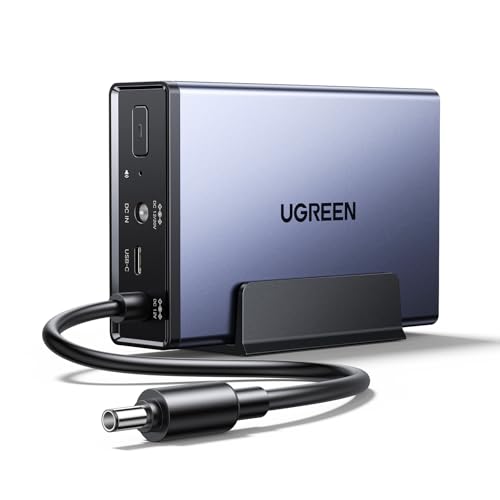
UGREEN NAS UPS US3000 Battery Backup
GOLDENMATE 1500VA/1200W Lithium UPS (White)
Inside Each Recommended Option
This gray-cabinet GOLDENMATE unit uses a lithium iron phosphate (LiFePO4) battery, the same chemistry now common in electric vehicles and home solar banks. LiFePO4 cells hold up to many more charge cycles than the sealed lead-acid bricks in older UPS units, which is the main reason this format has started replacing the old school backup battery. The 1500VA/1000W rating means it can comfortably carry a desktop tower, monitor, router, and external drive through a brief outage.
For a home office that runs eight hours a day, the long-life chemistry is genuinely useful. Compared with a traditional lead-acid UPS at this capacity, owners can expect a much longer service interval before any battery swap, which means fewer interruptions over the years. The metal housing also helps it sit quietly in a corner without rattling during the cooling fan ramp-ups.
Where It Delivers
- LiFePO4 chemistry rated for thousands of charge cycles, so battery replacements should land far in the future.
- 1500VA / 1000W handles a full desktop setup with monitor and peripherals on one unit.
- Metal chassis stays rigid on the floor and tends to run cooler than plastic enclosures during long outages.
- Built-in surge protection on every outlet means a single unit covers both battery backup and spike clamping.
Honest Caveats
- At full draw of roughly 1000W the runtime window shrinks fast, so heavy workstations may want the 1200W sibling reviewed later.
- LiFePO4 units weigh more than people expect from a “small” UPS, which matters if your shelf has a low weight rating.
Key Specs
Built With In Mind
Home office owners who leave a workstation running for years between battery swaps and want a set-and-forget gray box behind the desk.
Reach For A Different Pick When
Power users running a multi-monitor render rig should look at the GOLDENMATE 1500VA/1200W Lithium UPS reviewed below for the extra wattage.
The CyberPower CP1500PFCLCD leans into a feature that audiophile PC builders and workstation shoppers care about: pure sine wave output. Many modern power supplies use active PFC (power factor correction), and a stepped-approximation backup battery can confuse those supplies, sometimes causing shutdowns during a switchover. Pure sine wave mimics wall current closely enough that active PFC supplies stay happy, which is the practical benefit that shows up during a real outage.
It ships as a compact mini-tower with a color LCD on the front that surfaces load, battery level, and estimated runtime. The setup leans toward a home office or a serious gaming corner, and the LCD readout helps when you want to know how much time is left before a graceful shutdown kicks in.
Everyday Advantages
- Pure sine wave output keeps active PFC power supplies stable through switchovers.
- Color LCD makes runtime and load readable at a glance without installing software.
- Mini-tower footprint fits beside a desktop without dominating floor space.
- Battery backup plus surge protection in one chassis simplifies cable management.
Trade-Offs To Consider
- Sealed lead-acid battery means a replacement battery is likely needed somewhere down the road, unlike the lithium models above.
- The LCD is bright by default and may need a settings tweak for bedroom desks at night.
Right Fit For
Gaming PC and workstation owners with active PFC power supplies who want clean switchover behavior and visible runtime data.
A Better Fit Elsewhere
Anyone allergic to future battery swaps should consider the GOLDENMATE 1500VA/1000W Lithium UPS in Pick 1 instead.
The UPS Mount 548 is a different kind of pick, and that is the point. It is a heavy-gauge cold rolled steel bracket finished in powder-coated flat black, built to hold a UPS or surge protector vertically on a wall, desk side, or cabinet panel. For anyone whose UPS currently lives behind a desk collecting dust bunnies and ankle bumps, getting it up off the floor changes the feel of the room.
The bracket is shaped around common APC Back-UPS footprints, so it pairs well with the APC bundle reviewed below. Hardware mounting usually calls for basic stud finding and a drill, and the steel gauge keeps the unit from flexing once it is loaded.
The Case For It
- 16GA cold rolled steel resists flex under load, so the UPS does not sag after months of mounting.
- Powder-coated finish resists scuffs in a busy office or workshop corner.
- Vertical orientation keeps the UPS visible for status checks without bending down.
- Reclaims floor space that a tower UPS would otherwise occupy.
Some Limits To Know
- Installation requires finding studs or anchors and a drill, which is more work than simply setting the UPS on a shelf.
- The footprint fits certain APC-style units best, so a chunkier tower UPS may not seat cleanly.
Made For
Home office owners who already own a compatible UPS and want to lift it off the floor for cable management and visual calm.
Swap It Out When
Shoppers who do not yet own a UPS should start with the CyberPower CP1500PFCLCD in Pick 2 and circle back to a mount later.
This bundle from APC packages two small UPS units that are meant to be used separately, not stacked or daisy-chained. The BE600M1 covers a higher-draw zone like a home office or entertainment console, while the BE425M suits lighter loads like a cable modem, router, or VoIP box. Splitting protection this way means a surge event on one circuit is less likely to take out everything at once.
The product type is listed as power supplies or protection, and the units ship from the Philippines. For a first-time UPS shopper, the bundle is a low-commitment way to learn what kind of runtime you actually need before investing in a single big unit.
A Few Strong Suits
- Two-unit design separates high-draw and low-draw gear onto different backup batteries.
- Compact wall-tap style fits behind a desk or TV cabinet without dominating the room.
- APC brand familiarity means replacement batteries are easy to source when the time comes.
Where It Is Less Suited
- Each unit is small, so runtime during a long outage is limited, more of a blip-cushion than a full workday bridge.
- The two units must be deployed separately and not chained together, which can confuse first-time installers.
Who It Suits Best
Apartment dwellers and renters protecting a modem, router, and small PC who want two compact UPS units instead of one big tower.
Consider Something Else When
Anyone running a full tower workstation will outgrow the watt capacity here and should move up to the GOLDENMATE 1500VA/1000W in Pick 1.
The white-cabinet twin of the gray unit in Pick 1 offers the same 1500VA / 1000W rating and the same LiFePO4 battery pack, just wrapped in a lighter finish. For rooms with white trim, blonde wood, or Scandinavian-style furniture, a black or gray UPS can read as an eyesore next to the cable cluster behind a desk. Color choice is a small detail, but in a curated room it matters.
Functionally the internals match the gray version, including the LiFePO4 cycle-life advantage over traditional lead-acid UPS units. The white chassis does tend to show dust more visibly over time, which is worth knowing if the unit sits in an open corner.
A Strong Showing
- Identical 1500VA / 1000W capacity and LiFePO4 chemistry as the gray sibling.
- White finish blends into bright, modern rooms and minimalist setups.
- Same long cycle life, so the battery swap conversation stays far in the future.
Practical Considerations
- White surfaces show dust and scuffs sooner than darker finishes, so a quick wipe-down every few weeks may be needed.
- No functional difference over the gray model, so the choice comes down to aesthetics and room lighting.
Who Will Love This
Design-minded home office owners who want power protection without a black box disrupting a light-color palette.
Look Elsewhere When
Shoppers who prioritize runtime over appearance will be equally served by the gray Pick 1 or the higher-watt Pick 9.
This 1000VA / 800W GOLDENMATE steps down from the 1500VA units while keeping the LiFePO4 battery chemistry. The real-world use case is a single desktop computer with a primary monitor and a small accessory stack, which fits neatly under the 800W ceiling for most productivity PCs. For a remote worker who only cares about saving a draft and shutting down cleanly, the smaller capacity is often the right size.
Same long-cycle LiFePO4 story applies, so battery replacements should be rare. The lighter capacity also makes the unit easier to lift onto a shelf or the UPS Mount 548 from Pick 3.
Good Reasons To Consider
- 1000VA / 800W matches a typical productivity PC plus monitor without overpaying for unused headroom.
- LiFePO4 chemistry delivers the same long cycle life as the bigger GOLDENMATE siblings.
- White finish integrates with lighter home office aesthetics.
- Lighter overall weight simplifies shelf or wall-mount placement.
Points To Keep In Mind
- 800W will not comfortably cover a multi-GPU gaming rig or a 3D workstation, where headroom matters.
- Fewer outlets than the larger GOLDENMATE units, so careful outlet budgeting is needed.
Perfect Match For
Remote workers with a single mid-range desktop who want lithium battery longevity without paying for capacity they will never use.
Skip It When
Gaming PC owners with power-hungry GPUs will want the CyberPower CP1500PFCLCD from Pick 2 for cleaner sine wave delivery at higher loads.
The 1000VA / 600W sibling is the entry step into the GOLDENMATE lithium family. The 600W ceiling is well matched to smaller electronics, a home office printer station, a point-of-sale terminal, or a backup for a network closet. Compared with the 800W unit in Pick 6, the watt rating drops by 200W, which translates into shorter runtime at peak load but a more compact footprint for tight shelves.
The LiFePO4 chemistry promise carries over, so owners should still expect thousands of cycles before any battery service. The white chassis behaves the same as the other white-finish models, which means dust becomes visible sooner than on darker units.
Notable Upsides
- Compact footprint fits into tight network closets and small home office shelves.
- LiFePO4 chemistry brings long cycle life even at the entry tier.
- Surge protection included on the unit, so a single device handles both jobs.
- Lower capacity keeps the weight manageable for wall-mount placement.
Honest Caveats
- 600W is not enough for a full tower PC with a discrete GPU, so users with that gear should step up to the 800W or 1000W siblings.
- Fewer outlets than larger units, so power-strip stacking may be tempting but should be avoided.
Feature Snapshot
Best Suited To
Owners protecting small electronics like a router, modem, mini PC, or a network-attached device who do not need heavy watt capacity.
Not Your Match When
Anyone backing up a full desktop workstation will be better served by the 800W Pick 6 or the 1000W Pick 1.
The UGREEN US3000 is purpose-built rather than general-purpose. It is a 120W DC battery backup with a 12000mAh internal cell, designed to sit next to a compatible UGREEN NAS and keep it running through short outages so that writes finish cleanly. Compatibility is specific, covering 2-bay and 4-bay UGREEN units like the DXP2800, DXP4800 family, and DH-series models listed in the source.
Protection includes power failure, surge, over-charge, over-current, and short-circuit handling, which is more layers than a typical consumer UPS exposes. The compact, quiet operation also makes it friendlier for a living-room closet or a bedroom office than a fan-cooled mini-tower.
Advantages To Know
- DC-only design avoids the bulky inverter stage, keeping the unit compact and quiet.
- Multi-layer protection covers surge, over-charge, over-current, and short-circuit events.
- Compatibility list targets popular 2-bay and 4-bay UGREEN NAS models.
- 12000mAh cell is sized for graceful NAS shutdowns rather than hours of runtime.
Where It May Fall Short
- Compatibility is narrow, so non-UGREEN NAS owners will need to look at a general-purpose UPS instead.
- 120W output limits use to NAS hardware, not desktop computers or monitors.
Feature Rundown
The Right Fit
UGREEN NAS owners with a 2-bay or 4-bay unit on the compatibility list who want quiet, NAS-specific backup power.
Where A Sibling Pick Shines
Anyone protecting a Synology, QNAP, or non-UGREEN NAS should reach for a general-purpose unit like the GOLDENMATE 1000VA/600W in Pick 7 instead.
This is the most generous watt rating in the roundup. At 1500VA / 1200W, the white lithium UPS has 200 watts of extra headroom over the 1000W siblings in Picks 1 and 5, which is meaningful for workstations with discrete GPUs, multi-drive storage enclosures, or a beefy monitor array. The LiFePO4 battery pack matches the chemistry of the smaller siblings, which keeps the long-cycle story consistent across the family.
For content creators running a capture workstation, an editing tower, or a small home server rack, that extra watt cushion is the difference between graceful shutdown and abrupt power loss during a brownout. Compared with the gray 1000W Pick 1, this unit shares the same form factor while raising the usable ceiling.
What Helps Most
- 1200W real-world watt capacity covers a content creation workstation with room to spare.
- LiFePO4 battery delivers thousands of cycles for low long-term maintenance.
- 1500VA rating protects against momentary sags as well as full outages.
- White finish integrates with modern studio or office environments.
What To Weigh
- Heavier and bulkier than the 600W or 800W siblings, so shelf placement needs planning.
- Diminishing returns for users whose actual draw sits well below 1000W, who may prefer the smaller 1000VA Pick 6.
Who Should Grab It
Power users running a workstation with a discrete GPU and external drives who want maximum watt headroom in a lithium UPS.
Not Your Match When
Light-duty users running only a router and modem will find the GOLDENMATE 1000VA/600W from Pick 7 a more sensible match.
Factors Worth Weighing Before Choosing Surge Protector Battery Backups
Wattage And Capacity Match
The single biggest mistake is under-sizing. A UPS rated at 600W cannot safely carry a workstation that draws 700W under load, and the unit will simply shut off during the first real outage. Add up the watt draw of every device on battery backup, leave roughly 20 to 25% margin, and choose a unit rated above that number.
Battery Chemistry And Service Life
Traditional sealed lead-acid UPS batteries typically need a swap somewhere between three and five years, depending on cycles and climate. LiFePO4 batteries stretch that window into thousands of charge cycles, often covering the full useful life of the unit. The trade-off is upfront weight and cost, but for a set-and-forget installation the chemistry choice tends to win on long-term ownership.
Output Waveform For Sensitive Gear
Active PFC power supplies in modern desktops, workstations, and some NAS units can react badly to stepped-approximation battery output, occasionally tripping or rebooting during a switchover. Pure sine wave output, like the CyberPower Pick 2, mimics utility power closely enough that these supplies stay stable. For most other electronics, stepped output is acceptable.
Outlets, Form Factor, And Mounting
Count the outlets you actually need, then add a buffer for the occasional accessory. Wall-tap styles save shelf space but limit how many devices you can plug in. Tower units offer more outlets but need floor or shelf room. For UPS owners tired of floor clutter, a steel mounting bracket like the Pick 3 UPS Mount 548 can change how the setup looks.
Key Considerations Across These Picks
Wrong Turns To Avoid
The most common mistake is treating “VA” as identical to “watts.” A 1500VA unit might only deliver 1000W of real power, and trying to bridge that gap by overloading outlets is exactly the scenario a UPS is meant to prevent. The other frequent trap is daisy-chaining surge protectors or stacking UPS units, which can confuse the switchover logic and create hidden fire risk.
Where The Extra Money Goes
Higher-tier lithium models in this list cost more because the battery chemistry lasts far longer, the watt headroom is wider, and the housings tend to be sturdier. For a user who replaces their workstation every few years, a basic lead-acid unit may be perfectly fine. For a long-term home office or a NAS closet that runs around the clock, the lithium upgrade usually pays for itself in fewer battery swaps and steadier protection over time.
Frequently Asked Questions
How Long Will A Surge Protector Battery Backup Run During An Outage?
Runtime depends entirely on how much wattage the connected gear draws. A router and modem on a 600W unit may run for an hour or more, while a full workstation on the same unit could last only a few minutes.
Can I Plug A Surge Protector Into A UPS?
It is generally not recommended. Daisy-chaining surge protectors and UPS units can confuse the switchover behavior and may violate the safety certifications built into both devices.
Do I Need Pure Sine Wave Output?
Only if the connected gear uses active PFC power supplies, which is common in modern desktops, workstations, and gaming PCs. Routers, modems, and simpler electronics do not need pure sine wave.
How Often Will The Battery Need Replacing?
Sealed lead-acid UPS batteries typically last three to five years. LiFePO4 batteries can stretch across thousands of charge cycles and often outlive the rest of the unit.
Will A UPS Protect Against Lightning Strikes?
A UPS offers solid protection against common surges and brownouts, but a direct lightning strike can overwhelm any consumer device. For areas with frequent storms, a layered approach with a quality surge protector at the panel is the safer route.
Closing Remarks
The right surge protector battery backup comes down to matching real watt draw, battery chemistry, and form factor to the gear you actually own. A modest network closet lives happily with a compact lithium model, while a busy workstation earns the headroom of a higher-watt unit. Whatever the setup, getting power protection in place before the next outage is the part that actually matters.
